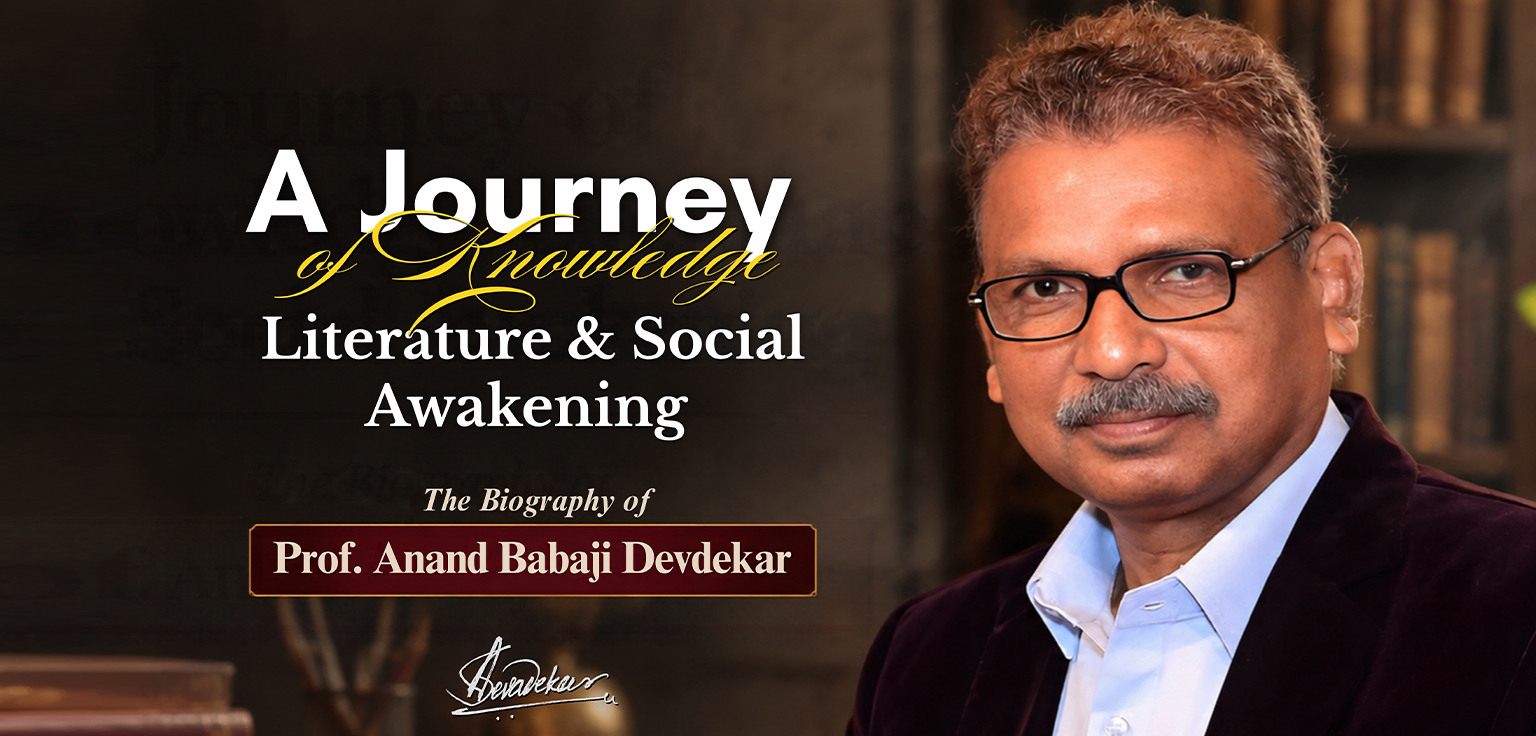
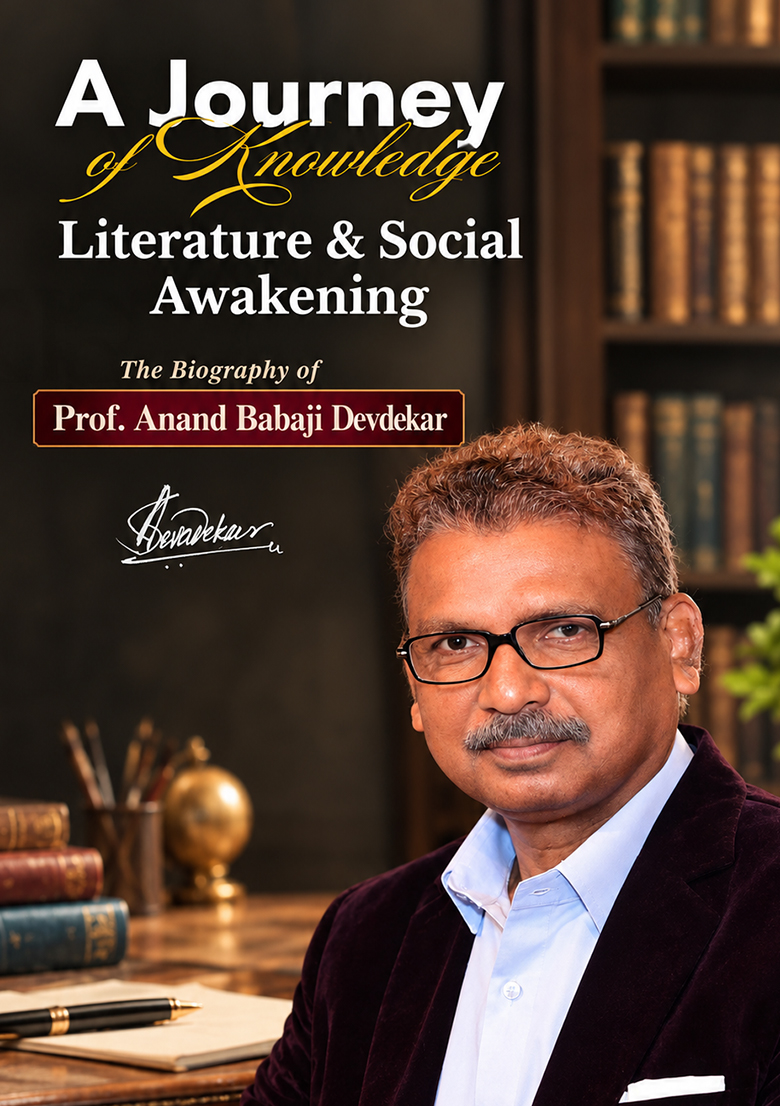
"From the red soil of Devde to the classrooms that shaped generations, I walked a path of quiet determination. I turned grief into grace, knowledge into service, and my own journey into a bridge for countless others to cross."
Introduction
Every extraordinary journey has a beginning that the world rarely sees. Before the applause, before the recognition, before a name becomes synonymous with purpose, there is a quieter story unfolding in the shadows. It is a story of small choices, of inherited values, of determination that refuses to be extinguished. The journey of Prof. Anand Babaji Devdekar is precisely that kind of story. It did not announce itself with fanfare. It began softly, in the red soil of the Konkan, in the modest walls of a village home, in the hearts of parents who believed in something greater than their circumstances.
He was born in Devde, a village nestled in the Sangameshwar Taluka of Ratnagiri district, where the Arabian Sea whispers against the western coast and the Sahyadri hills stand guard over ancient traditions. Life there was simple, but simplicity has its own kind of richness. His father, Babaji Ratna Devdekar, traveled to Mumbai to work with the Municipal Corporation, carrying the weight of providing for a family on his shoulders. His mother, Mankibai Babaji Devdekar, tended to the land and the household with quiet strength, her hands never idle, her spirit never weary. Together, they planted something far more valuable than crops. They planted values. Discipline. Hard work. Integrity. The quiet understanding that a person’s worth is not measured by what they own, but by who they become.
Young Anand absorbed these lessons not through lectures, but through observation. He watched his father leave and return, leave and return, a rhythm of sacrifice that never once became a complaint. He watched his mother manage a home with grace that seemed effortless, though he would later understand just how much effort it truly required. From them, he learned that resilience is not loud. It is the steady breath that keeps you moving when the road is steep.
Even as a child, there was something different about him. A calmness that drew people. A quiet curiosity that could not be satisfied with easy answers. He found himself drawn to Marathi literature, to the stories and verses that carried the soul of his culture. History fascinated him, not as a list of dates, but as a living conversation between the past and the present. These early loves would never leave him. They would grow, evolve, and eventually shape the very core of his life’s work.
His educational journey became a bridge between two worlds. The world he was born into and the world he was destined to enter. When he completed his early education and moved to Mumbai, he carried more than just his belongings. He carried the hopes of an entire village, the prayers of a family that had never before seen one of their own reach such heights. He became the first student from Devde to achieve significant educational milestones. He became the first in his family to walk through the doors of higher learning. And with every step, he understood that he was not walking alone. He was walking for all of them.
At Hume High School in Mumbai, he began to see the world beyond his village. At Siddharth College, he found his intellectual home. It was there that his thoughts were stirred by the visionary ideals of Dr. B. R. Ambedkar, a man who had fought tirelessly for equality, for justice, for the belief that education was the most powerful weapon against oppression. That belief took root in young Anand’s heart and never let go.
"He transformed education from a profession into a devotion, measuring his success not by the titles he earned but by the lives he awakened along the way."
Phase 1: A Voice That Refused to Be Silent
Some lives are measured by the titles they accumulate. Others are measured by the echoes they leave behind in the hearts of those they touch. The journey of Prof. Anand Babaji Devdekar belongs unmistakably to the latter. He did not simply occupy a position. He inhabited a purpose. Over the decades, he became a presence that transcended the ordinary boundaries of a teacher’s role. He was an educator, yes, but he was also a thinker whose mind refused to rest, a writer whose words carried weight, and a speaker whose voice reached far beyond the four walls of any lecture hall.
At the core of his existence lay a conviction so simple yet so profound. Knowledge, he believed, was never meant to be hoarded. It was meant to flow. To reach. To awaken. He saw education not as a transaction of information but as a transformation of the human spirit. And that belief became the compass that guided every step of his journey.
For decades, teaching was not merely his profession. It was his devotion. When he stood before his students, he did not see a room full of faces waiting to be filled with facts. He saw individuals. Each carrying their own story, their own struggles, their own quiet dreams. He understood that to teach was not to lecture but to listen. To guide, not to command. To build confidence, not to demand obedience. His classroom became a sanctuary of dialogue, a space where questions were welcomed and curiosity was celebrated. Students did not fear him. They trusted him. They opened their minds to him because he first opened his heart to them.
But his vision could not be contained within academic corridors. He felt a restless urge to reach further, to speak to a larger world that needed the same clarity and compassion he offered his students. That urge found its most enduring expression in Satdhamma Patrika, the monthly magazine he launched in 1999. It was not merely a publication. It was an extension of democratic values. A living platform where Buddhism, human values, and social consciousness were explored with depth, dignity, and unflinching honesty. Through his editorials, he invited readers to think, to question, to reflect. He created a community of minds that stretched across distances, united by a shared hunger for meaning. The magazine became his voice when he could not be present, his hand reaching out to touch lives he would never meet in person.
Prof. Devdekar possessed a rare gift. He could take complex ideas and make them feel like conversations between old friends. His speeches were not performances. They were offerings. He spoke with clarity, with conviction, with a warmth that made every listener feel seen and understood. Whether addressing a small gathering or a vast auditorium, he carried the same authenticity. His words were rooted in the ideals that had shaped him, the vision of Dr. B. R. Ambedkar, the enduring principles of equality and justice, the belief that education was the great equalizer. Audiences did not just hear him. They felt him. And they left carrying a piece of his wisdom in their hearts.
His influence naturally found recognition in literary circles. He was invited to lead and participate in conferences where the brightest minds gathered to discuss literature, culture, and social thought. He did not seek these honors. They came to him because his dedication was impossible to ignore. He earned respect not through ambition but through authenticity. He became a figure whose presence elevated every gathering, whose insights added depth to every discussion.
"His parents gave him no wealth but something far more enduring. They gave him roots. And from those roots, he learned to grow beyond any horizon."
Phase 2 : The Soil That Shaped the Soul
Before a name becomes known, before achievements are recorded, before a voice finds its audience, there is always a place that holds the first drafts of a life. For Prof. Anand Babaji Devdekar, that place was Devde. A small village cradled in the Sangameshwar Taluka of Ratnagiri district, where the Konkan coast meets the sky and the soil carries the memory of generations. Long before his words would travel to classrooms, literary gatherings, and social platforms, his story began in the quiet rhythms of village life. And in that quietness, something remarkable was taking shape.
He was born in 1960, into a world that demanded more than it gave. Life there was not measured in luxuries but in lessons. Every day was a classroom. Every chore was a teacher. His parents, Babaji Ratna Devdekar and Mankibai Babaji Devdekar, were not wealthy in possessions, but they were rich in something far more enduring. They were rich in character. His father traveled to Mumbai to work with the Bombay Municipal Corporation, carrying the weight of a family on his shoulders, crossing distances that were not just geographical but emotional. His mother stayed behind, tending to the household and the farmland, her hands never resting, her spirit never wavering. Together, they wove a fabric of values that would clothe their son for the rest of his life.
There were no shortcuts in that household. Every achievement demanded effort. Every meal was earned. Every step forward required sacrifice. Young Anand watched his father leave at dawn and return at dusk, not with complaints but with quiet determination. He watched his mother balance the demands of home and field, her resilience as natural as her breathing. From them, he learned that discipline was not a punishment. It was a gift. That perseverance was not exhausting. It was empowering. That responsibility was not a burden. It was a privilege.
His parents did not lecture him on honesty or self-respect. They lived those values in front of him, day after day, in ways that needed no explanation. They created an atmosphere where learning was honored, where integrity was expected, where a person’s word was their bond. Even though formal education had not been a part of their own family history, they understood its transformative power. They planted that understanding in their son, and it took root deeper than they could have ever imagined.
The village itself became another teacher. Devde was not a place of abundance, but it was a place of community. Neighbors knew each other. Families supported each other. Struggles were shared, and so were joys. In that environment, young Anand developed something that would serve him throughout his life. Empathy. He learned to see the humanity in others, to understand that every person carried their own invisible burdens. He was not loud or attention-seeking. He was reflective, calm, and thoughtful. Those who knew him then remember a boy who observed more than he spoke, who absorbed the world around him with quiet wonder.
His curiosity found its earliest expression in Marathi literature and history. Literature opened windows into the souls of others. It showed him that words could heal, could inspire, could capture the beauty and pain of human existence. History taught him that societies rise and fall, that individuals shape the course of time, that the past is never truly past. These were not passing interests. They became the compass points of his intellectual life, guiding him toward the work he would eventually dedicate himself to.
"He walked out of his village not to escape his past, but to honor it, carrying the hopes of his family like a lantern in the dark."
Phase 3 : Breaking the Cycle, One Step at a Time
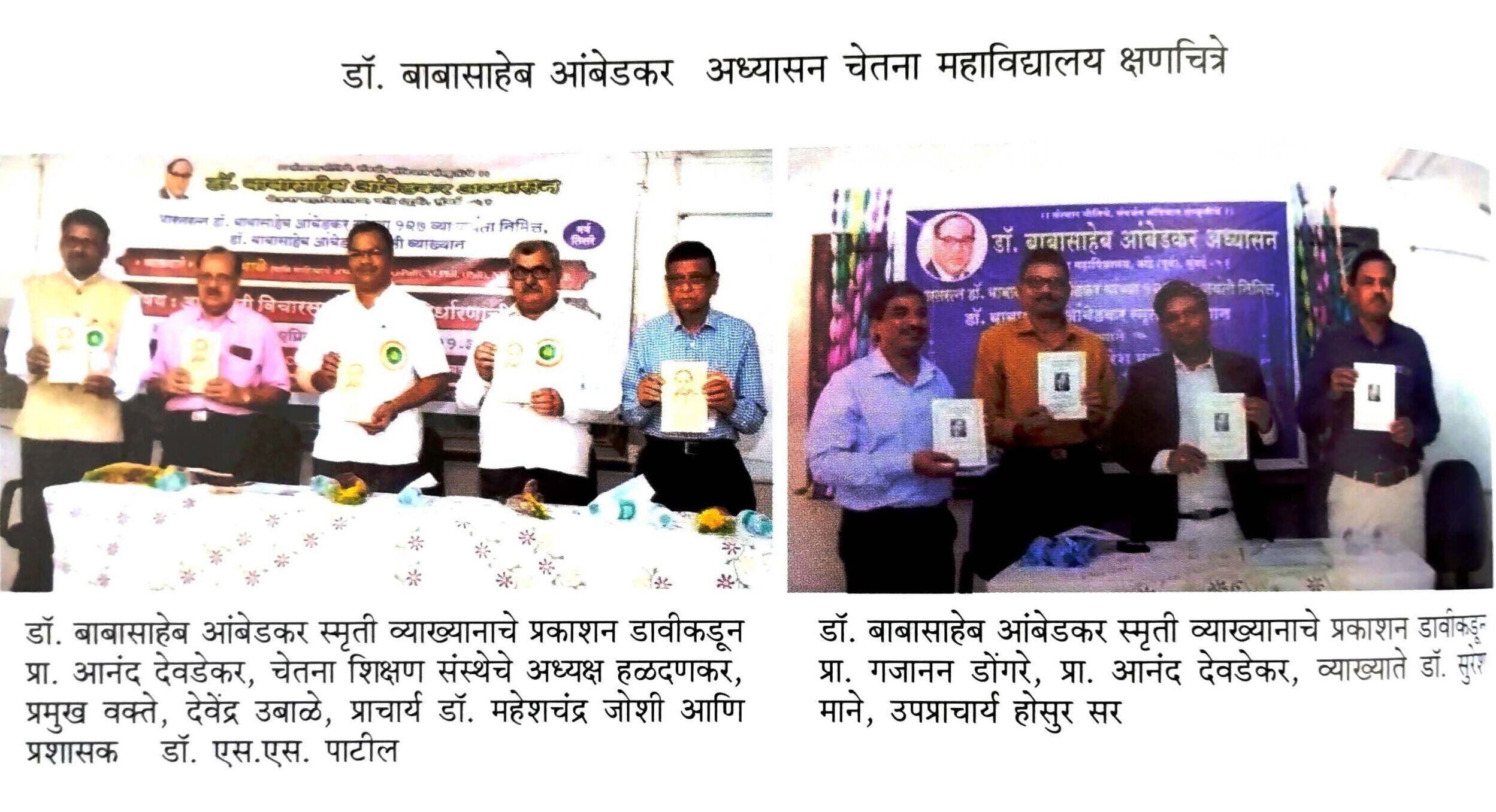
For most, education is a means to an end. A certificate. A qualification. A ticket to employment. But for Prof. Anand Babaji Devdekar, it was something far more profound. It was the bridge between what was and what could be. The thread that connected the red soil of Devde to the vast, uncharted territories of possibility. Carrying the values his parents had planted in him, carrying the quiet determination that had taken root in his childhood, he took his first steps beyond the boundaries of his village. And with every step, he proved that learning was not just about acquiring knowledge. It was about transforming a life.
Growing up in Devde, he understood education in a way that children from more privileged backgrounds never could. For him, it was not a given. It was a privilege. A rare and precious gift that his family had never fully possessed.
His grandparents had not walked these paths. His parents had not had the chance. He was the one chosen, the one entrusted with the responsibility of breaking a cycle that had held his family for generations. His success was never just his own. It carried the whispered hopes of his parents, the silent prayers of his village, the collective pride of a community watching one of their own rise.
His school years became the crucible where his character was tested and tempered. There were no shortcuts, no special privileges, no easy victories. There was only effort. Consistent, unglamorous, relentless effort. When he sat for his SSC examination, he did so with the weight of expectation on his shoulders. And when the results arrived, they brought with them a moment of triumph that would echo through his family for years. He became the first student from Devde to pass the SSC examination in his very first attempt. He became the first person in his entire family to achieve this milestone. It was not just a certificate. It was a declaration. A statement that circumstances did not define destiny. That a village boy could compete with the world and win.
But the journey did not end there. It was only the beginning. The next chapter took him far from the familiar landscapes of his childhood. From the narrow lanes of Devde to the sprawling, pulsating city of Mumbai. The transition was jarring. The noise, the crowds, the relentless energy of a metropolis that never slept. It was a world away from the quiet rhythms of village life. But he did not flinch. He carried with him the discipline of his father, the resilience of his mother, and the values that had been woven into his very being. He was leaving behind his home, but he was taking his foundation with him.
In Mumbai, he continued his academic journey at Hume High School. The city became his new classroom, its streets and its people offering lessons that no textbook could provide. He encountered ideas that challenged him, perspectives that broadened him, experiences that stretched his understanding of the world. He was no longer just a student from a village. He was becoming a citizen of a larger world, a world where his dreams could find room to breathe.
Note of Thanks
No journey of significance is ever walked alone. However strong the legs that carry us, however steady the heart that guides us, we are always supported by hands we cannot always see, by voices that encourage us when our own grows faint, and by the quiet, unwavering presence of those who believe in us even when we struggle to believe in ourselves. The journey of Prof. Anand Babaji Devdekar, for all its determination and purpose, was shaped not in isolation but in the warm embrace of a community of souls who gave him strength, direction, and the courage to keep moving forward.
First and foremost, with a heart full of reverence, he bows to the memory and legacy of his parents, Babaji Ratna Devdekar and Mankibai Babaji Devdekar. They were not wealthy in possessions, but they were immeasurably rich in character. Their sacrifices were silent, their principles unwavering, their faith in education absolute. They gave him not just a home but a foundation. They taught him that dreams are not reserved for the privileged, that discipline is the quiet companion of every great achievement, and that the simplest life, when lived with integrity, can produce the most extraordinary results. Everything he became, every step he took, every mind he touched, rests upon the bedrock of their love and their example.
He extends his deepest and most heartfelt appreciation to his wife, Vijaya Anand Devdekar. She stood beside him through seasons of triumph and seasons of trial, through moments of joy and moments of profound sorrow. Her companionship was not merely a presence but a pillar, steady and unshakeable. Her understanding, her patience, and her quiet strength became the anchor that held their family together and allowed him to pursue his mission with clarity and purpose. She was not just a partner in life. She was a source of grace, a constant reminder that behind every public achievement lies a private sanctuary of love and trust.
He acknowledges with immense pride and joy his children, Dr. Abhinav Devdekar and Abhiruchi Devdekar. Watching them grow, watching them pursue their own educational journeys with dedication and excellence, has been one of the deepest satisfactions of his life. Their achievements are not merely their own. They are reflections of the values that have always guided their family, the belief that learning is sacred, that effort is its own reward, and that the pursuit of knowledge is a noble and lifelong calling. They are his legacy in the truest sense, not because of what they have accomplished, but because of who they have become.
Prof. Anand Babaji Devdekar also extends his sincere gratitude to Dr. Yuvraj Sontakke, a distinguished scientist and litterateur, whose intellectual contributions and dedication to knowledge have remained a source of inspiration. He also expresses his heartfelt appreciation to Mr. Gopichand Kamble, President of Ambedkari Sahitya Va Kala Akademy, Yawatmal, Maharashtra, and a researcher in archaeology, for his significant efforts in promoting the teachings and values of Buddhism and contributing to the preservation of cultural and social awareness.
Prof. Anand Babaji Devdekar also wishes to remember and honor the friends and well-wishers who accompanied him through the various chapters of his life. To Uttam Bhagat, whose motivation and encouragement arrived at moments when they were most needed, he offers his sincere gratitude. To Girish Salve, whose valuable association with Satdhamma Patrika became an integral part of his literary journey, he acknowledges a partnership built on shared values and mutual respect. To Vilas Kambli, whose constant friendship and willingness to stand by him during challenging moments offered a reassurance that words cannot fully capture, he expresses his deepest appreciation. These were not mere acquaintances. They were fellow travelers on the road of life, companions who reminded him that no burden is too heavy when it is shared.
He extends his gratitude as well to his students, readers, and everyone who became a part of his journey through education, literature, and social contribution. Their trust, their curiosity, and their willingness to engage with ideas, gave greater meaning to every effort he made. They were not passive recipients of his work. They were active participants in a shared mission of growth and awareness. Their appreciation reminded him, time and again, that the purpose of knowledge is not to elevate the individual but to uplift the collective.
This biography, while it tells the story of one man’s life, is in truth a tribute to every person who played a role in shaping that life. It is a recognition that achievement is never solitary, that every success is built upon the foundations laid by others, and that the most meaningful journeys are those woven from the threads of relationship, support, and shared purpose.
With humility and gratitude in his heart, Prof. Anand Babaji Devdekar acknowledges that every milestone he reached was made possible by the people who walked alongside him, who inspired him, who believed in him when the path was unclear. Their presence turned his individual journey into a collective story of hope, resilience, and the enduring power of human connection. And for that, he will forever remain grateful.
thanks,
– Prof. Anand Babaji Devdekar