“True mastery begins the moment a person turns curiosity into compassion, and knowledge into healing.”
Introduction
Born in 1957 to Hofrat Dkfm. Alfred Tröstl and Helga Tröstl, Harald entered a world that was already teaching him subtle lessons about precision and perspective. His father, a disciplined man of structure and intellect, taught him that diligence is the foundation of respect; his mother, tender-hearted and deeply connected to nature, taught him that beauty often hides in the smallest of details. Together, they nurtured in him a balance between logic and empathy—two forces that would guide every chapter of his life. Even as a child, he was less interested in competition and more intrigued by creation. He would spend hours observing insects, collecting stones, or experimenting with simple tools and materials, curious about how things worked and why they existed the way they did.
His early years in Vienna were filled with both the innocence of discovery and the early lessons of struggle. A congenital problem with his left foot made his first years a little more challenging, yet it also made him strong-willed. Where others saw limitation, Harald saw a puzzle to understand. This curiosity extended to everything he touched—from the way machines functioned to the mysterious ways of the human mind. He preferred reading over routine play, finding joy in exploring worlds through words. One of those books—a chance encounter in a small bookstore on his way to school—would change the course of his destiny. It was a simple volume on hypnosis, describing the mysterious bridge between consciousness and the subconscious. He was only fourteen when he first tried to hypnotize a friend. It didn’t work, but something far more important happened—he discovered the field that would one day define his purpose.
As he grew older, Harald’s academic journey took him to the University of Economics and Business (WU Vienna), where he pursued Business Administration, much like his father before him. He could have chosen medicine, but he saw in economics a structure that mirrored life’s systems complex, interconnected, and influenced by unseen forces. While many of his peers focused on grades and careers, Harald focused on understanding—on learning for the sake of knowledge itself. His curiosity often led him outside the classroom. He learned magic, studied sports, and explored the power of human performance. This restless curiosity made his path longer but richer. For him, education was never about finishing quickly; it was about finishing meaningfully.
After completing his studies, Harald entered the professional world—first through a brief, uninspiring tenure at the tax authority, which he found too rigid and detached from real people. It was at Robert Bosch AG, however, that he discovered the thrill of innovation and responsibility. As a Product Manager, he handled divisions related to mobile communication, hearing aids, and medical electronics, learning not just how to manage products but how to understand people’s needs. He saw that technology, much like the mind, could connect or isolate depending on how it was used. These professional years gave him the grounding in structure, teamwork, and leadership that would later become the backbone of his independent practice.
“Every story begins with a heartbeat—a moment when the world first whispers that we are meant for something more.”
PHASE 1: Vienna Beginnings: The Foundation of Wonder (1957–1965)
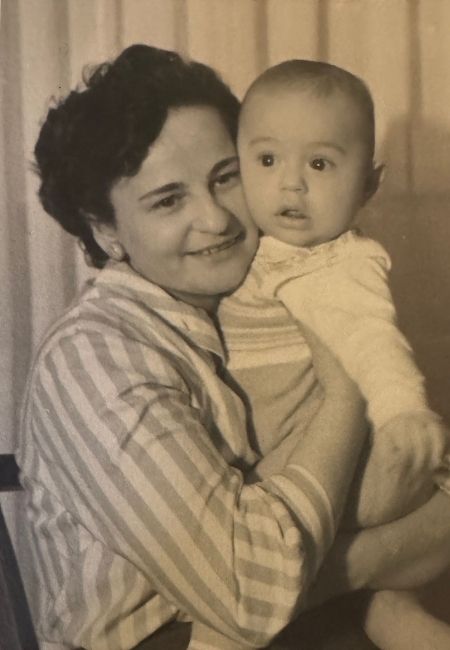
When Mag. Dr.h.c. Harald Tröstl came into this world in 1957, Vienna was
wrapped in the warmth of an unusually hot summer—the kind that paints the
skies in gold and fills the streets with quiet anticipation. His mother, Helga Tröstl,
often recalled that it was the hottest summer in a century. She would tell him
with affectionate humor that even before he was born, he was testing patience—
arriving three weeks late, as if he already knew that time should bend to purpose,
not pressure. His father, Hofrat Dkfm. Alfred Tröstl, a disciplined and methodical
man, received his newborn son with the same precision with which he lived his
life: orderly, calm, and deeply respectful of responsibility.
From the beginning, Harald’s world was defined by contrast and harmony—the precision of his father and the warmth of his mother, the logic of discipline and the poetry of emotion. His father was a man of structure, an intellectual whose commitment to excellence was unwavering. He valued education, integrity, and the quiet dignity of doing things well. Helga, on the other hand, was guided by heart. She found joy in simple things: the smell of freshly cut grass, the delicate curve of a flower petal, and the way morning light danced across the curtains. Together, they built a home that was both steady and full of imagination—a balance of reason and wonder that would define Harald’s character for a lifetime.
But life’s first lessons often come through challenge. From the day he took his first steps, Harald’s parents
noticed something unusual—his left foot was slightly weak, and he struggled with balance. Doctors diagnosed it as a mild congenital condition. For some children, it might have meant frustration or limitation, but for Harald, it became his first experience of resilience. His parents refused to let it define him. They made sure he walked, ran, and played like
any other child. If the world gave him a smaller step,
he learned to take it with greater intention. Years
later, he would look back and say that it taught him
patience—the kind that endures quietly, without
complaint.
“Curiosity is not a phase of childhood—it is the beginning of every lifelong journey toward truth.”
PHASE 2: The Young Explorer: The Awakening of Curiosity and Courage (1965–1975)
As the seasons of his childhood gently turned toward adolescence, Harald began
to step into a world that was larger, louder, and more demanding than the one
he had known. The carefree days of playing with frogs and conducting small
experiments in his home laboratory slowly gave way to structured schooling,
examinations, and expectations. Yet within him, the same flame of curiosity that
once drew him to nature now began to guide him toward a deeper understanding
of people, emotions, and the mysteries that lived within the human mind.
Vienna during the mid-1960s was a city full of life and learning. Post-war recovery
had transformed into progress—streets buzzed with conversation, art flourished
in galleries, and science began to shape everyday living. For a young Harald, it was the perfect environment to nurture an inquisitive soul. The Tröstl household remained a place of both discipline and inspiration. His father, Hofrat Dkfm. Alfred Tröstl, continued to emphasize structure, responsibility, and education. His mother, Helga Tröstl, continued to teach him to
look deeper—to see life not merely as a series of tasks but as a living story.
During these years, Harald entered Gymnasium, Austria’s equivalent of secondary or high school. It was a period that tested both his endurance and his sense of identity. The curriculum was rigorous—mathematics, physics, Latin, literature, and history filled his days—but it was not the difficulty of the subjects that challenged him most. It was the teaching style: strict, cold, and often devoid of empathy. Teachers demanded perfection, and mistakes were treated as failures rather than opportunities to learn.
For a sensitive and creative student like Harald, this environment felt suffocating.
He often found himself frustrated, not because he didn’t understand the material, but because he longed for a kind of learning that connected knowledge to meaning. He wanted to know why things worked, not just that they did. He wanted to understand how ideas connected to life.
“Every struggle carries within it a hidden invitation—to rise, to learn, and to become who we were meant to be.”
PHASE 3: Lessons of Endurance: The Long Road of Learning and Becoming (1975–1985)
As the gentle echoes of adolescence faded, Harald Tröstl found himself at the crossroads between youthful curiosity and the responsibilities of adulthood. The young boy who once questioned everything around him now stood ready to shape his own path. The 1970s were a period of transformation not just for Vienna but for Harald himself—a time when discipline met discovery, and the real lessons of endurance began to unfold.
By the time he completed his schooling, Harald was determined to pursue higher education. His choice, influenced partly by his father’s journey and partly by the practical needs of the time, was Business Administration at the University of Economics and Business (WU Vienna). While his heart often leaned toward the human sciences and even medicine, logic and opportunity led him toward economics. His father, Hofrat Dkfm. Alfred Tröstl, had always believed in education that built stability and structure. Harald respected that belief deeply and followed the path with sincerity, even if, in his heart, he knew that numbers and financial models could never fully capture the intricacies of human life that fascinated him.
University life opened a new world for Harald—one filled with ideas, independence, and intellectual challenge. The transition from structured schooling to a freer academic environment was both exciting and overwhelming. For the first time, he had to define his own rhythm. The campus buzzed with ambition,competition, and curiosity. Students debated economics, politics, and global change, while the city of Vienna itself seemed to hum with cultural energy—art, music, and literature were all around him, and he absorbed them eagerly.
However, the university curriculum with it’s seminars and lectures was not easy for him. Harald found the academic theories interesting but somewhat detached from the human realities he cared about. Supplychains, accounting equations, and market theories seemed to exist in a world where feelings and values were secondary.
Note of Thanks
He extends his heartfelt gratitude to his beloved wife, Petra, whose unwavering support, patience, and companionship have been the cornerstone of his life.Through every transition—professional, personal, and spiritual—her quiet strength has remained his constant source of peace. Their shared understanding has turned daily life into a sanctuary of love and reflection.
He also expresses sincere appreciation to his family, friends, colleagues, and students who have walked beside him over the decades. Each conversation, each encounter, and each lesson shared has contributed to the depth of his insight and compassion. The many clients who entrusted him with their healing journeys became, in his words, “teachers in disguise,” reminding him of the shared humanity that unites all souls.
Mag. Dr.h.c. Harald Tröstl offers his deepest thanks to the global community of healers, mentors, and practitioners who inspired his lifelong pursuit of balance between science and spirit. Their collaboration and trust allowed him to transform ideas into methods, and methods into meaningful impact.
Above all, he gives thanks to life itself—for its challenges that refined him, for its beauty that humbled him, and for its silence that taught him to listen.
For Mag. Dr.h.c. Harald Tröstl, gratitude is not an ending—it is the essence of living. Every person who crossed his path remains a part of his story, and through them, his message of awareness, love, and peace continues to breathe.
Thanks
Dr.h.c. Harald Tröstl