

"Life does not always begin with certainty, but it often finds its direction through perseverance, values, and the courage to keep moving forward."
Introduction
The story of Dr. Yusuf Abbas Poonawala is one shaped by determination, resilience, and a continuous effort to understand life beyond its surface. Born on 24 December 1986, his journey began in a modest environment where material comfort was limited, yet the strength of family bonds formed the foundation of everyday life. His parents, Abbas Poonawala and Shakera Abbas Poonawala, raised their children in a household where unity and togetherness were more valuable than material possessions. Growing up in a small and crowded home meant that life was shared closely, where every challenge and every moment of happiness was experienced together as a family.
The simplicity of those early years had a lasting effect on him. In a time when technology was not deeply woven into everyday life, childhood revolved around personal interactions, shared experiences, and a sense of dependence on family members. For Dr. Yusuf Abbas Poonawala, those memories represent a period when life demanded patience and understanding. Even small needs required effort and cooperation within the household, and such circumstances quietly shaped his character. Looking back, he often reflects on those days as a time that strengthened family connections and taught him the value of resilience.
His childhood was not marked by academic brilliance in the early years. By his own reflection, he considered himself mischievous and not particularly focused on studies until he approached the later stages of his schooling. However, the turning point came during his higher secondary years, when he developed a strong interest in physics and even achieved distinction in the subject. That moment opened a new path of curiosity toward science and learning. It was not merely about academic achievement but about discovering a deeper sense of direction that had previously remained unexplored.
As his educational journey progressed, his interests expanded beyond traditional learning. He explored computer science and gradually became interested in understanding human behavior and analytical thinking through psychometric studies. This phase proved to be particularly influential, as it allowed him to observe how knowledge from books could connect with real-life experiences. Through psychometric analysis, he began to understand not only the personalities and behaviors of others but also aspects of his own thinking that he had never examined before. This realization strengthened his ability to approach situations with greater awareness and reflection.
Education for Dr. Yusuf Abbas Poonawala did not follow a straightforward or uninterrupted path. Alongside his studies, he began working at a young age, driven by both necessity and responsibility. His early experiences in the workforce introduced him to various roles, including working in call centers before eventually entering a U.S.-based KPO environment. It was within this professional setting that he began to find his place in the field of human resources. The role required patience, understanding, and the ability to simplify complex processes, qualities that aligned with his growing interest in people and organizational systems.
"A person’s beginning may be simple, but the values learned in those early years often become the compass that guides the rest of life."
Phase 1: Roots of a Journey

The story of Dr. Yusuf Abbas Poonawala begins with humble roots, shaped by a family environment where unity, resilience, and shared responsibility defined everyday life. Born on 24 December 1986, he entered a household where simplicity was not merely a circumstance but a way of life. His parents, Abbas Poonawala and Shakera Abbas Poonawala, raised their children with a deep understanding that strength does not always come from comfort; often, it grows quietly in environments where people learn to support one another through every situation.
In those early years, life unfolded within the walls of a small house situated in a crowded neighbourhood. The physical space may have been limited, but the emotional bonds within the family were strong. Living closely together meant that family members shared not only resources but also experiences, conversations, and moments of laughter that created lasting memories. In such surroundings, privacy was rare, yet the sense of belonging was constant.
For Dr. Yusuf Abbas Poonawala, childhood was not defined by luxury or convenience. Instead, it was shaped by everyday realities that required patience and understanding. Resources were modest, and even simple things often demanded effort and careful planning. Yet these circumstances did not diminish the warmth of family life. Rather, they strengthened it. The closeness of the household created an environment where everyone relied on each other, building a natural sense of responsibility from an early age.
His father, Abbas Poonawala, played an important role in shaping his outlook toward life. Through quiet example rather than elaborate words, he demonstrated the meaning of hard work and perseverance. Observing his father’s dedication left a lasting impression on the young boy, teaching him that commitment to family and responsibility toward one’s duties were essential aspects of character. These lessons, absorbed during childhood, would later influence many of his decisions in life.
"The greatest lessons of life are often learned not in grand places, but in the small spaces where families grow together, sharing both struggles and joy."
Phase 2 : Childhood Lessons in Simplicity and Togetherness
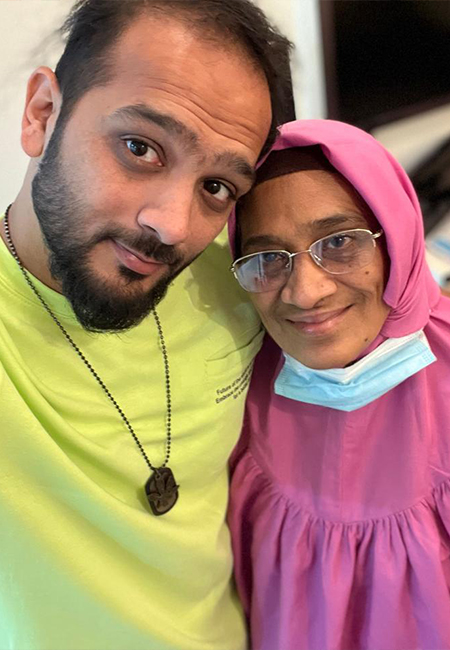
The childhood of Dr. Yusuf Abbas Poonawala unfolded in an environment that was simple, crowded, and full of shared experiences. Growing up in a small house within a closely packed neighbourhood meant that space was limited, yet the emotional closeness within the family was abundant. Life in such surroundings naturally brought family members closer together, creating a sense of unity that shaped his early understanding of relationships and responsibility.
The house where he spent his early years was modest, and the surroundings were bustling with activity. Many families lived in close proximity, and life was lived in the presence of neighbors, relatives, and friends who shared similar circumstances. In that environment, everyday routines carried a strong sense of community. People knew each other, supported each other, and shared moments that created a collective sense of belonging.
For the young Dr. Yusuf Abbas Poonawala, this world was both lively and grounding. The crowded streets, the small rooms filled with family members, and the constant interaction with people around him became the backdrop of his early memories. These conditions may not have offered luxury, but they offered something equally valuable: a deep connection to people and a strong sense of togetherness.
Within the household, life revolved around shared responsibilities and mutual support. His parents, Abbas Poonawala and Shakera Abbas Poonawala, worked hard to provide for the family while ensuring that their children grew up with discipline and strong values. In such an environment, every small effort contributed to the well-being of the household. Even simple tasks carried importance because they helped maintain the balance of everyday life.
Childhood during those years was far removed from the technological conveniences that define the present day. There were no digital devices or instant forms of communication shaping everyday routines. Instead, life was filled with direct interactions and physical presence.
"True strength is not always built through comfort; it often grows quietly in the lessons taught by family, patience, and the realities of everyday life."
Phase 3 : Values That Shaped a Mindset

As the early years of Dr. Yusuf Abbas Poonawala unfolded, the environment around him gradually began shaping his outlook toward life. The simplicity of his childhood was not merely a circumstance of limited resources; it was also a powerful teacher that instilled values that would remain with him throughout his journey. Within the close-knit family led by Abbas Poonawala and Shakera Abbas Poonawala, everyday experiences quietly transformed into life lessons.
Growing up in a modest household meant that every member of the family understood the importance of cooperation. Life was not structured around individual convenience but around collective responsibility. In such a setting, children naturally developed an awareness of how their actions affected others. The environment encouraged patience, adaptability, and a strong sense of belonging within the family.
For Dr. Yusuf Abbas Poonawala, one of the most influential aspects of his upbringing was observing the dedication of his parents. His father, Abbas Poonawala, demonstrated perseverance through his commitment to family responsibilities. Even when circumstances were challenging, the example he set showed that determination and hard work were essential in navigating life’s uncertainties. These observations left a deep impression on a young mind that was quietly absorbing the realities of adulthood.
His mother, Shakera Abbas Poonawala, played an equally important role in shaping the emotional fabric of the household. Her patience and care ensured that the family remained connected through both comfortable and difficult times. Through her actions, she demonstrated the power of resilience and the strength that comes from maintaining faith and positivity during moments of hardship. Her presence created an atmosphere where discipline and compassion coexisted, allowing the children to grow with a balanced understanding of responsibility and empathy.
Note of Thanks
The life journey of Dr. Yusuf Abbas Poonawala has been shaped not only by personal determination and hard work but also by the presence, encouragement, and support of many people who stood beside him through different phases of life. With deep appreciation, he acknowledges those whose guidance, belief, and companionship helped transform challenges into opportunities and aspirations into achievements.
His heartfelt gratitude begins with his parents, Abbas Poonawala and Shakera Abbas Poonawala, whose sacrifices and values laid the foundation of his character. Their dedication, patience, and commitment to family life shaped his understanding of perseverance and responsibility from a very early age. The lessons learned within the family home continue to guide his decisions and outlook toward life.
Special appreciation is also extended to his sister Batul, whose encouragement and guidance played an important role in his formative years. Her support during his academic journey and the principles she shared with him have remained a lasting influence throughout his life.
He also expresses sincere thanks to his close friend Denzil, whose presence during moments of uncertainty provided reassurance and thoughtful perspective. True friendship often reveals itself during challenging times, and such companionship has been an important part of his journey.
Deep gratitude is reserved for his wife, Fatema, and their children, Insiya and Miqdad, whose presence brings balance and meaning to his life. Their support, patience, and understanding have given him the strength to continue pursuing his professional responsibilities with confidence and dedication.
Finally, Dr. Yusuf Abbas Poonawala acknowledges the commitment and hard work of the Woodpecker team. Their collective effort, professionalism, and loyalty have played a significant role in building the company and sustaining its growth.
With humility and gratitude, he recognizes that every milestone in his life has been made possible through the shared support of family, friends, and colleagues who have been part of his journey.
Thanks,
– Dr. Yusuf Abbas Poonawala