“The roots were humble, but the vision was extraordinary.”
Introduction
In the quiet farming village of Lemon Hall in St. Catherine, Jamaica, where the soil is rich but opportunities were scarce, a boy was born—the seventh of seven children—into a life that would demand resilience from the very beginning. That boy, Dr. William Willis, would one day become a celebrated educator, transformational leader, ordained minister, and global advocate for youth empowerment. But before any titles or accolades came into view, there was a child mourning the loss of his father at the age of two, clinging to the unwavering strength of a mother who refused to let poverty define their future.
This is not just a story of academic success or community leadership. It is a chronicle of unshakable faith, intergenerational impact, and a life of relentless service. Dr. Willis’s journey began amidst coconut trees and chalkboard dreams—where pencils were precious, school uniforms were patched with prayer, and excellence had to be earned the hard way. His formative years were marked by both struggle and spark: the absence of a father figure was met with the deep emotional wealth of his mother, who shaped his values with love, discipline, and determination.
He was not a child prodigy. He struggled, stumbled, and even ran home from school out of fear. But every setback became a seed, and by the time he gave his first valedictory speech, the world around him began to recognize what he was destined for. Education was never a stepping stone—it was the calling, the cause, and eventually, the very vehicle through which he would lift generations.
Dr. Willis rose through Jamaica’s educational ranks not with shortcuts, but with sleepless nights, strategic thinking, and servant leadership. He became a teacher, a principal, a school supervisor, and a community builder. At every stage, he didn’t just occupy roles—he redefined them. He turned failing institutions into centers of achievement. He introduced corporate partnerships to feed students and reward academic excellence. He used human resource principles to maximize the potential of his staff and students alike. And in doing so, he raised an army of scholars, professionals, and change agents who still credit him as their guiding light.
His leadership philosophy was rooted in a simple but powerful idea: every child, regardless of where they come from, deserves a chance to shine. His schools produced pilots, doctors, lawyers, teachers—and more importantly, people of integrity. He was never afraid to ask for help from business leaders, never hesitant to invest in staff training, and always ready to push against the odds when others walked away.
“The soil of hardship can still grow the strongest roots.”
Phase 1: Roots in Lemon Hall : Childhood, Family, and First Loss
In the modest rural settlement of Lemon Hall, nestled within the parish of St. Catherine, Jamaica, a child named William Willis entered the world as the last of seven children, born to Thomas and Imogene Willis. There was no grand fanfare, no golden crib—just the rustle of palm leaves, the scent of fertile soil, and the quiet, unspoken dreams of a family living off the land. His community was not built on privilege, but on resilience and rhythm—where peasant farming, honesty, and dignity shaped daily life.
His early childhood was defined not by what he had, but by what he lacked—and how he learned to grow despite it. His father, Thomas Willis, was a man of potential, a man who once had the opportunity to travel to England as part of the Caribbean migration wave. Yet he chose to remain, prioritizing family unity over foreign opportunity. His love was not in words but in presence—a presence that was tragically cut short. When William was just shy of three years old, his father passed away due to a surgical mishap, leaving behind a household suddenly without its pillar. In that moment, the family’s foundation shook—but it did not fall.
Left with the immense responsibility of raising seven children alone, Imogene Willis emerged as the quiet hero of this story. Though she had limited financial means, she was rich in faith, determination, and maternal strength. She heeded her late husband’s final request—that no matter what happened, she would never let the family be split or scattered. And so, with a kind of grace born only through trial, she did exactly that. She raised them herself, sewing resilience into their days and love into their nights.
William, as the youngest, felt the weight of absence early. So deep was his attachment to his mother that when she attempted to send him to school, he would run back home in fear, terrified that she too might vanish like his father. He wept, hid, resisted—but through patience and persistence, his journey into education began.
“Education was not a privilege he inherited—it was a mountain he climbed.”
Phase 2 : From Broken Beginnings to Academic Triumph
After a childhood shadowed by grief and grounded in unwavering maternal love, William Willis entered adolescence with something far more powerful than money: a hunger to learn and a refusal to fail. The roads were neither paved nor privileged, but he walked them anyway—determined to rise from the limitations of his environment and claim a future his village could not imagine for him.
The transition from primary school to secondary education was marked not by excitement but by uncertainty. Jamaica’s education system required competitive examination scores to secure placement in prestigious institutions, and only a select few received government scholarships. Dr. Willis, despite his talent, found himself navigating a patchwork of lesson centers and local programs, never fully anchored in a traditional secondary school system. Yet even within these fragmented environments, his spirit remained whole.
He was not handed anything. Each opportunity came only after strategic persistence and personal sacrifice. His early exposure to English literature, for instance, was nearly nonexistent. At Moneague Teachers’ College, when presented with Shakespeare’s Macbeth, he found himself lost. The language was foreign, the plot elusive. But instead of giving up, he borrowed a massive volume—The Complete Works of Shakespeare—from the school librarian, and over the winter holidays, he read, absorbed, and decoded the Bard himself.
By January, he returned transformed. He could ask questions. He could answer them. And in the end, he earned an A-minus in a subject he once feared.
This quiet academic comeback became a pattern in his journey. Time and again, he would enter spaces as the underdog and emerge a contender. What he lacked in polish, he made up for in grit, humility, and strategic learning. He was never afraid to seek help, stay up late, or put in the extra effort, because he knew every classroom was a rung on a ladder that could lift him—and, one day, others.
“He didn’t just teach students—he cultivated futures.”
Phase 3 : Planting Seeds of Change : Early Career and the Rise as Educator
Armed with a heart full of conviction and a head trained in both education and human development, Dr. William Willis entered the next stage of his life—not just as a teacher, but as a missionary of change. His early career in education was less about climbing ladders and more about digging roots, laying the foundation for a legacy that would grow far beyond lesson plans and report cards.
He began humbly, like everything else in his life. His first teaching assignments were in rural and underserved communities, where resources were scarce, and hope was often thinner than the chalk he used to write on the board. But he never approached his work with resignation. Instead, he saw these challenges as soil ripe for transformation.
In every school he entered, Dr. Willis brought something extraordinary: vision fused with compassion. He understood from the beginning that students do not just need information—they need affirmation. Many came from broken homes, hungry bellies, and bruised identities. They needed to be seen. And so he made it his mission not just to educate minds, but to heal hearts.
One of the first things he mastered was the power of individual attention. He would sit with students after class, ask about their lives, and ensure that no child felt invisible. Slowly, he began to witness something beautiful—quiet students finding their voices, troubled teens finding their footing, and apathetic learners discovering passion. He had a gift, and it was not in preaching—it was in presence.
His classrooms were alive with more than academic content. They were spaces where discipline was paired with dignity, where the loudest student didn’t always win, and where excellence was not a privilege of the elite but an expectation of all. Even those who entered his classrooms with poor performance often exited with newfound self-belief, because Dr. Willis had an unwavering rule: You are more than your circumstances.
Note of Thanks
As the story of Dr. William Willis unfolds across these pages, it becomes abundantly clear that his life, while shaped by personal vision and unwavering effort, has also been lifted by the presence, support, and sacrifices of many. This Note of Thanks is a moment of reflection—a quiet bow to those who walked beside him, carried him, taught him, believed in him, and shared his mission, even when the road was steep and the destination uncertain.
First and foremost, he offers eternal gratitude to his mother, Imogene Willis, whose wisdom and strength remain the spiritual cornerstone of everything he has accomplished. Her example of resilience, compassion, and unfailing love became his first education, his lifelong compass, and the silent promise that has fueled his every act of service.
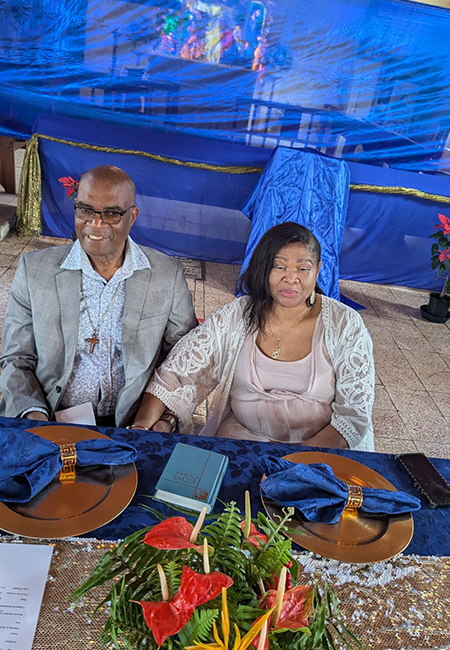
To his beloved wife, whose patience, encouragement, and understanding have been unwavering, thank you for being his anchor in the tides of responsibility. Your quiet presence through seasons of trial and triumph has meant more than words can say.
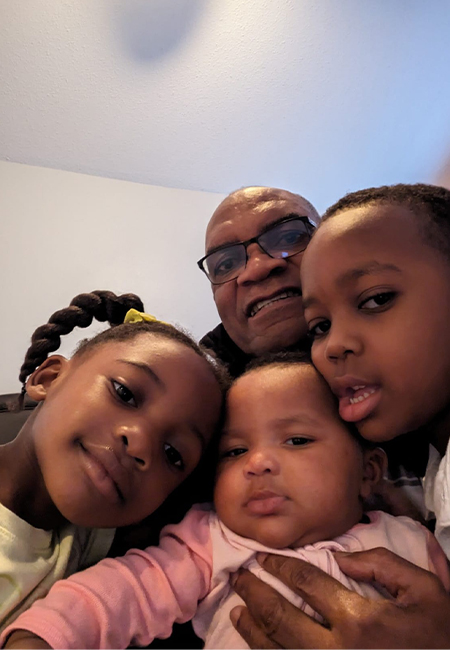
To his children and grandchildren, many of whom have followed in his footsteps as educators and moral leaders—you are the living testimony of his legacy. Every moment he invested in building schools, writing lesson plans, counseling students, and preaching sermons was, at its core, an investment in you.
To his siblings—those still with him, and those who have passed—he extends heartfelt appreciation for their unseen sacrifices, for the shared memories of childhood, and for the strength they offered through distance, time, and loss.
To the teachers who shaped him in his early years—especially those who gave him pencils when he had none, who believed in him when his voice trembled, and who saw a leader in a boy grieving his father—you planted seeds whose fruits have nourished generations.
Thank You
– Dr. William Willis