
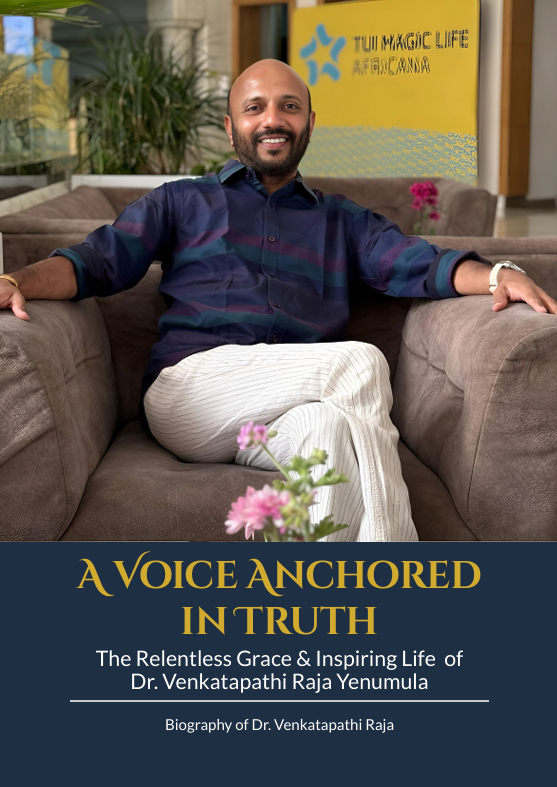
A Voice Anchored in Truth The Relentless Grace & Inspiring Life of Dr. Venkatapathi Raja Yenumula
Introduction
In a world where silence is often more convenient than courage, the journey of Dr. Venkatapathi Raja Yenumula stands as a luminous exception. Born in the tranquil village of Kesavadasupalem in Andhra Pradesh’s Konaseema region, he could have chosen a life of comfort, anonymity, or even quiet success abroad. Instead, he chose a life of active service—of sleepless nights, legal battles, civic accountability, and unwavering advocacy for those whom the system had long neglected.
This biography is not merely a chronicle of accomplishments. It is a testament to one man’s relentless determination to build a better society—not from the podiums of political power, but from the margins—through petitions, protests, digital outreach, and a deep, almost spiritual bond with his people and their land.
As a grassroots activist, legal reformer, environmental warrior, and political conscience-keeper, Dr. Venkatapathi Raja Yenumula has dared to fight battles many wouldn’t even name. Whether it was challenging one of India’s largest oil corporations in a national tribunal, exposing electoral fraud in his constituency, or holding public representatives accountable for misuse of government funds, he has consistently demonstrated that ethical courage is not optional—it is essential.
What makes his story extraordinary is not just what he has fought against, but what he has fought for: clean water, fair elections, ecological preservation, public dignity, and above all, an awakened citizenry. His activism, though international in its span, has always been deeply local in its heart.
This narrative spans decades of unseen labor—from remote English courtrooms to Konaseema’s village lanes. It draws from newspaper clippings, legal orders, government acknowledgments, and the trust of thousands who see in him not a hero, but a human being who never turned away.
To understand Dr. Venkatapathi Raja Yenumula is to understand what it means to serve without seeking, to lead without commanding, and to love a place so deeply that no distance can dilute your duty toward it.
This is not just a life story. It is a movement written in the shape of a man.
PHASE 1: The Roots of Life
“I was not born into power, but into purpose. My village didn’t give me riches—it gave me roots, and from those roots, I learned to rise not alone, but with others.” -Dr. Venkatapathi Raja Yenumula
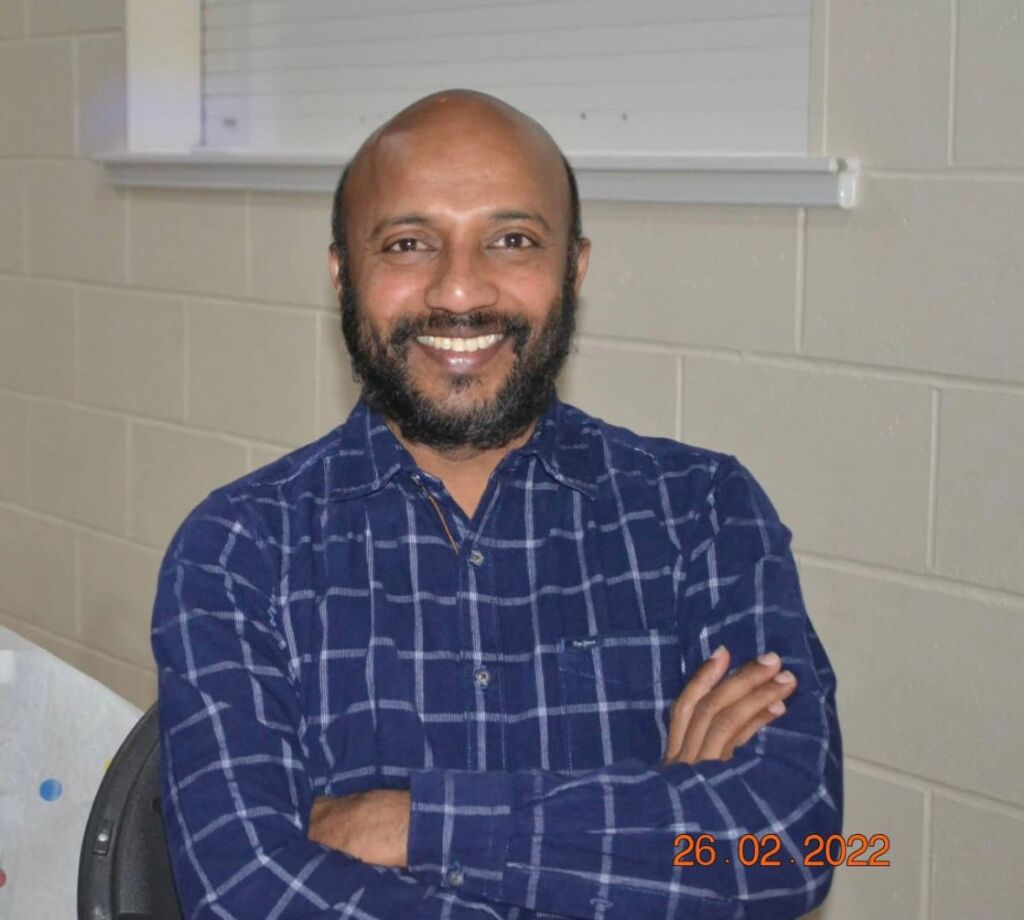
Dr. Venkatapathi Raja Yenumula was born in the serene village of Kesavadasupalem, nestled in the lush Konaseema region of Andhra Pradesh—a land known for its coconut groves, meandering canals, and agrarian richness. This was not merely a geographical origin, but the spiritual bedrock upon which his values, character, and lifelong convictions would be shaped.
Raised in a humble household by his parents, Mr. Tirupathirao and Mrs. Suryanarayanamma, Dr. Venkatapathi Raja Yenumula was immersed from childhood in a culture that upheld simplicity, discipline, and service. His father, a man of steady resolve, and his mother, a quiet pillar of strength, cultivated in him a sense of integrity and community belonging that would become his compass in later years. Their modest life did not offer luxuries, but it offered something far greater—a foundation rooted in dignity, empathy, and an unshakable sense of justice.
From a young age, Dr. Venkatapathi Raja Yenumula bore witness to the silent struggles of rural life: the aching scarcity of clean drinking water, the marginalization of the poor, the injustice suffered by those who lacked social voice or political power. These experiences were not distant observations; they were visceral realities that shaped his conscience. Where others saw routine village hardship, he saw the aching need for transformation. The land he walked on was fertile not only in crop but in dreams—dreams he carried on behalf of the voiceless.
He began his early education in local schools within the village, excelling not merely in academics but in a growing awareness of the larger world. After completing his SSC (10th grade), he entered the intermediate stream—what would be equivalent to high school education elsewhere—but made the bold decision to discontinue formal education. This was not born out of disinterest or deficiency, but out of an instinct to engage life directly. Dr. Venkatapathi Raja Yenumula was never content to be a bystander in the classroom of theory when the world outside demanded urgent action.
His choice to leave the path of traditional academics was not a retreat, but a recalibration. He believed deeply that real education lay in experience—in standing with people, in observing systemic injustices firsthand, and in understanding the pulse of his community. While many might have considered this a deviation, for him it was a deliberate step toward a more profound learning—one that would make him not just literate in facts, but fluent in life.
In hindsight, the early life of Dr. Venkatapathi Raja Yenumula was the forging ground of a future social reformer. It was in those dusty bylanes, under the shade of village tamarind trees, and in the unfiltered cries of the common folk that he began to envision a larger role for himself—a role not shaped by titles or degrees, but by the courage to act when silence was easier.
Even today, he often reflects on the spiritual debt he owes to Kesavadasupalem. The village that once nurtured a young boy’s curiosity would one day witness the return of its son—not as a man changed by the world, but as a man determined to change it.
PHASE 2: The Entrepreneurial Ascent
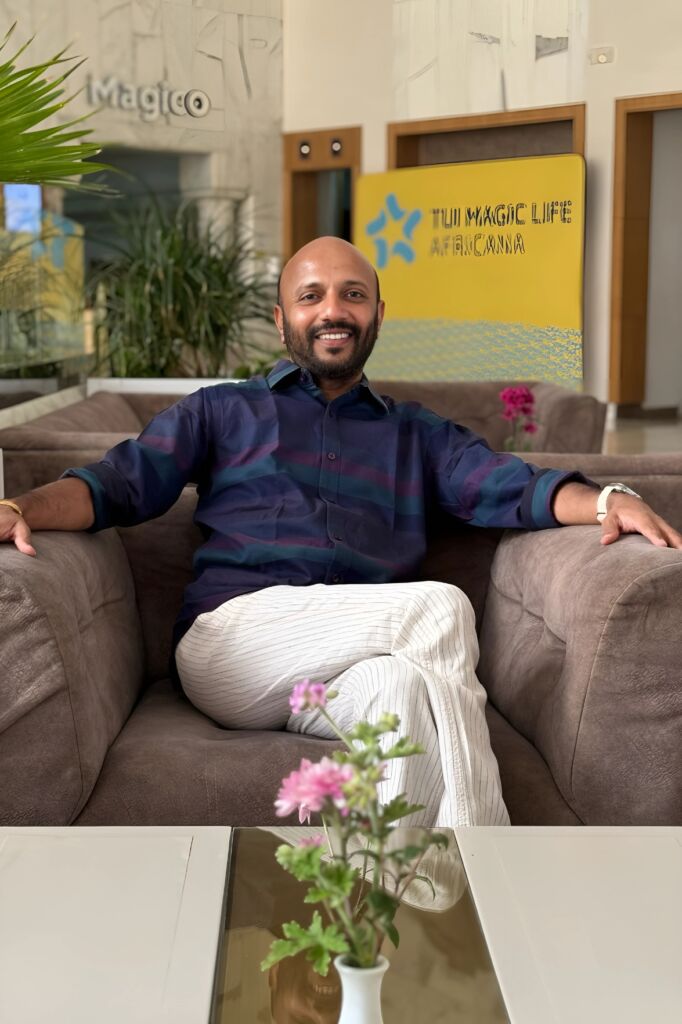
For Dr. Venkatapathi Raja Yenumula, leaving the familiar soils of Kesavadasupalem was not an escape, but an expansion—a necessary departure to prepare for the greater battles that lay ahead. With little more than ambition and raw determination, he ventured into Vijayawada, a rapidly developing city pulsating with commerce, competition, and opportunity. It was here, amid the urban hustle, that a village-born dreamer began forging his professional identity.
The transition from rural simplicity to metropolitan complexity was far from seamless. For a young man without elite academic degrees or corporate backing, the business world seemed a daunting terrain. But Dr. Venkatapathi Raja Yenumula was never one to be intimidated by circumstance. What he lacked in formal training, he compensated with a relentless hunger to learn, to adapt, and to prove that lived experience could rival any credential.
He laid the foundations of his own advertising and marketing agency, a bold move for someone with no prior experience in the field. The beginning was arduous—approaching clients, learning the language of corporate negotiation, understanding market psychology—all while battling the underlying biases often directed at small-town entrepreneurs. But each rejection became a lesson, and every small win built the scaffolding of his future impact.
It was during this time that he came under the mentorship of Mr. Anand Kumar, then the South India Zonal Head at Sony. Mr. Kumar saw in him not just a budding businessman, but a man of integrity and substance. Under his guidance, Dr. Venkatapathi Raja Yenumula honed the finer aspects of brand communication, client management, and strategic outreach. He was taught not just how to run a company, but how to represent a vision with conviction.
The advertising firm became more than just a commercial venture. It evolved into a crucible where he learned how to listen to people, interpret their needs, and convert ideas into action. Campaign after campaign, client after client, he developed a keen understanding of public opinion, mass communication, and persuasive storytelling—tools that would later prove indispensable in his political awakening and grassroots advocacy.
His office became a lab of possibilities. He interacted with industry leaders, media professionals, and social campaigners. These experiences expanded his worldview and deepened his resolve to one day use these insights not for personal profit, but for social transformation. He was not merely learning how to sell products; he was learning how to inspire people, how to mobilize sentiment, and how to lead with authenticity.
PHASE 3: A New Beginning
“I may live far from my land, but I never left it. My postcode changed, not my purpose.” — Dr. Venkatapathi Raja Yenumula
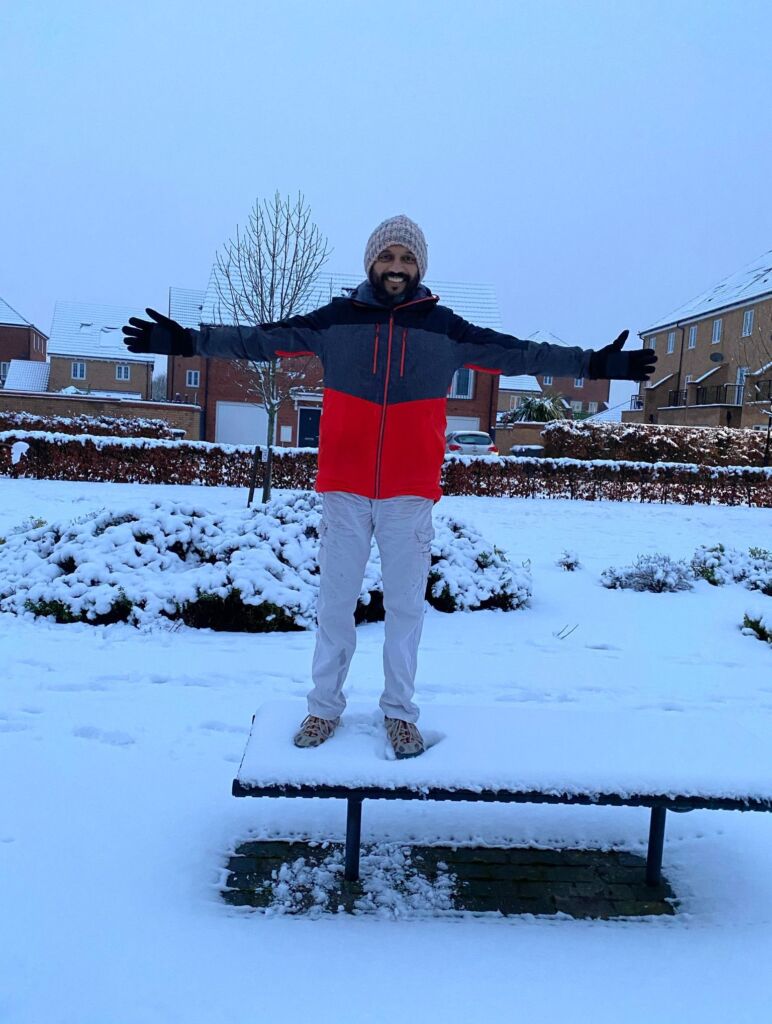
This chapter of Dr. Venkatapathi Raja Yenumula’s life was not defined by geography, but by companionship and calling. He married Dr. Atchamamba Yenumula, a brilliant and compassionate consultant in haematology. Their union was not only a confluence of hearts but also a convergence of two deeply ethical individuals who shared a commitment to healing—one through medicine, the other through justice.
Dr. Atchamamba Yenumula’s career brought the couple to the United Kingdom—a transition that marked both a personal relocation and a profound transformation. For many, moving abroad signifies comfort, upward mobility, or a retreat from domestic challenges. But for Dr. Venkatapathi Raja Yenumula, migration was not a departure from duty; it was an extension of it. The physical distance from Andhra Pradesh did not diminish his emotional proximity to his people. If anything, it sharpened his sense of accountability.
Settling in the UK offered financial stability and international exposure, but Dr. Venkatapathi Raja Yenumula never allowed comfort to lull him into complacency. While balancing the demands of a new life in a foreign land, he began using his own earnings and resources to catalyze transformation in the villages of Konaseema. As others built homes in the West, he built hope back home.
His initiatives were rooted in urgent needs. One of his earliest and most impactful efforts involved funding the construction of drinking water tanks in underserved areas, quenching the thirst of villages long neglected by official infrastructure. Each tank was not just a reservoir of water but a symbol of dignity—an assertion that rural lives mattered.
But his philanthropy was not limited to infrastructure. Recognizing the bureaucratic oppression faced by the poor, Dr. Venkatapathi Raja Yenumula also began offering legal aid to those wrongfully accused or entangled in fabricated police cases. These were not just acts of charity; they were acts of defiance—defiance against apathy, systemic negligence, and corrupt power.
Even from thousands of miles away, he monitored the pulse of Razolu constituency as if it were his own heartbeat. Friends, strangers, and local officials alike knew that a call to Dr. Venkatapathi Raja Yenumula—no matter the hour—would be received not with bureaucracy, but with urgency and care. He became a remote yet resolute sentinel, defending the dignity of people who had no access to legal counsel or media voice.
Technology became his bridge. Through emails, calls, and especially his active presence on Facebook, he maintained a digital corridor that allowed villagers to report issues, share grievances, and seek advice. In time, his page grew not only in reach but in reverence—so much so that even intelligence and government agencies monitored it to assess grassroots sentiments.
Behind this unwavering mission stood a woman of strength—Dr. Atchamamba Yenumula—his wife, confidante, and silent warrior. Her support, both emotional and financial, allowed him to pursue his causes with undivided focus. She never questioned his decisions, even when they involved significant personal sacrifice. Her unwavering faith in his ideals became one of the strongest pillars upon which his cross-continental activism stood.
Despite the time zone gap, Dr. Venkatapathi Raja Yenumula adjusted his daily routine to Indian time, often waking at 3:00 a.m. to make calls, track developments, and manage ongoing cases. It was a commitment that required not only discipline but a deep sense of belonging—belonging to a land he had physically left, but never emotionally relinquished.
In this phase of life, he proved a remarkable truth: service has no borders, and activism needs no proximity. From a quiet residence in the UK, he moved levers of change in Andhra Pradesh—proving that citizenship is not defined by location, but by compassion in action.