“There are no secrets to success. It is the result of preparation, hard work, and learning from failure.”
Dedication
This biography is about the things that made Dr. Umair Noorani’s life possible, like his parents, whose unwavering faith was the compass that guided him through all of life’s uncertainties. Their love and sacrifices gave him the strength to reach every milestone, from the narrow streets of Karachi to the corporate skylines of the Middle East.
It is also for everyone who dreams and starts with nothing but faith, who is willing to rise above their circumstances, and who knows that true wealth comes from honesty, kindness, and hard work.
To his father, who may not have gone to college but dreamed of seeing his son grow into a man of honour and success. He also extends his gratitude to his mother, whose quiet prayers had a profound impact on his life. He thanks his family for supporting him through every challenge, triumph, and transformation.
This biography is a tribute to Dr. Umair Noorani’s life and to the idea that dreams can change an ordinary life into an extraordinary legacy if they are based on a purpose.
“It is not the stars to hold our destiny but in ourselves.”
Phase 1: Roots of Resolve: The Making of a Dreamer
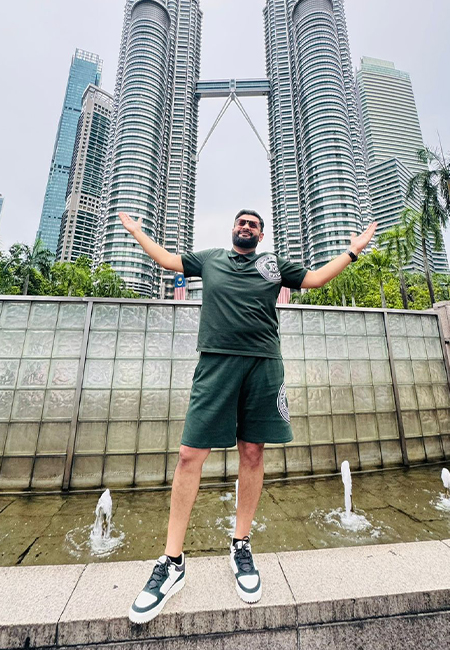
Every great journey begins before the first step. Dr. Umair Noorani’s journey began in the heart of Karachi, in a home where love was abundant, money was tight, and dreams were much bigger than what was possible. A boy came out of those narrow streets and sunny afternoons with a curious mind, a kind heart, and eyes that showed he was determined to make something meaningful of his life.
Dr. Umair’s family had strong beliefs about the value of hard work. His father, who had little formal education but a lot of conviction, worked hard to give his children the chances he had not had. He would often say, “I can’t climb every stair, but I’ll build them for you.” Those words really touched Umair’s heart and became the moral compass that would guide him for the rest of his life. His mother was kind but strong, and she kept the house in order with quiet grace. Dr. Umair learnt from her how to be patient, understanding, and persistent. These are the traits that would later define his leadership.
Being the oldest child came with its own set of problems. He was the one who was supposed to set a noble example, make ethical decisions, and protect and motivate his younger siblings. He knew what it meant to have expectations, even as a child—not as pressure, but as a goal. He saw how hard his parents worked, how well they saved every rupee, and how much they believed in education. They thought that education was the only way to get a job and keep their dignity.
For young Umair, school was both a safe place and a place where ideas fought. He was a curious student who always wanted to know why and how things worked. His teachers often saw that he was interested in more than just schoolwork; he wanted to know how life worked. He was interested in maths not because of the numbers, but because of the logic behind it. He was interested in English literature because it showed him how people who lived far away from him thought.
“Courage is not the absence of fear, but the triumph over it.”
Phase 2 : The Leap of Faith: Building Foundations Beyond Fear
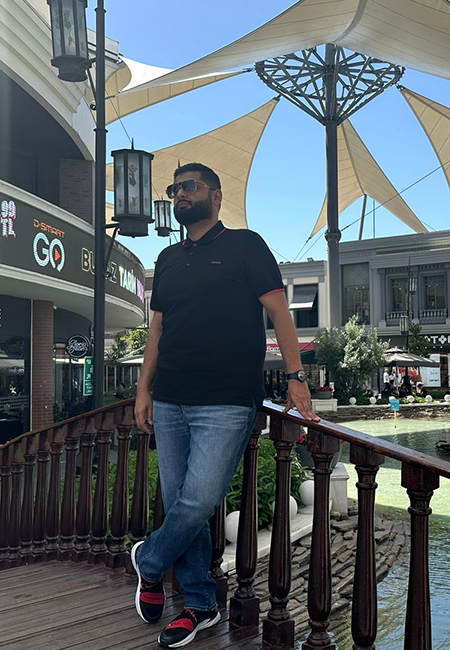
The moment that decides a man’s fate is somewhere between comfort and courage. Dr. Umair Noorani’s moment came not with a lot of noise but with a quiet sense of purpose: the choice to leave the safety of his job and make his own future. It was the start of a change that would turn him from an ambitious professional in Saudi Arabia into one of the most respected business leaders in the Gulf.
Dr. Umair had success early on. He earned his bosses’ trust, his coworkers’ loyalty, and his clients’ respect as the head of marketing and sales. But he felt like something was missing inside him. After work some nights, he would sit alone and contemplate his day. He would ask himself a simple but powerful question: “Am I building my own dream or someone else’s?”
That question got louder every day. He came from a proud Memon family, where being an entrepreneur was more than just a job; it was a way of life. The men in his family built businesses, took risks, and planned their futures. Umair knew that he had the same blood in his veins.
It wasn’t simple to leave a safe job. He had just gotten married; his family responsibilities were growing, and society told him to “play it safe”. But he also knew that living small often meant playing it safe. For months, he struggled with the choice, looking at budgets, looking for gaps in the market, and talking about his options with trusted friends. Finally, one night, as the call to prayer rang out across the Riyadh skyline, he made up his mind that it was time.
He started his first small business in 2010, which offered consulting and certification services for quality management systems. It was a small room, but it had big plans. The only things in the room were a desk, a laptop, and a whiteboard with handwritten goals on it. But for Umair, it was more than an office; it was where freedom began.
“The function of leadership is to produce more leaders, not more followers.”
Phase 3 : Expanding Horizons : The Making of a Global Visionary
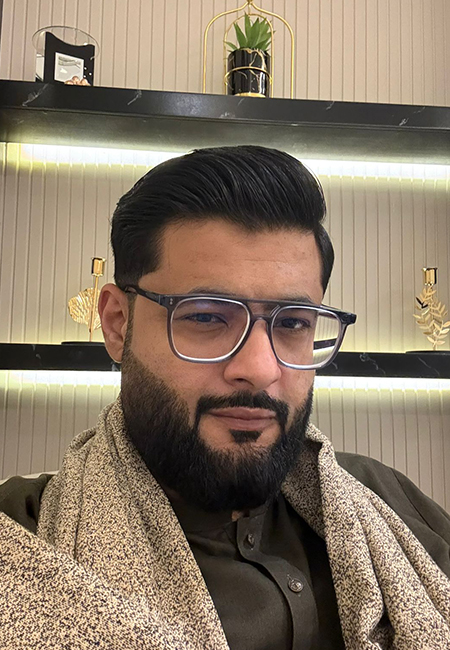
A real leader doesn’t just build things; he also helps others build things with him. Dr. Umair Noorani had already shown that he was good at business by the time he had firmly established QCCS & GAC Group. But the most significant change in him was not from manager to millionaire; it was from entrepreneur to visionary mentor.
The second decade of his career brought with it a new goal. Dr. Umair Noorani’s businesses in Saudi Arabia, the UAE, and Bahrain were doing well, but he never thought that business was just about the numbers. He thought that real success was having meaning—the power to change, motivate, and come up with new ideas that go beyond one’s immediate surroundings.
He started to think of his group as more than just a group of businesses; he saw it as an ecosystem of growth, a place where ideas, talent, and technology could all work together. The Gulf’s skyline, which was constantly changing and reaching for more, was like his own way of thinking. He wanted to be a part of this change, not just watch it happen.
His businesses used to only do quality certification and flooring systems, but now they are looking into cross-disciplinary innovation. He pushed the divisions to work together so that engineers could learn from auditors, managers could learn from site supervisors, and designers could learn about sustainability standards. This cross-pollination was the most important thing in GAC’s new era.
He thought that when people from different fields sit down together, they don’t just share ideas; they start revolutions.
Dr. Umair Noorani thought that innovation was never just one thing. Every day, it was a way of thinking. He started what he “Dynamic Efficiency Meetings,” which were short, focused meetings where workers could suggest any improvements, no matter how small.
Note of Thanks
This biography of Dr. Umair Noorani is living proof that every great story is made up of many hearts. Many people worked together, trusted each other, and wanted to help make his amazing journey possible.
We owe a special thank you to Dr. Umair Noorani’s family, whose love and patience have been the quiet force behind every success. He was able to dream beyond limits because of their strength and support. His wife’s faith, his children’s curiosity, and his parents’ blessings have all played a part in his success and his humility.
We want to thank the QCCS & GAC Group teams in Saudi Arabia, the UAE, and Bahrain from the bottom of our hearts. This includes the engineers, managers, and workers who stood by their leader during every stage of growth. Your hard work brought his vision to life and made ideas have a lasting effect. This book shows how much you care about doing the right thing and being your best.
He also wants to thank the mentors, coworkers, and friends who had a big impact on his life in many ways. Every conversation, collaboration, and moment of support helped him on his way.
And last, but not least, thank you to everyone who read this story, took time to understand its meaning, and realised that greatness is not a destination but a direction.
May these pages inspire people to do the right thing, create with love, and be grateful.
Thank you to everyone who helped with this project for believing that stories like Dr. Umair Noorani’s should be told, kept, and shared as blueprints for future generations.
Thank You
– Dr. Umair Noorani