“Adversity is not a barrier; it is the soil in which our strength grows, shaping us into the people we are meant to become.”
Dedication
To my grandparents, whose home was my first school and whose wisdom was my earliest compass. Your quiet strength, steady faith, and daily example of sharing and fairness shaped the person I became. The stories you lived and the values you practiced taught me that character is built in small, honest actions. Every step I take carries your blessings and your lessons.
To my parents, whose trust and guidance gave me courage long before I had titles or milestones to show. Thank you for believing in my judgment, for entrusting me with responsibility, and for teaching me the dignity of disciplined work. Your confidence in me has been a lifelong inheritance that I strive to honor every day.
To my in-laws, whose warmth, generosity, and unwavering support made me a daughter as much as a bride. Your encouragement through seasons of study, teaching, and service has been a gentle wind at my back. Thank you for the kindness that made room for my aspirations and the grace that steadied me in challenging times.
To my husband, whose patience, partnership, and faith in my purpose have been a constant source of courage. Thank you for standing beside me through long days and longer journeys, for understanding the calling that shaped our routines, and for celebrating every small victory with a full heart. Your companionship makes every endeavor meaningful.
To my child, whose presence has filled my life with hope and renewed purpose. You remind me why learning must be compassionate and why work must be honest. Your resilience and joy have been my daily inspiration to keep building spaces where every learner can grow with confidence and dignity.
To my extended family, my brother, sister, and all the loved ones who walked with me in spirit and in solidarity. Your encouragement, humor, and timely help made the hard days lighter and the good days brighter. Thank you for the countless acts of care that stitched strength into my journey.
“Education is the manifestation of perfection already in man.”
PHASE 1: Origins of Resolve

The story of Dr. Sujata Shete begins in the quiet hills of Surgana, a remote Adivasi tehsil in the northern reaches of Nashik District, Maharashtra. In this landscape of red soil and restless monsoons, where evenings fall early and every household lives by rhythm more than routine, a young girl opened her eyes to a world that measured wealth not in money but in mindfulness.
Her father, a modest shopkeeper, managed a small hardware-cum-stationery-and-cutlery store on the village’s narrow main street. From dawn to dusk the clang of metal utensils, the rustle of paper, and the occasional laughter of customers filled the day. Her mother balanced accounts at home while tending to three children. Life was simple, sometimes difficult, but never joyless. From these beginnings Sujata absorbed her first lessons in patience and perseverance.
When she was still in primary school, her parents sent her to live with her grandparents in Mhasarul, near Nashik, believing that better schooling awaited her there. The move tested her young heart. Away from the comfort of her parents, she learned early that love can also mean responsibility.
Her mornings began before sunrise—helping her grandmother sweep the courtyard, fetching water, and grinding spices for the day’s meal. Her grandfather, once a farmer with a stoic face softened by wisdom, became her first mentor. He would often say, “To till soil or mind, you must keep your tools clean.” She carried those words through every notebook she ever opened.
Even as a child she displayed a rare equilibrium: a mix of composure and curiosity. After finishing her chores, she would settle at a wooden table beside her grandfather’s chair and begin revising her lessons. The radio played bhajans in the background, the scent of burning incense mingled with the ink on her notebook, and Sujata, with her plaited hair and wide-eyed concentration, began to shape the self-discipline that would define her adulthood.
“The purpose of education is to bring out the best in you.”
PHASE 2: Turning Setbacks into Accomplishments
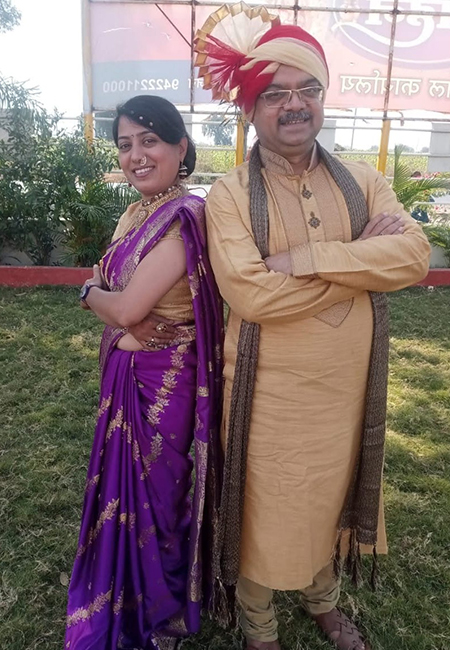
The years that followed Sujata’s school days in Nashik were years of quiet transformation—where the shy, dutiful girl from Surgana began to evolve into a young woman aware of her potential. Her family’s modest income meant there were no shortcuts; every textbook was an investment, every fee a collective effort. Yet the same limitations became her teachers, sharpening her focus and sense of gratitude.
At CDO Meri High School, Sujata had learned the rhythm of hard work. But adolescence introduced new distractions—peer comparisons, self-doubt, and the restless urge to fit in. Many classmates attended private tuitions; she could not afford them. Instead, she became her own tutor. Each evening she would sit by the window with her lamp and whisper the day’s lessons aloud, testing herself through repetition.
Sometimes fatigue caught her mid-sentence. “Can I really manage all this?” she would think. Then her grandmother’s voice would echo from the kitchen: “If you can light the lamp, you can light the mind.” The reassurance was enough. She would smile, stretch her arms, and continue reading until the words blurred into dreams.
In Class 8 she faced another academic dip. A sudden illness kept her from attending a few crucial weeks of lessons. When the results arrived, she found herself in the middle ranks. It hurt—not because of pride, but because she felt she had disappointed those who believed in her. For one afternoon she allowed herself tears; the next morning she drafted a new plan. Each page of her notebook carried a short motivational quote in Marathi: “Aajcha prayatna, udhyacha yash.” (Today’s effort is tomorrow’s success.)
What began as recovery soon became excellence. Her teachers noticed her persistence and made her a group leader. Helping her peers understand algebraic formulas reignited her confidence. It was then she realised that teaching clarified not only subjects but also the self. “When I explain something to others,” she wrote later in her diary, “I understand it more deeply myself.”
“Character is higher than intellect.”
PHASE 3: Ledgers of Trust
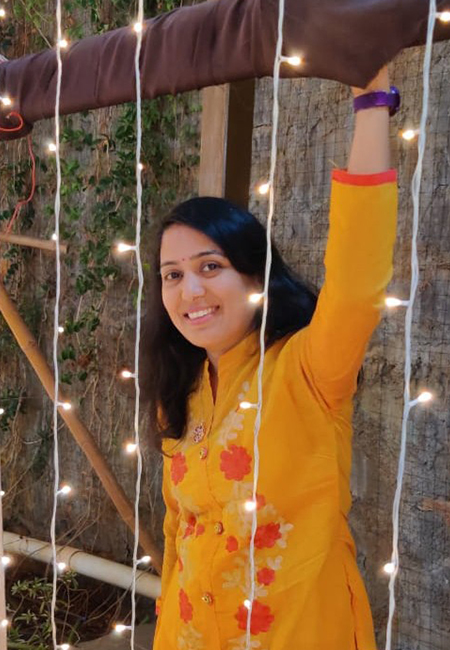
The end of the 1990s brought both a gentle closing and a brave beginning. In December 1999, Sujata entered a new chapter of life — marriage — and, with it, the intricate art of balancing affection, obligation, and ambition. She married Mr. Nilesh Shete, a young professional from Pune whose quiet strength complemented her sense of purpose.
The wedding was modest yet filled with laughter, music, and the fragrance of marigolds. Amid blessings and farewells, her father whispered, “Live with respect; the rest will follow.” Those words, spoken without ceremony, would echo through every decision she later made.
Moving from Nashik’s open courtyards to the dense lanes of Raviwar Peth in Pune was a cultural leap. The couple began married life in a joint family, sharing two small rooms in a traditional wada. The quarters were crowded but full of warmth — the chatter of elders, the clatter of utensils, and the faint scent of incense curling through narrow windows. For Sujata, each sound became part of a new rhythm.
She woke before sunrise, helped with household chores, and adjusted to the etiquette of a large family where age dictated every gesture. But beneath the layers of ritual and routine pulsed the same determination that had driven her studies. She refused to allow domesticity to dissolve her intellectual hunger.
Evening conversations with Nilesh often circled back to her dream of continuing higher education. He would smile and say, “If knowledge is your heartbeat, we’ll make room for it.” Encouraged, she enrolled to complete her Bachelor of Arts in History, attending lectures between household duties. In 2001, as she held her newborn son Shreenil, she also held her B.A. results sheet — First Class. That single piece of paper symbolised the seamless weave of motherhood and ambition.
Note of Thanks
This work is written with deep admiration for women who rise quietly yet powerfully — those who do not seek applause but create change through constancy, compassion, and courage. In an age that often celebrates noise over nuance, Dr. Sujata Shete’s story shines like a lamp of steady brilliance, reminding us that true greatness seldom arrives with fanfare. It grows silently, nurtured by purpose, perseverance, and faith.
Writing about her has been more than an exercise in narration; it has been a journey of rediscovery — of what it means to live meaningfully, to serve selflessly, and to lead gracefully. Her life reminds us that influence is not born of position or privilege, but of quiet integrity — the kind that touches lives without ever announcing itself.
Each interview, each anecdote, and each memory shared by her family, students, and colleagues revealed a woman who has made the extraordinary seem attainable. In her ability to transform challenges into stepping-stones, one witnesses the timeless truth that determination, when guided by empathy, becomes a force of transformation.
This biography celebrates her as a teacher, a mentor, a homemaker, an entrepreneur, and above all, a human being who chose contribution over comfort. It stands as a tribute not only to her journey but to every woman who has dared to walk her own path — one that balances compassion with conviction, logic with love, and strength with sensitivity.
Through these pages, the author hopes that readers will pause and reflect upon the quiet power that resides in steadfast purpose — that they will see in Sujata’s life a mirror of their own potential, and perhaps, find the courage to turn their small beginnings into extraordinary impact.
May this narrative remind us all that ordinary lives, when lived with extraordinary sincerity, can light the world in ways grand achievements never could.
Thanks
Dr. Sujata Shete