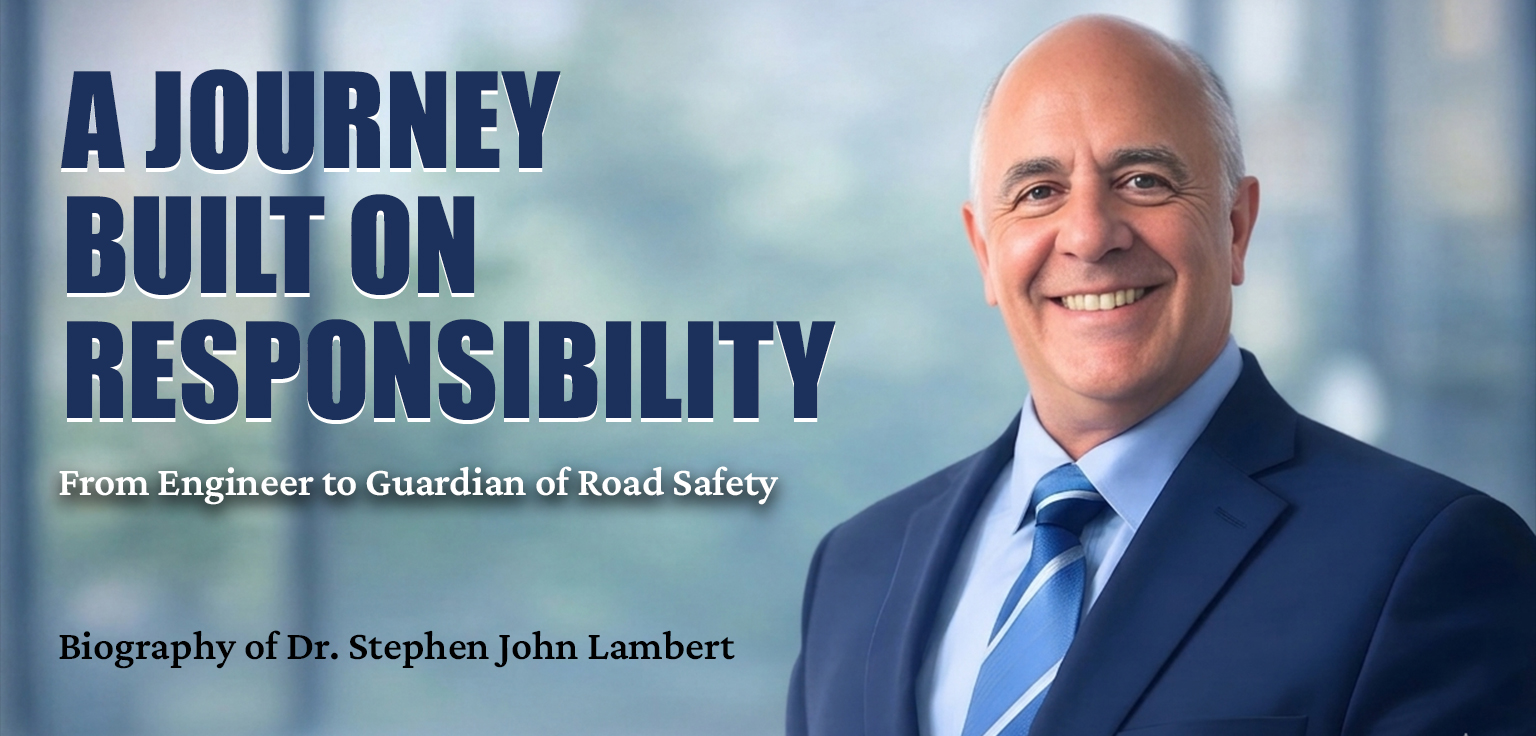
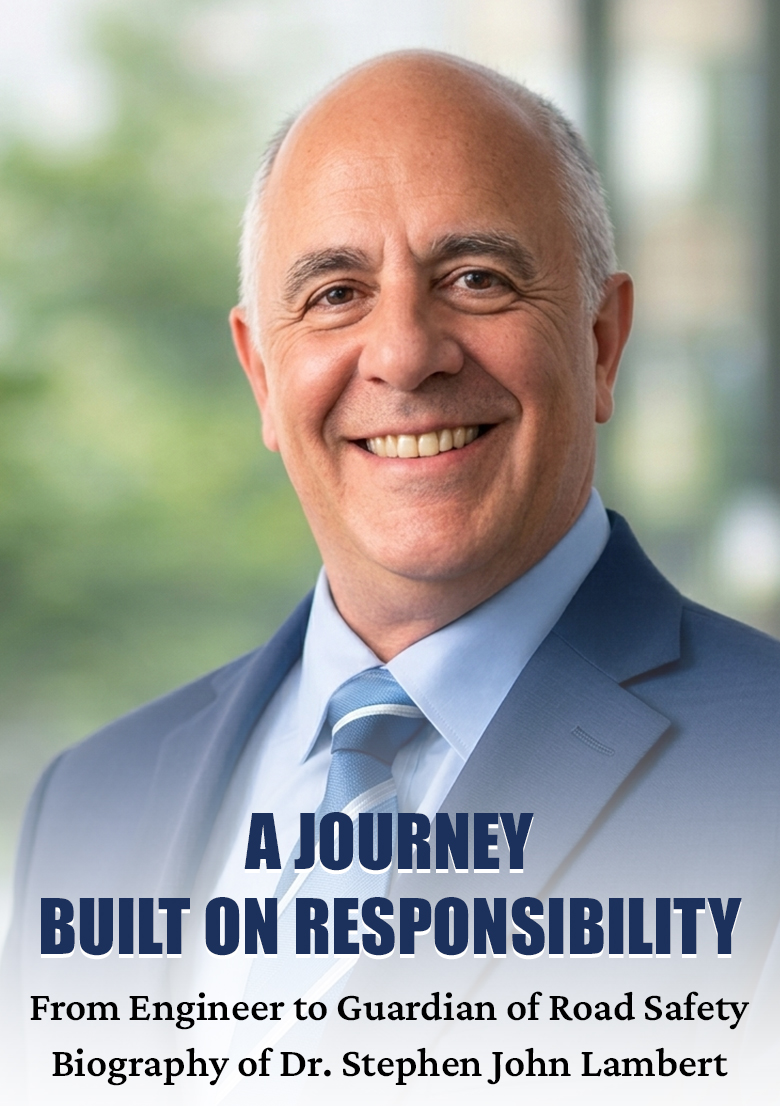
“Real change is built quietly—by those who take responsibility, ask the right questions, and stay committed long after the excitement has passed.”
Introduction
The life of Dr. Stephen John Lambert is a story shaped not by shortcuts or sudden success, but by responsibility accepted early and carried consistently through decades of learning, work, and service. His journey reflects a quiet determination—one rooted in family values, strengthened by experience, and guided by a belief that meaningful work must ultimately protect and serve people.
Born and raised in Dublin, Dr. Stephen John Lambert grew up in a working-class household as the second eldest of eleven siblings. Life in a small family home demanded cooperation, patience, and shared responsibility. From a young age, he helped care for younger brothers and sisters, learning that contribution was not optional—it was simply part of belonging. His parents, Sean and Claire, lived by example. They worked hard, stayed disciplined, and expected the same from their children. Without speeches or instruction, they passed on values that would quietly guide his choices for the rest of his life.
His early education was practical rather than exceptional, and his first ambitions did not point toward engineering. For a time, Dr. Stephen John Lambert considered a life of service through faith and education. He trained with the intention of becoming a missionary priest and a secondary-school teacher, and during that period, he spent time reading about different religions. That exploration led him to a simple conclusion that stayed with him: beyond structures and rules, most belief systems share the same core message—treat others with respect, act fairly, and care for those around you. This understanding later shaped how he approached leadership, collaboration, and public responsibility.
A defining moment arrived in 1974, when, at around sixteen or seventeen years of age, he took a summer job in an engineering office. That experience changed the direction of his life. What he encountered there—a world of practical problem-solving and real-world impact—resonated deeply. From that point onward, engineering replaced teaching as his chosen path. Financial realities played a role; growing up in a large family meant that a long, full-time degree was not immediately possible. Instead, he chose a practical route, completing a two-year civil engineering technician course full-time, finishing in 1976.
The years that followed were not easy. Ireland’s economic conditions at the time offered limited opportunities, and technical work was scarce. For several years, Dr. Stephen John Lambert took on any employment available—factories, laundries, supermarkets, and trainee management roles—while waiting for a chance to return to his field. These experiences were humbling, but they strengthened his resilience and deepened his respect for hard work in all forms. They also reinforced a lesson he would carry forward: progress is not always visible, but persistence matters.
“Before responsibility becomes a choice, it is first learned as a way of life.”
Phase 1: Roots of Responsibility — Growing Up Where Life Taught First Lessons

The story of Dr. Stephen John Lambert begins in an ordinary but deeply formative setting—a working-class home in Dublin, where life moved quickly, space was shared, and responsibility arrived early. He was raised as the second eldest of eleven children, in a household where effort was constant and contribution was expected from everyone. Long before professional titles or public roles entered his life, he learned what it meant to belong to something larger than oneself.
The Lambert family lived in a three-bedroom corporation house, a space that required cooperation simply to function. With five brothers and five sisters, the home was always full—of voices, movement, and competing needs. Privacy was limited, but connection was unavoidable. In such an environment, awareness of others developed naturally. One learned quickly when to step forward, when to step back, and how to share without being asked.
At the center of this household were his parents, Sean and Claire. They were not people of grand speeches or dramatic instruction. Instead, they led by example. Both worked hard throughout their lives, setting a steady rhythm for the family—work must be done, responsibility must be met, and excuses carried little weight. There was an unspoken understanding in the home: effort was normal, and discipline was part of everyday life. These values were absorbed quietly, becoming habits rather than rules.
As the second eldest child, Dr. Stephen John Lambert stood in a unique position. He was young enough to be learning, yet old enough to be relied upon. By the time he was only six, seven, or eight years old, there were already several younger siblings who depended on him in small but meaningful ways. Helping at home, watching over younger brothers and sisters, and stepping in when needed became part of his daily routine. Responsibility was not introduced gradually—it was simply there.
“Before he chose what he would do in life, he first learned to ask why it mattered.”
Phase 2 : Searching for Meaning — Faith, Reflection, and the Shaping of Inner Values

As Dr. Stephen John Lambert moved out of childhood and into his formative teenage years, the sense of responsibility he had learned at home began to deepen into something more reflective. The discipline, effort, and accountability instilled by his parents, Sean and Claire, had already shaped how he approached daily life. Now, alongside those practical values, a quieter but equally important process was unfolding—an inner search for meaning, purpose, and direction.
Growing up in a working-class household in Dublin, surrounded by ten siblings, service to others was never an abstract idea. Helping was simply part of living. Looking after younger brothers and sisters, sharing space, and contributing to the household had been his reality from an early age. As he grew older, this natural inclination toward responsibility evolved into a deeper curiosity about how one might live a life that truly mattered beyond immediate duties.
It was during this period that Dr. Stephen John Lambert began to explore a path rooted in faith and education. He trained with the intention of becoming a missionary priest, while also preparing for a future as a secondary-school teacher. This was not a decision driven by status or certainty, but by a genuine desire to serve, to guide, and to contribute to the lives of others. Teaching appealed to him because it reflected continuity—knowledge passed on, values shared, and people shaped quietly over time.
His religious training was undertaken with sincerity. It was a time marked by discipline, study, and reflection. Yet what distinguished this phase was not blind acceptance, but openness. While preparing for a religious vocation, Dr. Stephen John Lambert chose to read widely about other religions. This was not an act of rebellion, but of honesty. He wanted to understand belief beyond tradition, to see what lay beneath structures, rules, and labels.
“A single opportunity can quietly reveal where one truly belongs.”
Phase 3 : A Direction Takes Shape — Choosing Engineering and Learning to Persist

Phase Three marks the moment when Dr. Stephen John Lambert’s life began to move from reflection into action. After years shaped by family responsibility and a thoughtful search for meaning, this phase introduced him to a practical world where ideas were tested by reality. It was not a dramatic leap, but a gradual, grounded shift—one that required patience, resilience, and an acceptance that progress often unfolds slowly.
In 1974, when Dr. Stephen John Lambert was around sixteen to seventeen years old, he took what he understood to be a temporary step—a summer job in an engineering office. At that time, his future was still loosely aligned with teaching and service-oriented work. Engineering had not yet presented itself as a calling. Yet from the moment he entered that office, something changed. He observed how problems were examined, how drawings translated into physical outcomes, and how careful thinking could shape structures and systems that people relied on every day.
What struck him most was the practicality of it all. Engineering was not abstract; it demanded accountability. Decisions mattered. Mistakes had consequences. Solutions had to work in the real world. This resonated deeply with someone who had grown up learning responsibility not as a concept, but as a daily reality. That summer did not overwhelm him with ambition, but it planted a quiet certainty. Without announcing itself loudly, engineering began to feel like a place where he belonged.
Once the summer ended, the decision became clear. Dr. Stephen John Lambert chose to pursue engineering as a profession. However, the path forward was shaped by circumstance as much as intention. Coming from a large working-class family, committing to a long, full-time university degree was not financially realistic. Practicality, something he had learned early in life, guided his next step.
Note of Thanks
This life story is offered with sincere gratitude by Dr. Stephen John Lambert to the people and experiences that quietly shaped his journey and gave meaning to his work. Every phase of his life—personal and professional—was supported by others whose presence, patience, and belief made steady progress possible.
First and foremost, Dr. Stephen John Lambert extends his deepest thanks to his parents, Sean and Claire, whose example of hard work, responsibility, and resilience formed the foundation of his character. Growing up in a large family, they taught him—through daily life rather than instruction—the value of care for others, perseverance, and humility. Those early lessons remained constant throughout his life and guided every professional decision he made.
His heartfelt gratitude is reserved for his wife, Lorraine, whose unwavering support over more than three decades made it possible for him to carry the demands of a career shaped by responsibility, travel, and long hours. Her patience, understanding, and quiet strength provided stability and balance, allowing him to remain grounded while pursuing work that often carried significant weight.
He is equally thankful to his three children and four grandchildren, who offered perspective and purpose beyond professional life. They served as a constant reminder that the true value of safety, care, and responsibility lies in protecting families and futures. Their presence reinforced why the work mattered, especially during challenging times.
Dr. Stephen John Lambert also acknowledges his brothers and sisters, whose shared upbringing fostered a lifelong sense of responsibility and connection, and remembers with respect the loss of one brother, an experience that deepened his understanding of life’s fragility.
Professionally, he expresses sincere thanks to colleagues, teams, institutions, and collaborators across Ireland, the United Kingdom, the Middle East, and beyond. Their willingness to question, learn, and work together made meaningful progress in road safety possible. He remains grateful to those who trusted the process, challenged assumptions, and shared the responsibility of protecting lives.
Thanks,
– Dr. Stephen John Lambert