“A meaningful life is not built by certainty, but by willingness to observe, reflect, and act with awareness.”
Introduction
Every life holds a quiet dialogue between the outer world and the inner self. For some, this dialogue remains faint, overshadowed by routine and expectation. For others, it becomes a steady presence that guides choices, shapes perception, and influences how meaning is constructed over time. The journey of Dr. Soham Ghantiwala belongs to the latter. His life reflects continuous engagement with observation, inquiry, and responsibility, unfolding through the structured domains of architecture and urban planning while remaining deeply attentive to questions of consciousness, purpose, and human experience.
Born on 19 February 1996, Soham grew up in an environment where learning extended beyond textbooks and formal instruction. His early years were shaped by exposure to history, traditional knowledge systems, and reflective thoughts, creating a foundation that encouraged curiosity rather than passive acceptance. This upbringing did not impose rigid conclusions; instead, it allowed space for questioning life, systems, and the unseen patterns that influence both individuals and societies. Such an atmosphere subtly cultivated his habit of looking beyond surface realities and considering multiple perspectives before forming an understanding.
His schooling in a government institution further broadened this awareness. Surrounded by students from diverse economic and social backgrounds, he encountered the realities of inequality, resilience, and aspiration early on. These experiences instilled in him a grounded sensitivity toward people and environments, reinforcing the idea that systems- educational, social, or urban- profoundly shape human behaviour and opportunity. Rather than isolating him, this exposure connected him more closely to the lived experiences of others, nurturing empathy alongside observation.
It was this dual inclination toward structure and introspection that eventually led him to the field of architecture. For Soham, architecture was never limited to designing buildings. He viewed it as a study of patterns, proportions, and relationships, a discipline that translates abstract intention into physical form. Through architectural education, he began to see how nature, geometry, and human experience intertwine. Movement converges, revealing that design exists not only in constructed environments but also in the natural world. This understanding deepened further as he pursued advanced studies in Urban and Regional Planning, where individual structures give way to cities, policies, and collective systems.
As his academic and professional journey progressed, Soham remained aware that technical expertise alone could not address the deeper questions he carried. Alongside his formal training, he engaged in sustained self-study and reflection, exploring themes related to consciousness, perception, and awareness. These explorations were not undertaken as an escape from professional responsibility but as a means of understanding how internal states influence external action. Over time, this inquiry shaped his worldview, allowing him to balance analytical rigour with reflective depth.
“The earliest lessons in life are not taught through answers, but through the freedom to ask questions.”
Phase 1: Origins Of A Questioning Mind
The earliest phase of Dr Soham Ghantiwala’ s life is defined less by specific events and more by atmosphere- the intellectual and emotional environment that quietly shaped his worldview. Born on 19 February 1996, he spent his formative years in a household where knowledge was not seen as a possession but as a living practice. Conversations went beyond surface explanations, and curiosity was never discouraged. This subtle encouragement to observe, question, and reflect became the foundation for his later journey.
From a young age, Soham was exposed to ideas that extended beyond conventional learning. History, traditional knowledge systems, and reflective inquiry naturally formed part of his surroundings. Instead of being told to accept ideas as fixed truths, he was implicitly guided to explore, examine, and understand through experience and observation. This early exposure fostered an unusual sensitivity to patterns—in thought and in life—and cultivated an inclination to look beneath appearances.
His schooling in a government institution further grounded this sensitivity in reality. The classroom was not a homogeneous space; it reflected society’s diversity. Students came from varying economic backgrounds, carrying different struggles, expectations, and ambitions. Within this environment, Soham began to observe how circumstances shape opportunity and how often unnoticed systems influence individual lives. These early experiences quietly instilled in him an awareness that learning is not solely academic but also social, emotional, and deeply human.
Unlike many children who pass through early years without questioning the structures around them, Soham was attentive to contradictions. He observed how intelligence was often narrowly measured, how comparison became a tool of judgment, and how potential could be overlooked when it did not conform to predefined standards. These observations did not lead to resentment but to contemplation. Even at a young age, he sensed that understanding life required more than mere compliance; it demanded attentiveness.
“Discipline did not silence curiosity; it gave it a form through which it could grow.”
Phase 2 : The Formation Of Structure And Discipline
As Dr Soham Ghantiwala moved beyond the reflective openness of his early years, the second phase of his life marked a gradual shift from observation to structured engagement. This period was characterised by disciplined learning, the demands of formal education, and the initial conscious efforts to turn inner curiosity into external pursuits. During this phase, questions began to take shape, and reflection began to align with responsibility.
The transition from adolescence to higher education brought a clearer awareness of the frameworks that shape modern life. Academic systems, evaluation methods, and societal expectations became more prominent, often reinforcing straightforward definitions of success. Soham approached this environment with attentiveness rather than resistance. While he recognised the necessity of structure, he remained aware of its limitations. This balance enabled him to participate fully without being confined by narrow metrics of achievement.
His decision to pursue architecture was not solely motivated by vocational prospects. Instead, it stemmed from his growing understanding of form, proportion, and relationships. Architecture represented, for him, a tangible language— one through which abstract ideas could be translated into physical form. It offered a way to explore how human intention becomes material, how space influences behaviour, and how design mediates between nature and culture. This alignment between intellectual curiosity and practical application made architecture a natural extension of his interests.
The academic rigour of architectural education instilled in him precision, patience, and accountability. Design demanded more than creativity; it required adherence to constraints, attention to detail, and the ability to iterate without attachment to initial ideas. Through studio work, technical training, and critique, Soham learned that discipline is not a restriction but a framework within which clarity can emerge. Each project became an exercise in balancing imagination with feasibility.
“When observation deepens, reality reveals layers that logic alone cannot explain.”
Phase 3 : Expanding Perception And Inner Inquiry
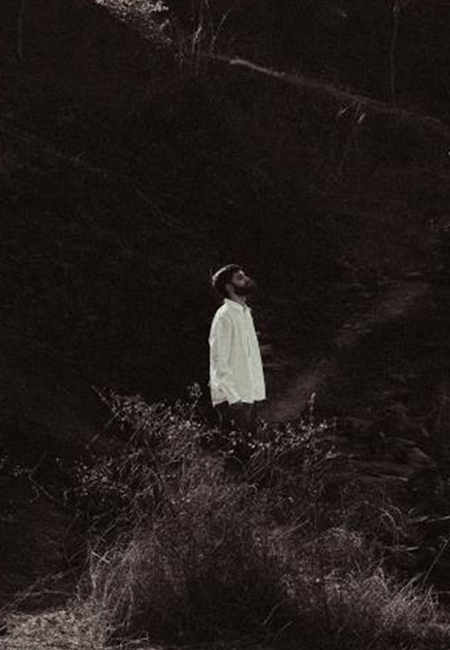
The third phase of Dr Soham Ghantiwala’s journey signifies a deepening awareness that developed not through dramatic upheaval but through steady inquiry and lived experience. Having built a foundation of discipline through formal education and professional work, this stage reflects his gradual turn inward- not as an escape from responsibility but as a way to understand the forces shaping thought, perception, and human behaviour. It’s during this phase that inner exploration and external practice began to influence each other more intentionally.
As professional demands grew, so did his awareness of the nature of experience itself. Soham increasingly realised that actions, decisions, and interactions were shaped as much by internal states as external circumstances. This insight led him to explore the mind—its patterns, conditioning, and capacity for awareness. Instead of adopting rigid beliefs, he approached these questions experimentally, noticing changes in perception through reflection, meditation, and focused attention.
This period featured long states of contemplation that shifted his view of time and consciousness. He started to see transitions among wakefulness, dreaming, and deep rest as experiential states rather than biological needs. These observations weren’t seen as extraordinary claims but as subjective experiences that provide insight into how awareness functions beyond linear time. Through careful recording and reflection, he aimed to understand these experiences practically, blending them with rational inquiry.
A significant development was his engagement with ancient knowledge systems and symbolic languages. His earlier exposure to traditional thought now found practical expression through independent study and research. Soham delved into scripts, symbols, and philosophical ideas across cultures, exploring how civilisations tried to express the nature of reality, consciousness, and self- awareness. This cross- cultural exploration reinforced his belief that truth is layered and contextual, not singular and absolute.
Note of Thanks
This biography is offered with heartfelt gratitude to the many people and influences that have supported Soham Ghantiwala on his journey. While much of his path has been shaped by reflection and personal inquiry, it has never unfolded in isolation. Every phase of growth has been strengthened by the presence, guidance, and quiet support of others who, knowingly or unknowingly, contributed to his development.
Just like the five elements of earth, just as the strong roots of a tree, and just as the purity of heredity, Soham dedicates this crucial philosophical piece to his Father, Mr Devendra Ghantiwala; His Mother, Mrs Urmisha Ghantiwala; His Grandparents, Dr Rameshchandra Ghantiwala and Mrs Indira Ben Ghantiwala; His Uncle and Aunty, Mr Nitin Ghantiwala and Mrs Alpa Ghantiwala; His brother, Mihir Ghantiwala; His Maternal Grandparents, Mr Pravinchandra Champaneria and Mrs Naina Ben Champaneria; His beloved wife, Ayushi Karia; His sister, Prakruti Kodrawala, and the Kodrawala Family; Mr Prakash Patel and Patel Family, His friends, Harshit Mendapara, Chirag Patel, Saransh Srivastava, and Tosha Rao.
Their open, curious, and culturally grounded environment laid the earliest foundations of his worldview. The values learned during these formative years continue to guide his sense of responsibility and balance.
Soham also expresses gratitude to his teachers, mentors, and academic guides— Ar. Ranga Dayasena, Ar. Govindlal Patel, Mrs Farida Jahabux Bhatporia, Ar. Bhinag Dalal, Ar. Vismay Wadiwala, Dr Aditya Contractor, Mr Rajesh Mehta and Mr Gajendra Majithia—whose guidance helped shape his professional discipline. Their lessons in architecture, urban and regional planning, and related fields instilled rigour, patience, and respect for structure—qualities that still influence his work within public and professional systems.
He thanks his colleagues and professional peers for their collaboration and dialogue, which enriched his understanding of teamwork. Working within institutions and administrative frameworks has reinforced the importance of trust, consistency, and ethical conduct, learned as much through shared experience as through instruction.
Soham is grateful for the many people he met through conversation, inquiry, and exchange—those whose questions, reflections, and perspectives contributed to mutual understanding. These interactions confirmed his belief that learning is ongoing and often reciprocal.
Finally, he recognises the importance of experience—the challenges, uncertainties, and moments of clarity that shaped his understanding over time. Gratitude is given to the journey as it unfolds, reminding us that growth arises from attentiveness, humility, and presence.
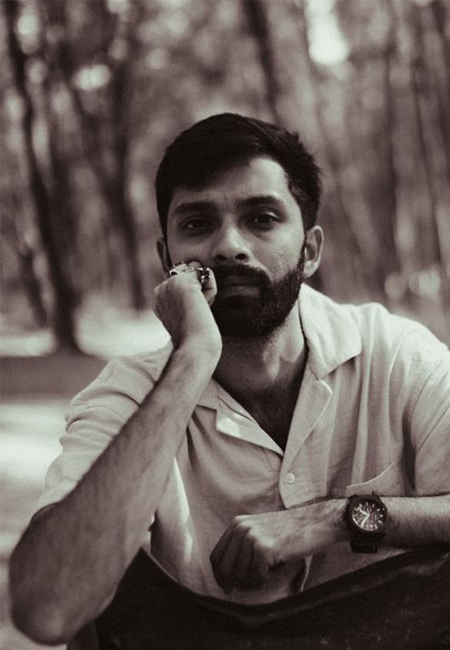
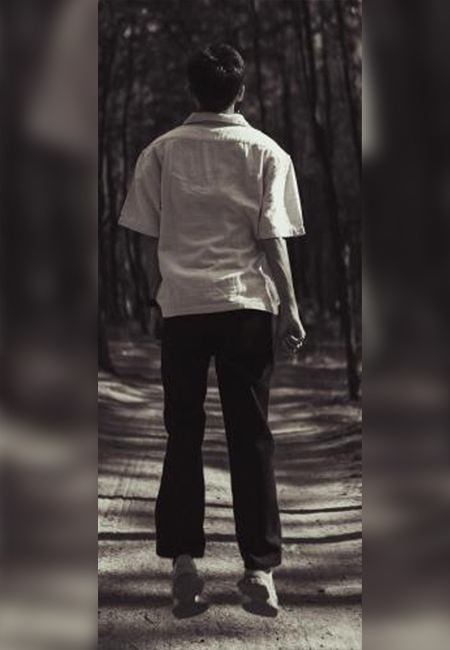
Special thanks to Samarth Madhwani for capturing the beauty of Soham with nature, as he surrendered to understanding the nature of life.
Thanks,
– Dr. Soham Ghantiwala