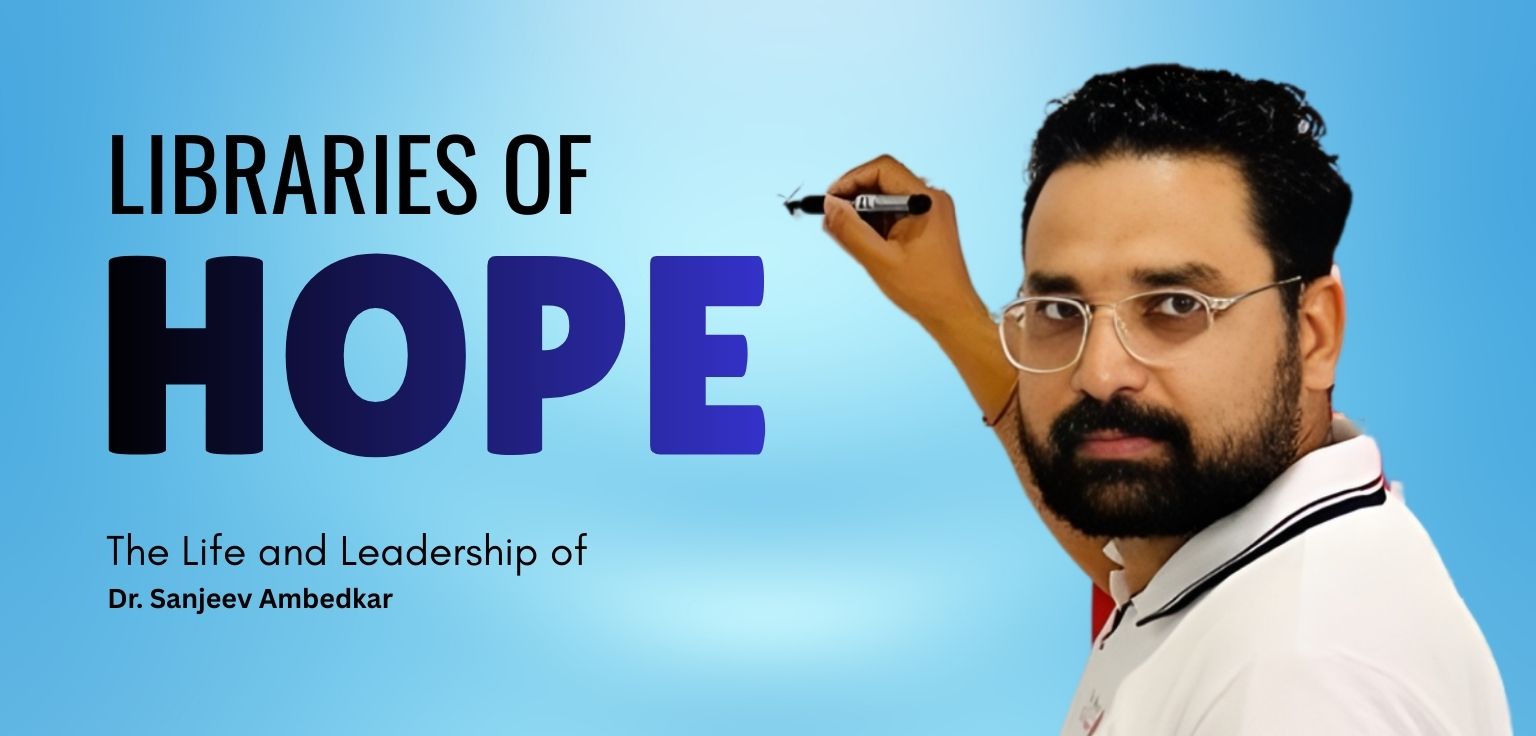

“When a child rises from scarcity with dignity, the world learns what true strength looks like.”
Introduction
Every life has a story, but only a few lives have a purpose so strong that the story becomes a movement. Dr.
Sanjeev Ambedkar is one of these people whose journey goes beyond personal success and into the world
of social change. His life is not just a story of overcoming challenges; it is a living example of what a single
determined person can do when they choose courage over fear, conviction over doubt, and service over
self-interest.
Dr. Sanjeev Ambedkar was born in a small village named Mahipat Kheda,Block Harchandpur in Raebareli, Uttar Pradesh. He grew up with many of the same problems that many rural Indian children face, such as not having enough resources, social barriers, having to walk long distances to school, and always being reminded that opportunity is a privilege. But he had a spark inside him that wouldn’t go away, unlike most people who just accept things as they are. He learnt early on that education was not just a way to get ahead; it was the only way to end the cycle of inequality that had been going on for generations. Every step he took to get to a classroom far away was an act of defiance, a quiet way of saying that he would not give in to the limits of his surroundings.
As he got older, he became more aware of the social structures around him—structures that helped the strong and silenced the weak. He saw Caste Discrimination, Religious Rigidity, Gender Bias, And Economic Injustice not as abstract ideas, but as real things that affected the lives of people he cared about. These events did not make him bitter; they made him more aware. They taught him that he had a strong moral duty to fight against what was wrong and help those who were left behind. This sense of duty would eventually help him make every important choice in his life.
When he took on the name Ambedkar, it wasn’t just a personal choice; it was a promise and a call to action. He agreed with the ideas of Bharat Ratna Dr. B.R. Ambedkar, whose idea of social equality is still not fully realised. Dr. Sanjeev Ambedkar thought that changing his last name was a clear sign of his beliefs. It was a reminder to himself that he would stand firm when others wavered, speak up when others hesitated, and do what others looked away from.
His academic journey—starting from high school to getting a degree in Information Technology and then going on to get an MBA—shows that he is always willing to learn. But what defined him wasn’t his desire for degrees; it was his desire for purpose. He worked in the Banking Industry, Passed competitive exams, and eventually became a Divisional Accounts Officer, but his heart was always with the grassroots.
Dr. Sanjeev Ambedkar was born in a small village named Mahipat Kheda,Block Harchandpur in Raebareli, Uttar Pradesh. He grew up with many of the same problems that many rural Indian children face, such as not having enough resources, social barriers, having to walk long distances to school, and always being reminded that opportunity is a privilege. But he had a spark inside him that wouldn’t go away, unlike most people who just accept things as they are. He learnt early on that education was not just a way to get ahead; it was the only way to end the cycle of inequality that had been going on for generations. Every step he took to get to a classroom far away was an act of defiance, a quiet way of saying that he would not give in to the limits of his surroundings.
As he got older, he became more aware of the social structures around him—structures that helped the strong and silenced the weak. He saw Caste Discrimination, Religious Rigidity, Gender Bias, And Economic Injustice not as abstract ideas, but as real things that affected the lives of people he cared about. These events did not make him bitter; they made him more aware. They taught him that he had a strong moral duty to fight against what was wrong and help those who were left behind. This sense of duty would eventually help him make every important choice in his life.
When he took on the name Ambedkar, it wasn’t just a personal choice; it was a promise and a call to action. He agreed with the ideas of Bharat Ratna Dr. B.R. Ambedkar, whose idea of social equality is still not fully realised. Dr. Sanjeev Ambedkar thought that changing his last name was a clear sign of his beliefs. It was a reminder to himself that he would stand firm when others wavered, speak up when others hesitated, and do what others looked away from.
His academic journey—starting from high school to getting a degree in Information Technology and then going on to get an MBA—shows that he is always willing to learn. But what defined him wasn’t his desire for degrees; it was his desire for purpose. He worked in the Banking Industry, Passed competitive exams, and eventually became a Divisional Accounts Officer, but his heart was always with the grassroots.
“Greatness does not begin with abundance; it begins with a child who refuses to be defined by scarcity.”
PHASE 1: Roots in Raebareli – A Childhood of Limits and Learning
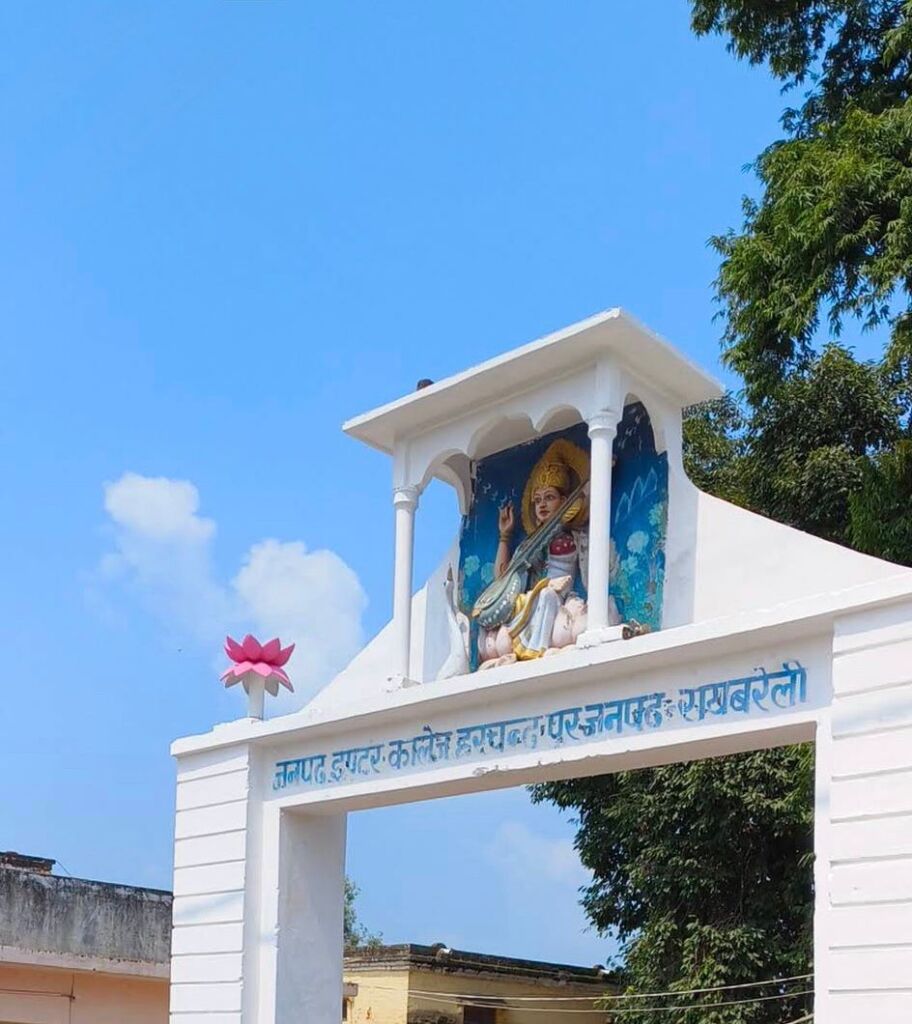
Dr. Sanjeev Ambedkar’s extraordinary journey began in a small village named Mahipat Kheda, Block Harchandpur, in the Raebareli district of Uttar Pradesh. His earliest memories are of the simple life and hard work that are part of rural India: narrow mud paths, fields that go on forever, kids running barefoot, and homes where survival was more important than dreams. But in those simple surroundings, a seed of strength was quietly growing.
His childhood was shaped not by having a lot but by having little. He was born into a lower-middle class family. His parents were already teaching him the values that would one day make him Dr. Sanjeev Ambedkar when he was born. Ram Narayan, his father, a worker in the unorganised sector, was a strong man who was calm and grounded. His mother couldn’t read or write despite having no education and belonging to a lower middle-class family where you are supposed to focus only on day-to-day requirements and there is no room to see any dreams for the future. Still, she had dreams for her children: to get an education and to go beyond this village.
The village where he grew up didn’t have many resources, and every child in the community had trouble getting a good education. There weren’t many schools, and the infrastructure wasn’t excellent. People often had to work hard to learn instead of getting professional help. Sanjeev went to a primary school located 2 km away from his village when he was young. It was a small school where kids learnt on simple wooden boards, and one teacher often taught multiple grades at once. The idea of competing in the outside world felt far away and almost impossible.
His childhood was shaped not by having a lot but by having little. He was born into a lower-middle class family. His parents were already teaching him the values that would one day make him Dr. Sanjeev Ambedkar when he was born. Ram Narayan, his father, a worker in the unorganised sector, was a strong man who was calm and grounded. His mother couldn’t read or write despite having no education and belonging to a lower middle-class family where you are supposed to focus only on day-to-day requirements and there is no room to see any dreams for the future. Still, she had dreams for her children: to get an education and to go beyond this village.
The village where he grew up didn’t have many resources, and every child in the community had trouble getting a good education. There weren’t many schools, and the infrastructure wasn’t excellent. People often had to work hard to learn instead of getting professional help. Sanjeev went to a primary school located 2 km away from his village when he was young. It was a small school where kids learnt on simple wooden boards, and one teacher often taught multiple grades at once. The idea of competing in the outside world felt far away and almost impossible.
“When a student walks miles for learning, the universe walks miles with him to open doors no one thought existed.”
PHASE 2: Miles Towards Freedom—Going to School No Matter What
Learning doesn’t start in a classroom. It starts in a child’s mind when they don’t want to give in to what is going on around them. Dr. Sanjeev Ambedkar’s journey to education was not easy. It involved long walks, tough changes, new places, and a constant fight against limits that tried to hold him back at every turn. Phase 1 gave him the skills he needed to get started, and Phase 2 gave him the courage that would shape the rest of his life.
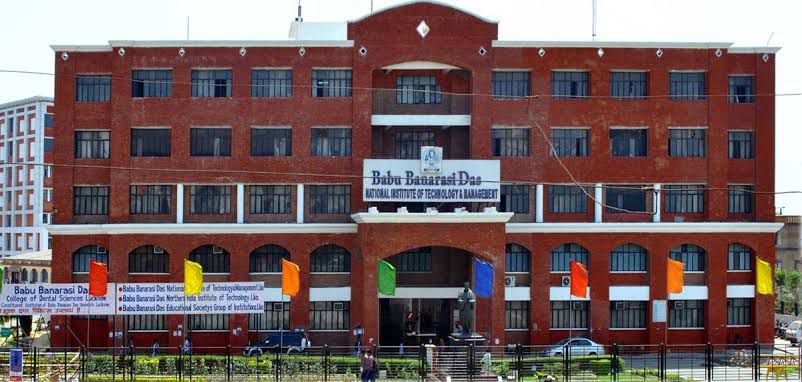
He finished his early schooling in his village and then at a private school a few kilometres away. After that, he needed a more structured and higher-level environment to continue learning. This is how he ended up at Janpad Inter College, a school at the block level where he would finish grades 10 and 12. Many kids at this age like the comfort of routine, but for him, these years were full of hard work.
He finished his early schooling in his village and then at a private school a few kilometres away. After that, he needed a more structured and higher-level environment to continue learning. This is how he ended up at Janpad Inter College, a school at the block level where he would finish grades 10 and 12. Many kids at this age like the comfort of routine, but for him, these years were full of hard work.
“Awareness is the moment when silence breaks, and a human being chooses justice over acceptance.”
PHASE 3: Awakening the Rebel of Equality – Identity, Awareness & the Birth of Social Consciousness
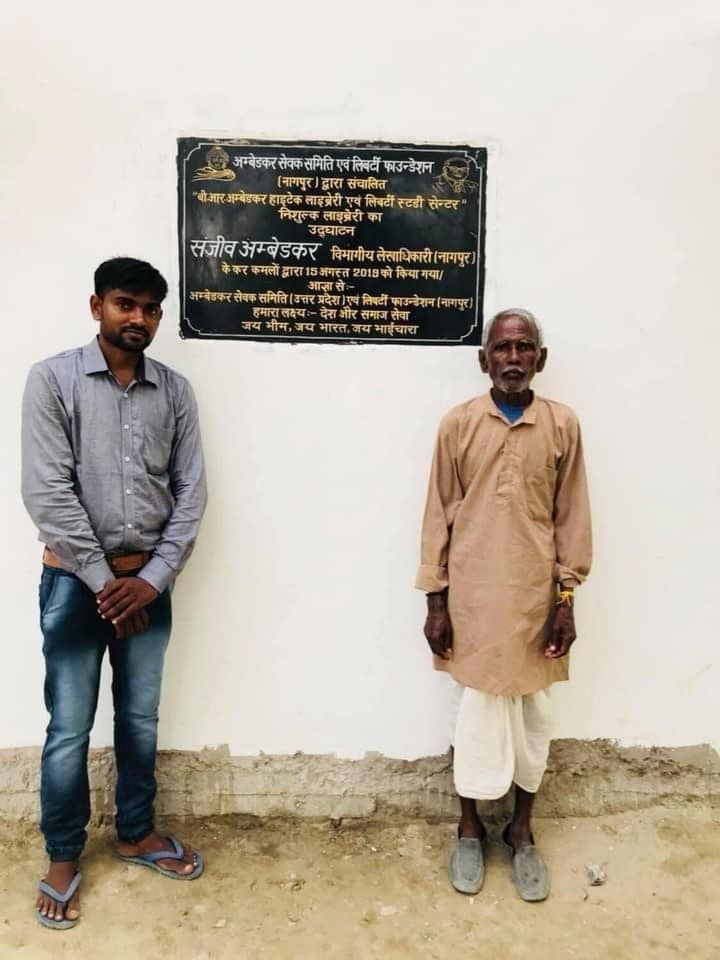
After Dr. Sanjeev Ambedkar got into engineering school, he went through a deep inner change that turned him from a determined student into a socially aware person who understood the hidden inequalities that shape society. This time was different from the earlier years, which were all about survival and adaptation.
Instead, it was all about thinking, being aware, and feeling a growing moral obligation to do what is right.
This moment is where he started to wonder not only about the barriers he had broken down but also about the systems that had put those barriers up in the first place.
He had lived through inequality long before he knew how to talk about it. He grew up in a small village where there weren’t many opportunities and discrimination was normal. But going to college opened his eyes to new worlds and new ways of life. He started to see how different the starting points were for kids just because of where they were born when he was around students from different backgrounds, like urban, privileged, and well-off. At home, kids walked miles to school and studied with few resources. Kids his age had tutors, libraries, English-medium schools, and access to computers. This big difference made him more aware. He knew that talent was never the problem; exposure was. There was never a lack of ability; there was a lack of opportunity. The more he saw these differences, the more he realised that inequality was not a random thing but a part of the system.
During this time, he became more aware of unfairness. He couldn’t ignore the small ways that caste still affected how people saw each other. He remembered the unspoken barriers in his village, the doubts, and the unspoken hierarchy that decided which child should be encouraged and which one should “be practical” and limit their dreams. As he got older, these early memories became clearer. They were no longer personal stories; they became examples of a bigger social truth.
He had lived through inequality long before he knew how to talk about it. He grew up in a small village where there weren’t many opportunities and discrimination was normal. But going to college opened his eyes to new worlds and new ways of life. He started to see how different the starting points were for kids just because of where they were born when he was around students from different backgrounds, like urban, privileged, and well-off. At home, kids walked miles to school and studied with few resources. Kids his age had tutors, libraries, English-medium schools, and access to computers. This big difference made him more aware. He knew that talent was never the problem; exposure was. There was never a lack of ability; there was a lack of opportunity. The more he saw these differences, the more he realised that inequality was not a random thing but a part of the system.
During this time, he became more aware of unfairness. He couldn’t ignore the small ways that caste still affected how people saw each other. He remembered the unspoken barriers in his village, the doubts, and the unspoken hierarchy that decided which child should be encouraged and which one should “be practical” and limit their dreams. As he got older, these early memories became clearer. They were no longer personal stories; they became examples of a bigger social truth.
Note of Thanks
In reflecting upon his journey, Dr. Sanjeev Ambedkar extends heartfelt gratitude to the individuals
who shaped his life with wisdom, support, and unwavering belief. He expresses deep appreciation to Mr. Suryakant Taboria, who introduced him to the life-altering concept of “Payback to Society”, a
philosophy that became the guiding light of his mission. He offers profound thanks to his parents, Late Mrs. Neelam and Mr. Ram Narayan, whose values, sacrifices, and quiet strength created the foundation
on which he continues to build.
He acknowledges with warmth the encouragement of his elder brother, Mr. Santosh Chaudhary, and his brother’s friend, Md. Rizwan Siddique, who consistently motivated him to rise beyond the limitations of rural life. He bows to the lifelong inspiration of his mother, whose courage in the face of illiteracy strengthened his resolve to pursue meaningful change.
He is highly obliged for the contributions made by Mr. Ambrish Shukla during his engineering days. He is grateful to his friend Ms. Kalyani Jaiswal for guiding him toward government opportunities at a pivotal moment. He expresses sincere thanks to Mr. Hanoman Ambedkar and Mr. Vinod Ambedkar for their steadfast support in advancing his “OGOL” mission. His appreciation extends to Liberty Foundation, Nagpur, for helping establish the first library in his village.
Above all, he conveys his deepest love and gratitude to his wife, Dr. Harshal Ambedkar, and his children, Delissa and Daisheen, whose presence gives purpose to every endeavour.
Thanks
Dr. Sanjeev Ambedkar
He acknowledges with warmth the encouragement of his elder brother, Mr. Santosh Chaudhary, and his brother’s friend, Md. Rizwan Siddique, who consistently motivated him to rise beyond the limitations of rural life. He bows to the lifelong inspiration of his mother, whose courage in the face of illiteracy strengthened his resolve to pursue meaningful change.
He is highly obliged for the contributions made by Mr. Ambrish Shukla during his engineering days. He is grateful to his friend Ms. Kalyani Jaiswal for guiding him toward government opportunities at a pivotal moment. He expresses sincere thanks to Mr. Hanoman Ambedkar and Mr. Vinod Ambedkar for their steadfast support in advancing his “OGOL” mission. His appreciation extends to Liberty Foundation, Nagpur, for helping establish the first library in his village.
Above all, he conveys his deepest love and gratitude to his wife, Dr. Harshal Ambedkar, and his children, Delissa and Daisheen, whose presence gives purpose to every endeavour.
Thanks
Dr. Sanjeev Ambedkar