“Let man be human again.”
Introduction
Is that presence not enough? Is that identity not enough? What does it mean to be a popular and well-read poet? We all know that we have an unsung poetry which still needs to be written. Our diaries are a gist of memories without any recollection. There is raw dust settling down without any prejudice. That is how memories look like. To keep memories alive, we choose to write biographies.
The best way to understand a poet’s life is through the rhythm of their words, not by the dates or awards they have won. Dr. Sandeep Sharma’s poems tell the story of his life, from how he went from being a boy in Ujjain and Dhar to a poet who used humour as a guide and laughter as a way to change things. His poems are not separate from his life; they are the best way to see his life story.
This one line could be the key to everything about him. Dr. Sharma’s poetry has always said that people are more important than accomplishments, that kindness is more important than intelligence, and that society needs to take a break to get back to being gentle. He lived the same way: always being humble, disciplined, and respectful of every stage and audience.
He didn’t see the world as a show; he saw it as a classroom from a young age. Ujjain’s mix of tradition and learning taught him to see humour not as a waste of time but as wisdom hidden in laughter. He knew even as a schoolboy that a joke could make things less tense and that satire could call out unfairness without being mean. This is where the poet’s inspiration began.
“Henna still stained their hands, but they chose to die.”
These words paint a picture of his sense of sacrifice—not just for the soldiers he wrote about, but also for his beliefs as a poet. Dr. Sharma never saw poetry as a luxury; it was a duty. He defended society with words, just like soldiers protect the country with weapons. His satire didn’t make fun of the weak; it questioned the strong. His humour was not a way to stay away from things; it was a way to get involved.
He used exaggeration to show how silly indulgence is and how arrogant unchecked power can be. However, the queue is filled with enjoyment, and the laughter it generates is not tinged with bitterness. Instead, it makes the listener contemplate the risks of too much, the duties of power, and the need for humility even when things are grand.
Dr. Sharma’s poetry is really a conversation with society that never ends. There is a part of his life story in each line. His shows at Raj Bhavan, and many Sammelans were not just events on a calendar; they were real-life classrooms where these lines appeared in life. His work on Doordarshan, SAB TV, and All India Radio brought these conversations into people’s homes, changing what people liked and giving them faith in the power of poetry again.
“Let us search again for those innocent smiles, in which the first song of life was hidden.”
Phase 1: Roots and First Light
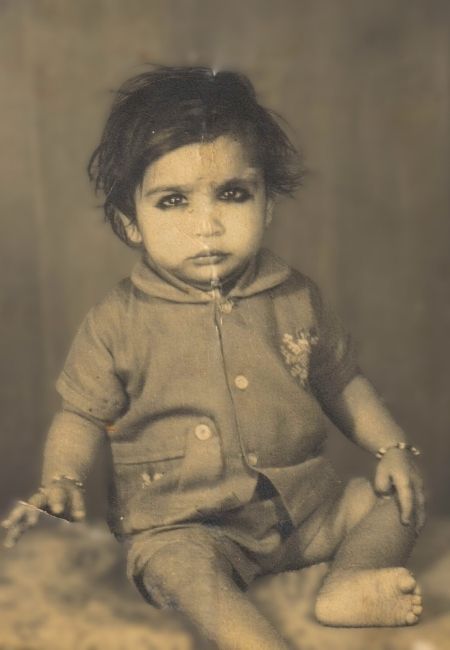
Every poet’s journey starts long before people start clapping. Dr. Sandeep Sharma’s quiet start was in classrooms and hallways that taught him to pay attention before being smart. Saraswati Shishu Mandir taught him moral music in primary school. He learnt to write neatly, pray in the morning, and enjoy saying lines out loud for the first time. A Government Middle School tested his ability to be on time and patient, which made him more reliable. He went to Anand Higher Secondary School in Dhar, where he started to realise that laughter can make even the hardest hours easier if you handle it right. Government College, Dhar (Dhar College), kept him close to home while he was in college, so he would never forget about the neighbourhood. And when the call of voice and medium got louder, he chose Government I.T.I., Ujjain, where he learnt about microphones and mixers with the same seriousness he gave to meters and metaphors. Later on, IGNOU (B.A., M.A. in Hindi) showed that self-study could be the best way for a poet to practice—no classrooms, no deadlines, and no show. He also lived in Mumbai for two years and one year in Bhopal.
He didn’t just receive certificates from these schools; he also got a way of thinking that discipline makes art nicer. Values were not preached in his house; they were lived. They taught their kids to respect elders, be kind to the weak, and be honest at work. He would notice how language could make even the hardest times easier when he was a boy. A funny comment at the dinner table or a clever remark in class were some of his first attempts at what would later become his art: humour as healing. There is another interesting fact associated with him: he recited his first poem when he was not even knowing the nuances of writing or composing. His mother helped him to compose the poem.
The Madhya Pradesh Board of Secondary Education taught him a lot of things that helped him a lot. He wasn’t the kind of kid who tried to get teachers’ attention by being flashy; instead, he impressed them by being serious, paying attention, and being curious about things that weren’t in the books.
“From words was born trust, and on stage it turned into the history of life.”
Phase 2: Finding the Stage
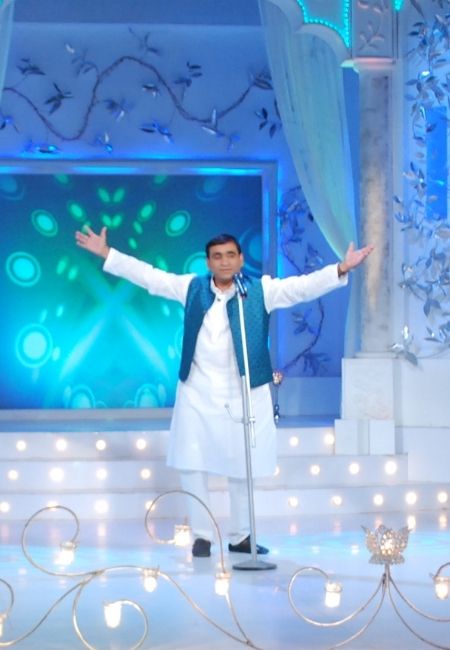
Dr. Sandeep Sharma got his roots, discipline, and a good set of values from the first stage of life. But a poet’s fate is incomplete in silence. You have to meet people. It has to put itself to the test by performing. Phase II of his journey was a turning point. He found the stage, shaped his voice, and changed from a student to a performer who would one day bring humour and conscience to thousands of people.
Poetry had already made its home in his heart on the streets of Ujjain and Dhar. The poems of great Hindi poets like Dinkar, Nirala, and Harivansh Rai Bachchan were not just distant chapters in a book; they were living voices that told him to add his voice to the chorus. But just having inspiration isn’t enough to make a poet. Dr. Sandeep Sharma’s big change happened when he put his words in front of other people’s to see if his laughter and thoughts could fill a hall.
His initial readings were modest milestones. He performed at a college event in one place and in a school auditorium in another. Anand Higher Secondary School, Dhar was where he first performed on stage in a semi-formal setting. It wasn’t about fame yet, but it was the first time he felt the audience’s attention. He felt nervous before speaking, silence when his lines landed well, and laughter when he made a funny point. That moment of connection between the poet and the people set him on his path. He understood then that poetry was not just something to write but also something to share.
It was during these early days that he started to figure out how to be funny. He liked to watch instead of copying or making cheap jokes like a lot of young performers. He would talk about the simple contradictions of life, like a teacher who preached being on time but was late or a shopkeeper who talked about being honest while putting a smaller portion in the bag. People laughed because they could relate. His satire wasn’t meant to make people feel awful; rather, it was meant to show them what they were doing wrong. This was the beginning of his style: funny but with empathy.
“When a soldier stands guard at the border, the doorstep of his home falls empty. Henna still stains his palms, yet he embraces death.”
Phase 3: The Craft of Performance
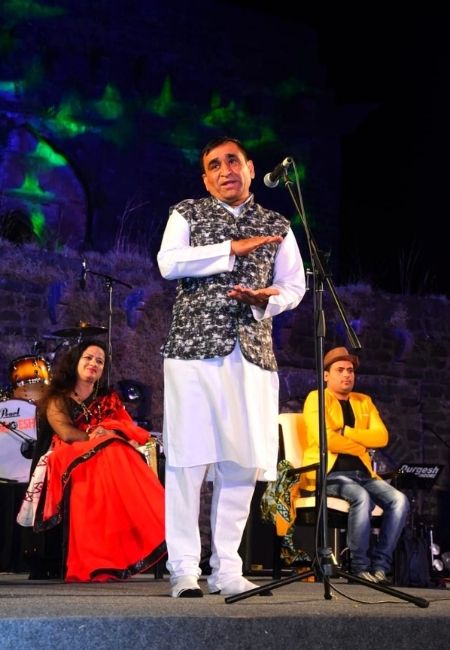
There are times in life when discipline becomes fate. The battlefield is where a soldier goes. For a poet, it’s the stage. The test is the same in both cases: bravery, duty, and service. Dr. Sandeep Sharma went from being a participant in poetry gatherings to a master of performance. His voice and humour became a craft that he honed with the same care as a soldier’s watch.
He had already learnt about the magic of the Sammelan when he was young. But from the 1990s to the 2000s, he started to live in that world. There were more and more invitations. His travels took him from Dhar and Ujjain to towns and cities all over Madhya Pradesh, Uttar Pradesh, Rajasthan, Maharashtra, Delhi, and even to stages in other countries. Every performance was a practice for the next one, and every hall became both a test and a place to learn.
He had sacrificed himself, just like the soldier in his poem. Giving up comfort, free time, and personal time, he spent his nights travelling by train and bus, and he often reached to his destinations tired. But when the organizers called his name, he was ever ready. The poet’s uniform wasn’t khaki; it was a crisp kurta. His weapon wasn’t a rifle; it was carefully chosen words. His battlefield wasn’t a frontier; it was a stage where thousands of people waited for laughter that also told the truth.
This time had a big impact on his professionalism. The people in charge quickly found out that Dr. Sandeep Sharma could be trusted. He showed up on time, brought new work, and never disrespected the stage. He didn’t just perform poetry; he saw it as seva, or service. He was thankful to his hosts, respectful to older poets, and encouraging to younger poets. People started to notice that his recitations were not only funny but also very respectful. There was no swearing or cheap insults. His humour, like the soldier’s sacrifice, was full of respect.
Note of Thanks
There are many people, voices, and gestures of support that go into every book. As this biography of Dr. Sandeep Sharma comes to an end, it carries with it the thanks of everyone who helped shape it, whether they did so directly or indirectly.
First and foremost, we owe thanks to Dr. Sandeep Sharma for the life he lived and the way he was open about it. His poetry, his thoughts, and his humility have guided these pages. There would be no rhythm without his verses, no heartbeat without his laughter, and no truth without his honesty.
We pay our deepest gratitude to Dr. Sharma’s family for their support and patience, which let his journey happen as it should. There were many sacrifices made at home for every performance. Their support made sure that his poetry was not only his own but also a gift from those who were with him.
He is also thankful to his teachers, mentors, and other poets. Every experience he had, from the classrooms of Ujjain and Dhar to the stages of national Sammelans, made him a better artist. His legacy includes his elders, peers, and younger people who admired him. Their faith in him and their friendship kept the fire of his work going strong.
We owe a big thank you to the people and groups who set up the places where his voice could be heard. The Sammelan committees all over India, the cultural groups that honoured his work, and organisations like INTACH and Akhil Bharatiya Kavi Sammelan Samiti, which valued his presence, made sure that his poetry was not just written down but also lived in the community.
We can’t forget all the people who came to see us, whether they filled halls, sat outside, listened to the radio, or watched on TV. Their laughter, silence, and applause were not just reactions; they were proof that the poet and the people had a connection. They turned performances into communion and made sure that his words would live on long after they were spoken.
We are also very grateful to the translators, editors, and compilers who worked hard to make this biography flow correctly, with dignity, and with the warmth that reflects Dr. Sharma’s spirit. Their work reminds us that there is always dedication behind every finished piece.
Lastly, we want to thank the people who read this book. By turning these pages, we have joined the journey of a poet whose life was spent reminding people of their strength, simplicity, and innocence. We have become a part of his legacy when we remember and talk about what he said.
This thank-you note isn’t the end; it’s a bridge. Like poetry, gratitude never ends; it goes on in echoes, gestures, and lives that are changed. May the spirit of Dr. Sandeep Sharma—his laughter, his conscience, and his spirituality can uplift everyone who comes into contact with it. This biography is seamless poetry which has enormous potential to inspire people even when they are not truly aware. Self-awareness rises in the poetic determination and Dr. Sandeep stands as a true hallmark on the stage of self-witnessing.
Dr. Sandeep Sharma is a poet of conscience whose humor carried truth, whose satire healed rather than hurt, and whose words reflected humanity’s highest values. Rooted in simplicity and guided by spirituality, he turned every stage into a space of reflection and every poem into a prayer for society.
Thanks
Dr. Sandeep Sharma