
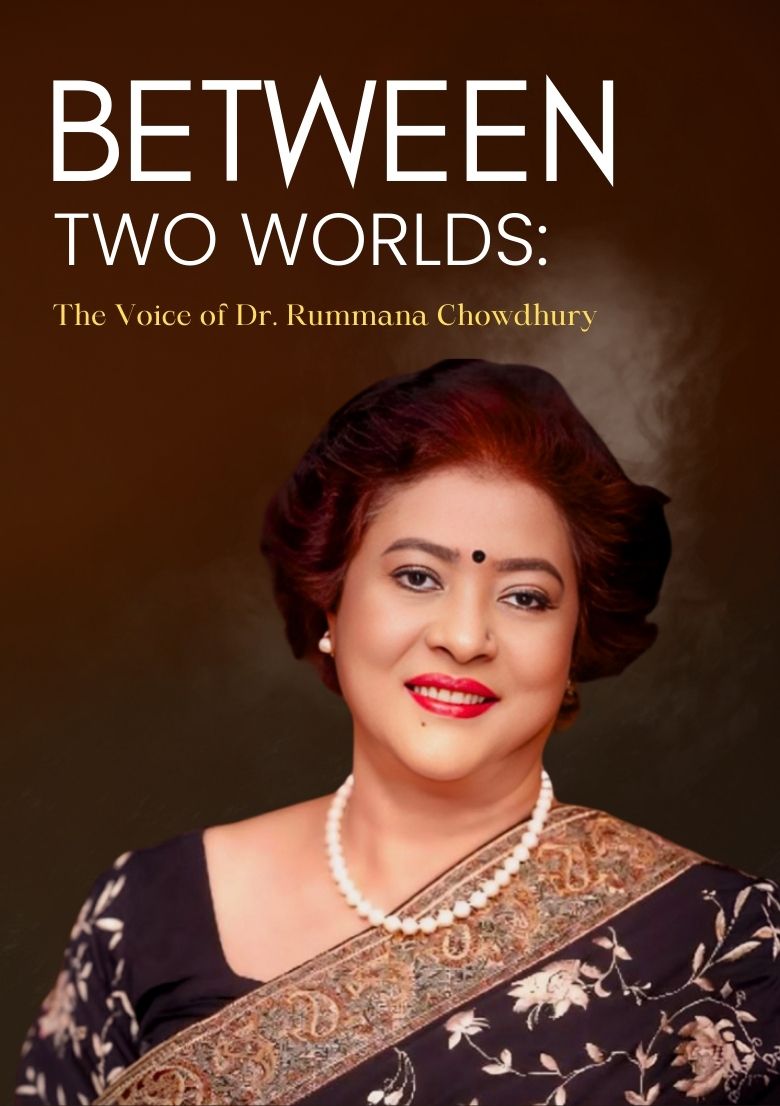
“I have never truly left Bangladesh, nor have I ever stopped belonging to Canada. I exist in the in-between - a space where memory sings in two languages and truth is born from the hyphen between identities.”
Introduction
In a world constantly shifting between borders, identities, and forgotten voices, Dr. Rummana Chowdhury has carved out a literary and human legacy unlike any other. Her story is not merely that of a woman who migrated from Bangladesh to Canada — it is the testament of a bridge, a voice, a witness to generations of transition, translation, and truth.
Born into a land rich with language, revolution, and ancestral pride, Dr. Rummana Chowdhury embraced the fire of eloquence early — through national-level debate, poetry, and intellectual resistance. Yet her destiny would not remain confined to her birthplace. When she stepped onto Canadian soil in 1982, she carried with her not just a suitcase, but a homeland wrapped in syllables, silence, and story.
Across over fifty-six books, international awards, courtrooms, protests, Shahid Minar, and women’s voices long buried beneath generations of patriarchy and migration — Dr. Rummana Chowdhury has remained undaunted in her calling. She is an interpreter of law and longing, of testimony and tenderness. A poet not just in meter, but in mission.
In this biography — told through her own voice, her memories, her rhythm, and the hearts she’s touched — we trace the life of a woman who has refused to choose between cultures, refused to shrink her vision, and refused to stay silent.
This is the story of a Bangladeshi-born Canadian literary warrior, a feminist torchbearer, a public intellectual, and a mother of two worlds.
This is the story of Dr. Rummana Chowdhury — and this is her voice, between two worlds, echoing across borders, bending time, and belonging to all who listen.
“I was born into language. Into resistance. Into poetry. My story did not begin with me—it began generations before, whispered through the strength of my foremothers.”
PHASE 1: Roots and Radiance

In the rich, red soil of Bangladesh—where the rivers write stories into the land and the air hums with poetry—was born a girl who would grow to become not only a literary icon but a cultural bridge between East and West. That girl was Dr. Rummana Chowdhury, and her story began in a home where tradition and rebellion danced side by side.
She was born into an intellectually vibrant family, rooted deeply in Bengali history and culture. From a very early age, Dr. Chowdhury was immersed in a world where words carried weight, silence held meaning, and every story mattered. Her father, a man of values and quiet dignity, and her mother, a nurturing matriarch steeped in spiritual grace, formed the moral compass that would shape her entire worldview. It was in their arms that she first learned what it meant to stand tall with humility and to question without arrogance.
Her family household was not just a place of shelter—it was an ecosystem of ideas, arguments, songs, and sacred rituals. Her older brother, Tasleem Ahmad, was a stoic figure—anchored in responsibility, intellect, and integrity. Her older sister, Dr. Durdana Ahmed Bhuiyan, was both a mentor and a mirror—someone whose intellect and achievements lit a fire within young Rummana to excel. Meanwhile, her younger sister, Ameena Ahmad, offered the gentle warmth of companionship, the kind that heals without ever needing to be spoken aloud.
From a very early age, it became clear that Rummana was not like the other children. While others played in the fields or chased paper kites in the sky, she could often be found tucked into a corner of the house with a book far too complex for her age. Literature, language, and ideas became her playmates. Her mind, even as a child, reached beyond her small surroundings in search of a world that could accommodate the magnitude of her curiosity.
“I didn’t come to Canada with just a suitcase—I came with stories. I carried a nation in my chest and a daughter in my arms. And somehow, I had to learn how to be both foreign and familiar.”
PHASE 2: A New Sky Over Toronto

When Dr. Rummana Chowdhury stepped onto Canadian soil, it was not the weather that chilled her the most—it was the silence. A silence that stretched between cultures, between languages, between dreamsand reality. She was no stranger to transition, but this was not just a relocation. It was rebirth through dislocation.
Canada was supposed to offer her a fresh beginning. It was a land painted with promises: opportunity, freedom, and a better life. But promises, she quickly learned, often arrive wrapped in challenge. She had left behind the bustling familiarity of Dhaka—the lyrical rhythms of her native tongue, the embrace of extended family, the smell of spices in alleyways, and the poetry of political resistance. In exchange, she was greeted by snow-blanketed streets, a faceless multiculturalism, and the endless effort of explaining herself.
She arrived in Toronto not only as an immigrant, but as a cultural figure and a social activist. Every job she took, every course she pursued, every night she spent awake
translating her own existence into English—was for her family. Her four children were both her strength and responsibility while her husband, renowned and dynamic businessman, was travelling the world for his shipping business. The weight of motherhood—already profound in its tenderness—became her anchor as she navigated the unknown.
Unlike many who try to forget their past in order to assimilate, Dr. Chowdhury chose instead to amplify it. She did not want to vanish into Canadian whiteness or be boxed into the caricature of the “grateful immigrant.” She carried her Bangladesh with her: in her saris, in her poetry, in her refusal to forget her accent.
One of her first realizations was the invisibility of the immigrant woman—especially those from South Asian and Muslim backgrounds. Canada prided itself on multiculturalism, yet it often functioned on polite erasure.
“I do not write because I have the answers. I write because my questions have nowhere else to go.”
PHASE 3: The Writer’s Soul
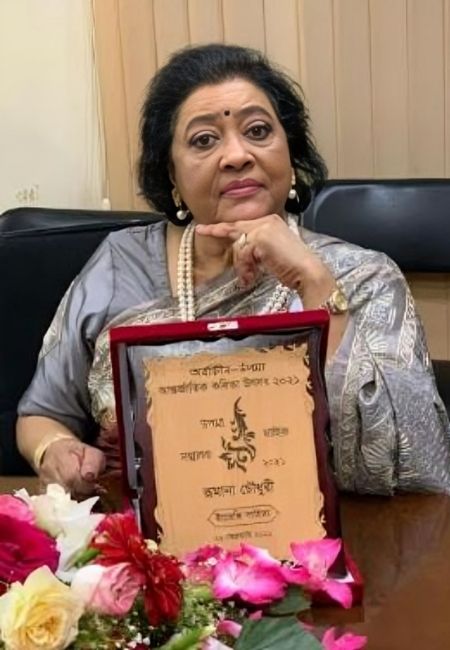
There are writers who compose verses. And then there are those whose entire life becomes a poem—breathing, grieving, resisting, and blooming across the pages of existence. Mrs. Rummana Chowdhury belongs to the latter. To understand her writing is not to explore ink and paper; it is to walk through a storm that holds both fury and faith, and to emerge trembling—but more alive.
Her earliest experiences with literature were planted long before Canada or courtrooms or global conferences. It began with her mother’s whispered lullabies, her father’s stories about justice, her teachers who challenged her wit in debate clubs in Dhaka, and the scent of rain on cracked bookshelves. Even as a child, she recognized that language had temperature. It could comfort, rage, mourn, rebel. And somewhere in her—quietly at first—a writer was being born.
Yet, it was not until pain, migration, and loss chiseled her identity that the poet in her truly broke open.
By the time she was firmly rooted in Canada, her life had become a tapestry of contrasts—between homesickness and hope, motherhood and mourning, belonging and rejection. These juxtapositions found their way into her writing, especially her poetry. She refused to pick between Bengali and English; instead, she let both languages kiss on her pages. She did not conform to “Canadian literature” or “South Asian diaspora literature”—she carved out her own genre: immigrant soul literature.
One of her most defining accomplishments was the publication of her books, both poetry collections and prose volumes. Her words were drenched in the spiritual, the cultural, and the deeply personal. Themes of identity, gender injustice, intergenerational trauma, and the silent survival of immigrant women beat at the center of her verses.
Note of Thanks
As the final words of this biography settle upon the page, there is one voice that must rise above all—the voice of gratitude. Dr. Rummana Chowdhury’s journey is paved not only with her strength but with the generosity, support, and unwavering presence of countless individuals and communities who helped shape her path. It is to them that she extends this heartfelt note of thanks.
To her parents, whose values became the architecture of her soul, thank you for teaching her that dignity and truth are more than concepts—they are a way of life. Your belief in her education, your silent sacrifices, and your enduring love created a foundation upon which her entire legacy was built.
To her grandparents, aunts, uncles, and the extended family who carried the richness of Bengali tradition and resilience in their bones, thank you for whispering identity and discipline into her early days. You taught her how to walk proudly in every land, with every name, without forgetting her origin.
To her older sister, Dr. Durdana Ahmed Bhuiyan, and older brother, Tasleem Ahmad, thank you for being anchors in the waves of her life—offering wisdom, constancy, and that irreplaceable bond of shared history.
To her younger sister, Ameena Ahmad, whose steady support became a quiet but powerful sanctuary through the most painful seasons, thank you for standing with her in silence and in storm.
To her niece, Esha Amin, who became one of her greatest pillars of hope after the loss of her daughter, thank you for proving that love can rebuild broken mothers. Your laughter, encouragement, and unshaken loyalty remind her that family is not only who we are born into, but who shows up when the world falls apart.
To her late daughter, Fariah Chowdhury, this note could never be enough. Your name lives in her breath, in her poetry, in every courtroom she entered and every page she bled ink onto. You are her shadow, her song, her undying “why.” Thank you for teaching her that grief can be transmuted into strength, and that the heart, once cracked open, can become a vessel of light.
Thanks
Dr. Rummana Chowdhury