“A life lived with purpose becomes a story that lights the way for others.”
Introduction
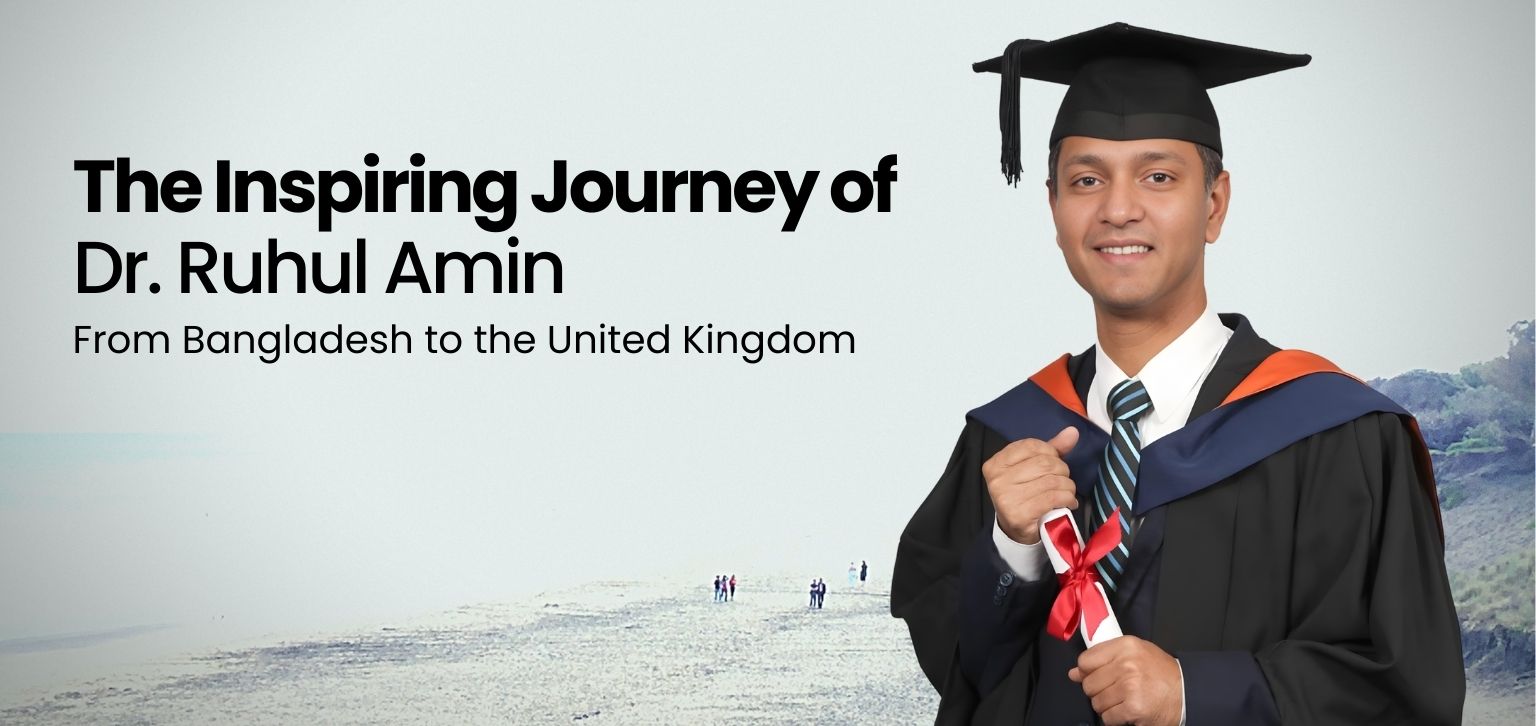
The life of Dr. Ruhul Amin is an inspiring reflection of courage, gratitude, and unwavering service. Born in Bangladesh in 1975, and later raised in London, United Kingdom, his journey embodies the meaning of determination guided by compassion. He stands as an example of how a person can remain rooted in humility while building a legacy that uplifts many. His path is not one of privilege alone, but of dedication to giving back—proof that true greatness lies not in what one receives, but in what one shares.
When Dr. Ruhul Amin came to the United Kingdom at the tender age of eight, he carried with him the memories of a homeland filled with simplicity and love. The new world was unfamiliar, the language foreign, and the surroundings strange. School was difficult at first; he could not understand a word his teachers spoke. Yet, he never gave up. Within three years, he not only learned the language but found his voice in a new culture. That period of silence and struggle became the foundation of his empathy. He learned that kindness and patience could bridge every distance.
As he grew, so did his sense of duty toward others. In his teenage years, while most of his peers were focused on studies and play, Ruhul was already serving his community. He began writing letters, filling forms, and guiding people from the South Asian community who could not read or write English. Many were migrants from rural Bangladesh, unfamiliar with the system, and often helpless in official matters. His ability to communicate, help, and solve problems became his first calling. This early experience was more than volunteer work—it was the beginning of a lifelong bond with people.
“Helping others is not an act of duty; it is the simplest form of humanity.”
After completing his education, Dr. Ruhul Amin began his professional journey in the civil service. His work taught him discipline, structure, and the value of working for the public. Yet, his heart was always drawn toward doing more than what was required. Soon, he joined the Citizens Advisory Group, one of the most trusted networks in the United Kingdom that provided advice and guidance to citizens in areas such as housing, health, and welfare. For four years, he listened to the problems of ordinary people and worked tirelessly to find real solutions. This role sharpened his understanding of society and showed him how leadership begins with empathy.
Still, his spirit longed for independence and creation. With courage and vision, he stepped into the world of business. As an entrepreneur, Dr. Ruhul Amin created and developed several ventures across different sectors in the UK. He succeeded in many, failed in some, but learned from all. His success was built not on chance but on resilience—the kind of mindset that turns setbacks into strength. What made his approach unique was his integrity. Business for him was not just about profit; it was about purpose. Every venture was a means to provide employment, growth, and opportunity for others.
“Every great journey begins with the courage to step beyond the familiar.”
Phase 1: Roots of a Dream
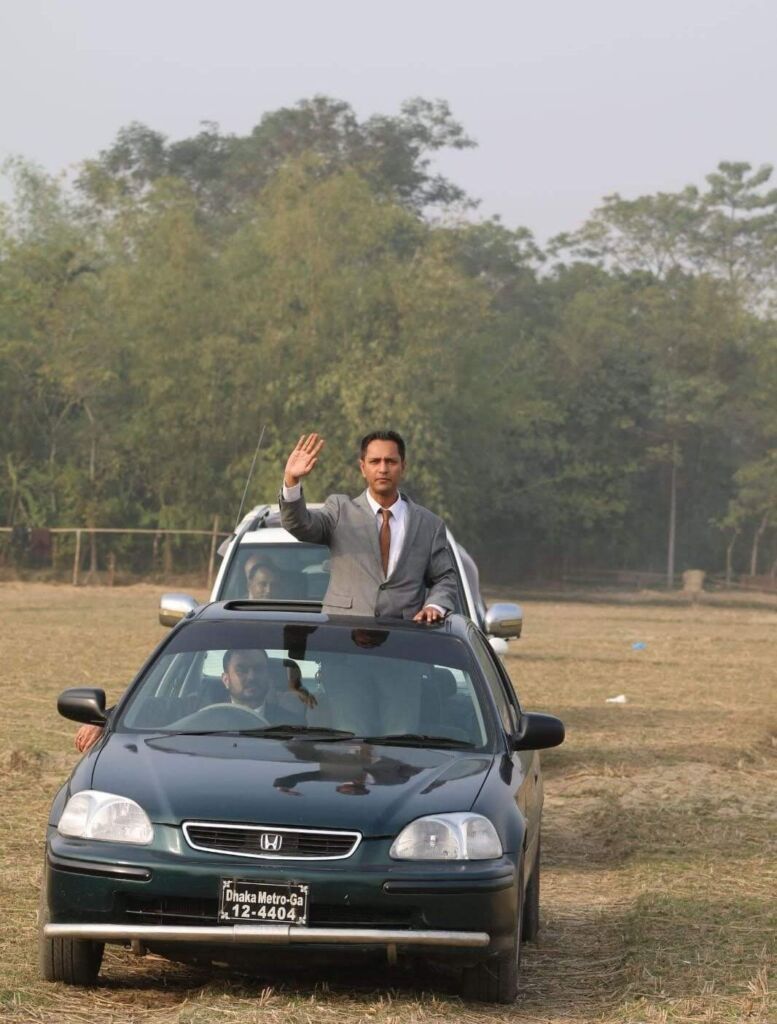
The story of Dr. Ruhul Amin begins in the heart of Bangladesh, a country known for its resilience, beauty, and warmth. Born in 1975 into a loving family, his earliest days were surrounded by the calm rhythms of rural life, where faith, simplicity, and togetherness shaped the foundation of his values. His father, Late Syed Ali, was a man of remarkable foresight and courage. His mother, Rama Aktar Khanom, was gentle, wise, and deeply nurturing. Together, they created an environment filled with love, discipline, and faith. For Ruhul, their guidance became the earliest lesson on what it means to live with purpose.
In those early years in Bangladesh, life was modest but peaceful. The mornings began with the call to prayer echoing across the fields, and evenings ended with family gathered over stories of ancestors and dreams of the future. Even as a young boy, Ruhul absorbed the values his parents lived by—hard work, honesty, and kindness. He often saw his father helping neighbors, sharing advice, or finding ways to solve someone’s problem. His father’s example quietly shaped his character. Watching him, young Ruhul understood that success was not measured by wealth, but by the ability to uplift others.
“A father’s courage plants the seeds of a son’s strength.”
Syed Ali, like many brave men of his generation, dreamed of building a better future for his family. In the early 1960s, when Bangladesh was still finding its footing as a young nation, he made the life-changing decision to migrate to the United Kingdom. He was only in his late teens, with limited education and no knowledge of English, yet he carried within him an unshakable faith in hard work. The 1960s were not easy times for immigrants in Britain. The language barrier, cultural differences, and racial challenges were daunting. But Syed Ali did not give in to fear. Through persistence and discipline, he built a life in the UK brick by brick.
“Greatness begins the moment we decide to make a difference, no matter how small the act may seem.
Phase 2 : The Awakening of Purpose

The early teenage years of Dr. Ruhul Amin marked a new chapter of awareness, responsibility, and quiet leadership. Having now adjusted to life in the United Kingdom, he found himself not only learning the ways of a new country but also recognizing his role within his growing community. The challenges of his early years—the language barrier, cultural differences, and sense of being an outsider—had shaped him into a person with deep empathy and patience. By the late 1980s, when he was around thirteen or fourteen, a spark began to form within him. It was the beginning of his lifelong journey of community service.
Life in London during that time was vibrant but demanding. The South Asian community, particularly those from Bangladesh, was growing, yet many families still faced social and economic difficulties. Most of them had migrated from small rural towns and villages. Their dreams were simple—to work hard, build a home, and educate their children. But they faced challenges in understanding the British system, especially when it came to paperwork, official communication, and legal documentation. The gap between the world they came from and the one they now lived in was wide, and they needed someone who could bridge that gap.
Ruhul, though still a teenager, was quick to notice this struggle. He saw elderly men looking confused in government offices, mothers unable to fill out school forms for their children, and families losing opportunities simply because they could not read English letters. While others of his age were busy exploring their own lives, he was thinking about how to help others navigate theirs. He realized that small acts—writing a letter, reading a form, or making a phone call—could change someone’s day.
“Service does not wait for age; it begins when the heart refuses to stay silent before someone’s struggle.”
“Dreams become real when discipline becomes our daily habit."
Phase 3 : Building the Path of Responsibility

The journey of Dr. Ruhul Amin entered a decisive stage as he stepped into adulthood. His foundation of empathy, discipline, and social awareness, formed through his teenage years, began to take shape into a clear direction. He had already learned that knowledge without purpose was incomplete, and service without structure could not reach far. Now, he wanted to build a life that combined both purpose and practicality—a balance between responsibility and aspiration.
By the time Ruhul finished his studies, he was already known as a young man of character and calm determination. He had matured early, shaped by his parents’ sacrifices and his own desire to do meaningful work. His father, Late Syed Ali, had always told him that success must be earned through patience and hard work, not shortcuts. His mother, Rama Aktar Khanom, often reminded him that whatever he achieved should bring goodness not only to his own life but to others around him. Those words guided every step he took.
After completing his education, Ruhul joined the civil service, marking his first entry into the professional world. It was his first real taste of structured work life, where rules, regulations, and timelines defined the rhythm of each day.
The job demanded precision, attention to detail, and the ability to understand people’s needs through administrative systems. It was not glamorous work, but it was meaningful. He learned how government offices operated, how decisions affected citizens, and how empathy could still exist in official spaces.
He approached every task with humility and commitment. His supervisors quickly recognized that he was different—disciplined, respectful, and sincere. He never rushed through his duties. He understood that each file represented a real person’s life, a request, or a hope. This sensitivity made him not just efficient but compassionate in his role. For him, work was not only a job but also a way to serve.
Note of Thanks
As the story of Dr. Ruhul Amin comes together, it stands as more than a biography — it is a reflection of a life built on kindness, determination, and service. With deep humility and sincerity, Dr. Ruhul Amin expresses his heartfelt gratitude to all those who have been part of his remarkable journey.
He first gives thanks to the Almighty, whose guidance and grace have been his constant light. Every milestone in his life, every success, and even every challenge, has been a reminder of divine purpose and strength.
He extends profound gratitude to his beloved parents, Late Syed Ali and Rama Aktar Khanom, whose sacrifices and values shaped his foundation. Their lessons in patience, humility, and honesty have guided every step of his path. He also thanks his devoted wife, Noosrat Firdaus, whose understanding and unwavering support have been his greatest strength. Her faith in him through every phase of life has made every success possible.
To his children — Shuaib Ahmad, Fatima Firdaus, Mumin Ahmad, and Sulayman Ahmad — he offers his endless love and pride. They have been his true inspiration and the reason behind his continued efforts to do good.
He also expresses his appreciation to his mentors, colleagues, and countless individuals in both Bangladesh and the United Kingdom, whose trust, friendship, and encouragement have made his mission of service meaningful.
Lastly, Dr. Ruhul Amin extends his heartfelt thanks to everyone who believed in his vision, worked beside him, and shared in his journey. His life remains a tribute to the belief that gratitude, service, and humility are the true pillars of a life well lived.
Thank You
– Dr. Ruhul Amin