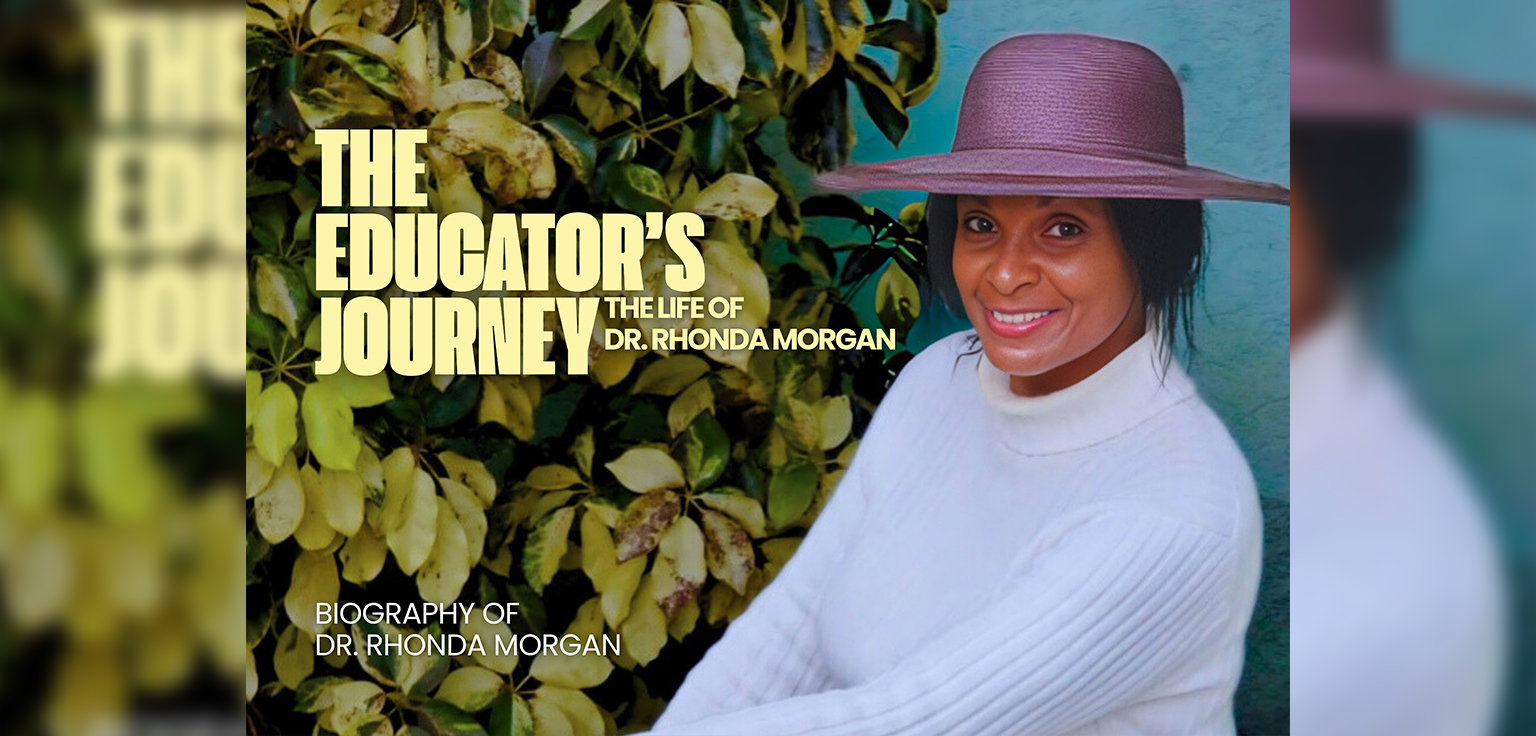
“She who opens a school door, closes a prison.”
Introduction
What makes a life extraordinary? Is it accolades and awards, degrees and titles—or is it something quieter, more enduring? The kind of legacy that unfolds not in front of crowds, but in the stillness of classrooms, in the scribbled notebooks of students, in the transformation of hesitant voices into confident ones. This is the kind of life Dr. Rhonda Morgan has lived. And this is the story you are about to enter.
Dr. Morgan’s journey is not one of sudden fame or dramatic breakthroughs. Rather, it is a steady rise—marked by discipline, humility, and an unshakable belief in the power of education to change lives. Born on May 31, 1968, in the Caribbean Island of St. Vincent and the Grenadines, Rhonda Morgan’s earliest years were shaped by simplicity, community, and a deep reverence for learning. It was in these formative moments that her calling as an educator began to take root.
What followed was a lifetime of service across classrooms and countries—Dominica, Barbados, Trinidad, and back to her homeland. Her teaching style is not merely academic; it is intuitive, nurturing, and deeply intentional. To Dr. Morgan, literature is not just a subject, but a vessel—one through which students discover identity, culture, and possibility. Her influence stretches far beyond syllabi and exams. She teaches her students to think, to feel, to question, and to become.
With each role she embraced—from classroom teacher to department head, from peer tutor to senior lecturer—Dr. Morgan expanded her impact, always grounding her work in empathy and excellence. Her professional journey spans more than four decades and is studded with milestones: preparing students for regional CXC and CAPE examinations, leading curriculum reforms, mentoring junior educators, and guiding countless young minds to self-belief. Her reach is quiet, yet profound.
But perhaps the most telling part of her story is that she never stopped learning. Even as she mentored others, she continued her own academic path—earning her Bachelor’s degree from Andrews University, completing her Teacher Training Certificate, and now approaching the completion of her Master of Education from UNICAF University in Zambia. Her dedication to lifelong learning sends a powerful message: the best educators are those who continue to be students at heart.
This biography is not just a chronology of her achievements; it is a tribute to her spirit. It is about the ripple effect of one life lived with intention and grace. Through personal stories, professional insights, and reflections on her journey, this book seeks to honor a woman who has shaped generations—not with grand gestures, but with quiet, consistent love for the work she does and the people she serves.
“Education is the most powerful weapon which you can use to change the world.”
Phase 1: Humble Beginnings (1968–1986)
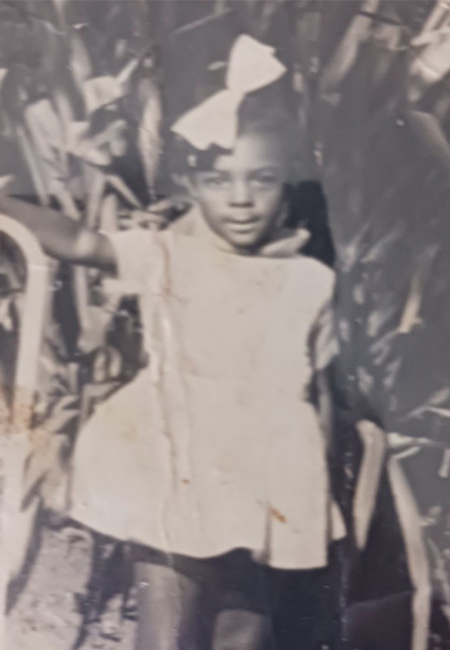
The morning of May 31, 1968, dawned quietly over the verdant hills and sun-kissed coastlines of St. Vincent and the Grenadines, a twin-island nation nestled in the eastern Caribbean. In a small but vibrant community where sea breezes carried the rhythm of gospel songs and the warmth of neighborly laughter, Dr. Rhonda Morgan entered the world—a child destined not just to learn, but to teach, to guide, and to leave an indelible mark on the hearts of generations.
From the earliest days of her childhood, Dr. Rhonda displayed a sensitivity to the world around her—not only seeing, but sensing, observing, and absorbing. Her home was a modest yet nurturing haven, infused with the values of discipline, respect, faith, and learning. Her parents, strong in character and devout in their Christian beliefs, placed great emphasis on the importance of education—not as a means to wealth, but as the foundation of wisdom, dignity, and independence.
Dr. Rhonda grew up surrounded by the lyrical sounds of island dialects, the lull of ocean waves, and the scent of salt and spices carried from nearby markets. In that environment, education was not taken for granted; it was treasured, and every book was a passport to a wider world. Her parents cultivated her natural curiosity, encouraging her to read voraciously, to ask questions boldly, and to speak with conviction, even when her voice trembled. Her mother often said, “If you can read, you can reach,” a mantra that Rhonda would carry into every stage of her life.
Her early schooling was marked by a quiet but persistent intellectual fire. Dr. Rhonda was not the loudest in the classroom, but she was certainly among the brightest. Teachers soon noticed her natural gift with language—the way she played with words, interpreted meaning, and spoke with an eloquence far beyond her years. This contributed to academic acceleration when she was skipped an entire grade. Her love for literature and storytelling began to flourish during these years. She recalls vividly getting into trouble as a sixth-grader because she had made some unsavory remarks to a classmate and her headmistress “punished” her by making her read Louise May Alcott’s classic, Little Women.
“Tell me and I forget, teach me and I may remember, involve me and I learn.”
Phase 2: A Young Teacher’s Resolve (1986–1991)
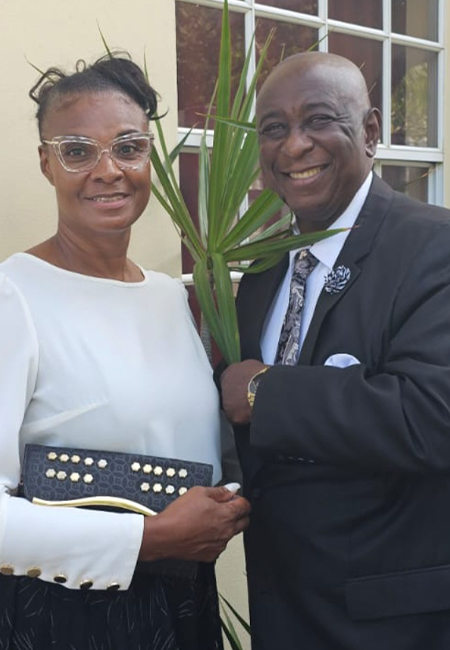
At just 18 years old, while most young adults were still navigating their own path to self-discovery, Dr. Rhonda Morgan stood confidently at the front of a classroom, armed not only with academic knowledge, but with an unwavering belief in the transformative power of education.
Fresh out of school and brimming with purpose, she joined the esteemed Bishop’s College Kingstown, one of the leading secondary institutions in St. Vincent and the Grenadines. It was here that Dr. Rhonda’s passion for teaching truly ignited. She was entrusted with teaching English and Geography to the lower forms and Spanish to the upper forms—a heavy responsibility for someone so young, yet she carried it with a quiet grace and bold determination.
Despite her age, Dr. Rhonda was never intimidated by her role. In fact, her youthful energy became her strength. She entered the classroom not merely as an instructor, but as a facilitator of imagination, expression, and discovery. Her lessons weren’t confined to the blackboard; she often introduced creative activities, storytelling, and real-world connections to awaken curiosity in her students. She understood early on that teaching was not about depositing information—it was about drawing out potential.
Her connection with students was immediate and authentic. She spoke to them, not at them. She listened. She remembered names, asked questions about their lives, and offered encouragement even when no one else did. In a country where academic achievement was often a path out of poverty, Dr. Rhonda understood that each child carried a dream—and she made it her mission to nurture those dreams with intention and compassion.
Soon, her journey took her to Mountain View Adventist Academy, a school known for its values-based education and emphasis on character development. At Mountain View, Dr. Rhonda expanded both her teaching portfolio and her influence. She taught English and Spanish, but beyond academics, she became a beacon of inspiration for students and colleagues alike.
“The beautiful thing about learning is that no one can take it away from you.”
Phase 3: Learning While Leading (1994–1999)

In a world that often insists on choosing between study and service, Dr. Rhonda Morgan did both—and did them masterfully. These years marked a powerful chapter of dual dedication, where she seamlessly balanced personal academic advancement with the demanding, heart-driven work of educating others. It was here that she truly embodied the principle that learning and leading are not opposing forces, but complementary pursuits.
After her formative years as a young educator, Dr. Rhonda set her sights on deepening her own knowledge and sharpening her professional tools. She enrolled at Caribbean Union College (CUC) in Trinidad and Tobago, now known as the University of the Southern Caribbean—a respected institution that nurtured academic excellence within a framework of moral and spiritual values.
But Dr. Rhonda was never one to passively absorb information. She learned actively and gave generously, even while seated at the student’s desk. She quickly became a peer tutor at the College’s Writing Center, where she assisted students from various faculties in developing and refining their academic writing. Her guidance was sought by peers not just for grammar and structure, but for the clarity of thought she inspired and the empathy with which she offered help.
Tutoring at the Writing Center was no small feat—it demanded precision, patience, and a deep understanding of the diverse disciplines and struggles of fellow learners. Dr. Rhonda’s sessions often went beyond syntax; they were about empowering voices, cultivating confidence, and fostering clarity of thought in students who sometimes doubted their own capabilities. Her time here not only further honed her ability to connect with learners on both intellectual and emotional levels—skills that would continue to define her career—but she received the David Williams 1994–1995 Student of the Year award and was the valedictorian of the graduating class of 1995. That same year, she also welcomed her first born, Rhonique S. C. Morgan.
Note of Thanks
As we come to the close of this journey through the life and legacy of Dr. Rhonda Morgan, it is only fitting that we pause—grateful, humbled, and in awe—to express our deepest thanks.
First and foremost, to Dr. Morgan herself: thank you. Thank you for choosing the classroom as your stage, for making every lesson a performance of grace, intellect, and dedication. Thank you for never taking the easy route, but always the meaningful one. In a world that often overlooks the silent warriors of education, your life has been a thunderous affirmation of its power.
Thank you for showing us that teaching is not just about content, but about connection. That a teacher’s greatest tools are not only books and chalkboards, but empathy, patience, and unwavering belief in a child’s potential. Your students remember more than your lessons—they remember how you made them feel: capable, seen, and inspired.
To the schools, colleagues, and institutions that formed part of Dr. Morgan’s journey—Bishop’s College Kingstown, Mountain View Adventist Academy, Caribbean Union College, Roseau SDA Primary, Dominica SDA Secondary, Barbados SDA Secondary School, and St. Vincent and the Grenadines Community College—thank you. Thank you for providing the fertile soil where her talents took root and blossomed. Your classrooms were not merely places of employment; they were the canvases on which she painted futures.
To the students—past and present—who walked through the door of her classrooms: thank you. Thank you for allowing yourselves to be guided, challenged, corrected, and uplifted. Thank you for being the reason behind her perseverance, the fuel behind her passion. Whether you excelled immediately or needed time, she believed in each of you. And in doing so, she changed your life—and ours.
To her family and close friends: thank you. Behind every remarkable educator is a quiet circle that uplifts her in unseen ways. Your support, encouragement, and belief gave her the strength to keep going, year after year. The nights she spent planning, the weekends she spent grading, the holidays she turned into opportunities for extra classes—these were possible because of your sacrifices too.
To every teacher inspired by Dr. Morgan’s story: thank you. Your choice to continue this sacred work is a tribute to her legacy. May you carry her spirit in your own classrooms, lighting fires in students’ hearts just as she did—one child at a time.
Finally, to the readers of this biography: thank you for taking the time to walk alongside this extraordinary life. In doing so, you’ve honored not just one educator, but the entire vocation. You’ve recognized that to teach is to give of oneself in a way few truly understand—and even fewer celebrate.
Dr. Rhonda Morgan’s story is one of endurance, faith, grace, and greatness. This note of thanks is a small offering for a life that has given so much to so many.
With boundless gratitude,
Thank You
Dr. Rhonda Morgan