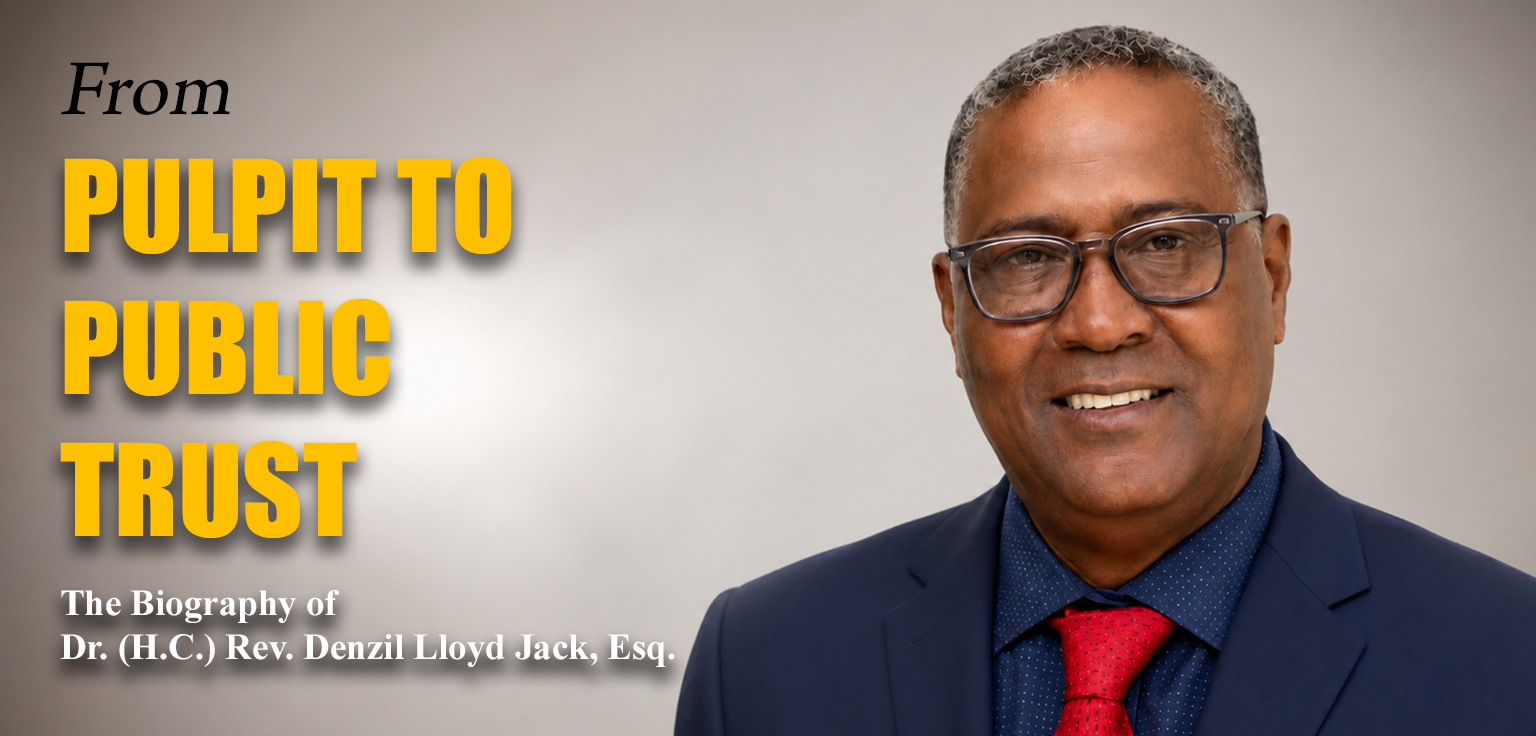
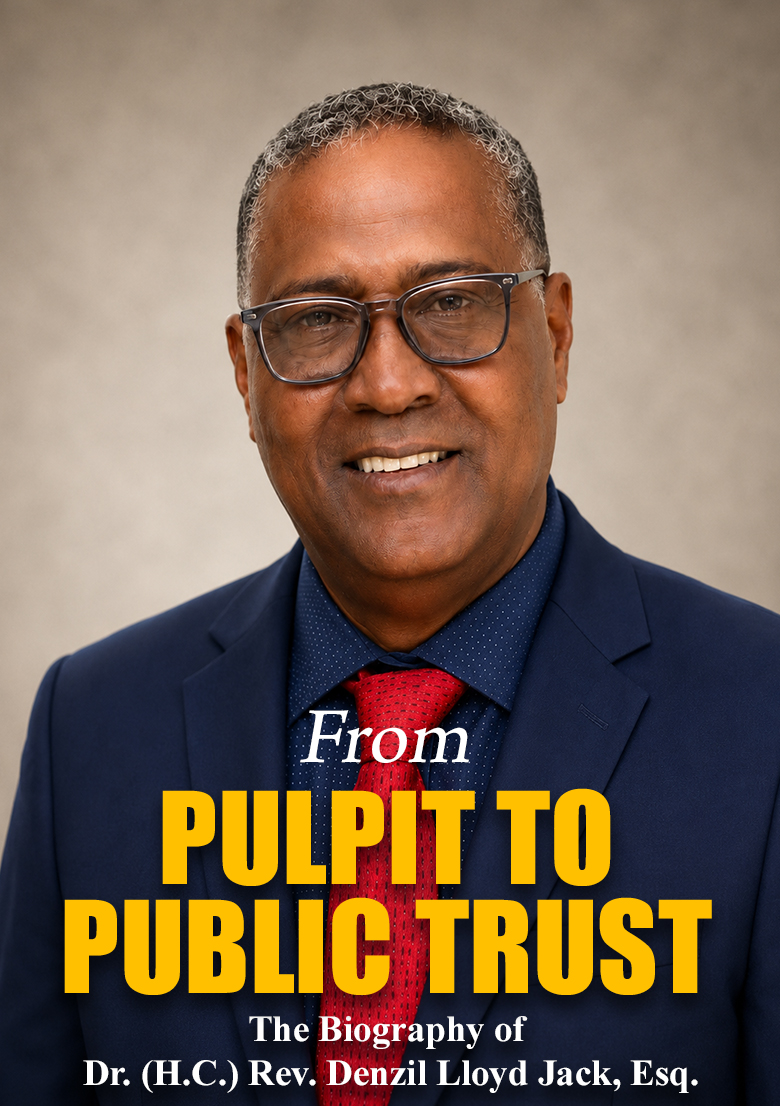
“The best way to find yourself is to lose yourself in the service of others.”
Introduction
The life of Dr. Rev. Denzil Lloyd Jack, Esq. reflects a steady and purposeful journey shaped by faith, learning, and service. His work has spanned decades of dedication to Christian ministry, theological education, and public service, all of which are based in Jamaica. His path is defined not by a single role, but by the thoughtful integration of multiple responsibilities that together form a consistent narrative of leadership and dedication.
From the beginning of his formal theological training, it was clear that he wanted to work in ministry. The completion of a Diploma in Ministerial Studies established a foundation for enhanced academic involvement, which was subsequently fortified by a Bachelor of Arts in Theology from the University of the West Indies. This academic journey continued when he earned a Master of Divinity degree from Luther Rice University in the United States. This showed both intellectual discipline and a desire to broaden his understanding of theology beyond his own area.
Practical ministry closely connected these academic experiences. Serving as a Pastor in Jamaica, his responsibilities extended across preaching, teaching, and sacramental duties. His work involved not only the delivery of religious instruction but also the provision of spiritual guidance and counseling to individuals and families. Through mentorship and consistent engagement with congregants, his role became one of both leadership and support, grounded in the principles of faith and service.
He was already a minister, but being named a Justice of the Peace for the Parish of St. Catherine was a big step up in his public service career. To do this job, you needed to have a strong sense of right and wrong and be committed to being fair, responsible, and accountable. His successful completion of the Justice of the Peace Training Programme showed that he was ready for civic duties and would be able to make important contributions to community justice and governance.
His involvement in community outreach and faith-based initiatives demonstrates a broader understanding of leadership that extends beyond institutional boundaries. Through these efforts, he has contributed to moral development and community engagement, reflecting a balanced approach to both spiritual and social responsibilities.
“Where there is no vision, the people perish.”
Phase 1: Identity and Calling

The life of Dr. Rev. Denzil Lloyd Jack, Esq. begins with a clear and enduring sense of identity shaped by faith, responsibility, and service. His journey is not defined by a single role but by the meaningful integration of spiritual leadership and civic duty, both of which have been consistently guided by principle and purpose. From the beginning, his calling has been a balance between his dedication to ministry and his dedication to the larger community. This has been the foundation that has guided every stage of his life.
His identity as a Pastor is rooted in a profound understanding of Christian theology and the responsibilities that accompany spiritual leadership. In this role, he has carried the responsibility of guiding individuals and families through the teachings of faith, offering direction not only through words but also through consistent action. His work shows that he is always committed to ministry, where the focus is on service, discipline, and a clear alignment with the values that define Christian leadership. This calling is not limited to formal duties but extends into everyday interactions, shaping how he engages with people and responds to their needs.
His identity as a theologian also shows how dedicated he is to learning and growing intellectually in the field of theology. This part of his life shows that he has a disciplined way of understanding faith through academic study and careful thought. His theological foundation has significantly influenced his viewpoint, enabling him to engage in ministry with clarity and profundity. His work stays structured and purposeful because he combines knowledge with practice. This makes sure that his contributions are always valuable and consistent.
In addition to his role in ministry, Dr. Rev. Denzil Lloyd Jack, Esq. carries the responsibility of serving as a Justice of the Peace in Jamaica. This position embodies a unique aspect of his identity, rooted in public service and civic responsibility. His appointment to this role signifies trust in his judgement, integrity, and ability to contribute to community justice. It represents an extension of his commitment to service, moving beyond the church into the broader framework of society, where ethical oversight and accountability are essential.
“Study to show thyself approved unto God, a workman that needeth not to be ashamed.”
Phase 2 : Early Academic Foundations in Ministry

The early academic journey of Dr. Rev. Denzil Lloyd Jack, Esq. reflects a period of intentional preparation, where purpose began to take structured form through disciplined learning and theological grounding. This phase marks the beginning of formal ministerial development, where the foundations of faith were not only believed but also studied, examined, and understood with clarity. It was during this time that the transition from personal conviction to structured ministry began to take shape, guided by a commitment to both knowledge and service.
Between 1988 and 1991, he studied for a Diploma in Ministerial Studies at the United Theological College of the West Indies. This was a key step in his journey. This time was not just about getting degrees; it was also about learning the principles of ministry, understanding the duties that come with being a spiritual leader, and getting ready for a life of service. The institution created a structured setting where theological teachings were taken seriously, which made it possible to explore faith and doctrine in a disciplined way.
The academic setting prioritised the development of a comprehensive understanding of ministry. The curriculum required students to pay attention to both theoretical and practical parts of the subject, making sure that what they learned wasn’t just in books but also in real life. This balance played a crucial role in shaping his perspective, allowing him to see ministry as both a calling and a responsibility that demands preparation, consistency, and accountability. Each aspect of his training contributed to building a framework that would later support his work in pastoral leadership.
For Dr. Rev. Denzil Lloyd Jack, Esq., this phase of study was marked by a steady and focused approach. It was a time of discipline, where learning required not only intellectual engagement but also a personal commitment to growth. The process of studying theology involved reflection, interpretation, and a willingness to engage with complex ideas, all of which contributed to a more profound understanding of faith. This academic journey did not exist in isolation but was closely connected to the broader purpose of serving others through ministry.
“The fear of the Lord is the beginning of knowledge, but fools despise wisdom and instruction.”
Phase 3 : Undergraduate Theological Development

The transition into undergraduate theological study marked a significant step in the intellectual and spiritual development of Dr. Rev. Denzil Lloyd Jack, Esq. Having established a foundational understanding of ministry through earlier training, this phase introduced a deeper level of academic engagement, where theological principles were explored with greater depth, structure, and analytical focus. It was a period defined by expansion, where learning moved beyond the basics into a more comprehensive understanding of faith and its applications.
His decision to get a Bachelor of Arts in Theology from the University of the West Indies shows that he is serious about building a strong academic foundation. He got this award on November 1, 1991, with Second Class Honours (Lower Division). It shows that he is dedicated and consistent in how he learns. The programme created a space where theology was looked at not just as a set of beliefs, but also as a field of study that needed discipline, interpretation, and critical thinking. This academic progression built on what had come before, allowing for continuity while adding new levels of understanding.
Within this phase, the focus shifted toward engaging with theology in a more structured and comprehensive manner. The academic demands required attention to detail, a willingness to explore complex ideas, and the ability to connect theoretical knowledge with practical application. This process was essential in shaping a perspective that was both informed and balanced, ensuring that his approach to ministry would be grounded in a well-developed understanding of theological concepts. The discipline required during this time reinforced the importance of consistency, not only in study but also in personal development.
For Dr. Rev. Denzil Lloyd Jack, Esq., going to the University of the West Indies was a time when he was always working to improve his academic skills. There was a time when people didn’t seek knowledge to get attention but to improve their ability to help others. Every part of the programme helped him learn more about theology, which let him think about the subject in a way that was both useful and thoughtful. This method made sure that learning stayed useful, which helped him get ready for ministry.
Note of Thanks
This note of thanks is offered in recognition of the many individuals, institutions, and experiences that have contributed to the journey of Dr. Rev. Denzil Lloyd Jack, Esq.. His life, shaped by faith, learning, and service, reflects not only personal dedication but also the collective influence of the environments in which he has served and grown.
He is very grateful to the schools that gave him a strong theological background, which helped him to be clear and disciplined in his ministry and leadership. These places of learning were very important in getting him ready for the duties he would later have in both spiritual and civic life.
Gratitude is also expressed for the communities that have engaged with him throughout his years of service. Their trust, participation, and continued interaction have been central to the effectiveness of his work, allowing his contributions in ministry, mentorship, and public service to remain meaningful and relevant.
Acknowledgment is further given to the structures of public service that entrusted him with responsibility as a Justice of the Peace, providing an opportunity to serve with integrity and accountability.
This journey stands as a reflection of shared effort, where dedication has been supported by the presence and contribution of many, shaping a path defined by purpose and service.
Thanks,
– Dr. Rev. Denzil Lloyd Jack, Esq