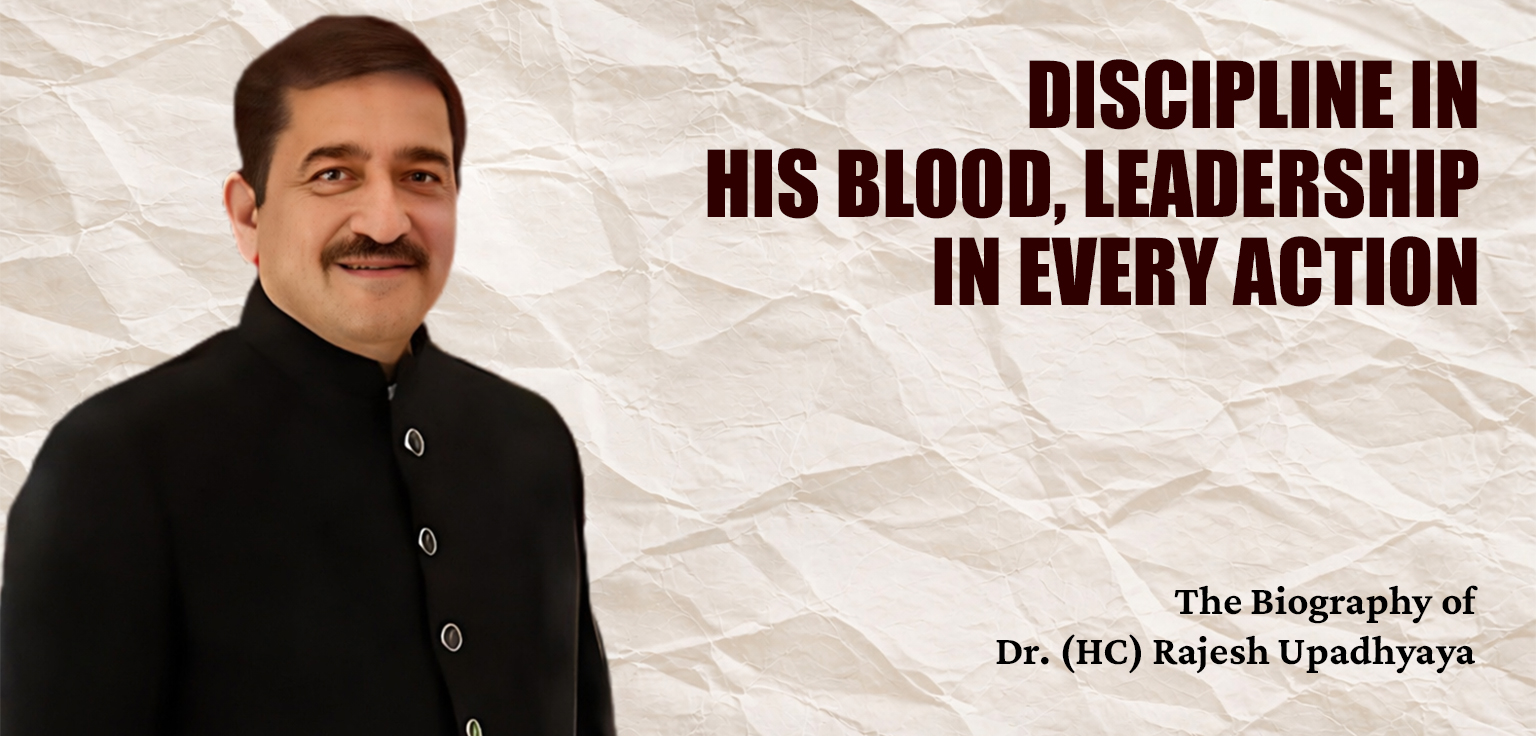
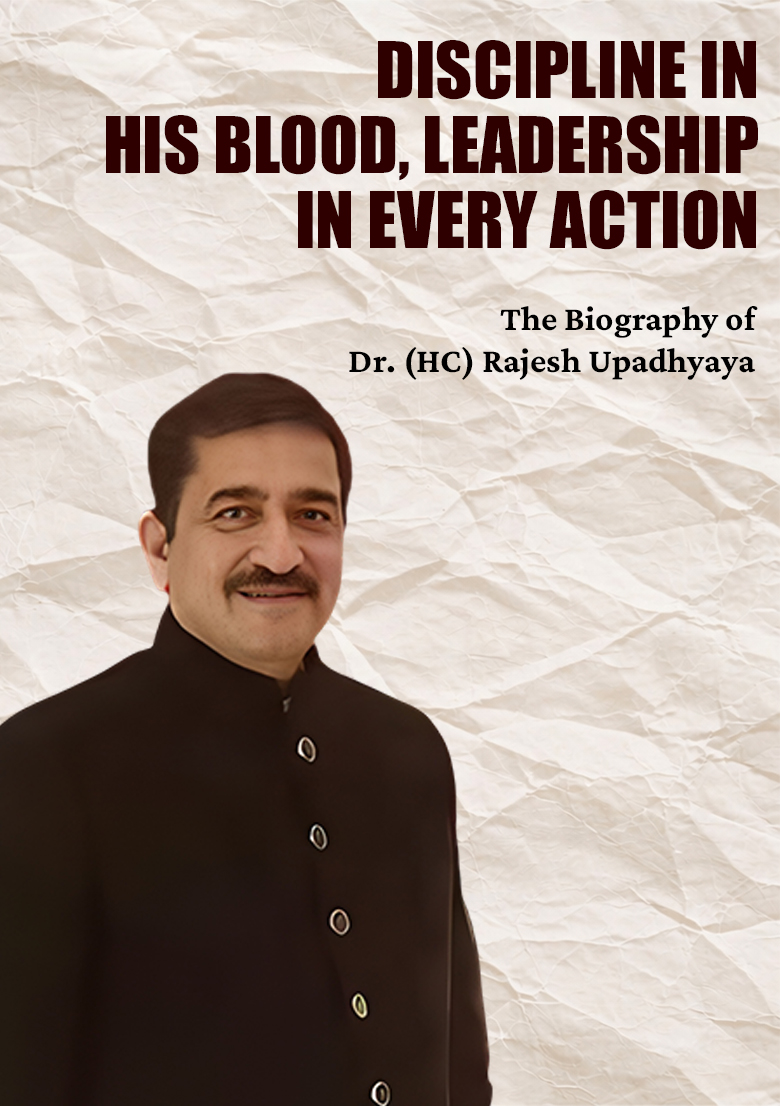
“I have never believed in reacting to chaos. I believe in restoring order. Discipline first, fairness always.”
Introduction
The life of Dr. Rajesh Upadhyaya unfolds as a study in structure, courage, and responsibility. It is a journey that moves through disciplined upbringing, global exposure, industrial turbulence, corporate transformation, and humanitarian service. At every stage, one principle remains constant. Order must be created where disorder exists, and fairness must anchor every decision.
Born as the youngest among four siblings, he grew up in a home where discipline was not preached but practiced. His father, a former fighter pilot, later associated with Miliatry Intelligence and the Central Government Railways, embodied physical endurance and mental strength. His life represented national service, precision, and unshakable composure. Under such influence, routine became training, and training became instinct. Early morning discipline, physical conditioning, and structured living formed the invisible framework of his personality.
His mother brought balance to that framework. Coming from a lineage marked by dignity and refinement, she instilled integrity, restraint in speech, and emotional control. She taught that words must be measured and that character is revealed most clearly during testing moments. These teachings would later define how he negotiated with unions, addressed crises, and carried authority without aggression.
The intellectual environment around him extended beyond his immediate home. His maternal grandfather, one of the earliest Indians to complete an MD in the United States in 1926 and the first Mayor of Ajmer, stood as a figure of accomplishment and public service. The wider family included accomplished administrators and civil servants. Excellence, therefore, was never an abstract expectation. It was visible in lived examples.
As a student at Kendriya Vidyalaya, he developed both physical stamina and intellectual curiosity. He excelled in sports, participating in cross-country runs stretching up to seventy-five kilometers and representing at competitive levels in games such as Kho Kho, Kabaddi, and Cricket. At the same time, his academic strength, particularly in Biology, reflected his fascination with human systems. That curiosity led him to observe a postmortem during his school years and pursue studies in science and homeopathy. The desire to understand structure, whether of the human body or of institutions, would remain a defining trait.
“Discipline was not something I was taught through words. I saw it lived every single day, and that made all the difference.”
Phase 1: Born into Discipline and Legacy
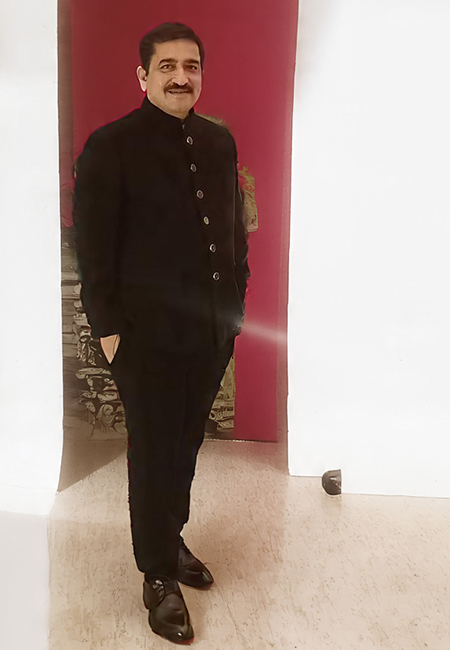
The story of Dr. Rajesh Upadhyaya begins in a home where discipline was not enforced through fear but demonstrated through example. As the youngest of four siblings, he grew up observing, absorbing, and quietly learning from an environment shaped by structure, service, and dignity. His life laid its foundation long before he entered classrooms, corporate boardrooms, or embarked on international assignments. It was laid within the walls of his home.
His father was a man of remarkable presence. A former fighter pilot, he had once flown from India to the United States without halt during the 1960s, a feat that reflected courage and technical mastery. His association with Miliatry Intelligence and later with the Central Government Railways spoke of a life committed to national responsibility. Yet beyond the uniforms and titles was a father who believed in raising his children with mental and physical strength.
For the youngest son, this meant growing up under a regimen that was clear and uncompromising. Early mornings were not optional. Physical endurance was constant. Discipline was not negotiable. Exercise, routine, and punctuality were woven into daily life. There was no dramatic announcement of these principles. They were simply practiced. In watching his father, young Rajesh understood that strength is not loud. It is consistent.
Even at ninety-eight years of age, his father remained physically active and mentally sharp. That continuity of discipline across decades left an imprint that lasted. It taught him that resilience is not built overnight. It is cultivated daily, quietly, and with intent. Later in life, when he would stand in front of agitated workers, navigate industrial crises, or manage large-scale transformations, the calm he carried had roots in those early mornings of structured upbringing.
If his father represented discipline in action, his mother embodied grace with strength. Coming from a royal lineage, she carried herself with quiet dignity. But what influenced him most was not her background.
“Energy without direction can become disruption. Energy with discipline becomes strength.”
Phase 2 : The Energetic Mind and the Making of Character
This phase sums up as Dr. Rajesh Upadhyaya’s motion. The discipline instilled at home did not make him withdrawn or restrained in spirit. On the contrary, it created a young boy who was active, curious, athletic, and restless in the best possible way. He marked his childhood and student years not with quiet conformity but with an energetic search for experience and understanding.
He studied at Kendriya Vidyalaya, an institution known for its structured environment and disciplined culture. The setting suited him. It mirrored the order he had already known at home, yet it also offered space for expression. School was not merely a place of attendance. It became an arena where physical stamina and intellectual curiosity developed side by side.
Athletics formed a significant part of his identity during these years. He participated in cross-country running, covering distances that ranged from ten kilometers to seventy-five kilometers. Such endurance was not accidental. It was a continuation of the physical conditioning he had received from his father. Running long distances demands not only stamina but also mental resilience. It trains the body to persist and the mind to remain steady when fatigue sets in. Those early races were lessons in endurance that would later translate into professional persistence.
Beyond running, he represented in competitive sports such as Kho Kho, Kabaddi, and Cricket. These were not solitary activities. They required teamwork, coordination, and strategy. Participation at competitive levels meant learning to operate within a group dynamic, to understand roles, and to accept both victory and defeat with composure. Sports shaped more than his physical fitness. They sharpened his reflexes, strengthened his concentration, and built quiet confidence.
While his physical energy was evident, his academic inclination revealed another dimension. Biology fascinated him deeply. He consistently scored near-perfect marks in the subject. The human body, with its intricate systems and delicate balance, captured his attention. He did not approach it casually. He studied it with genuine interest.
“Pressure does not frighten me. It clarifies me. When the situation is intense, the mind must become steady.”
Phase 3 : Into the Fire: The United Nations Years
Dr. Rajesh Upadhyaya’s journey took a significant turn when he ventured into a world that was significantly different from classrooms, sports grounds, and structured academic environments. His association with the United Nations High Commissioner Wing introduced him to realities that most professionals encounter only through reports and headlines. He experienced these realities firsthand.
This phase was not about comfort. It was about exposure. It was about entering situations where uncertainty was constant and stability had to be created rather than assumed. His training under the United Nations framework was rigorous and multidimensional. It was not limited to administrative preparation. It involved structured exposure to anthropology, psychology, sociology, and military disciplines. This combination of subjects was not incidental. Each one sharpened a different dimension of his thinking. Anthropology helped him understand communities and cultural patterns. Psychology strengthened his ability to read human behavior under stress. Sociology offered insight into group dynamics and conflict structures. Military training instilled alertness, discipline, and tactical awareness.
Carrying a white passport with high security clearance, he entered assignments that demanded both discretion and courage. These were not desk roles. They required presence in sensitive zones and environments shaped by political tension and humanitarian crisis.
The aftermath of the Chernobyl nuclear disaster was one of the most significant exposures during this period. The site symbolized the catastrophic consequences of systemic failure. Observing and being part of investigations in such an environment required composure. Radiation zones are not merely physical spaces. They carry psychological weight. Fear is invisible but palpable. In such settings, panic can compromise judgment.
For Rajesh, his situation was a testing ground. The discipline built during childhood and adolescence now found practical application. Calm observation replaced anxiety. Structured thinking replaced reaction. He learned that in high risk situations, clarity of mind becomes the greatest asset.
Note of Thanks
This biography of Dr. Rajesh Upadhyaya would remain incomplete without acknowledging the guidance, trust, and leadership extended by Mr. Dilip Shanghvi, whose vision shaped one of India’s most significant pharmaceutical institutions. Working within such an environment required not only professional competence but also alignment with a larger organizational purpose. The confidence placed in Rajesh during complex integrations, regulatory transitions, and large-scale workforce alignments reflected an ecosystem where leadership was supported by trust and clarity. That trust enabled structured execution and strengthened institutional stability.
Gratitude also extends to his spouse, whose quiet strength remained a constant throughout the demanding phases of his journey. Behind boardroom negotiations, plant consolidations, regulatory remediations, and humanitarian commitments stood a home anchored in patience and understanding. Her presence steadied the long hours, the pressure of responsibility, and the emotional weight carried through both professional and personal trials. Stability at home often becomes the unseen pillar behind visible leadership.
The journey of Dr. Rajesh Upadhyaya reflects not an individual effort alone but the confluence of mentorship, institutional faith, and personal support. Recognition, awards, and milestones mark achievements, yet enduring strength grows from relationships that reinforce purpose.
In expressing thanks, this acknowledgment honors those who contributed to an environment where discipline, fairness, and structured leadership could flourish with confidence and dignity.
Thanks,
– Dr. Rajesh Upadhyaya