“A life lived with integrity does not simply tell a story — it creates a standard.”
Introduction
The biography of Dr. Rafiqul Haider is not written merely to catalogue dates, events, and milestones. It is written to reflect a life that embodies the quiet yet powerful truth that character outlasts circumstance, and values outshine recognition. His journey from modest beginnings in Bangladesh to a respected position of leadership and community service in the United Kingdom is not one of sudden fortune or easy privilege. It is the journey of a man who chose perseverance over defeat, ethics over compromise, and service over self-interest.
Born in Narayanganj, Dhaka, with ancestral roots in Kulaura, Moulvibazar, Dr. Haider’s earliest years were shaped by the values of his parents, the resilience of his family, and the sacrifices that etched responsibility deep into his being. His father, Asaddar Ali, carried the discipline of military service in the British Army during World War II into his civilian life as an accounts officer. His mother, Alam Ara Begum, nurtured her six sons with faith, patience, and moral strength. The family endured hardship, but their strength was never defined by lack of resources—it was defined by the abundance of values that guided them.
Dr. Haider, every struggle thereafter became a way to honor his brother’s sacrifice — not with slogans or speeches, but with a life that would embody dignity, discipline, and service. This sense of responsibility shaped his approach to education, work, and community, making his life not just personal, but profoundly purposeful.
Education became his first proving ground. At Narayanganj High School and later at Dhaka University, where he studied mathematics and physics, he developed the habits of discipline, patience, and focus that would guide him throughout his life. Yet his pursuit of learning was never about achievement for its own sake. It was about the responsibility to use knowledge as a tool for clarity, fairness, and contribution. Later, when he migrated to the United Kingdom and pursued formal studies in accounting at South Thames College, the challenges multiplied. He balanced long hours of work with the rigor of study, enduring fatigue, isolation, and sacrifice. Yet through it all, his resolve never wavered. For him, education was not a privilege—it was a duty.
His professional career reflected the same philosophy. Beginning at the Bangladesh Government’s Social Service Department, he gained an early appreciation for the role of public service. In the UK, he found his professional home at Mohammad Shah & Co. LLP, one of the renowned chartered accountancy firms in the country. Guided by mentors such as Nasir Ali Shah, Abdul Muhith, Syed Abdur Rahman, and the late Mohammad Ferdous Bhuiyan, Dr. Haider honed his expertise in taxation, VAT, and investigative cases. Over time, through loyalty, precision, and unwavering ethics, he rose to become a Partner at the firm — a testament to perseverance in an era where many sought shortcuts.
But his story cannot be reduced to professional milestones. Dr. Haider’s true distinction lies in his ability to balance professional excellence with ethical leadership and community service. As a leader, he was calm, principled, and empathetic—never seeking dominance, but always earning trust. As a mentor, he invested in others, guiding students, professionals, and colleagues not only with technical advice but with moral wisdom. As a community servant, he assumed roles of treasurer, trustee, and advisor in organizations across the UK and Bangladesh, always ensuring financial transparency, fairness, and responsibility. His service was never about recognition; it was about duty.
“The roots that ground us in childhood become the compass that guides us through life.”
Phase 1: Roots of Resolve: Childhood and Family Foundations

The life of Dr. Rafiqul Haider begins not in privilege or abundance, but in a household where values carried more weight than wealth. Born in Narayanganj, Dhaka, with ancestral ties to Kulaura, Moulvibazar, he entered the world as the youngest of six brothers. This position — the last in a line of sons — was both a challenge and a gift. It gave him the benefit of learning from the experiences of his elder brothers, yet it also placed upon him the responsibility of honoring their sacrifices, struggles, and achievements.
His father, Asaddar Ali, was a man of discipline and quiet dignity. Having served in the British Army during World War II, he carried into civilian life the habits of precision, order, and resilience. Later, as an accounts officer at the Bangladesh Inland Water Transport Authority (BIWTA), he lived by principles of honesty and hard work, ensuring that his family understood the importance of both education and ethical conduct. Dr. Haider often recalled how his father’s evenings at home were not simply times of rest but moments of teaching. Books, numbers, and life lessons flowed seamlessly into conversation, instilling in his sons the truth that education was not a privilege but a duty.
If his father was the disciplinarian and guide, his mother, Alam Ara Begum, was the moral center. She was the quiet strength behind the household — patient, resilient, and deeply rooted in faith. Her role was not confined to managing the home; it was in shaping the hearts of her children. With patience and compassion, she taught them humility, gratitude, and the value of service. Dr. Haider would later reflect that much of his ability to stay calm under pressure, to endure hardship with grace, and to treat others with dignity came directly from the example of his mother.
“Education is not the filling of a vessel, but the lighting of a flame.”
Phase 2: The Discipline of Learning: Education and Intellectual Growth
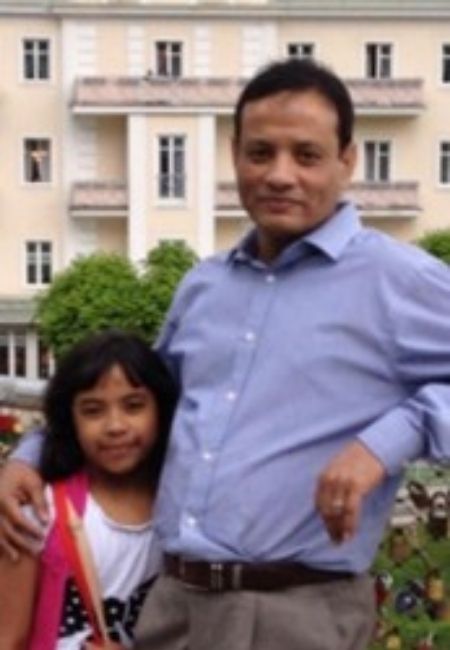
If the foundation of Dr. Rafiqul Haider’s life was laid in his childhood home, the walls of his character were built through his devotion to education. From an early age, he understood that knowledge was not a luxury, nor even a personal achievement, but a responsibility — one that could change not only his own life but the lives of those around him. His parents’ constant reminders that education was the path to dignity and service became the compass guiding him forward.
At Narayanganj High School, Rafiqul’s seriousness was evident. While many of his peers saw schooling as a duty to complete, he embraced it as a calling. Teachers noticed not just his diligence but also his curiosity. He was not content to memorize facts; he wanted to understand how things worked. Mathematics appealed to his love for precision and order, while science fed his hunger for discovery. This balance between structure and curiosity would remain with him for life.
Even in his school years, Rafiqul was not selfish with his knowledge. Friends recall how he would tutor classmates, often staying after class to explain difficult problems. Teaching, for him, was a natural extension of learning. This generosity of spirit foreshadowed the mentorship that would later become a hallmark of his professional and community life.
After excelling in school, he entered the prestigious University of Dhaka, where he pursued studies in mathematics and physics. The transition from school to university was not without challenge. Resources were scarce, financial burdens were real, and the expectations of being the youngest son weighed heavily. Yet, Rafiqul faced these obstacles with the resilience he had inherited from his family. At Dhaka University, he developed habits that shaped his intellectual identity: discipline, clarity, and patience. Mathematics demanded precision; physics required imagination and persistence. The balance of these two fields gave him both the rigor of structure and the openness of inquiry. More importantly, it taught him that education was not about grades or recognition, but about cultivating the mind to think ethically, solve problems, and contribute responsibly.
“Work done with honesty may not always bring immediate rewards, but it builds a repu- tation that outlasts lifetimes.”
Phase 3: A Career of Integrity: From Bangladesh to the United Kingdom
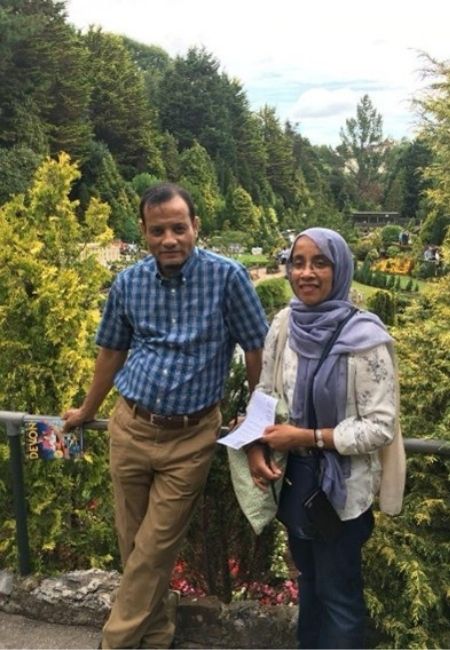
After years of disciplined study, Dr. Rafiqul Haider stepped into the professional world with the same clarity that had guided his academic journey. His earliest role at the Bangladesh Government’s Social Service Department was not glamorous, but it was deeply formative. It taught him the value of public service, the importance of accountability, and the responsibility that comes with handling matters that affect ordinary people’s lives. This first professional step grounded him in the belief that work, regardless of scale, must always be conducted with integrity.
When the time came to migrate to the United Kingdom, it was not a decision made lightly. Migration was a leap of faith — into uncertainty, hardship, and sacrifice. Yet, Dr. Haider carried with him the lessons of his parents and the resilience forged by his brother’s sacrifice. He understood that though the path would be challenging, the opportunity to grow, serve, and contribute at a higher level was worth every obstacle.
In London, he began his career in earnest at Mohammad Shah & Co. LLP, one of the renowned chartered accountancy firms in the country. The firm was a place of both opportunity and testing. The technical demands of taxation, VAT, and investigative cases required sharpness of mind; the responsibility of advising clients required clarity and precision; and the trust placed in him required loyalty and ethical grounding.
Here, mentorship played a decisive role. Under the guidance of Nasir Ali Shah (GCMA), Abdul Muhith (ACA), Syed Abdur Rahman (ACA), and the late Mohammad Ferdous Bhuiyan, Dr. Haider refined not just his technical knowledge but also his professional philosophy. His mentors emphasized that an accountant’s worth is measured not only by numbers balanced or cases won, but by trust preserved. Rafiqul absorbed this lesson deeply: every decision, every recommendation, and every calculation must be rooted in honesty.
Note of Thanks
The story of Dr. Rafiqul Haider is not a solitary tale. It is a tapestry stitched together by countless hands — those of family, mentors, colleagues, students, friends, and community members. In every chapter of his life, others played a role: guiding him, uplifting him, challenging him, and inspiring him. This note of thanks acknowledges those bonds of love and responsibility that gave his journey its richness.
First and foremost, gratitude is owed to his parents, Asaddar Ali and Alam Ara Begum. From his father, he inherited discipline, a respect for numbers, and an unshakable sense of integrity. From his mother, he absorbed patience, humility, and compassion. Their sacrifices during financially strained times ensured that their children understood that education was not a privilege but a duty. They did not leave behind great wealth, but they left something far greater — values that outlived them and continue to guide every decision.
A profound debt of thanks also belongs to his eldest brother, Jalal Uddin Haider, who gave his life during the 1971 Liberation War. Jalal’s sacrifice was not only a loss but also a legacy — a reminder that freedom and dignity come at great cost. Every achievement that followed in Rafiqul’s life was lived in part to honor his brother’s memory.
To his wife, Dr. Haider extends boundless gratitude. Through years of migration challenges, professional struggles, and personal hardships, her partnership was unwavering. She carried not only the responsibilities of home but also the emotional weight of encouragement, ensuring that Rafiqul never lost sight of his goals. In every success, her patience, resilience, and faith were quiet forces behind the scenes.
His children, too, deserve acknowledgment. They grew up watching their father live out his values, and in turn, they offered him daily motivation to persevere. Their laughter, questions, and achievements reminded him of why resilience mattered and why values had to be lived consistently, both in public and private life. In later years, their companionship became one of his greatest joys, affirming that the sacrifices of work and service were never in vain.
Dr. Haider also acknowledges the mentors who guided his professional path. At Mohammad Shah & Co. LLP, individuals such as Nasir Ali Shah (GCMA), Abdul Muhith (ACA), Syed Abdur Rahman (ACA), and the late Mohammad Ferdous Bhuiyan provided more than technical guidance. They modeled professionalism anchored in ethics. Their lessons about transparency, loyalty, and the sanctity of trust shaped Rafiqul’s career and ensured that he always chose principle over profit.
To his colleagues and peers, both in Bangladesh and the UK, he extends appreciation. Their trust in his leadership and their collaboration made it possible to achieve milestones that would have been impossible alone. Every case resolved, every challenge overcome, and every organizational initiative advanced was the product of teamwork, not individual effort.
Dr. Haider is deeply grateful to the organizations that entrusted him with leadership: the Global Jalalabad Association, the South London Bangladesh Welfare Association, and the Darul Amaan Masjid Management Committee, among others. Serving as treasurer and trustee was a privilege, but it was also a responsibility only made possible by the trust of community members. Their confidence in his integrity allowed him to contribute meaningfully, and for that trust, he remains forever thankful.
Special thanks must also be offered to the charitable initiatives that gave him purpose beyond professional life. The Royal Marsden Hospital Cancer Charity, the Beani Bazar Cancer and General Hospital, the Friends of National Heart Foundation Sylhet, and the Sreepur Village in Dhaka were not simply projects to support — they were causes that deepened his empathy and broadened his understanding of service. These initiatives allowed him to transform personal trials into public contributions, reminding him always that hardship can be a seed of generosity.
Dr. Haider also remembers the Labour Party’s local community branch and leaders like Councillor Sherwan Chowdhury, whose collaborations gave him opportunities to connect with broader civic responsibilities. Through these networks, he was able to voice issues affecting communities both local and international, turning private concern into public advocacy.
Thanks
Dr. Rafiqul Haider