"Words can inspire, thoughts can provoke, but only action truly brings you closer to your dreams"
Dedication
To my father, your work ethic, dignity, and quiet resolve continue to guide me, even long after your words turned into memories. You taught me the meaning of responsibility before I ever entered the world of business or leadership. You believed in showing up—not just for yourself, but for others. Your life was your message, and I have carried that message into every room I’ve walked into.
To my mother, your boundless love, wisdom, and strength in the face of adversity have been the soft power that carried our family through every season. You taught me how to listen deeply, care honestly, and lead with humanity. You gave me the courage to be kind in a world that often forgets the value of empathy. You were, and always will be, my moral compass.
To my sister, Elizabeth and my nephew Alexander who walked alongside me through life’s valleys and triumphs—your support, laughter, and presence made the burden lighter and the victories sweeter. Our roots kept me grounded as the world grew bigger and more complex.
To the past and present Presidents, Prime ministers, Ministers of Tourism, Members of Parliament, policymakers, and public officials who have shaped Malta’s national direction—this is a heartfelt dedication to your partnership and trust. Your willingness to listen, to engage with the realities on the ground, and to involve voices like mine in decision-making has been instrumental in fostering a more inclusive and forward-thinking Malta.
This book is also dedicated to the Maltese business community—my second family, and my lifelong commitment. From the smallest shop owner to the most ambitious entrepreneur, you are the pulse of this nation. You have taught me that economic growth is not just about profit—it’s about people, perseverance, and pride in one’s work. Your stories, your challenges, and your successes have shaped my mission.
To the Malta Chamber of SME’s, The Malta Hotels and Restaurants Association and every trade body I have had the honour of serving or collaborating- you have given me purpose beyond personal ambition. It has been my privilege to represent your voices in policy corridors, media discussions, and community forums. You trusted me with your concerns and your dreams, and I have done my best to honour that trust with transparency and tenacity.
To the hospitality industry of Malta, which I have championed for decades—you are not just a sector; you are the soul of our island. You are the first welcome and the lasting memory. You bring jobs, joy, and international admiration to our shores. I dedicate this work to your resilience, especially through turbulent times. You showed the world what Maltese courage looks like.
Phase 1 : Strings and Speeches
The only way of finding the limits of the possible is by going beyond them into the impossible.h

Born on May 12, 1955, Dr. Philip Fenech was raised in a household where tradition, discipline, and a deep sense of public duty were woven into the very fabric of daily life. His father, a highly respected civil servant, left a profound legacy through his work during a transformative era in Maltese history. Initially serving as a stenographer in Parliament, meticulously documenting the speeches of ministers, he later became the personal assistant to the Commissioner of Police. Eventually, he rose to a significant national role as the personal assistant to Malta’s Governor General during its days as a British colony. In a remarkable historical moment, he personally oversaw the transition of duties from the British Governor to the first Maltese Governor General, a symbolic and practical handover of sovereignty that deeply influenced young Philip’s understanding of leadership, continuity, and legacy.
Nostalgia often sweeps over Dr. Philip Fenech as he reflects on the influential presence of his father, Mr. Joseph Fenech, a man of precision and poise who served as the personal assistant to Sir Maurice Dorman, Malta’s last colonial Governor and first Governor-General. Among Philip’s most vivid childhood memories were of his father bent over his desk, swiftly taking shorthand notes while on the telephone with Dorman, capturing every word of preparation for Queen Elizabeth II’s historic 1967 visit. He would then rush to the Typewriter, the rhythmic clicking of keys and the familiar ding of the carriage return marking the intensity of that era.
The month leading up to the royal visit was a time of heightened discipline at home, with the young Dr. Philip Fenech instructed not to disturb his father, whose professional ethos was shaped by an uncompromising sense of excellence, especially when dealing with the British. That visit held national and personal significance, embodying Malta’s colonial relationship with Britain and the reverence held by many,
including the Fenech family, for the Royal Family. So deep was their admiration that Philip was named after Prince Philip, while his sister was named after Queen Elizabeth. The family’s connection extended beyond ceremony, as Joseph Fenech was also closely associated with Lord Louis Mountbatten, Prince Philip’s uncle and a key figure in Malta’s naval history.
Mountbatten once invited Joseph to relocate to the UK for a position with the British government, a path not taken due to family commitments and fate, which in hindsight may have saved his life, as Mountbatten was later assassinated by the IRA. Dr. Philip Fenech still remembers his parents going out for a cocktail party with Queen Elizabeth II and Prince Philip, hosted by Governor Dorman and then Prime Minister George Borg Olivier, his mother in full evening attire and his father in a tailcoat.
Phase 2 : Chasing Knowledge in his own Way
Phase 2: Chasing Knowledge in his own Way Live each day as if your life had just begun.
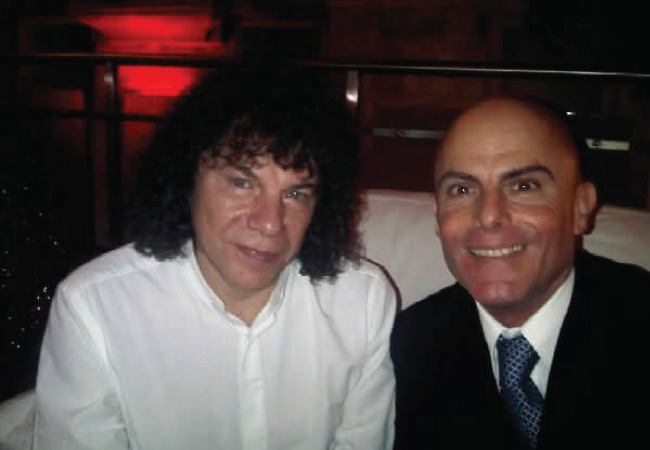
Unlike many who follow a linear academic path, Dr. Philip Fenech’s journey through education was shaped by real-world experience, emotional intelligence, and a strong instinct for business. Born into a household that revered structure and discipline—his father a high-ranking civil servant—Dr. Philip Fenech was raised in an environment where education was not only encouraged but expected. Yet, from a young age, his heart beat to a different rhythm. He was drawn to music, specifically the guitar, and early on he found himself immersed in the world of bands, melodies, and the thrill of live performance. His first job, in fact, was playing in a band for the British Services in Malta, performing at socials, parties, and clubs. This was his classroom, an unconventional space where he began developing soft skills that would later form the bedrock of his career.
Despite his early resistance to formal education, Dr. Philip Fenech never closed the door on learning. He understood that knowledge could be acquired not just through textbooks, but through observation, interaction, and immersion. His initial foray into management while working on a Mediterranean cruise liner sparked a new kind of curiosity. While organizing lounge events and theme nights for cruise guests, he gradually developed a fascination for the operational side of business. This passion slowly steered him toward structured learning. He was no longer the boy avoiding studies; he was now the man eager to sharpen his skills to match the responsibilities he had taken on.
This hunger for deeper understanding led him back to academia, albeit later than most. Recognizing that his practical exposure in the hospitality industry could be enhanced by formal training, Dr. Philip Fenech enrolled at the University of Malta. He pursued a diploma in Management, along with studies in Micro and Macro Economics and aspects of
Maltese Law for Business Executives. These courses weren’t designed for traditional students; they were tailored for individuals already immersed in the business world, individuals like Dr. Philip Fenech. Surrounded by seasoned professionals, including hotel managers and senior business owners, Dr. Philip Fenech thrived. This environment allowed him to view the larger economic landscape and see how his own ventures fit into the broader picture.
In parallel, he acquired a certificate in accounts from the London Chamber of Commerce, further grounding his hands-on experience with academic credentials. These programs didn’t just grant him certificates, they offered him frameworks, vocabulary, and theoretical tools that would allow him to articulate and expand upon the business instincts he had developed organically. His education became a mirror, reflecting and validating the lessons he had absorbed over years of work in clubs, restaurants, and event management.
Phase 3 : Evolution of an Industry Leader
Whether You Think You Can or Think You Can’t, You’re Right.
Dr. Philip Fenech’s professional journey began not in a boardroom, but on a stage. As a young man, his passion for the guitar and live performance led him into the vibrant entertainment scene of Malta during the years when British services still held social events on the island. Playing music at these gatherings wasn’t just a job, it was Dr. Philip Fenech’s first introduction to the world of hospitality and live entertainment. This early exposure would plant the seeds for a lifelong commitment to the leisure industry, where creativity, management, and cultural vision would become his driving forces.
One of the most pivotal chapters in his early working life came when he was offered a role performing on a luxury cruise liner operated by Sovereign Cruises. While the initial draw was music, Dr. Philip Fenech quickly became fascinated by the logistics behind the experiences he was helping to create. He began assisting with lounge operations, organizing events, and learning the finer points of club and hospitality management. This immersive, high-stakes environment was his real-world apprenticeship. The cruise liner became his floating classroom, where he honed skills in customer service, event coordination, and the intricate dance of high-end hospitality.
Dr. Philip Fenech’s aptitude did not go unnoticed. Before long, he transitioned from performing to managing the lounge itself. This leap from artist to operator was a significant turning point, marking the start of his career in management. When he eventually returned to Malta, he brought with him a renewed sense of purpose. A friend’s struggling restaurant presented the perfect challenge. Dr. Philip Fenech envisioned a transformation, and with his unique blend of creativity and practical know-how, he converted the space into a discotheque-style club restaurant. It thrived under his direction and became an early testament to his knack for turning vision into viable business.
By the age of 25, Dr. Philip Fenech was ready to make a larger move. He spotted an opportunity to acquire a club, a venture that required courage, business intuition, and a reliable partner to support the financial load. Teaming up with a sleeping partner, Philip acquired and launched what would become one of Malta’s most iconic nightlife venues, BJ’s, a jazz bar and restaurant offering French cuisine. BJ’s was not just a business; it was a mission. At a time when the disco craze was drowning out live performance, Dr. Philip Fenech made it his goal to preserve live music as an art form and a cultural experience. The venue became a sanctuary for musicians and music lovers alike, prioritizing authenticity over commercialism.
For over three decades, from 1980 to 2013, BJ’s remained at the forefront of Malta’s nightlife scene. It attracted internationally renowned performers and built a legacy around high-quality live music. Under Dr. Philip Fenech’s management, it wasn’t just about food and entertainment, it was about fostering a community, creating an artistic platform, and contributing to the island’s cultural heritage. The club’s success allowed him to further influence the direction of nightlife on the island, and he became an outspoken advocate for the importance of live entertainment in a world increasingly dominated by digital soundscapes.