“The greatest strength we can possess is the courage to stand for what is right, even when the world around us questions our resolve.”
Introduction
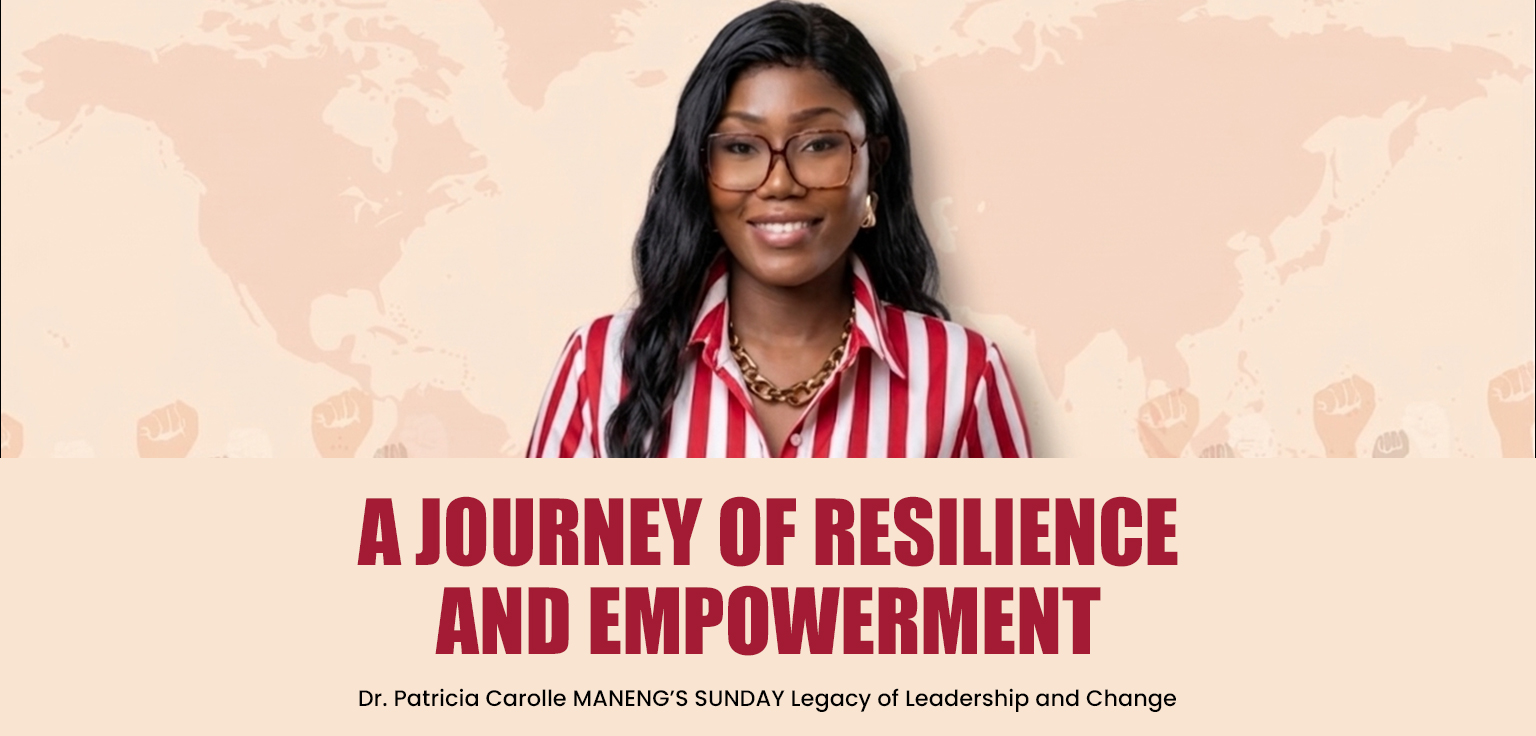
Dr. Patricia Carolle MANENG’S SUNDAY is a name that resonates strongly in the field of human rights advocacy, particularly in advancing the empowerment of women and girls. Her life’s journey reflects a sustained commitment to overcoming personal adversity, challenging entrenched societal barriers, and dedicating herself to causes greater than herself. Through her transformative work, she has become a leading voice and a source of inspiration for thousands of marginalized women and girls, especially in conflict-affected settings.
Born on April 6, 1991, in Douala, Cameroon, Patricia’s early years were shaped by a world that was not kind to girls. Raised in a patriarchal society, where her brother was favored and seen as the one who would inherit all, she faced the harsh realities of gender inequality. But rather than succumb to the limitations placed upon her, Patricia’s upbringing ignited a fierce determination to fight for equality. Her father, despite the prevailing norms, placed great emphasis on the value of education, and it was this encouragement that laid the foundation for her remarkable journey.
From a young age, Patricia displayed an insatiable thirst for knowledge. While other children might have been preoccupied with typical childhood pursuits, she began questioning the societal inequities that surrounded her. It was this curiosity about the world and the deep frustration with injustice that sparked her desire to bring about change. By the time she was 12, she was already conscious of the disparities between how girls and boys were treated, and this awareness would fuel her journey toward advocating for the rights of women and girls.
Patricia’s early academic career, however, was not without its challenges. She faced setbacks during her GCE Advanced Level exams, where her first failure was a crushing blow. It was a humbling moment that made her question her abilities. Yet, Patricia, known for her resilience, overcame this obstacle and passed the exam the following year. It was through this experience that she learned that failure is not a permanent state but a stepping stone to greater success. This mindset would guide her throughout her educational and professional journey.
After completing high school, Patricia pursued a Bachelor’s degree in Biochemistry and Molecular Biology at the University of Buea. It was during this formative period that her advocacy began to take shape, rooted in the profound personal hardships she endured. Advocacy became both a means of survival and a tool of resistance an avenue through which she confronted injustice, gender-based violence, and sexual harassment. Her university years, however, were marked by a deeply distressing experience when a lecturer attempted to abuse his position of authority to exploit her. This ordeal exposed the entrenched power imbalances and systemic abuse that many women face within academic institutions. Despite the personal trauma and the dismissal of her claims by both her family and university authorities, Patricia chose to pursue justice rather than silence. This pivotal experience became a defining moment in her life, solidifying her resolve to defend the rights of women and girls and laying the foundation for her lifelong commitment to gender justice and accountability.
“In the face of adversity, I learned that my worth was not defined by the society norms around me, but by my own actions and beliefs.”
Phase 1: Early Life and Inspirations

The story of Dr. Patricia Carolle MANENG’S SUNDAY begins in the bustling city of Douala, Cameroon, where she was born on April 6, 1991. In a country where the scars of colonialism still linger and patriarchy runs deep, Patricia’s journey has been nothing short of extraordinary. Raised in a traditional family, where societal norms dictated that the male child would inherit the family’s wealth and be given more opportunities, Patricia faced obstacles from the very beginning. These limitations were not only imposed by her community but were also deeply ingrained in her family’s worldview, making her early life a blend of frustration, determination, and quiet rebellion.
Patricia was the third daughter in a family of four children, with an elder brother who was often seen as the one destined for greatness. Her father, Emmanuel MANENG, a man deeply rooted in traditional values, believed that a boy would carry on the family legacy. For Patricia, this meant growing up with the persistent feeling that she was somehow lesser—not because of her intellect or abilities, but simply because she was a girl. Yet, despite his adherence to tradition, her father often reminded his daughters that education is the key to change, a belief that became the guiding principle of Patricia’s journey toward success.
At an early age, Patricia was keenly aware of the subtle but powerful injustices surrounding her. The inequalities she faced were not just about being a woman in a male-dominated society but also about feeling like an outsider in her own family. Her father’s disappointment at the birth of a third daughter left a lasting impression on her. As a child, she could not understand why, when she was born, her father refused to visit her mother in the hospital, a stark contrast to the attention he gave her brother. These early experiences shaped Patricia’s perspective on gender inequality, and from them, she forged an inner resolve to change the narrative around women’s roles in her community.
By the time Patricia reached the age of 12, she began questioning the disparities she saw around her. She realized that education was one of the few ways to defy the limitations placed on her by society. As she grew older, her frustration with the way girls were treated in her community intensified, and she started focusing her energies on academic success as a means to break free from these limitations. Her father’s insistence that girls should be educated and that “school is the first husband a girl must have” became a mantra for Patricia, and she embraced it with conviction. Education, she believed, was the path to self-empowerment and, ultimately, to changing the narrative for women in her country.
Despite the challenges, Patricia excelled academically. She quickly distinguished herself in school, showing a keen interest in science and mathematics. She would later describe her academic pursuit as a way to prove to herself, and to the world, that she could achieve just as much as her brother, or any boy, despite the societal biases she faced. However, her journey was not without its setbacks. During her GCE Advanced Level exams, Patricia faced a significant blow when she failed the first time. This was a moment of deep reflection and personal doubt. It was difficult for her to reconcile the failure with her identity as a determined and ambitious student. Yet, it was through this failure that Patricia discovered a new layer of resilience within herself. Instead of giving in to despair, she refocused her efforts and passed the exam the following year, learning that failure was not the end but rather a stepping stone to greater success.
“Every setback is an opportunity to rise stronger. It is not about howmany times you fall, but how many times you stand up and keep moving forward.”
Phase 2 : Overcoming Setbacks and Embracing Change
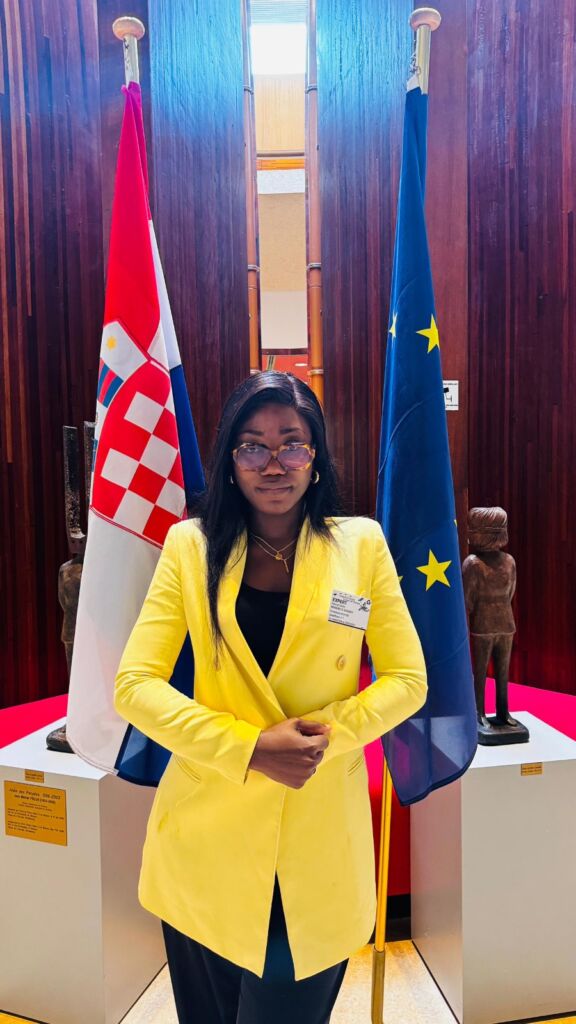
After overcoming the hurdles of her early life, including the struggles with her family’s patriarchal expectations and the hardships of failing her GCE Advanced Level exams, Patricia’s academic journey began to take shape in ways that would define her future. The lessons from her past, coupled with her determination to prove herself, propelled her forward. However, this phase of her life was not without its challenges. It was a period of transformation, one where Patricia had to confront her failures, redefine her path, and ultimately choose to move beyond the boundaries that were set for her.
In her late teenage years, after the GCE failure, Patricia learned a crucial lesson: failure does not define you; it is merely a stepping stone to greater success. Her first failure was a humbling experience, especially considering the pressure she had always felt to succeed. The competition with her brother, who had always excelled academically, had further intensified her desire to prove herself. Patricia’s first reaction to her academic failure was a mixture of frustration and disappointment. She had always been a determined student, and this setback shattered her belief that things would always go her way. However, rather than wallow in self-pity, Patricia took this as an opportunity for introspection and growth. She realized that the experience was not an end but a lesson in resilience.
The following year, Patricia passed her GCE Advanced Level exams with flying colors, and the victory was sweet, not just because it marked the end of her struggle, but because it affirmed her belief that success is built upon perseverance. This victory over herself laid the foundation for her next steps in life. It was at this juncture that Patricia made a pivotal decision: she would no longer allow society or her past failures to define her. She embraced a new perspective on life, one where setbacks were seen not as failures, but as chances to rise stronger.
Patricia’s academic path took a significant turn when she decided to pursue a Bachelor’s degree in Biochemistry and Molecular Biology at the University of Buea. This decision was not solely driven by her own aspirations but also by her family’s expectations. Her father, who had always envisioned his children pursuing careers in medicine, hoped Patricia would follow in her mother’s footsteps, who was a respected medical doctor. Initially, Patricia felt the weight of this expectation, but as she delved deeper into the world of biochemistry, she found herself drawn to the subject in a way that she had never anticipated. Though her heart was not set on becoming a medical doctor, she grew increasingly fascinated by the world of science and health, understanding how biochemistry could play a significant role in addressing public health issues.
“Adversity is not something to be feared, but something to be understood and overcome. It is through our challenges that we discover our true strength.”
Phase 3 : Rising Above Adversity and Defining a Purpose
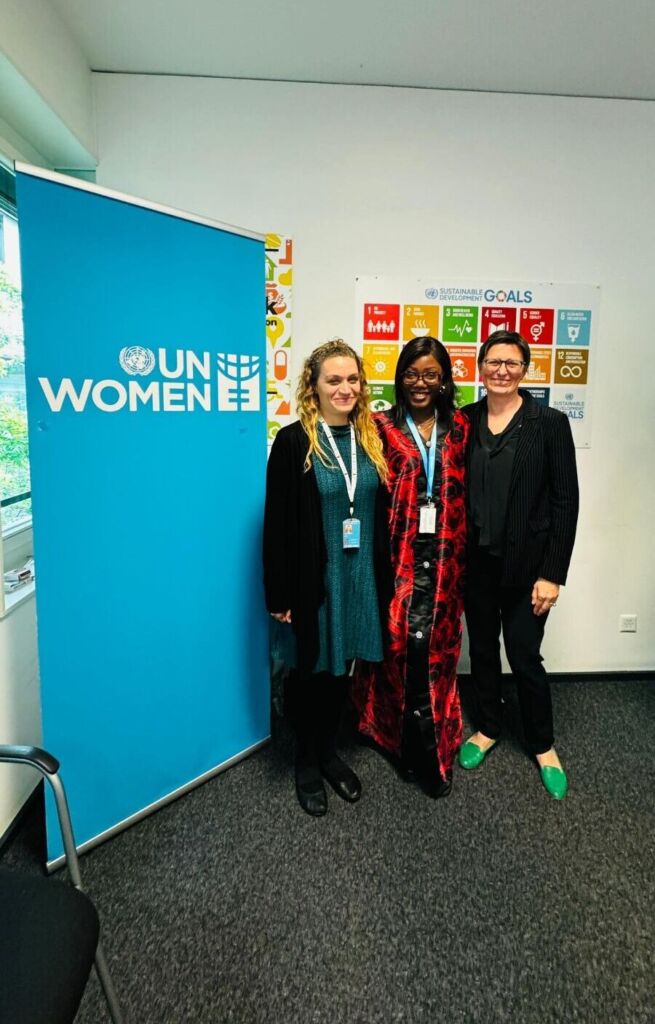
The years following Patricia’s graduation from the University of Buea marked a turning point in her life. It was a time of deep personal reflection, professional development, and the solidification of her commitment to fighting for women’s rights and gender equality. The harrowing experiences of sexual harassment at university and the systemic failure she encountered when seeking justice were not moments of defeat, but rather catalysts for her transformation. They fuelled her desire to bring change not only to her own life but to the lives of countless others, especially women and girls who faced the same barriers she had.
Patricia’s decision to pursue a Master’s in Public Health at the University of Douala was motivated by a deep desire to make a difference in the health sector, particularly in areas where public health intersected with gender equality. In the face of numerous setbacks, Patricia’s passion for education and improving the lives of marginalized women was unwavering. Public health became the perfect platform for her to combine her scientific background with her commitment to social justice, allowing her to address pressing issues such as sexual and reproductive health (SRH), gender-based violence (GBV), and HIV/AIDS prevention in vulnerable communities.
Her Master’s degree in Public Health, with a specialization in Infectious Disease Control, exposed her to the devastating consequences of systemic inequalities. She understood that health outcomes, particularly in the context of HIV/AIDS, were intrinsically linked to gender norms and violence. While studying the medical aspects of these issues, Patricia also began to develop a keen understanding of the socio-cultural factors that contributed to women’s health disparities. This realization would later shape her approach to addressing sexual violence and the challenges women face in conflict areas.
After completing her Master’s degree, Patricia began an internship at the National AIDS Control Committee, where witnessing the struggles of women in some of Cameroon’s poorest and most conflict-affected regions left a profound impression on her. It was during this time that she realized her purpose: to dedicate herself to addressing the inequalities that disproportionately affect women, particularly those marginalized by war and conflict.
Note of Thanks
In this journey of advocating for gender equality, human rights, and women’s empowerment, Dr. Patricia Carolle MANENG’S SUNDAY has been profoundly supported by countless individuals who believed in her vision and helped her along the way. As she reflects on her life and work, she is deeply grateful to those who have walked beside her, encouraged her, and shared in her mission.
First and foremost, Patricia would like to express her heartfelt thanks to her family, Dad Emmanuel MANENG, mom Emilienne MITH, her sisters and brother, but more especially her husband, Yannick NYOSSA, and her children, whose love and unwavering support have been her foundation. Their presence has been a constant source of strength, allowing her to pursue her passion for women’s rights with a deep sense of purpose and commitment.
She is also immensely thankful to the remarkable individuals at GELA (the Girls Empowerment for Leadership Association), who have been her partners in this work. The incredible team that helped Patricia turn her vision into reality deserves special recognition. Their tireless efforts to support women and girls in conflict zones have been central to the impact GELA continues to have in Cameroon and beyond.
Dr. Patricia Carolle MANENG’S SUNDAY would like to extend her deepest gratitude to the many global partners, including French Government, and various international NGOs, whose collaborations have amplified her voice and advocacy. Through these partnerships, Patricia has been able to advance policy reforms, create leadership opportunities, and empower women on a global scale.
Lastly, Patricia expresses her gratitude to the young women leaders who have been inspired by her work. Their dedication to continuing the fight for gender equality and women’s empowerment ensures that the work Patricia has started will carry on, creating an enduring legacy for generations to come.
With deep humility and appreciation, Patricia thanks all those who have been part of her journey, knowing that together, they have built something that will continue to transform lives across the world.
Thanks,
– Dr. Patricia Carolle MANENG’S SUNDAY