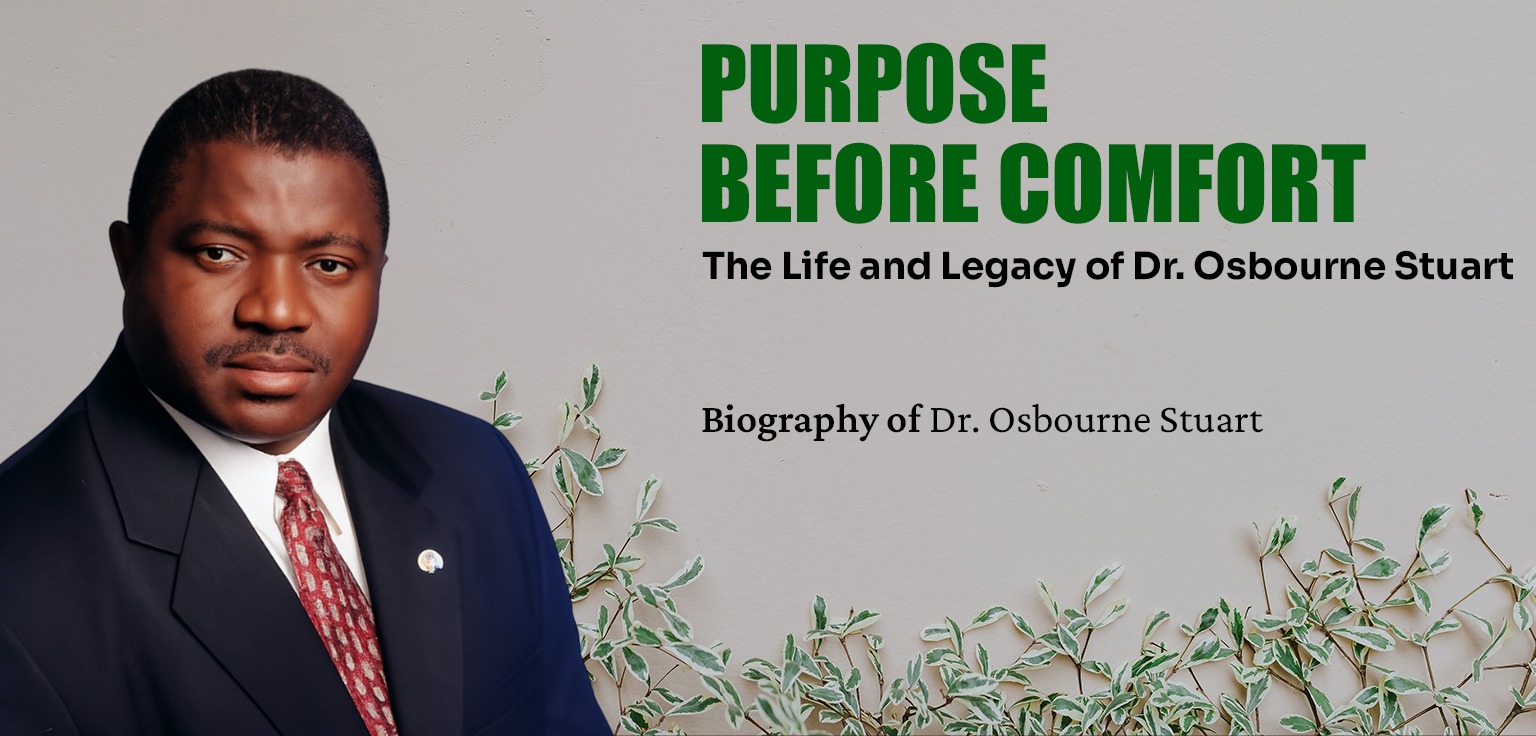

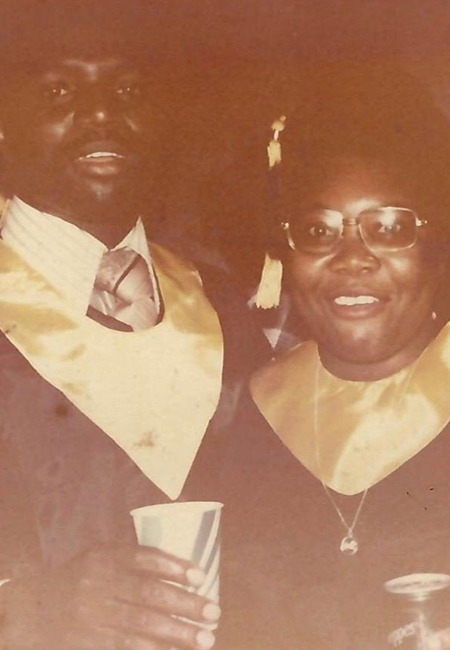
“Discipline is the bridge between goals and accomplishment.”

Dedication

This biography is dedicated to the foundations that quietly shaped the life and values of Dr. Osbourne Stuart— to the people, places, and principles that guided him long before his achievements became visible to the world. It is first and foremost dedicated to his parents, Edward Stewart and Relda Stewart, whose lives of honest labour, discipline, and unwavering faith provided the earliest lessons in responsibility and self-respect. From them, he learned that dignity is found in work, that discipline precedes comfort, and that success carries meaning only when it uplifts others. Their example did not merely influence his choices; it defined his character.

This work is also dedicated to his family and siblings, whose shared experiences on Moore’s Island, Abaco, fostered resilience, cooperation, and humility. Growing up within a close-knit island community taught him that individual progress is inseparable from collective well-being, and that character is shaped as much by community as by ambition.

This biography is dedicated to the teachers, students, colleagues, and young people whose lives intersected with his journey—as learners, leaders, and citizens. Their challenges, questions, and aspirations reinforced his lifelong commitment to education, service, and ethical leadership. In honouring them, this dedication reflects the enduring belief that a life of purpose is ultimately measured by the lives it touches.

“We are what we repeatedly do. Excellence, then, is not an act, but a habit.”

Phase 1: Roots of Discipline — Where Character Was First Formed

The foundation of Dr. Osbourne Stuart’s life was not laid in privilege or excess, but in discipline learned early and reinforced daily. His childhood, spent on Moore’s Island in the Abaco chain of the Bahamas, was shaped by simplicity, responsibility, and an unspoken understanding that every individual had a role to play within the family and the wider community. It was within this environment that the habits, values, and work ethic that would define his life quietly took root.

Born into a large family, Dr. Stuart grew up as one among eight brothers, later seven after the early loss of one sibling. Life in such a household demanded cooperation, patience, and resilience. Resources were not abundant, yet scarcity was never allowed to become an excuse. His parents, Edward Stewart and Relda Stewart, ensured that their children understood the dignity of effort and the importance of contribution from an early age. Work was not introduced as punishment, but as participation in family life.

His father embodied both service and enterprise. As a fisherman and businessman, and later as a public servant responsible for the administration of local affairs and student transportation on the island, Edward Stewart  modelled responsibility that extended beyond the home. His work demonstrated that leadership was rooted in reliability and presence rather than authority. Accompanying his father on daily tasks exposed young Osbourne to the realities of accountability and the importance of showing up consistently for others.

His mother, Relda Stewart, was equally influential. As a business owner running a restaurant and baking goods for sale, she introduced her children to entrepreneurship not as theory, but as lived experience. From as early as five years old, Dr. Stuart assisted in selling cakes, jellies, and produce throughout the island. These early interactions were not merely commercial; they were lessons in communication, honesty, and perseverance. Customers were neighbours, transactions were personal, and reputation mattered.

“An investment in knowledge pays the best interest.”

Phase 2 : Education as Commitment — From Learning to Leadership

The transition from adolescence into adulthood marked a decisive period in the life of Dr. Osbourne Stuart, one defined not by uncertainty, but by an emerging sense of responsibility toward learning and service. Having completed his secondary education at the age of sixteen, he stepped into the next phase of his life with the same discipline and clarity that had guided his childhood years on Moore’s Island. Education, for him, was no longer only a personal pursuit; it was becoming a public commitment.

His early attempts to establish himself in the workforce took him beyond the familiarity of island life. Moving to Freeport, Grand Bahama, he sought employment and exposure in a larger, more industrial environment.

The experience was instructive, even though it proved unsatisfying. Working with a roofing company offered insight into the realities of labour and structure, yet it did not align with his developing sense of purpose. Rather than remaining in a role that did not reflect his values or aspirations, Dr. Stuart made the deliberate decision to return home. This choice reflected a growing maturity—an understanding that progress is not measured by endurance alone, but by alignment with purpose.

Upon his return to Moore’s Island, an unexpected opportunity emerged. The local school system required teachers, and Dr. Stuart undertook the necessary examination to qualify as an untrained teacher. Successfully completing the process, he began teaching at the age of eighteen. This moment represented more than the start of a profession; it was the moment when his relationship with education shifted from recipient to custodian. Standing before students who were not much younger than himself, he assumed responsibility with humility and seriousness.

Teaching as an untrained educator demanded adaptability, patience, and self-discipline. Without the benefit of formal pedagogical training at that stage, Dr. Stuart relied heavily on the values instilled during his upbringing—preparation, accountability, and respect for learning.
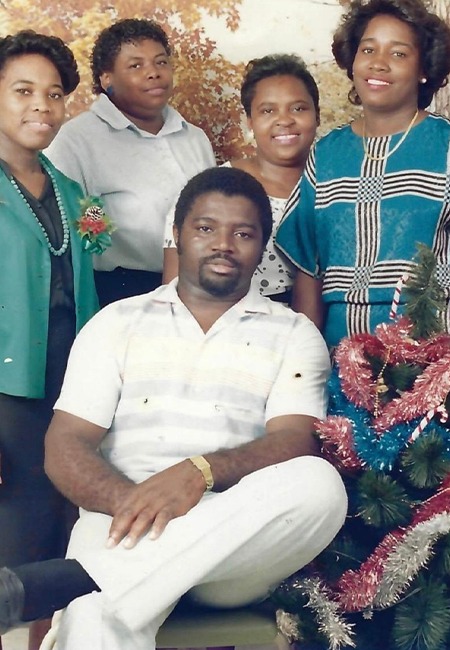
“Leadership is not about titles, positions, or flowcharts. It is about one life influencing another.”

Phase 3 : Leadership Through Responsibility — Shaping Institutions and Minds

As Dr. Osbourne Stuart progressed within the education system, leadership emerged not as an ambition he pursued, but as a responsibility he gradually assumed. His transition from classroom teaching into administrative and leadership roles was neither abrupt nor self-seeking. Instead, it was the natural extension of years of disciplined service, professional consistency, and an unwavering commitment to student development. Phase Three of his life reflects a period in which influence expanded beyond individual classrooms to entire school communities and institutional frameworks.

After completing his professional training in secondary education, Dr. Stuart served in various teaching roles across the Bahamian school system. His early postings in Nassau provided exposure to diverse student populations and educational challenges. Teaching in urban settings required adaptability, sensitivity, and a deeper understanding of social dynamics. Here, he refined his ability to balance academic expectations with the realities students faced outside the classroom. Education, he came to realise, was inseparable from environment, family circumstances, and community structure.

His dedication and effectiveness did not go unnoticed. Over time, he was entrusted with greater responsibilities, eventually leading to his appointment as Principal of Dundas Town Primary School in Abaco. This marked a significant shift in his professional life. As principal, Dr. Stuart was no longer responsible solely for instruction, but for institutional culture, staff leadership, student welfare, and administrative accountability. The role demanded strategic thinking, emotional intelligence, and moral clarity.

Leading a primary school required patience and foresight. Young learners were at formative stages of development, and decisions made at the administrative level had lasting consequences. Dr. Stuart approached this responsibility with the same discipline that had guided him since childhood. 

Note of Thanks

Dr. Osbourne Stuart extends his heartfelt gratitude to everyone who has contributed to the creation of this biography. First and foremost, he would like to thank his family—his parents, Edward and Relda Stewart, for their unwavering support, guidance, and the foundational values they instilled in him from an early age. Their work ethic, commitment, and belief in the power of discipline have shaped him in ways that words can hardly express.

He would also like to acknowledge the countless educators, mentors, and colleagues who have influenced his journey. Their encouragement, wisdom, and patience have helped him grow both personally and professionally. Dr. David Allen deserves special mention for his collaboration in addressing the critical issue of drug abuse among youth, which remains a defining chapter in Dr. Stuart’s life and career.

A special thanks goes to the dedicated team at Adler Realty for their hard work, dedication, and commitment to upholding the company’s values. Their efforts continue to drive the success and growth of the business. Lastly, Dr. Stuart expresses his deepest appreciation to the many individuals and communities who have supported him, trusted him, and believed in his vision. It is through their partnership and faith that his journey continues to inspire and impact others.

Thank You
– Dr. Osbourne Stuart