“Every life has a rhythm. Mine started with the sound of soil under bare feet, the scent of morning bread in my mother’s kitchen, and the quiet certainty that there was more to give than to get.”
Introduction
In the life of Dr. O’Brian Taylor, there is no single moment that declares itself as the turning point. His biography is not shaped by spectacle or sudden fame, but by a continuous, deliberate commitment to values—community, education, equity, and service. He is a man who did not wait for opportunities to knock. He built the door, opened it wide, and then held it open for others to walk through.
Born and raised in the Caribbean, Dr. Taylor’s childhood was neither lavish nor predictable. He grew up surrounded by hard work, deep respect for elders, and a belief that success is not measured in wealth or position—but in how many people you uplift along the way. The fields and family tables of his youth became classrooms of humility, and it was in these simple places that the seeds of lifelong service were planted.
Education was never a distant goal for him—it was an anchor. A way to understand not only the world but also his place within it. From an early age, he recognized that learning was not just about acquiring knowledge, but about transforming reality. This belief would go on to define not just his career path, but his philosophy of leadership.
What makes Dr. Taylor’s story remarkable is not that he achieved so much, but that he remained so deeply connected to his roots while doing so. As he journeyed through roles in academia, agriculture, youth empowerment, rural development, and public policy, he never allowed title or recognition to detach him from purpose. His strength lies in how he brought global perspectives into local challenges and offered grounded, context-sensitive solutions wherever he served.
As a young man, he was curious and observant. Not drawn to spotlight, but always attuned to the world around him. He listened. He asked questions. And most importantly, he never forgot where he came from. Whether sitting across from government officials or walking through farming villages, he carried the same spirit: one of respect, patience, and accountability.
“The greatest lessons I ever learned didn’t come from a textbook—they came from watching my people work the land with their bare hands, love their families through struggle, and carry their dignity like royalty despite having so little.”
Phase 1: Humble Beginnings in the Caribbean
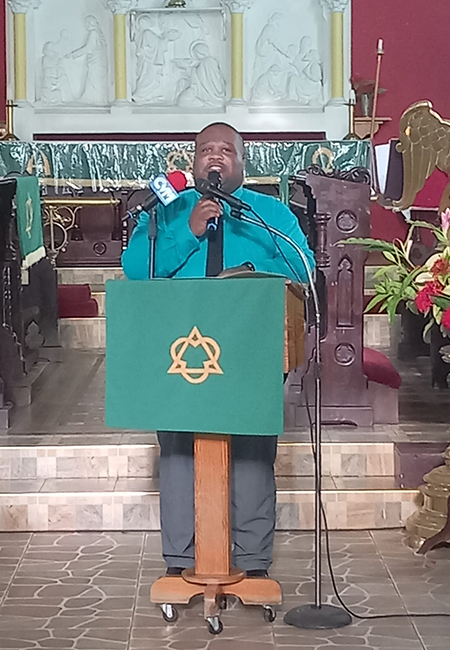
Before he was a scholar, a strategist, or a senior advisor, Dr. O’Brian Taylor was a boy molded by the soil of his homeland. His story begins in the Caribbean—not merely as a geographical location, but as a living, breathing foundation of his identity. He was born into a region alive with rhythms of resistance, survival, and spirit. The Caribbean is a place that teaches you early that life is not always easy, but it is always worthy. That roots matter. That struggle shapes character.
For Dr. Taylor, home was where values were sown as carefully as crops. His family was not wealthy by conventional standards, but they were rich in resilience, in culture, and in community. The elders in his life didn’t speak in academic theory—they spoke in proverbs, wisdom passed down through generations that had weathered colonization, economic hardship, and the slow crawl of post-independence nation-building. These teachings would become the philosophical bedrock of his leadership.
His earliest memories were painted with images of his mother’s strength and his father’s steady hand. They taught him the quiet power of consistency, the importance of showing up even when no one is watching. From a young age, he saw how his parents balanced hope with hardship, and how they prioritized education even when putting food on the table meant sacrifice. Their faith in his future was so deep it became a part of his own self-concept. It was in the quiet strength of his mother, the quiet guidance of his father, and the shared laughter with his siblings that his first lessons in empathy and duty were formed.
Education, in Dr. Taylor’s household, was not negotiable—it was sacred. His parents understood that knowledge was the one inheritance they could offer that would never be taken away. Even when resources were scarce, books were present. He would often recount how the smell of old paper felt like possibility, and how community teachers were revered as keepers of dreams. But even as a child, O’Brian Taylor was more than just a student.
“A mind once stretched by education never returns to its original dimensions. But when that education is powered by purpose, it stretches more than the mind—it stretches generations.”
Phase 2 : Academic Awakening and Leadership Spark
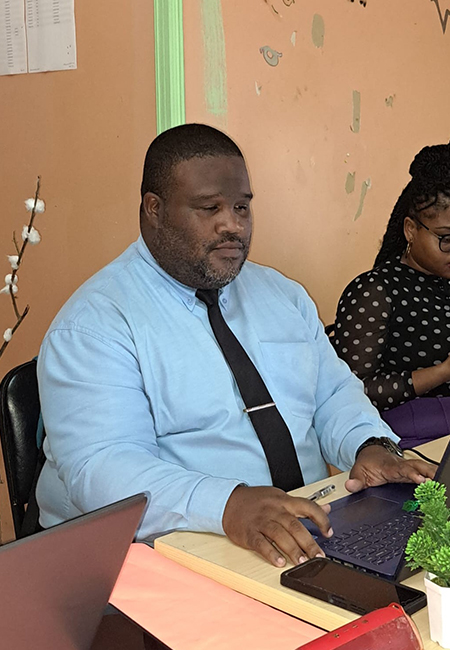
If the soil of the Caribbean formed Dr. O’Brian Taylor’s character, it was academia that shaped his voice—and revealed the depth of his calling. Transitioning from village schools to institutions of higher learning was not simply a geographic shift; it was a transformation in awareness, discipline, and vision. It was during these pivotal years that Dr. Taylor’s natural intellect met the power of structured learning, and together, they ignited something unstoppable.
As a young student entering tertiary education, he brought with him not just academic promise but a burning question: How can knowledge serve people? He was never content simply absorbing theory. He needed to connect it to something larger—community, policy, equity, and tangible change. This mindset immediately set him apart. While others memorized for exams, he sought understanding. While others looked for grades, he looked for meaning.
From the outset, his academic journey was marked by excellence—not the kind measured only in scores, but in contribution, clarity, and character. Professors noticed his analytical mind, but also his emotional intelligence. He listened deeply, spoke thoughtfully, and brought a grounded Caribbean perspective into every discussion—reminding even the most elite academic settings that real knowledge is not elitist, but empathetic and inclusive.
It wasn’t long before his name began to carry weight—not because he demanded it, but because he earned it. He became known as a quiet force on campus, someone who could articulate complex socio-economic issues with clarity, always grounding them in the lived experiences of Caribbean communities. Whether discussing agricultural sustainability, youth migration, or educational reform, he didn’t theorize from the outside—he spoke from within.
But even as his academic prowess rose, Dr. Taylor remained closely tied to service. He volunteered with community organizations. He mentored younger students who struggled with confidence or finances.
“If we don’t prepare our youth to lead the future, we are preparing our systems to fail.”
Phase 3 : Building Systems and Shaping Youth Futures
For Dr. O’Brian Taylor, the transition from academia into action was not delayed by hesitation. While many graduates spend years searching for their footing, he stepped into his purpose with deliberate clarity. The knowledge he had gathered, the philosophies he had sharpened, and the leadership values instilled in him all found immediate and powerful expression in the domain closest to his heart: youth development and systemic transformation.
He understood intuitively that youth are not a passive demographic to be “engaged”—they are active agents of change, full of energy, perspective, and potential. The problem wasn’t their capacity—it was the lack of enabling structures. That became his mission: to build systems that allowed young people to thrive, not just survive. And not just in urban centers, but in every neglected corner where voices had gone unheard.
His first major projects were rooted in rural and underserved communities. He began working closely with ministries and NGOs, developing participatory programs designed to include youth in local governance, policy feedback, and social entrepreneurship. These weren’t symbolic seats at the table—they were real opportunities to co-create. From educational reforms to agricultural co-ops led by youth, he pushed every system he touched to be more inclusive, more dynamic, more forward-thinking.
But Dr. Taylor’s influence was not just in the initiatives themselves—it was in how he led. He built teams that mirrored the values he held: transparency, accountability, humility, and innovation. Whether it was a pilot program in a village or a regional youth summit, he ensured the design was bottom-up—informed by lived realities, local language, and grassroots wisdom.
A key breakthrough came when he was asked to help design and implement a national youth policy strategy in collaboration with stakeholders from across ministries. Rather than defaulting to bureaucratic templates, he spent months on the ground—conducting listening sessions with young people, parents, community leaders, and teachers. What resulted was a framework that didn’t just reflect policy needs—it reflected the heartbeat of a generation.
Note of Thanks
As the final pages of this biography draw to a close, there are no words more sacred to offer than these : thank you.
Dr. O’Brian Taylor wishes to extend his deepest gratitude to all those who have walked alongside him on this journey—those who taught him, trusted him, challenged him, and most of all, believed in him, even when he was still learning to believe in himself.
To his parents and ancestors, thank you for planting in him the values that no institution could ever teach—honesty, humility, hard work, and an unwavering commitment to service. Their sacrifices were quiet, their lessons loud, and their love unconditional. Their presence, seen or unseen, remains the compass that steadies his every step.
To his wife Kadiesha, whose steadfast love has been the bedrock of every triumph, and to his daughters Jhanielle and Gabrielle, who are the true reflections of his hopes for a better, kinder world—He thanks you for being his reason, my refuge, and my greatest reward.
To his community, thank you for being the first soil in which he grew. You offered him both strength and struggle, and from that sacred tension, he found clarity. Your stories became his syllabus. Your resilience became his responsibility. He carries you with him into every room.
To the many teachers, professors, and mentors who invested their time and wisdom into his development, thank you for seeing the leader within the student. You opened doors not just academically or professionally, but spiritually. You taught him that knowledge without integrity is hollow, and that leadership without heart is dangerous.
To his colleagues and collaborators, thank you for trusting him with the work of transformation. Whether in policy halls or on farmland, in classrooms or on international panels—you shared in both the vision and the labor. You reminded him that impact is always collective, and that real progress is not made by lone heroes but by committed communities.
To the youth and students who welcomed him into their lives as a mentor, thank you for teaching him how to stay curious, how to listen deeper, and how to dream wider. Your courage gave his work meaning. Your growth is his greatest reward.
To the many unsung heroes—the drivers, editors, assistants, farmers, caregivers, and community leaders—who helped make the journey possible behind the scenes, thank you. Your contributions, though often unnoticed in credits, are etched in the results. You are the backbone of every milestone.
Thanks,
– Dr. O’Brian Taylor