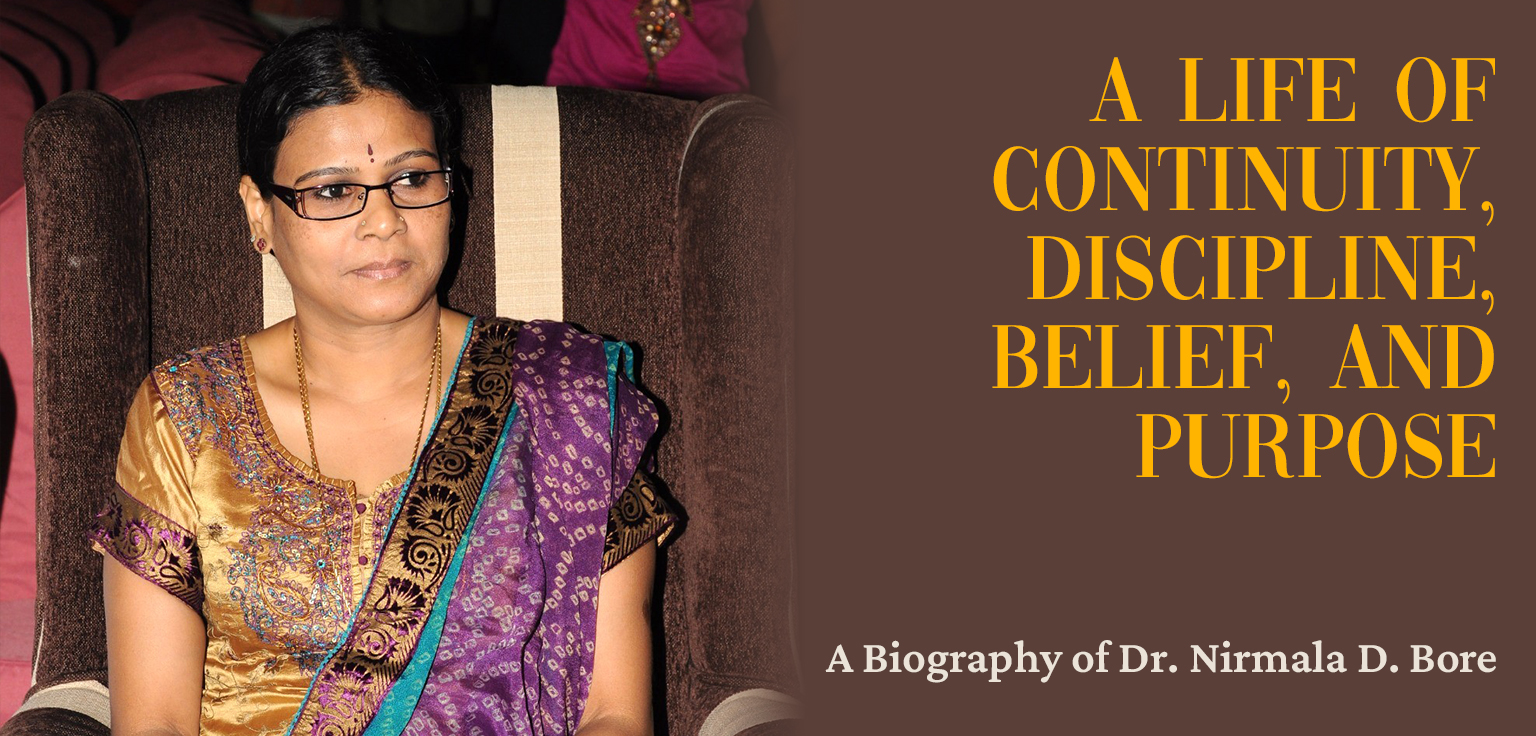
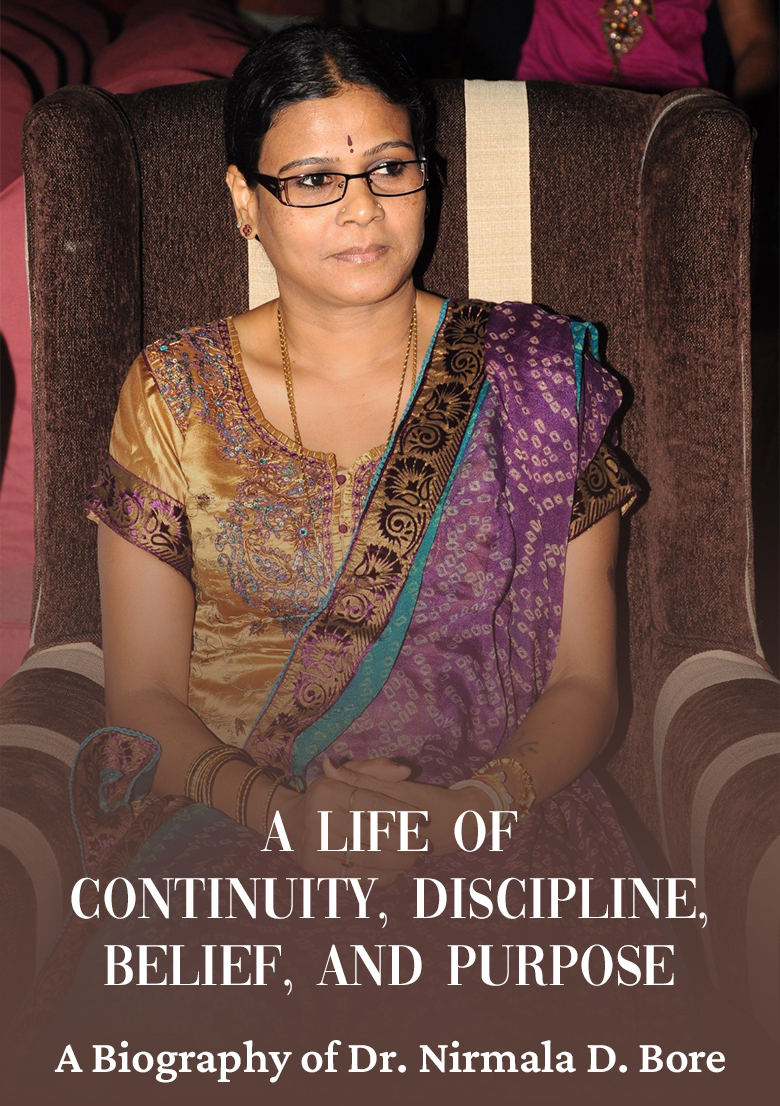
“Growth is not measured by where one begins, but by the persistence to move forward, to learn, and to remain anchored in purpose.”
Introduction
The life journey of Dr. Nirmala D. Bore offers a thoughtful exploration of perseverance, discipline, and inner conviction. Her story unfolds not through dramatic proclamations of success, but through steady evolution shaped by learning, responsibility, and deeply rooted values. This biography invites readers to understand a path defined by quiet strength, self-belief, and an enduring commitment to personal and intellectual development.
Her early years were marked by circumstances that demanded resilience rather than comfort. She speaks of childhood without embellishment, recalling those formative years as challenging and devoid of sentimental nostalgia. Yet within that reality existed a powerful influence that would guide her direction for decades to come. The unwavering support of her family created stability within an otherwise restrictive social environment. While prevailing societal attitudes often limited opportunities for girls, her home became a space of encouragement and possibility.
At the heart of this foundation stood her beloved grandmother, Late Smt Naga Bai, whose foresight and determination left an indelible imprint on her worldview. Education, dignity, and independence were reinforced not as privileges, but as essential pursuits. The values instilled during this period shaped a mindset grounded in discipline and self-confidence. Complementing this influence was the example of her revered father, Late Shri Digambar Rao Bore, remembered as a guiding presence whose belief in learning became a lasting source of inspiration. His personal journey as the first individual from his village to complete formal schooling carried significance far beyond academic achievement. It represented aspiration, perseverance, and the transformative power of knowledge.
Her academic progression introduced experiences that strengthened adaptability and independence. Years spent within a girls-only educational setting were later followed by entry into co-education, a transition that required confidence and adjustment. These encounters quietly reinforced social awareness and self-reliance. Alongside studies, she nurtured a strong inclination toward physical discipline through running, an activity that reflected determination and personal resolve. Participation in sport within culturally conservative expectations revealed an early pattern of persistence that would later characterize her professional life.
“Early life does not always offer visible advantages. Sometimes its greatest gift is the quiet formation of strength, shaped by those whose belief becomes a lifelong anchor.”
Phase 1: Early Foundations and the Strength of Influence
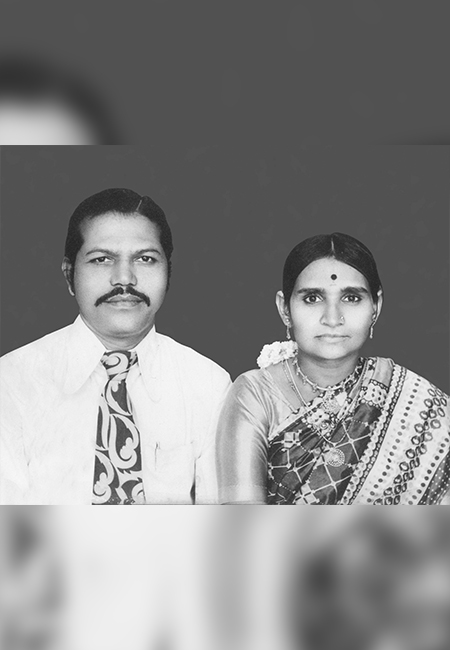
The earliest chapters of Dr. Nirmala D. Bore’s life unfold not as a story of ease, but as one shaped by endurance, quiet resilience, and deeply rooted familial influence. When reflecting on her childhood, she does so with a striking sense of honesty. Rather than painting those years with sentimental nostalgia, she describes them through the lens of hardship. Pleasant memories, she notes, are not what defined that period. Yet this absence of romantic recollection does not diminish the significance of her early years. Instead, it reveals the conditions within which strength, discipline, and inner resolve were gradually formed.
Growing up in a family of six children, consisting of four sisters and two brothers, she experienced life within a structure that demanded adaptability and perseverance. Resources were limited, and circumstances required patience and fortitude. However, one of the most defining aspects of her early life lies in an important distinction she articulates clearly. The challenges she encountered were not born from restriction within her home, but from the broader social environment surrounding it. While societal attitudes reflected conventional expectations about the roles and aspirations of girls, her family’s perspective offered a contrasting and empowering foundation.
Within her home, education was neither discouraged nor treated as secondary. On the contrary, it was valued, protected, and actively supported. This difference between family values and societal norms becomes a central thread in understanding her formative years. In a time when extended education for girls was frequently questioned by prevailing social attitudes, her family’s belief in learning created a stabilizing force. This environment nurtured confidence and direction, shaping a mindset resistant to external limitations.
At the heart of this supportive structure stood her beloved grandmother, Late Smt Naga Bai, whose influence emerges as one of the most profound forces in her life narrative. More than a familial presence, she represented conviction, courage, and foresight.
“Confidence does not always arrive through grand achievements. Often, it is shaped quietly through adjustment, persistence, and the courage to remain present in unfamiliar spaces.”
Phase 2 : Education, Adaptation, and the Emergence of Self Belief
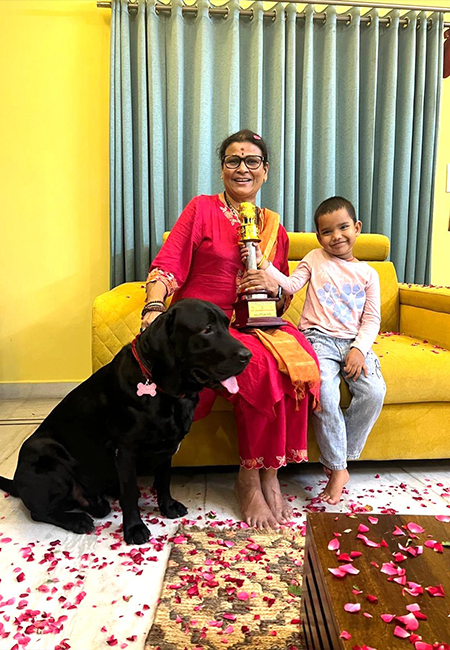
Following the foundational influences that shaped her early outlook, the next stage of Dr. Nirmala D. Bore’s life unfolded through education, transition, and gradual self-discovery. These years were marked by movement across academic environments that demanded adjustment, confidence, and emotional resilience. Rather than progressing through a single uninterrupted setting, her schooling journey introduced shifts that quietly strengthened independence and adaptability.
Her formal education began in a government school, where she studied up to the fifth standard. This early phase provided structure and fundamental learning, forming the initial framework of discipline and routine. Government schools often reflect simplicity in resources but strength in foundational instruction, and this environment served as her first engagement with formal academic life. However, the path ahead would soon introduce a different educational experience.
After completing her early years, she moved into a private institution dedicated exclusively to girls. This transition marked a meaningful change in her academic surroundings. A girls-only educational setting offers a distinct social and developmental environment, fostering familiarity and comfort among peers. Within this space, identity formation, confidence, and participation evolve differently from mixed settings. For a young student, such an environment often provides a sense of belonging and stability, and her years there became an important part of her educational progression.
Yet life rarely remains within fixed boundaries. A significant turning point emerged when she later entered a coeducational system. The adjustment was not effortless. She openly recalls the difficulty of adapting to this new environment, describing the challenge of mingling within a structure that differed considerably from her previous experiences. The transition from a familiar all girls setting into coeducation required not only social adaptation but also internal confidence. Interactions, classroom dynamics, and peer relationships suddenly acquired a new dimension.
“Transformation rarely announces itself at the beginning of a journey. It emerges through persistence, through discipline, and through the quiet refusal to surrender to self doubt.”
Phase 3 : Choosing Architecture and the Turning Point of Self Transformation
As the years of schooling, adjustment, and gradual self-discovery unfolded, a defining decision emerged in the life of Dr. Nirmala D. Bore. This decision would not merely influence her academic direction but would fundamentally shape her identity, discipline, and long-term professional journey. It was during this period that she chose to pursue architecture, a field demanding creativity, analytical thinking, sustained patience, and unwavering dedication.
In 1989, she entered the demanding world of architectural education. The choice itself represented more than the selection of a professional course. Architecture is widely recognized as one of the most rigorous academic disciplines, requiring a unique blend of imagination and precision. It demands not only technical competence but also conceptual clarity, endurance, and the ability to remain committed through prolonged cycles of critique, revision, and refinement. For a student stepping into this environment, the journey is as much psychological as it is intellectual.
Her reflections on this phase are marked by striking humility and honesty. Rather than presenting herself through the lens of early academic excellence, she describes her student years with disarming simplicity. She recalls being a last bench student throughout much of her academic life. This self-portrayal offers a rare and authentic insight into her mindset. It reflects grounded self-awareness rather than self-promotion, an attitude that would later characterize many aspects of her personal philosophy.
Yet the label of last bench student did not define her capacity or limit her trajectory. Beneath this modest self-description existed persistence, patience, and quiet determination. Architectural education requires sustained effort across multiple dimensions. Students navigate complex design studios, theoretical frameworks, technical subjects, and demanding project submissions. Progress is rarely linear. Growth is often invisible until moments of clarity emerge. For Dr. Bore, this clarity arrived during a decisive turning point.
Note of Thanks
Every life journey is shaped not only by individual determination, but by the presence of people, environments, and systems that quietly contribute to growth and resilience. With deep sincerity, Dr. Nirmala D. Bore extends heartfelt gratitude to those whose influence, support, and belief formed an integral part of her path.
She expresses profound appreciation for her family, whose values and encouragement established the earliest foundations of confidence and direction. The enduring influence of her beloved grandmother, Late Smt Naga Bai, remains a guiding presence, representing strength, foresight, and unwavering belief in education. Equally cherished is the memory of her parents Late Smt Shobha Bore and late Shri Digambar Rao Bore, whose example and conviction instilled discipline, perseverance, and respect for learning. Their impact continues to resonate through every chapter of her life.
Gratitude is also extended to the academic institutions and learning environments that shaped her intellectual and professional development. The discipline, knowledge, and perspective cultivated through education provided the framework upon which her professional identity was built. These institutions served not merely as centers of instruction, but as spaces of transformation and self discovery.
She acknowledges with appreciation the mentors, colleagues, and professional associations that contributed to her evolving understanding and experience. Their guidance, directly or indirectly, enriched her journey and strengthened her ability to navigate challenges with clarity and patience.
Special thanks are offered to the support systems that sustained balance and continuity throughout various phases of life. Encouragement, understanding, and shared resilience often become unseen pillars behind visible progress.
Finally, sincere gratitude is extended to the readers. Their time, reflection, and engagement give meaning to this narrative. It is through shared stories that experiences transcend individuality and become sources of inspiration and understanding.
With humility and appreciation, this biography stands as a collective acknowledgement of influence, belief, and the enduring power of support.
Thanks,
– Dr. Nirmala D. Bore