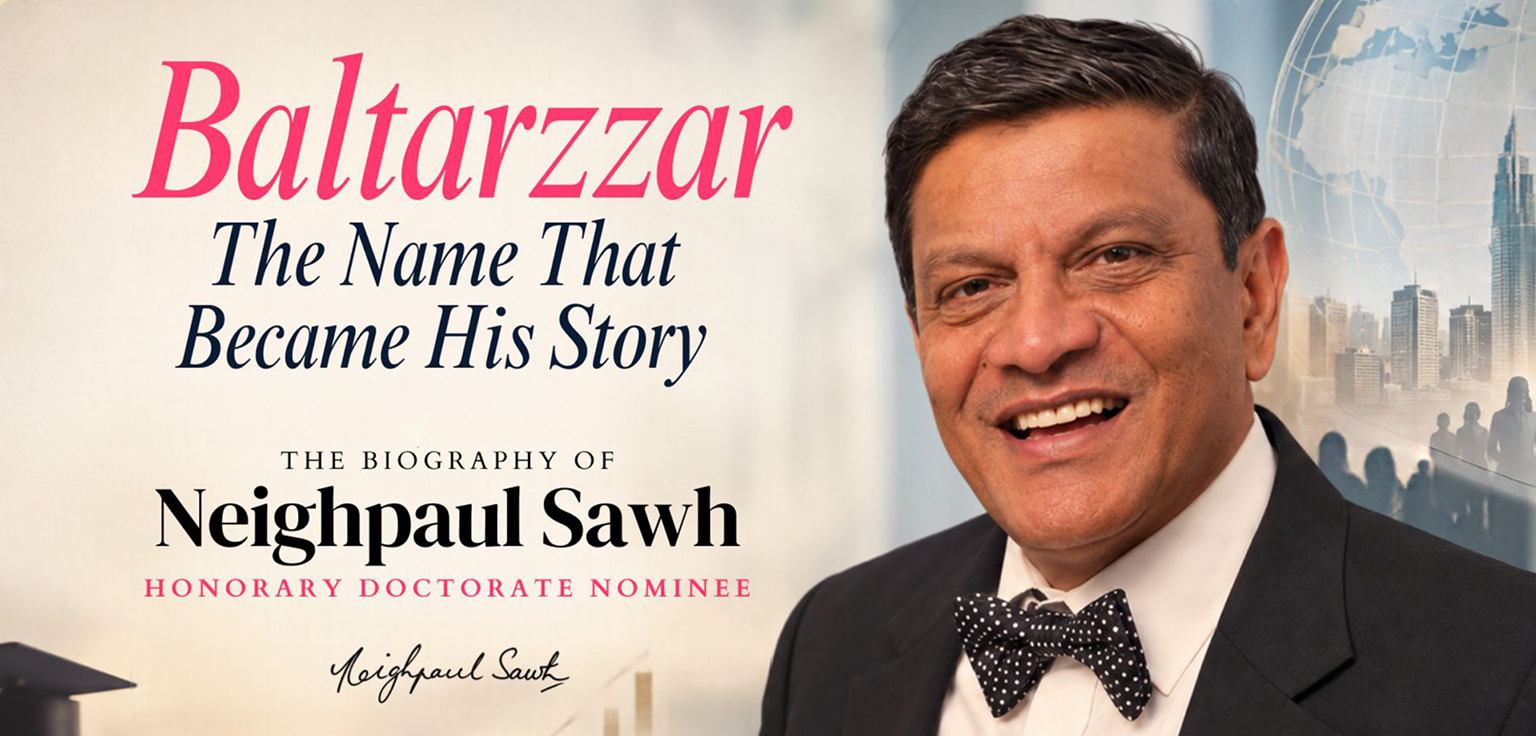
“When the opportunity came, I did not know everything about the restaurant business, but Igaee it a try. Experience became my teacher, and the yearning to do better kept me moving forward.”
Introduction
Across more than three decades, Neighpaul Sawh has demonstrated sustained entrepreneurship and professional leadership through Baltarzzar; continuous education through university study, specialist culinary training and formal wine qualification; culinary innovation through the development of Thai cuisine within his local market; hands-on stewardship of quality, staff, sourcing and customer experience; and a legacy that has created educational and professional opportunity across generations. These are the central themes through which this biography presents his candidature for honorary recognition.
Neighpaul Sawh’s professional story spans more than three decades of hospitality, entrepreneurship and continuing education. From early responsibility in his family’s business in Couva, Trinidad, he progressed to establish Baltarzzar, initially a modest twenty-five-seat restaurant, and to develop it into a longstanding hospitality enterprise. His career is characterised by perseverance, hands-on leadership, an instinct for customer service and a consistent willingness to acquire new knowledge and put it into practice.
Growing up in Trinidad, he was surrounded by a family environment where work, responsibility, and service were part of everyday life. His family’s business introduced him early to the responsibilities that accompany work and service. These experiences introduced him to the importance of discipline, customer interaction, and commitment long before he entered the hospitality industry.
As the second child in his family, Neighpaul Sawh witnessed the importance of unity and responsibility from an early stage. The values of supporting one another and remaining connected to roots became an important part of his outlook towards life.
Education also played an important role in shaping his character. His education further strengthened the discipline and confidence that were developing during those formative years.
His early professional experiences broadened his understanding of business, communication, and the importance of dealing effectively with people. These experiences later became useful when he began building his own venture.
His longstanding interest in business found its defining expression in Baltarzzar. What began as a small restaurant became the central enterprise of his professional life and a platform through which he could combine entrepreneurship, culinary creativity, service and continuous professional development.
Over the years, Neighpaul Sawh continued to expand his knowledge of culinary arts and hospitality. As his career developed, practical experience was joined by further study, specialised training, and international exposure that broadened his understanding of hospitality. These experiences strengthened his ability to combine food, service, and customer experience into a complete hospitality offering.
His development of Thai cuisine became one of the clearest examples of his entrepreneurial judgement. At a time when the cuisine was unfamiliar to many local diners and its commercial potential was questioned, he chose not merely to add unfamiliar dishes to a menu but to study the cuisine at source. He travelled to Bangkok, completed specialist training, returned to Trinidad and refined the offering through practice. food subsequently became one of the defining features of identity.
"We worked after school and on weekends. At the time it was simply family responsibility, but it prepared us for business."
Phase 1: Where the Counter Came First
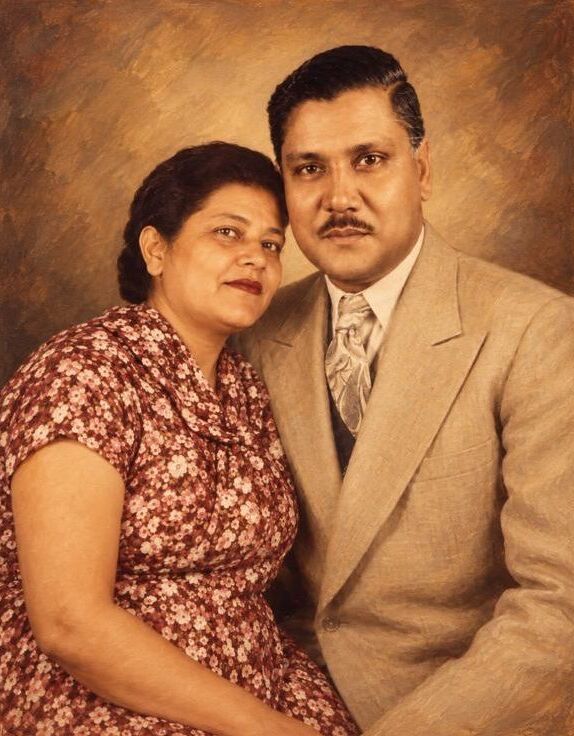
Long before Neighpaul Sawh became associated with hospitality, food, and restaurant management, his understanding of business began in a much simpler setting. His earliest lessons were not gained from a formal business environment but from the everyday rhythm of his family’s shop, located on the same premises where his restaurant stands today. It was there, through routine responsibilities and the daily activity of the shop, that he developed his earliest practical exposure to business.
During his childhood years, the shop was an important part of family life. As young children, he and his siblings supported their parents by assisting with the daily operations. After school and on weekends, responsibilities were part of their routine. They helped with cleaning, stocking, and preparing the shop for customers. These responsibilities became part of the business environment in which he grew up and quietly prepared him for the responsibilities of business.
The environment around the shop became an early classroom for Neighpaul Sawh. Every activity carried a lesson. Repackaging goods, arranging supplies, and serving customers required patience, attention, and accuracy. In those days, unlike modern supermarkets where products are already prepared and displayed, much of the work had to be completed manually. Goods arrived in larger quantities and had to be measured and packed according to customer needs. This process gave him an understanding of how much effort was involved behind every transaction and how important personal involvement was in running a business.
Growing up in this environment also meant becoming familiar with responsibility at a young age. The family business required cooperation, and each member had a role to play. The lessons learned from those years stayed with him as he moved forward in life. The ability to understand daily operations, work consistently, and appreciate the effort behind maintaining a business remained useful as he later began shaping a professional path of his own.
As the second child in the family, Neighpaul Sawh experienced the importance of family connection and shared responsibility from an early stage. The values formed during those years were not limited to business alone. They reflected a way of life where effort, contribution, and support for one another were deeply connected. The family environment encouraged him to understand that progress comes through commitment and that every role, regardless of how small it may appear, has importance.
One of the most memorable aspects of his childhood was witnessing the gradual development of his own understanding of business. The manual processes, direct interaction with customers, and responsibility of keeping operations running provided experiences that would later influence his approach towards entrepreneurship.
However, before it became the home of Baltarzzar, it represented something much more personal. It was the place where he learned the value of hard work, where he observed his parents’ dedication, and where his relationship with business first began.
Looking back at these early years, the foundation of Neighpaul Sawh’s journey can be traced to the lessons hidden within ordinary moments. The act of arranging goods, assisting customers, and supporting the family business gradually shaped his understanding Of responsibility and service. These experiences did not immediately reweal the path ahead, but they provided him with the qualities that would later guide his professional decisions.
The roots Of his Story were therefore not formed in a single defining moment but through years Of observation, participation, and learning. Those ordinary years would remain significant long after childhood had passed.
“When one of us moves ahead, one hand must still reach back to help the others rise."
Phase 2 : What School Could Not Teach
The formative years of Neighpaul Sawh were shaped by two powerful influences: education and responsibility. While his early environment introduced him to the realities of business and service, his years as a student helped develop the discipline, confidence, and character that would guide him through the challenges ahead. His journey during this period was not only about academic learning but also about understanding commitment, family responsibilities, and the importance of standing firm during times of change.
His educational journey began in the district of Couva, where he completed his primary schooling before moving forward to pursue secondary education. Through his efforts, he successfully passed the secondary entrance assessment and earned the Opportunity to attend Naparima College in San Fernando. This achievement marked an important step in his personal growth, as the institution became a place where he developed discipline, confidence, and a stronger sense of responsibility.
The environment at Naparima College played a significant role in shaping his character. As an all-boys school, it followed a structured approach where discipline and commitment were strongly emphasised. The guidance of his teachers and the leadership of the school principal, Dr. Alan McKenzie, left a lasting impression on him. The strict yet supportive environment encouraged students to develop themselves with focus and determination. For Neighpaul Sawh, these lessons became an important part of the foundation that influenced his approach towards work and life.
During his time at the institution, he demonstrated dedication towards his studies and achieved strong academic results. He graduated with 8 0 levels, including 5 distinctions. He later continued with A-level studies, but circumstances changed when his father passed away. This moment brought a new level of responsibility into his life, requiring him to support the family’s stability while his elder brother was abroad pursuing medical studies.
At a young age, Neighpaul Sawh found himself balancing personal responsibilities with his Own aspirations. Instead of continuing along the same academic path, he stepped forward to help manage the family’s needs during an important period. His role was not simply about assisting with daily activities but about ensuring that the family business continued to function while another chapter of the family’s future was being built. This experience strengthened his understanding of commitment and the importance of supporting those around him.
A significant influence during this period was his elder brother, Lall Sawh, who became an important figure in his development. After returning from medical studies, his brother assumed a guiding role and provided support that contributed to Neighpaul Sawh’s growth. A belief that remained meaningful to him was that when one person moves forward, they should extend support to help others rise as well. This philosophy of moving ahead while remaining connected to family values became a meaningful part of his outlook.
Although responsibilities changed the direction of his education, his desire to learn continued. His experiences after school expanded his understanding of professional life and introduced him to different aspects of business. He worked as a sales representative in the electrical industry, where he gained practical knowledge beyond the family business environment. During this period, he worked under Varun Mathur, a commercial manager who influenced his understanding of marketing, professional conduct, and dealing with people.
“I always wanted to get into business. When the opportunity came, I decided to give it a try and see how it went.”
Phase 3 : Twenty Five Seats and a Chance
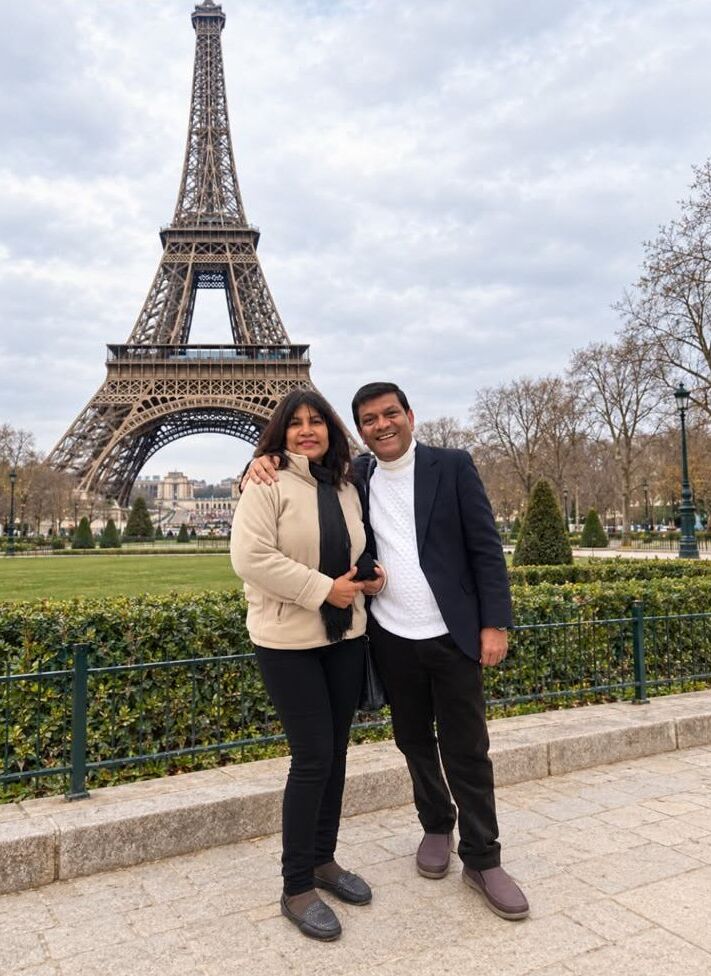
For Neighpaul Sawh, the move towards entrepreneurship was not an unexpected departure from the life he had known. He had always wanted to enter business, although the exact form that ambition would eventually take was not immediately clear. By the time the possibility of opening a restaurant emerged, he had already experienced different working environments and had learned to pay attention to people, service, marketing, and professional conduct. Cooking, meanwhile, was something he had always loved. When circumstances eventually brought business and food together, he was willing to explore where that combination might lead.
The opportunity appeared after the passing of his parents, when the premises that had once housed the family shop and rum shop became vacant. It was a place he knew intimately, but its purpose could now change. He and his elder brother considered what could be done with the property, and the possibility of his trying a restaurant began to take shape. At that stage, he did not have extensive formal training in restaurant operations. He understood this clearly and did not pretend otherwise. What he possessed was the willingness to begin, learn from experience, and allow practical knowledge to develop alongside the business.
The property itself offered an important advantage. Situated on the Southern Main Road, near the industrial estate at Point Lisas, it occupied a location that Neighpaul Sawh recognised as valuable for a commercial venture. The industrial activity in the surrounding area created business opportunities, and rather than overlooking what was already available to him, he chose to make use of it. The premises belonged to a world he had known for years, but turning them into a restaurant meant giving that familiar space an entirely different purpose.
The transformation required more than changing the physical surroundings. The former shop and rum shop were renovated and converted into a restaurant, beginning on a modest scale with approximately twenty-five seats.
There was no elaborate beginning and no suggestion that the restaurant had immediately become what it would later grow into. It started small, leaving room for Neighpaul Sawh to understand the business from inside it. The early period became a practical education in which daily Operations offered lessons that could be applied almost immediately.
Recognising the limits of his own experience was part of that learning. A knowledgeable chef was hired during the restaurant’s early period, and his guidance helped Neighpaul Sawh understand important aspects of food preparation and restaurant operations. He absorbed what was useful while continuing to develop his own judgement. Experience gradually taught him what customers expected and what standards he personally wanted the restaurant to maintain. Instead of making hospitality unnecessarily complicated, he reduced his thinking to a principle that was easy to understand: what he would appreciate for himself should also be offered to others.
That belief gave him a practical way to judge the restaurant. These were not ideas he wanted to leave entirely in the hands of others. His own presence became closely connected with the way the restaurant operated because he wanted to know what was happening rather than manage from a distance.
The commitment required long working days. His days at the restaurant often extended to approximately fifteen to sixteen hours, six days a week. He opened the doors and closed them, ate there, and remained deeply involved in the daily routine. Such hours reflected how personally he approached the venture. Ownership, in his case, did not mean standing apart from the work. It meant remaining close enough to notice what needed attention and being prepared to respond to it.
Note of Thanks
As Neighpaul Sawh reflects on the years behind him, his gratitude rests with the people who have shared those years with him. A career extending across decades could never be remembered only through professional accomplishments. Its fuller meaning lies in the family who remained close, the friendships formed along the way, and the customers whose continued presence gave purpose to the work.
His deepest appreciation goes to his wife, Imragie, and his children, Dr. Sergio Sawh, Emillio, and Maria Sawh. They form the immediate family he holds close when acknowledging the people who have been part Of his life and professional story. Their individual progress has brought another dimension of fulfilment to the years he has spent building his own path.
He also extends his heartfelt gratitude to his elder brother, Dr. Lall Sawh, whose help and support remained an important part of his journey.
He also carries sincere appreciation for the many friends he has made through the years. Some relationships accompanied particular periods of his life, while others became part of a wider circle that remained meaningful across the years. Their presence added warmth to a professional life that demanded considerable time and commitment.
A special place in his gratitude belongs to the customers who became familiar faces at Baltauzar. Their decision to return, their conversations, and the relationships formed over time gave the restaurant a human character that could never be created through food alone.
His thanks therefore extend beyond any single achievement or occasion. They belong to the family, friends, and customers who shared different parts of the road with him. In his own reflection, they are the people who helped make the experience both enjoyable and memorable.
thanks,
– Dr. (H.C.) Neighpaul Sawh

AIMLAY is a leading global education platform empowering ACADEMIC and EXPERIENTIAL learners, uniquely focused on recognizing knowledge gained through experience and building a diversified community of doctorates and aspiring researchers.