“The engine of success is built not from power, but from persistence.”

Dedication

This biography is dedicated to Dr. Narayanasamy Sivanandam’s late father, whose quiet strength and strong work ethic were the first steps that helped him achieve his dreams. His father worked as a watchman at Trafalgar School Quarters in Singapore. His father’s fierce commitment to duty taught him that true honor comes from honesty and service, not from status. Those first lessons in discipline, humility, and gratitude were the basis for all of the successes that came after.

It is also dedicated to his loving wife, who has been a constant source of peace during the ups and downs of travel, the unknowns of moving, and the long nights of technical work. Her strength and patience were the unseen hands that kept him on his path.

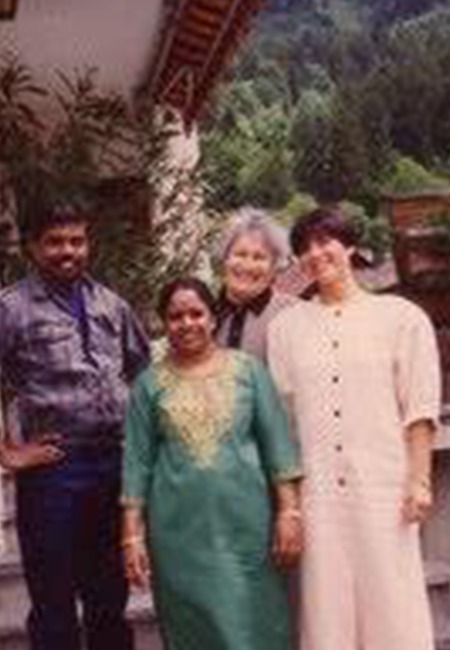
He also dedicates this biography to his son, whose brilliance as an astrophysicist has fulfilled a generational dream—serving as proof that a legacy built on courage and character always finds its orbit.

“Behind every man who reaches the sky is a family that loved him.”

“It is not the stars that hold our destiny, but the discipline with which we reach for them.”

Phase 1: Roots of Resilience: The Home That Taught Values Before Words

The story of Dr. Narayanasamy Sivanandam starts in the quiet, humid Trafalgar School Quarters in Singapore. This was a simple place where families of school workers lived together. His father was a watchman, a man of quiet pride whose uniform smelled like oil and chalk dust. The job wasn’t very glamorous, but it was crucial. He protected not only the school grounds but also the hopes of a young family who looked to him for both money and moral guidance.

There were five kids in the Sivanandam house, and their dreams had to fit inside small walls. Dr. Narayanasamy had to take on responsibilities long before he was ready as the oldest son. He learned that how you do what you have to do is more important than what you own. His mother was gentle but strong, and she added to that discipline with quiet compassion. She taught her kids that even tired people can understand kindness.

In Singapore in the 1960s, kids from working-class families didn’t always receive an education. However, their circumstances were favorable: residing in the school premises allowed him to attend classes without incurring significant costs or lengthy travel. He fiercely protected the privilege, which was real but fragile. He treated books like holy friends from the time he could hold a pencil.

Dr. Narayanasamy quickly showed that he had a sharp mind and a disciplined heart. Teachers saw that he was always on time, did his homework neatly, and was often more interested in things than what he was supposed to be learning. He was the best student in his class every year, but it wasn’t pride that drove him; it was fear, the fear of letting down a father whose eyes showed both love and expectation.

People in the neighborhood quickly noticed the watchman’s son, who was always first. Some people liked it, but others weren’t sure. But every night, as the sun went down, young Narayanasamy could be seen sitting under a dim lamp and reading his lessons out loud while his younger siblings watched.

“The desire to fly is an idea handed down to us by our ancestors who looked enviously on the birds soaring freely through space on the infinite highway of the air.”

Phase 2 : The Airborne Dream : From Service to Sky Mastery

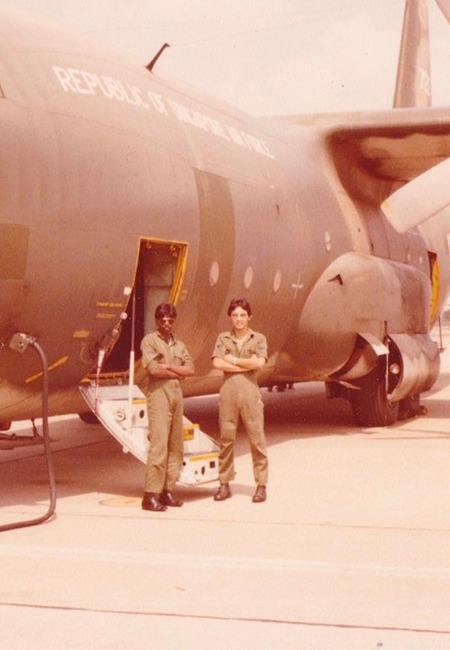
The smell of aviation fuel was intoxicating when Narayanasamy Sivanandam first stepped onto the flight line of the Republic of Singapore Air Force. The sound of hangar doors slamming shut, the way the sun shone on aluminum, and the nervous beat of drills all came together to make a symphony that woke up something deep inside him. He was no longer the watchman’s son from Trafalgar Quarters; he was now an engineer in uniform, responsible for keeping the planes safe.

The young technician quickly figured out that an airplane was more than just metal and wires; it was a living thing. Every vibration told a story, and every gauge spoke. He was part of the early Air Defence Command and was part of a pioneering group that had to turn borrowed machines into a national force. The United States gave Singapore two C-130 Hercules transport planes to start its air fleet, and Narayanasamy was one of the few people trusted with their upkeep.

He became an expert in avionics, focusing on flight-control systems and electrical instruments. He spent long nights studying by tracing schematics in yellow light, and his fingers were black with grease and graphite. “When you replace a circuit that controls hundreds of lives,” he once told a trainee, “you stop seeing wires and start seeing responsibility.”

Supervisors quickly saw how hard he worked. He was chosen to do fly-away engineering, which meant going on international missions with planes. Those trips, which took him to Southeast Asia, the Pacific, and occasionally the United States, were more than just work trips; they taught him how to be tough.

The Air Force reflected the world. While working with foreign allies, he met engineers who spoke different languages and had different personalities. In the Philippines, the humidity made every task a fight against tiredness, and in Japan, he slept next to spare parts and open manuals. He developed a calm strength that would define his leadership later in life.
“The function of education is to teach one to think intensively and to think critically. Intelligence plus character — that is the goal of true education.”

Phase 3 : The Making of a Mentor : Engineering the Human Mind

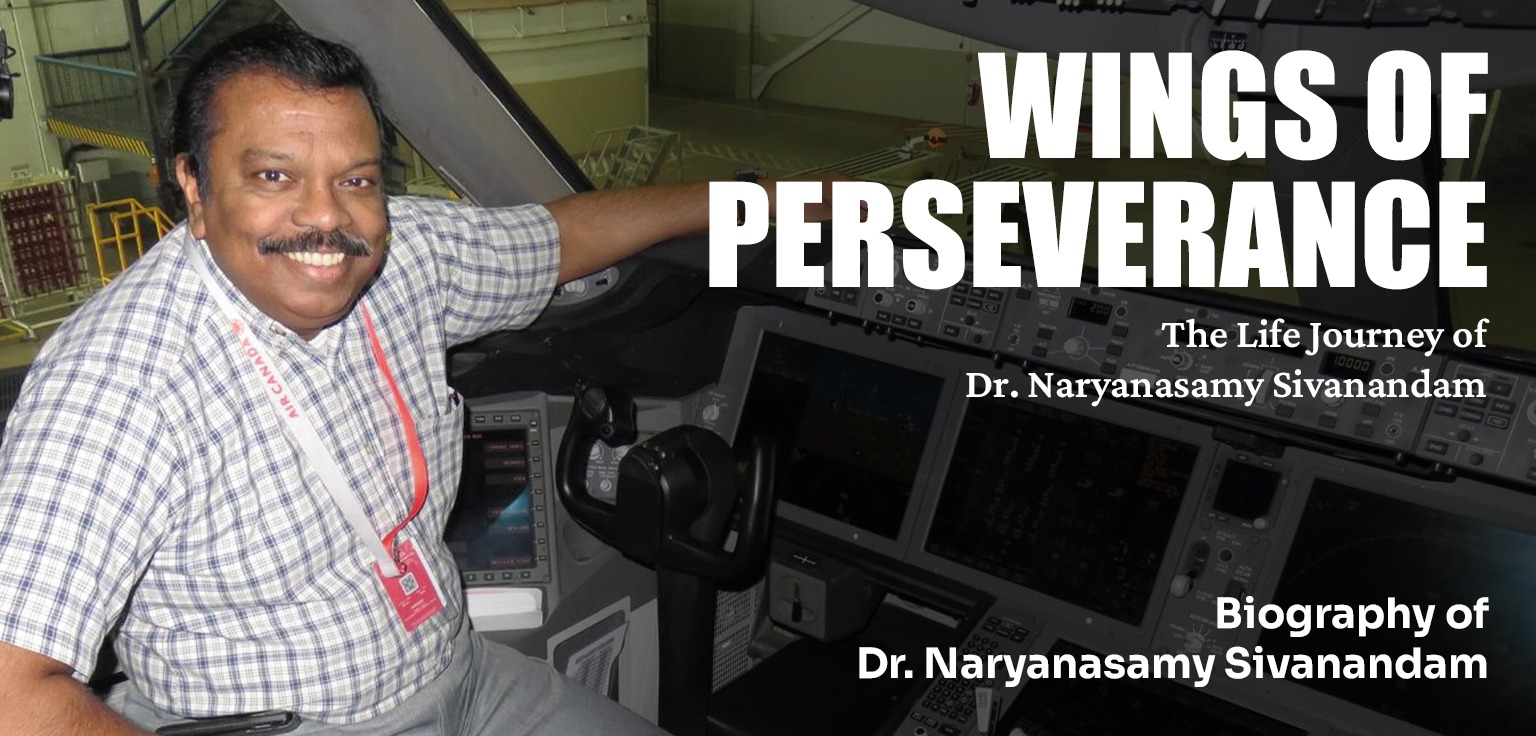
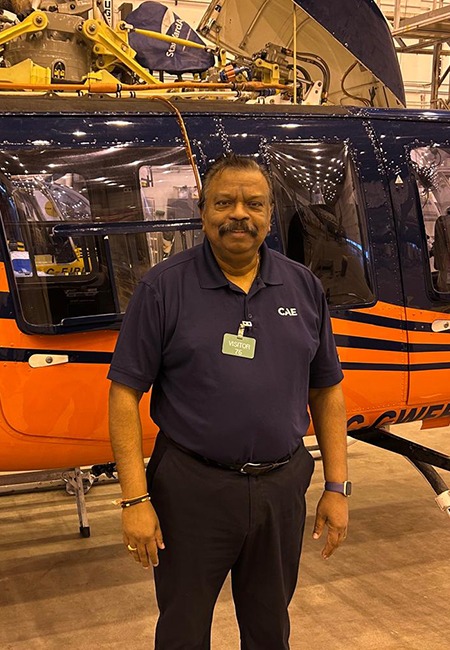
When Dr. Narayanasamy Sivanandam finally put down his maintenance tools, most people thought he would take a break. After forty years of precise work and late-night calls, it seemed like the right time to retire. But for him, rest was never about stopping; it was about changing where his energy went. He joined Pelesys/CAE as a course developer and instructor just a few months after leaving Air Canada. This was where his technical skills really shone through: in teaching.

In his new office in Richmond, British Columbia, he wasn’t surrounded by airplane parts; instead, he was surrounded by screens, storyboards, and young graphic designers. Keyboard clicks replaced the hum of compressors, but the goal was still the same: to keep machines safe and people skilled. He was responsible for turning large flight operation manuals into computer-based training modules for new types of planes, like Boeing 787s, Airbus A350s, Embraers, and others.

At first, the desk work felt strange to a man who was used to working with hydraulic pressure and jet noise. But soon, his engineering mind started to see education in the same way it used to see circuits. “Teaching is just keeping the mind in good shape,” he said with a smile. “You check, diagnose, and fix understanding.”

Writing training materials was like translating mechanical processes into human logic. He would start each class by reading the plane’s operational manual line by line, pointing out any possible misunderstandings, and then making up stories that made things easier to understand. His team of more than 150 young designers watched as he drew electrical flows in colors and used metaphors like blood flow to explain how fuel systems work. He thought that if a student could see a concept, they would always remember it.

Before long, he was making content and teaching it. CAE knew that his calm, measured, and authoritative voice could hold the attention of a room full of engineers. This is how he started his second career as an aviation instructor, teaching the next generation of aircraft mechanics, engineers, and maintenance workers.

Note of Thanks

As this biography comes to an end, we want to thank everyone who helped make it possible to tell the wonderful story of Dr. Narayanasamy Sivanandam. This work is a reflection of not only his life but also the lives of everyone who walked beside him, including his devoted wife, whose strength and patience have been his anchor; his son, whose brilliance and humility embody his father’s ideals; and the many students, colleagues, and community members who were inspired by his quiet wisdom.

Thanks also go to the organizations that helped shape his future: the Republic of Singapore Air Force, Liebherr, Air Canada, and Pelesys/CAE. They all saw how dedicated he was to doing his best. And finally, thanks to the divine grace that guided his steps, he learned that true success is not just in flying but also in having the courage to get back up after every landing.

Thank You
 Dr. Narayanasamy Sivanandam