
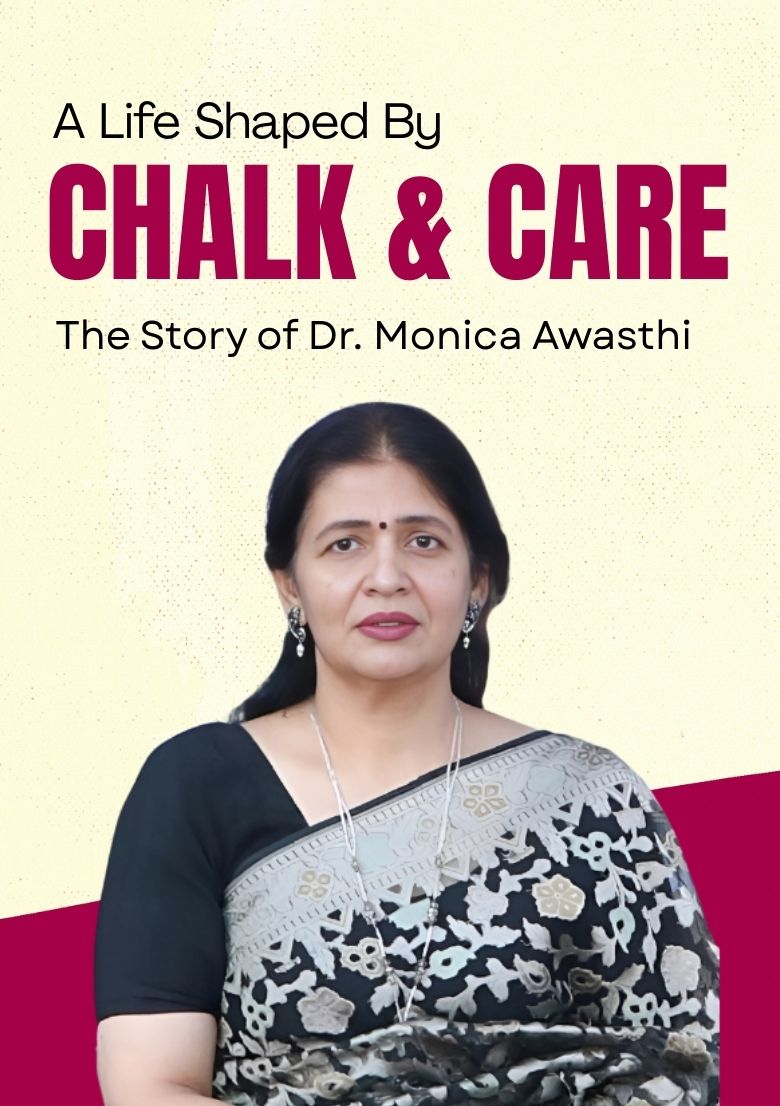
“The journey of a meaningful life is not defined by the paths we choose alone, but by the grace, resilience, and compassion we carry along the way.”
Introduction
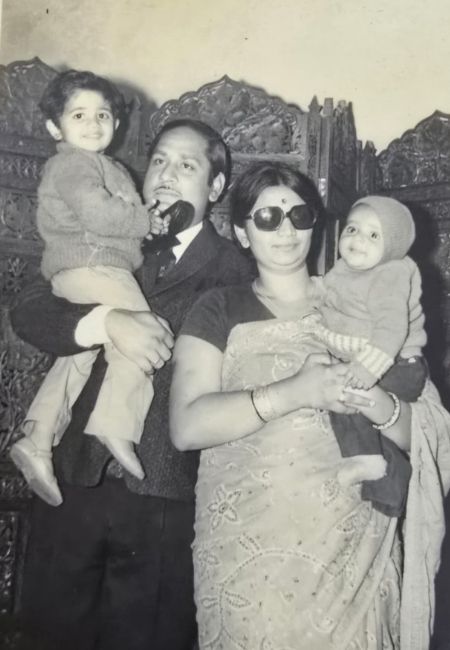
There is a particular memory from childhood that remains etched in her heart as the embodiment of love and presence. On the morning of an important school examination, young Monica waited anxiously, believing her father, away on a judicial commitment, would not make it in time. But to her surprise, he arrived early—having traveled through the night, tired but determined to stand by her side. That moment, seemingly small in the grand scale of life, became monumental for Dr. Monica. It shaped how she viewed relationships—not as obligations, but as commitments worth every effort. In her adult life, this translated into an unshakeable principle: show up, no matter what. As a mother, she became the same steady figure for her daughters and son, never absent, never too busy, always present. As a teacher and academic leader, she extended that presence to her students, who found in her more than just a mentor—they found an anchor. Dr. Monica’s life journey has been less about positions held and more about roles embraced—daughter, wife, mother, teacher, mentor, and reformer. Her path, far from linear, has been guided by conviction rather than convenience, by values rather than victories. With every step, she chose depth over display, substance over spotlight. This biography does not seek to glorify a career—it celebrates a calling. It is a tribute to the everyday choices that define greatness in its quietest form. From her roots in a household shaped by justice, grace, and quiet strength, to her decades-long dedication to education and community, Dr. Monica Awasthi’s biography A Life Shaped by Chalk and Care: The Story of Dr. Monica Awasthi, is ultimately one of care—deep, deliberate, and transformative. And it begins, as all great stories do, not with ambition, but with love.
“We are shaped by the hands that raise us, the voices that guide us, and the quiet strength we inherit without knowing.”
PHASE 1: The Early Years of Dr. Monica Awasthi
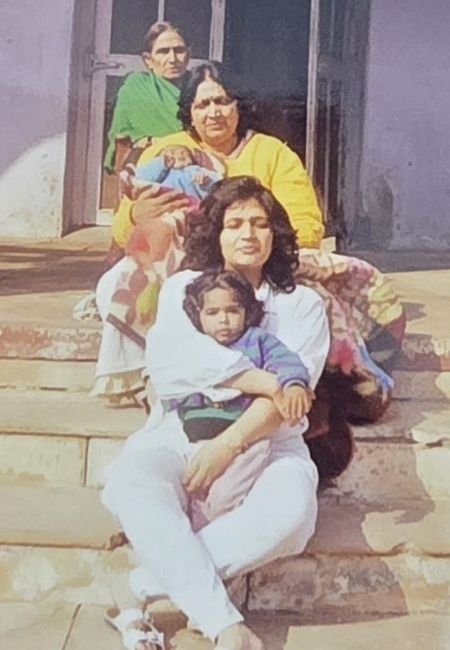
The most profound influence on Dr. Monica’s formative years came from her maternal grandmother,Ms. Sabita Tewari, a woman of uncommon strength and quiet heroism. With a piece of bone missing under her right arm and her knee broken, Dr. Monica’s grandmother never asked for sympathy, nor allowed others to treat her as less capable. She performed household chores with efficiency, using the same arm to knead dough or sweep the floor and walked without a walker, remaining remarkably independent well into her old age.
“Education is the most powerful weapon which you can use to change the world.”
PHASE 2: Dr. Monica Awasthi’s Educational Journey
From an early age, Dr. Monica Awasthi displayed a natural curiosity and sensitivity towards the world around her—a quality nurtured by her family and shaped through education. Her journey began in the culturally rich city of Bareilly, where the rhythm of temple bells, vibrant local markets, and the discipline instilled at home served as the backdrop to her growing intellectual world. Her schooling laid the foundation for a life rooted in academic excellence and social awareness. At RBL Girls Inter College, Bareilly, she completed her High School examination with First Division—a moment of pride not only for her family but also for her teachers. Her chosen subjects—Hindi, English, Home Science, Science, Social Science, and Vocal Music—reflected her diverse interests and a rare balance of scientific logic with artistic expression. Dr. Monica’s performance stood out not just for academic merit but for the holistic blend of intellect and emotion she brought to her studies. Her success was a testament to her disciplined approach and passion for learning. The environment at school, both
encouraging and rigorous, sharpened her focus early on. She wasn’t just studying to pass exams; she was learning to understand the world around her.
After high school, Dr. Monica pursued her Intermediate Examination at Government Girls Inter College, Bareilly. Here, she selected History, Psychology, English, Literature, Hindi, and Vocal music —a combination that revealed her increasing interest in humanities, mental health, and Indian culture. Although she passed with a Second Division, it was the depth of her intellectual and emotional exploration that stood out more than marks. Her engagement with subjects like history and psychology offered her insights into human behavior, societal transformation, and the complexities of the mind. Vocal music continued to be her emotional anchor, helping her navigate academic pressures and personal growth. These years helped Dr. Monica define what mattered most to her—empathy, cultural roots, and psychological understanding. Her studies were not isolated academic pursuits; they were part of a larger journey of self-discovery.
“The influence of a good mother and teacher can never be erased.”
PHASE 3: From Motherhood to Mentorship: The Making of an Educator
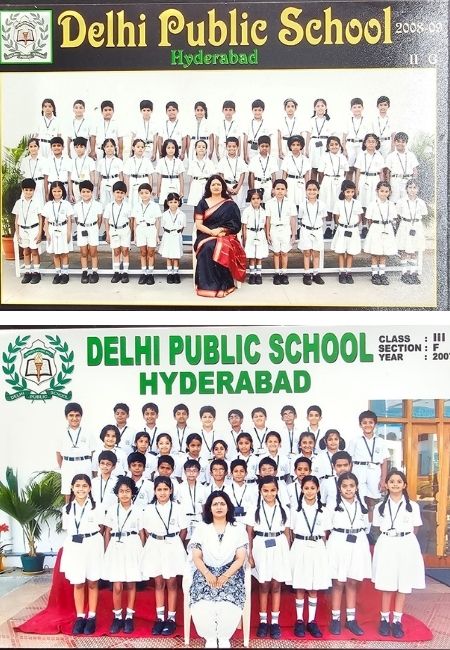
Dr. Monica Awasthi’s professional journey began in earnest in 1994, following her academic training in child psychology, education, and the social sciences. These foundational qualifications were more than degrees; they were pathways to understanding the minds and hearts of children. She started teaching in some of Uttar Pradesh’s reputed institutions, including St. Paul’s School in Shahjahanpur and St. Anthony School in Barabanki. These early postings were invaluable in developing her classroom management skills and pedagogical techniques. Working with diverse student populations honed her ability to empathize and adapt. She became known not just for her subject knowledge in Social Science, English, and Hindi, but for the genuine care she extended to each student.
Note of Thanks
She is deeply thankful to her family, whose support, values, and silent sacrifices laid the foundation of her character and purpose. Their constant presence has been her greatest strength.
To her students, who continue to inspire her every day, Dr. Awasthi offers sincere appreciation. Their innocence, questions, and silent stories have taught her more than any textbook ever could.
She also acknowledges her colleagues, mentors, and well-wishers who have helped refine her thinking and offered encouragement during moments of both doubt and discovery.
From the depths of her heart, she offers her sincere gratitude.
Thanks
Dr. Monica Awasthi