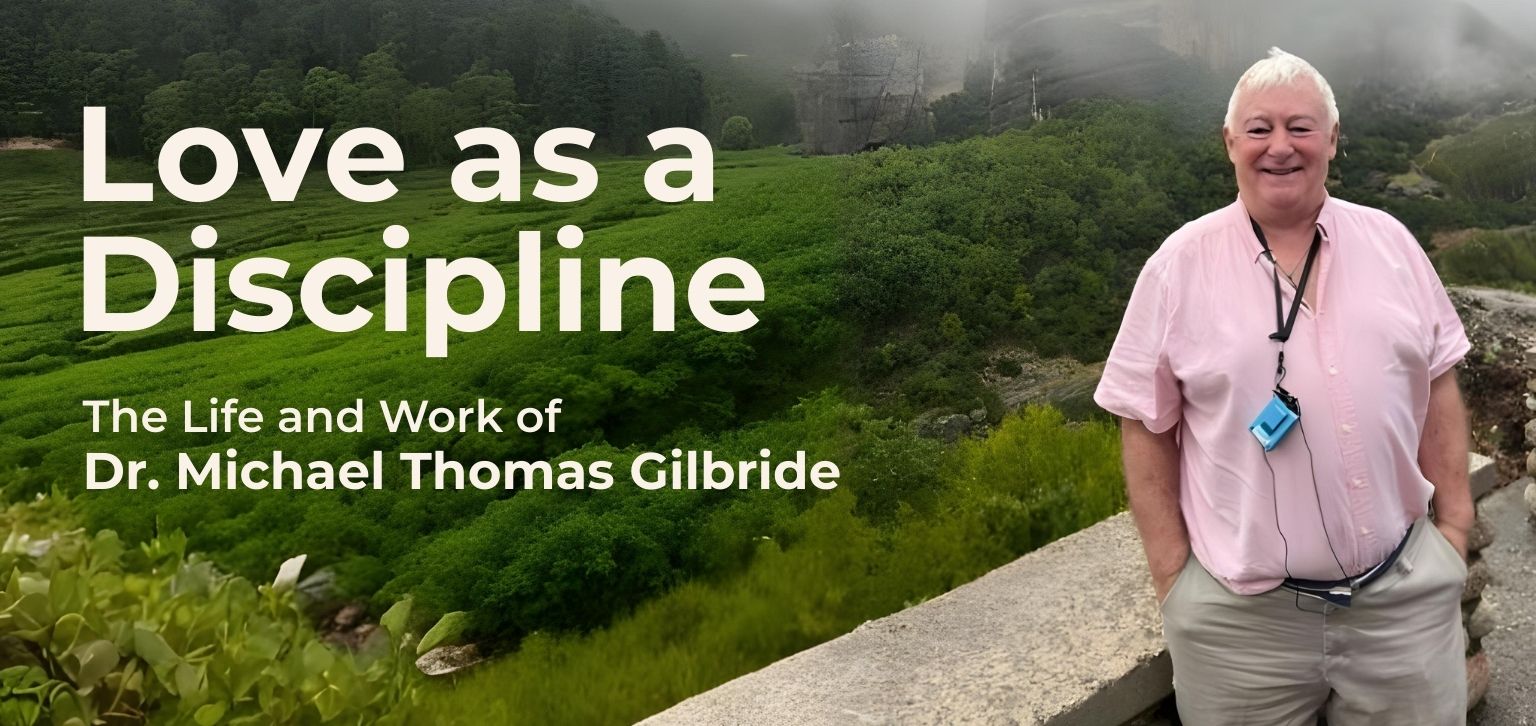

“Where there is love, there is life.”
Dedication
This book is dedicated to the determined young man who grew up into Dr. Michael Thomas Gilbride, a man who learned that intellect without tenderness is incomplete, that service without relationship is unfinished, and that love can become a way of thinking as well as a way of living. He dedicates this book to his parents, who shaped his first world of care; to the teachers who paved the way by introducing him to challenging books and challenging questions; and to every student who trusted him with a poem, a fear, or the first sentence of a fresh start.
It is dedicated to his lifelong friend Tim, who has walked beside him in seasons of doubt and discovery. It is dedicated to his colleagues in classrooms, clinics, and community projects who believed writing could heal and that attention could change a life. Above all, it is dedicated to his wife, whose presence reordered the meaning of purpose and whose courage has taught him what steadfast love is. May these pages be a quiet thank-you to all who helped Dr. Michael Thomas Gilbride become the person he chose to be, again and again, with grace.
“The limits of my language mean the limits of my world.”
Phase 1: Foundations of Faith and Language

Life always starts off low-key, with a rhythm so mundane that its importance isn’t appreciated until much later. Dr. Michael Thomas Gilbride grew up in a house where the gentle hum of books, the sound of faith, and the elegance of well-crafted language were as commonplace as a window on a sunny day. He did not grow up in a lavish household but rather in a routine one that was comforting and based on trust, education, and faith.
Dr. Michael came from a long line of people who placed a premium on education and the importance of paying close attention. His parents were decency personified; they were humble, self-controlled, and firmly believed that a person’s value is not determined by their accomplishments but by their character. Successful completion of tasks, in their view, were an end in themselves. In that setting, he learned the value of humility, politeness, and patience. Through his unassuming wisdom, his father instilled in him the value of consistency, the significance of keeping one’s word, the beauty of calm deliberation, and the importance of thinking carefully as a sign of respect. Dr. Michael owes much of the kindness that characterizes his approach to counseling and teaching to his mother, who was both intuitive and kind. She taught him that listening is the most basic expression of love.
Books served as much more than just accents in the Gilbride home; they were constant company. Poems, ancient novels with tattered covers, and prayer books with dates and notes written in the margins were all there. Language was more than just a subject in school; it was an integral part of daily life. There was care in the choice of words, the tone of the talk, and even the corrections offered. As a child, Dr. Michael knew that words had the power to hurt or help, and that selecting them carefully was an issue of morality in addition to intelligence.
“Give me that man that is not passion’s slave.”
Phase 2 : Learning to Read Minds and Plays
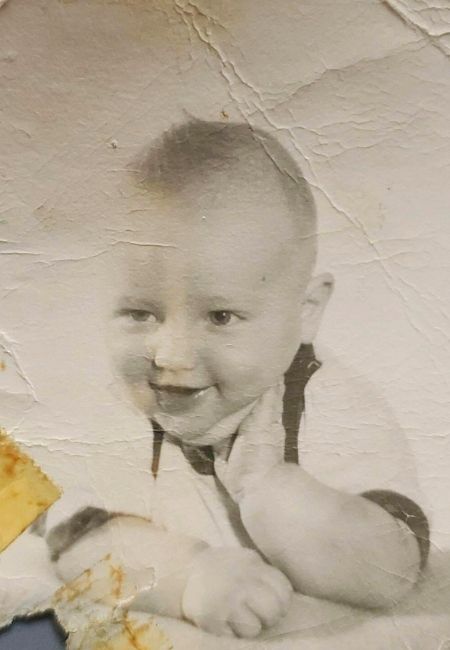
When Dr. Michael Thomas Gilbride entered university life, the quiet discipline of his childhood met the exhilaration of new horizons. What had begun in the gentle order of faith and family now unfolded in lecture halls, libraries, and late-night debates that stretched his mind and tested his convictions. He arrived with humility, curiosity, and a deep reverence for learning — qualities that would come to define his academic journey.
For Dr. Michael, the university was less a place of ambition than a living conversation. Columbia’s corridors carried the footsteps of thinkers who had wrestled with the same questions that stirred within him: What drives human behavior? How does art capture truth? Can knowledge reconcile the tension between logic and love? These questions did not intimidate him; they animated him.
The Convergence of Literature and the Mind
His studies in literature and psychoanalysis were not chosen by chance. He sensed instinctively that both disciplines explored the same terrain — the human heart in all its contradictions. Literature revealed how people narrate their struggles; psychology explained why they do so. Between them lay the mystery that had always fascinated him: consciousness itself.
In classrooms where Shakespeare, Joyce, Freud, and Jung were discussed with fervor, Dr. Michael found a kind of intellectual home. He was captivated by the way stories illuminated the mind’s hidden architecture. When he read Hamlet, he did not see a distant prince but a mirror reflecting the universal tension between thought and action. When he studied King Lear, he recognized in its unfolding tragedy the devastating cost of misjudged love. Every line seemed to offer a psychological revelation — proof that literature had been studying the soul long before psychology gave it language.
“Education is not the filling of a pail, but the lighting of a fire.”
Phase 3 : The Classroom as a Commons
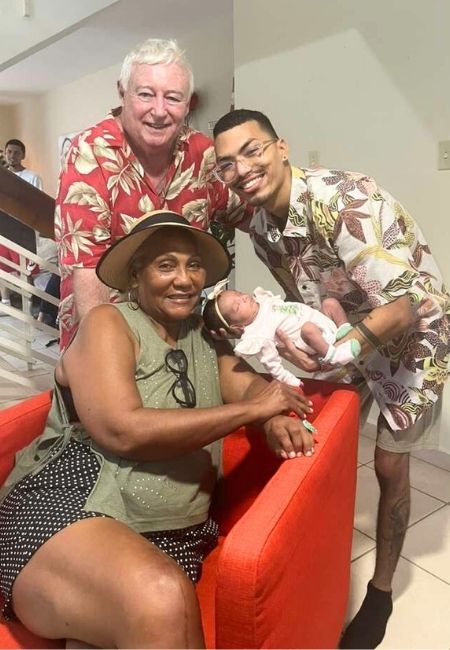
When Dr. Michael Thomas Gilbride first stepped to the front of a classroom, he carried with him not only degrees and theories but also a reverence for human possibility. The years spent immersed in literature and psychoanalysis had taught him that learning is not a transfer of facts but a transformation of attention. Teaching, for him, was not a performance; it was an act of service — a sacred trust between mind and mind.
His first assignments were in schools that reflected the diversity and resilience of the city. The desks were old, the windows sometimes stuck, but the air was alive with questions. He saw quickly that the realities of teaching would test every lesson he had ever learned about patience and empathy. Students arrived carrying not only backpacks but histories — of migration, family pressure, uncertainty, and hope. Dr. Michael understood that education would fail if it reduced them to test scores. Each one was a story in progress, and his task was to help them believe that their stories mattered.
He brought to his classroom the same sense of order he had grown up with: respect for time, for one another, and for the written word. Yet beneath that structure lay warmth. He greeted each student by name. He read their essays with the care of an editor and the compassion of a mentor. He never forgot what it felt like to be young and searching for coherence. His lessons were conversations rather than commands. He knew that genuine learning begins not with explanation but with invitation.
Dr. Michael’s subject was English, but what he truly taught was attentiveness. Grammar became ethics; composition became clarity of thought. He told his students that writing elegantly was not about decoration but honesty — about choosing words that told the truth without cruelty. Literature, he explained, exists to remind us that others have felt what we feel and survived it. Under his guidance, poems became maps of emotion, and plays became laboratories of human motive.
Note of Thanks
The completion of The Life and Work of Dr. Michael Thomas Gilbride is not merely the end of a biography — it is the fulfillment of a tribute. Behind every page stands the spirit of a man whose gentleness, intellect, and moral strength touched lives quietly yet profoundly. This work owes its depth to the echoes of his example and to those who walked beside him in love and purpose.
Our foremost gratitude extends to his beloved wife, whose courage and grace gave this story its most sacred chapter. Her journey, intertwined with his, revealed the deeper truth that love, when lived faithfully, becomes an act of wisdom. She remains the silent co-author of his legacy — the one who taught him, and through him all of us, that endurance is the purest form of devotion.
We also extend heartfelt gratitude towards people who have shaped the person that Dr. Michael is today: Poet Peter Orlovsky, Sra. Leonides Pellulera, Rt. Rev. Paul Moore, Jr., St. Francis of Assisi, William Butler Yeats, Theodore Reik, Saint John of Patmos, Rev. Edmond Hawley, Sal Denise, Dr. Eric Plaue, Robyn Kopet, Carol Cushman. We extend gratitude to Mrs. Castellano, a special substitute teacher at Dr. Michael’s elementary school. We also express his thankfulness to Professor Dr. E. Teddy Voss, who was in Germany at the time, accepted Dr. Michael’s lengthy paper on the relationship between Socrates and Plato and all his lovely students.
We also express deep appreciation to the colleagues and friends who shared their recollections and reflections. Their words illuminated the many dimensions of Dr. Michael Thomas Gillbride’s life — as educator, psychologist, mentor, and friend — and reminded us that true influence continues long after presence fades.
To those who have read these pages with open hearts, thank you for witnessing a life that was not about grandeur but about grace. Dr. Michael Thomas Gilbride’s story reminds us that compassion is a discipline, that understanding is a calling, and that service, when done with humility, becomes its own form of prayer.
May this biography stand as both remembrance and inspiration — a testament to a man who lived as he taught: patiently, attentively, and with a love that never tired of giving.
Thank You
– Dr. Michael Thomas Gilbride