“From a boy who once paused by railway tracks in wonder, to a leader guiding train without drivers, my journey has never been about machines alone—it has always been about people, purpose, and the quiet belief that learning never ends.”
Introduction
Every remarkable journey begins with a spark—an ordinary moment that quietly shapes the course of an extraordinary life. For Dr. Mahamood Rasheed Basha, that spark ignited during his childhood in the modest town of Chintalapudi, Andhra Pradesh, where he was born on 20 June 1974. Walking daily to school, he would pause at the railway tracks and watch the trains, captivated by how effortlessly they shifted from one line to another. Unlike a car with its steering wheel, here was a system that worked invisibly, guided by unseen signals and precise coordination. For most children, it was a fleeting curiosity. For him, it became a lifelong fascination—one that grew into a career spanning decades, shaping modern metro systems, and touching the lives of millions of passengers across the world.
Dr. Rasheed’s roots were anchored in a family that valued honesty, service, and resilience. His father, Md. Peer Basha, worked in the Indian Railways on the commercial side as a ticket collector, while his mother, Katija Begum, was a homemaker whose discipline and organizational skills left a profound mark on his character. From his father, he absorbed the values of responsibility and duty; from his mother, the ability to remain grounded, structured, and disciplined even when life brought constant changes. Together, they instilled in him the belief that humility and perseverance were the cornerstones of success.
Frequent transfers of his father’s job meant that his schooling was spread across different places—Warangal, Secunderabad, and a small village in Anantapur district. This movement taught him adaptability at a young age, exposing him to different learning environments and ways of life. Despite the challenges, his brilliance in academics shone through, particularly during his Intermediate education in MPC, where he earned recognition as the class topper in Physics. These formative years were not just about classroom achievements but about cultivating resilience—the ability to embrace change and still remain focused on a goal.
Fuelled by a strong inclination toward technology and computers, he pursued his B.Sc. in Mathematics, Physics, and Computer Science, graduating in 1996 from Osmania University. It was a time when computers were still finding their way into mainstream careers in India, but his curiosity drew him towards the subject with passion. At the same time, destiny pulled him closer to the railways. After clearing competitive exams, he secured a role in the Indian Railways in 1997, stepping into the technical world of Signalling and Telecommunications. This was not just a job—it was a gateway into the world that had first captured his imagination as a boy watching trains on the tracks.
His early years at Indian Railways were marked by responsibility and innovation. Entrusted with interlocking systems and signaling reliability, he managed operations that ensured safe and efficient train movements. In an environment where failures were frequent, he introduced systems and practices that reduced disruptions and achieved zero-failure operations. More importantly, he nurtured a management style that was uncommon in the railway culture of the time. Instead of imposing decisions from the top, he encouraged his small teams to share ideas and solutions, fostering ownership and accountability. This inclusive leadership not only solved technical issues but also built trust and motivation among his colleagues. His contributions earned him recognition, including the Best Employee Award for two consecutive years, a testament to both his technical competence and his people-centric approach.
“Great journeys often begin with small questions, and sometimes a child’s wonder becomes the compass for a lifetime.”
Phase 1: Whispers of Curiosity: A Childhood Rooted in Simplicity
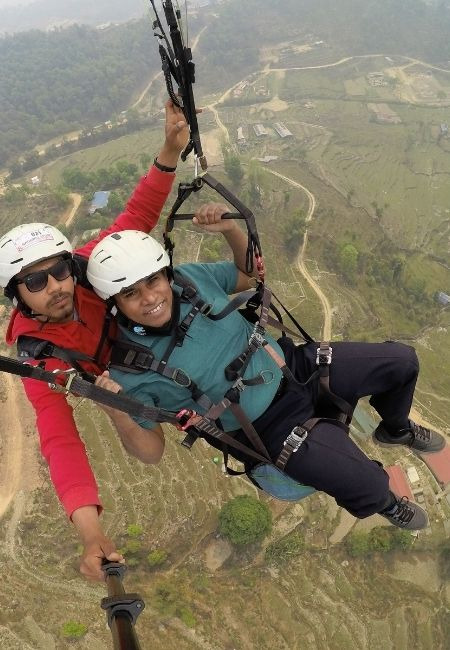
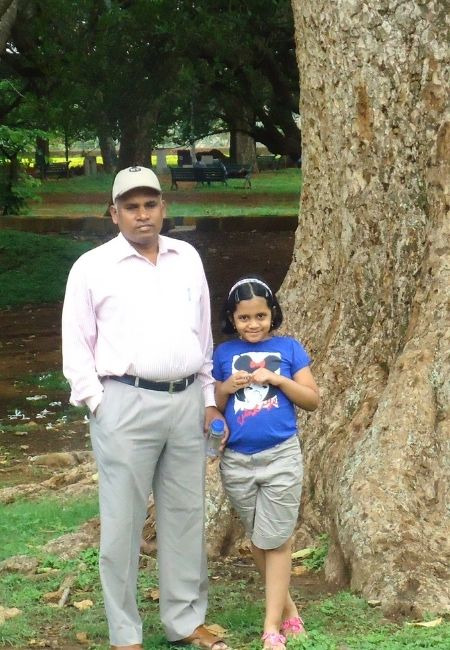
Childhood is rarely remembered for its milestones but rather for its simplest moments—the streets we walked, the sounds we heard, and the questions that quietly shaped our future. For Mahamood Rasheed Basha, born on 20th August 1974 in the modest town of Chintalapudi, Andhra Pradesh, it was the sound of trains and the sight of tracks that planted the earliest seeds of curiosity in his young mind. His father, Peer Basha, and his mother, Katija Begum, were the silent architects of his early foundation, providing him with values of discipline, humility, and resilience that would remain cornerstones of his life.
Life in Chintalapudi was simple, untouched by the noise of larger cities. Days flowed with the rhythm of family, school, and community. Mahamood was an average student by his own modest description, neither clamoring for attention nor content with mediocrity. Yet within him burned a quiet sense of wonder. Unlike many children who rushed past railway lines without a second glance, he lingered. As he walked the one kilometer stretch to school, he often crossed railway tracks, staring intently at the junctions where trains shifted from one line to another. “How do they move without a steering wheel like a car?” he would wonder. To him, the world of trains was both a puzzle and a promise—an invisible system of order waiting to be understood.
His father’s profession in the Indian Railways, though on the commercial side as a ticket collector, made the family’s life one of constant transfers. For young Rasheed, these moves meant new schools, new friends, and new environments—lessons in adaptability long before he would use the word. He began his schooling at St. Gabriel’s High School, Warangal, where he studied until the 7th standard. Warangal, with its mix of tradition and progress, gave him his first sense of belonging outside his birthplace. It was here that his curiosity deepened, shaped not just by the classroom but by the world around him
“Every choice we make in our youth, even the ones born of circumstance, shapes the architecture of who we become.”
Phase 2 : Foundations of Purpose: From Classrooms to Calling
When Mahamood Rasheed Basha completed his schooling and intermediate education, life stood before him like a set of diverging tracks. Each path held its own promise, its own risks, and its own unknowns. His childhood curiosity for trains and his growing passion for technology had already shaped his mind, but the question remained—what direction would life ultimately take him? Phase 2 of his story is about these crucial years: his higher education, his first professional steps, and the seeds of resilience and purpose that would guide his career for decades to come.
After his success in Intermediate studies with MPC (Mathematics, Physics, Chemistry), where he had earned recognition as a class topper in Physics, Rasheed carried forward a quiet confidence. He knew he had an analytical mind and the ability to understand systems. But like many students of his generation, he also carried the weight of expectations—of family, of society, and of his own inner desire to do something meaningful.
Initially, Rasheed dreamt of becoming an engineer, a path that seemed both natural and logical given his love for machines, systems, and computers. However, the competitive landscape of engineering admissions in the early 1990s was unforgiving. Despite his talent, the doors of engineering colleges did not open for him. For many, such a setback would have left a scar of disappointment. For Rasheed, it became a redirection, not a dead end. He chose to pursue a Bachelor of Science (B.Sc.) with Mathematics, Physics, and Computer Science at Osmania University—a decision that would prove critical in combining his fascination for science with his growing curiosity for computers.
The years he spent completing his B.Sc. (1993–1996) were formative in multiple ways. Firstly, the course sharpened his technical thinking. Mathematics gave him precision, Physics gave him perspective, and Computer Science opened a new horizon of possibilities. In the early 1990s, computers were still relatively rare in Indian households, often associated with curiosity rather than careers.
“When passion finds its path in purpose, even the toughest journeys become stepping stones to greatness.”
Phase 3 : The Rails of Responsibility: A Decade of Discipline and Discovery
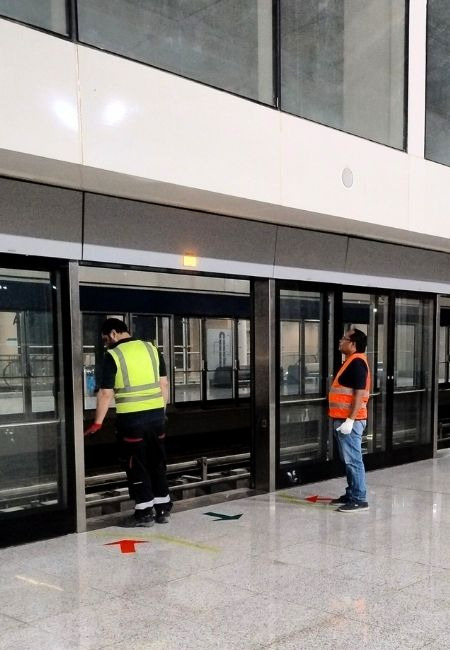
By the late 1990s, Mahamood Rasheed Basha had positioned himself at the beginning of what would become a defining decade in his professional life. With his B.Sc. in Mathematics, Physics, and Computer Science completed in 1996 and his successful entry into the Indian Railways in 1997 as a Signal and Telecom Technician, Rasheed was stepping into a world where precision was not a luxury—it was survival. The safety of thousands of passengers depended on the systems he was about to manage. This was more than just a job; it was a responsibility that required discipline, technical acumen, and a heart willing to serve.
For Rasheed, working in the Indian Railways was both familiar and foreign. Familiar, because his father, Peer Basha, had spent his career in the same organization, albeit in the commercial department as a ticket collector. Foreign, because Rasheed was entering the technical side, one of the most critical and demanding wings of the Railways. Here, signaling and telecommunications were not just systems—they were the invisible guardians ensuring trains moved safely from station to station.
His early assignments were in signaling cabins and field stations where the responsibility was immense, but the resources were often limited. Rasheed quickly discovered that failures in signaling systems were common. Tracks would experience breakdowns, communication links would falter, and interlocking systems would face repeated disruptions. Each failure meant delays, confusion, and potential risks to safety. For a young technician, the challenge was daunting. But for Rasheed, it was an opportunity.
Instead of being overwhelmed, he approached every failure as a puzzle waiting to be solved. He worked closely with his small team, often going beyond his assigned hours to ensure that trains moved without disruption.
Note of Thanks
The journey of Dr. Mahamood Rasheed Basha is not the story of one man alone—it is a tapestry woven with the love, sacrifices, and encouragement of many who walked beside him. This biography, while capturing his achievements and milestones, also stands as a tribute to those who shaped, guided, and supported him at every turn.
Dr. Basha extends his deepest gratitude to his beloved wife, Hazeera Mohammed, whose unwavering support, quiet sacrifices, and steadfast companionship became the cornerstone of his success. In her, he found not only a partner but also a planner, advisor, and guardian who gave him the strength to pursue demanding goals with confidence. Every accomplishment in his career bears her silent but invaluable contribution.
He also expresses heartfelt thanks to his mother, Katija Begum, whose discipline, nurturing spirit, and values instilled in him the foundation of perseverance and humility. To his father, Peer Basha, he owes gratitude for introducing him to the world of railways and providing the early inspiration that led to a lifetime of service in this field. Together, they gave him both the roots and the wings to embark on his journey.
His daughter, Alvira Mohammed, deserves special mention for being a source of pride and hope for the future. Watching her grow into an engineer in her own right has been one of his life’s greatest joys, and he is grateful that his passion for technology continues through her.
Dr. Basha is also indebted to the many colleagues, mentors, and teammates who enriched his path—whether in the Indian Railways, Blue Star Infotech, Thales Security Solutions, or Hitachi Rail STS. Their collaboration, trust, and shared dedication turned challenges into achievements and projects into legacies. He believes every recognition he has received is equally theirs.
Above all, he offers thanks to the Almighty, whose grace carried him through struggles, guided him in decisions, and blessed him with the opportunities to serve humanity through his work.
This biography is therefore not just a reflection of his own journey but a collective acknowledgment of family, faith, colleagues, and countless individuals who stood by him. It is with humility and deep gratitude that Dr. Mahamood Rasheed Basha dedicates this story to all those who became part of his life’s journey and helped him transform curiosity into knowledge, knowledge into service, and service into legacy.
Thank You
– Dr. Mahamood Rasheed Basha