

“A life is not defined by the systems it serves, but by the responsibility it accepts when those systems fall silent.”
Introduction
Biographies often read like checklists of success—a sequence of dates, titles, and wins. But the life of Dr. Ludwig Sadredin Sahesch-Pur doesn’t fit into such a small box. You can’t understand his journey just through academic degrees or career milestones because his real story happened elsewhere: in the responsibilities he took on when it was hard, the values he kept when silence was easier, and a discipline forged by personal loss as much as ambition. This isn’t just about an engineer or an advisor; it’s about a person who chose to live consciously within complex systems instead of hiding behind them.
Born in Germany as the youngest of four, Ludwig’s home life quietly prioritized discipline, culture, and learning. His father, an Iranian teacher, believed education was about building character, not just collecting facts. His mother, a midwife who spent her life delivering babies, was the embodiment of dignity and care. These influences didn’t turn into a life philosophy overnight; they surfaced slowly, tested by hardship and time. Like most people who find true clarity, he found it through confrontation, not comfort.
On the professional side, Ludwig moved into engineering and industry. Working in infrastructure, risk assessment, and quality leadership, he operated in worlds where precision and accountability were everything. Spending years working across Germany, Switzerland, the Middle East, and Asia, he learned that technical skill isn’t enough. Systems only work if the people running them have integrity. This realization became the heartbeat of his career as his responsibilities grew.
His 2007 move to Switzerland was a major turning point. While the country offered structure, it also revealed a gap between economic efficiency and social duty. Ludwig saw environments where “performance” was a narrow metric that ignored the human cost. Facing workplace pressure and ethical conflicts, he had to redefine what leadership meant. Instead of backing down, he chose to engage—often at a personal cost. These trials proved to him that intrinsic motivation, not a paycheck, is the root of real leadership.
The biggest shift in his life, however, happened at home. When his mother began her battle with dementia, Ludwig faced vulnerability in its rawest form. This reshaped his priorities and sharpened his sense of duty. It wasn’t enough to just work efficiently; he started questioning how our systems treat the elderly and the fragile. During the COVID-19 pandemic, he funneled his expertise into finding ways that technology and human-centered thinking could protect dignity for seniors, especially during times of isolation.
“Before the world asks who you are, life teaches you what you must stand for.”
Phase 1: Foundations of Character—Family, Culture, and Early Awareness
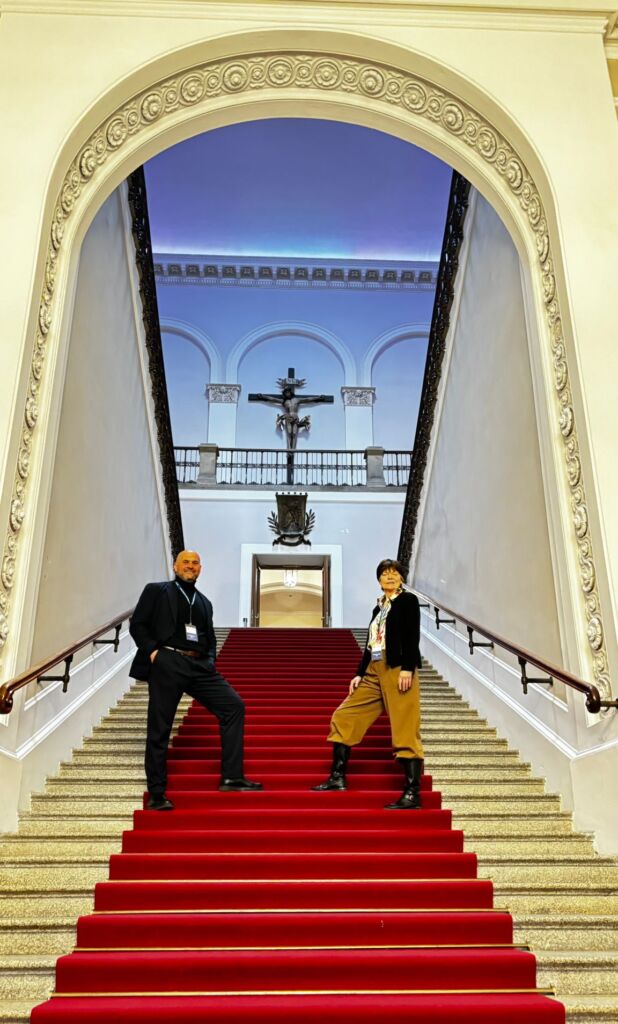
Every life begins long before it becomes visible to the world. In the case of Dr. Ludwig Sadredin Sahesch-Pur, the foundations of character were laid quietly, shaped not by privilege or early acclaim, but by family, cultural depth, and an unspoken code of responsibility that would later define the man he became. This phase of his life is not marked by dramatic events or public milestones; instead, it is defined by the slow, steady formation of values—values that would be tested repeatedly in the years ahead.
Born in Germany as the youngest of four children, Ludwig grew up in a household where observation mattered as much as instruction. Being the youngest carried its own form of responsibility. He learned early to listen, to watch carefully, and to understand the dynamics of people before forming judgments. In a family shaped by both strength and complexity, he absorbed the idea that identity is not inherited automatically; it is cultivated through awareness, discipline, and personal conduct.
His father, an Iranian teacher, represented the quiet authority of knowledge and moral clarity. Teaching, in this context, was never limited to textbooks or classrooms. It was a way of living—of asking questions, respecting tradition, and understanding that education carries ethical weight. From his father, Ludwig learned that intelligence without integrity is empty, and that clarity of thought must always be accompanied by responsibility of action. Cultural heritage was not something to display or explain; it was something to live, internally and consistently.
Equally formative was the presence of his mother, whose profession as a midwife defined care in its most elemental form. She dedicated her life to bringing new life into the world, often under difficult circumstances, often without recognition. Through her, Ludwig encountered the meaning of dignity long before he had the language to describe it. Care, he observed, was not an abstract value; it was physical, emotional, and deeply human. The quiet strength she embodied would later become a central reference point in his understanding of responsibility and service.
The household in which Ludwig grew up did not encourage entitlement. Instead, it fostered self-restraint, respect for others, and an awareness that every role—no matter how visible or invisible—matters. Conversations were shaped by reflection rather than noise. Cultural identity was present not as division, but as depth. Growing up between influences, Ludwig developed an early sensitivity to difference, learning that people cannot be understood through surface impressions alone.
"True learning is not the accumulation of knowledge, but the discipline to respect its consequences.”
Phase 2 : The Discipline of Learning— Engineering the Mind and the Self

Education, for Dr. Ludwig Sadredin Sahesch-Pur, was never a narrow pursuit of credentials. It was a disciplined process through which thought, character, and responsibility were gradually refined. Phase Two of his life marks the transition from formative awareness to deliberate preparation—the period in which curiosity was shaped into competence, and values were tested against structure, rigor, and expectation. These years did not merely train him to become an engineer; they trained him to think, to endure, and to take responsibility for precision in both work and conduct.
Entering formal education in civil and mechanical engineering, Ludwig was drawn to fields that demanded accuracy, accountability, and an understanding of systems far larger than the individual. Engineering appealed to him not because of prestige, but because it required discipline. Structures either held or failed. Calculations were either correct or dangerously wrong. There was little room for illusion and even less for ego. In this environment, Ludwig found a familiar alignment with the values he had absorbed at home—effort, humility, and respect for consequence.
University life introduced him to complexity in a new form. Concepts were no longer intuitive or observational; they were mathematical, technical, and unforgiving. Yet he did not experience this as a limitation. Instead, he understood that mastery required patience. Long hours, repeated failures, and incremental progress became part of his routine. He learned that understanding is earned slowly and that shortcuts, though tempting, compromise integrity. These lessons would later inform his intolerance for superficial performance and his respect for those who did the work thoroughly and honestly.
Equally important was the cultural exposure that accompanied his academic journey. Educational environments brought together people of different backgrounds, perspectives, and ambitions. Ludwig observed how individuals responded to pressure—some with resilience, others with avoidance or competition. These observations reinforced an insight he had begun to develop earlier: intelligence alone does not define character. How one behaves when challenged reveals far more than grades or titles ever could.
During these years, Ludwig also began to recognize the ethical dimension of technical knowledge. Engineering decisions do not exist in isolation; they affect lives, safety, and public trust. This awareness set him apart from peers who viewed technical expertise as an end in itself. For Ludwig, learning carried moral weight. He understood that the systems he would one day design or oversee would serve communities, economies, and human needs—not abstract theories.
“The real test of education begins when responsibility replaces instruction.”
Phase 3 : First Steps into Industry— Responsibility Beyond the Classroom
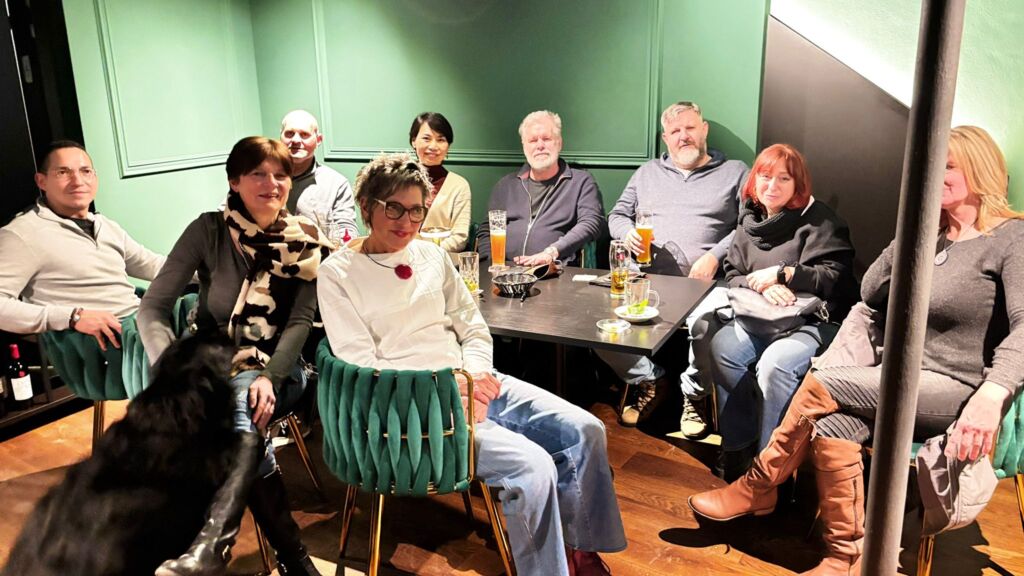
The transition from academic preparation to professional life marked a decisive shift in Dr. Ludwig Sadredin Sahesch-Pur’s journey. Phase Three represents the moment when theory met consequence, when knowledge was tested not by examinations but by real-world impact. Entering the industrial environment, Ludwig discovered that responsibility does not announce itself; it reveals itself quietly through decisions, behavior, and accountability under pressure. This phase would shape his understanding of work not as a pursuit of position, but as a commitment to reliability, ethics, and respect for human systems.
Stepping into the professional world, Ludwig encountered an environment far less forgiving than the classroom. In industry, precision was no longer academic; it was operational. Errors were not hypothetical—they carried tangible consequences for safety, cost, and trust.
The systems he now engaged with were large, interconnected, and dependent on coordinated effort. From the outset, he understood that competence required more than technical ability. It required discipline, humility, and an unwavering respect for process.
Early assignments introduced him to complex industrial settings where hierarchy, timelines, and expectations intersected daily. Ludwig observed that success depended not only on individual performance but on the integrity of collaboration. He learned quickly that listening was as important as speaking and that understanding context mattered as much as executing tasks. In these environments, credibility was earned slowly, through consistency rather than assertion.
One of the defining aspects of this phase was exposure to multicultural workforces and international projects. Ludwig found himself interacting with people from diverse backgrounds, each bringing different working styles, assumptions, and values. Rather than viewing these differences as obstacles, he approached them as opportunities for learning. He recognized that effective cooperation requires cultural sensitivity and mutual respect, not uniformity. This insight reinforced his belief that systems function best when human dignity is preserved within them.
A particularly formative experience during this period came early in his career, during an international assignment in the Middle East. As a young engineer, Ludwig encountered situations that challenged assumptions about appearance, authority, and competence. In one instance, he observed how individuals were dismissed based on superficial judgments, despite their deep operational knowledge. Choosing curiosity over prejudice, Ludwig engaged, listened, and learned. The encounter left a lasting impression: expertise often resides where least expected, and respect is the gateway to understanding.
Note of Thanks
This biography is offered with sincere gratitude to all those who stood beside Dr. Ludwig Sadredin Sahesch-Pur at different moments of his journey, often quietly and without expectation of recognition. Their presence, guidance, and patience shaped not only the course of his life but also the values that sustained it.
He extends heartfelt thanks to his family, whose strength, complexity, and enduring bonds provided both grounding and perspective through moments of growth, challenge, and loss. Their influence remains a constant source of reflection and responsibility.
Deep appreciation is also owed to the mentors, colleagues, and collaborators who challenged his thinking, trusted his integrity, and shared their knowledge generously. Through dialogue and shared effort, they contributed to a deeper understanding of leadership, culture, and service.
Finally, this work acknowledges all those who believe in responsibility over convenience and dignity over silence. To them, and because of them, this story was written.
Thanks,
– Dr. Ludwig Sadredin Sahesch-Pur