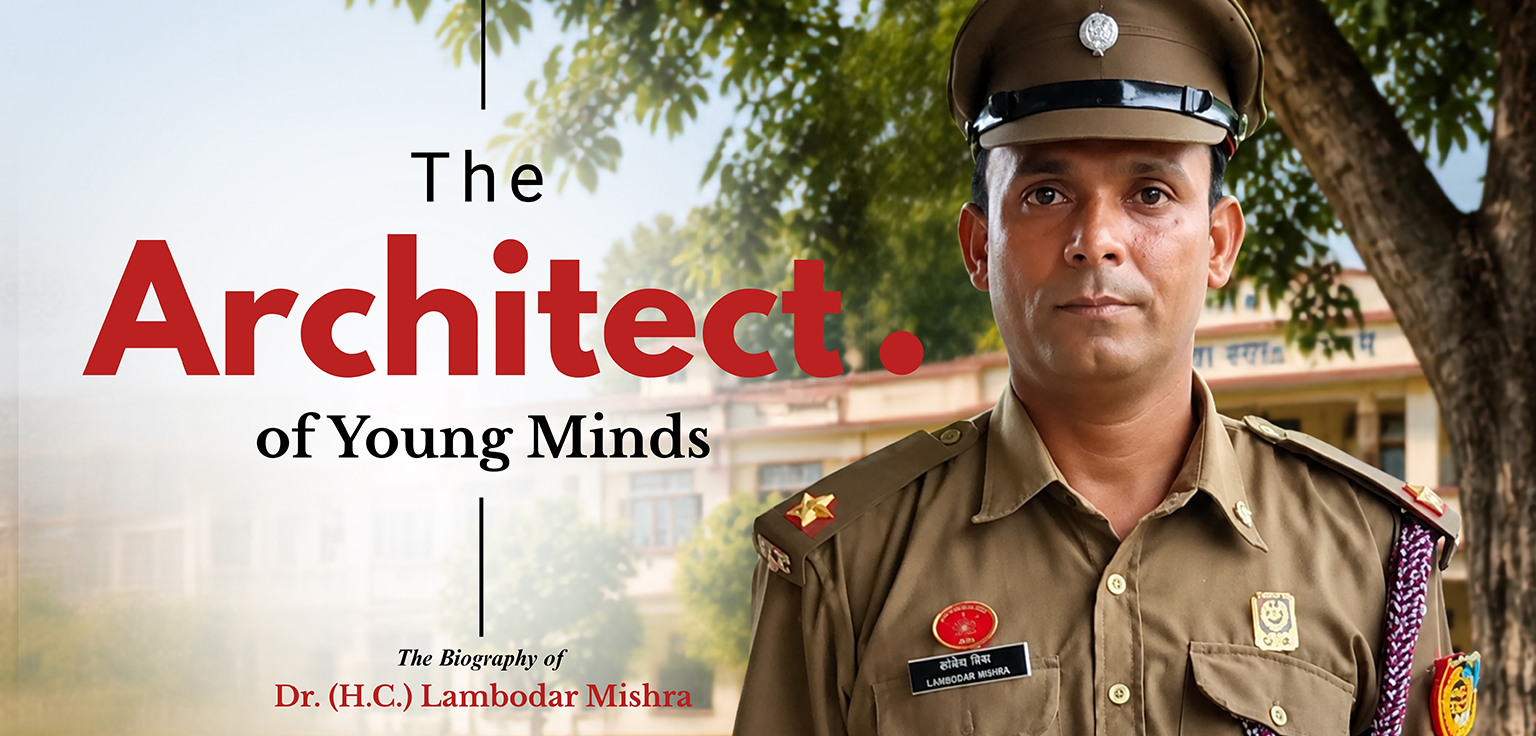
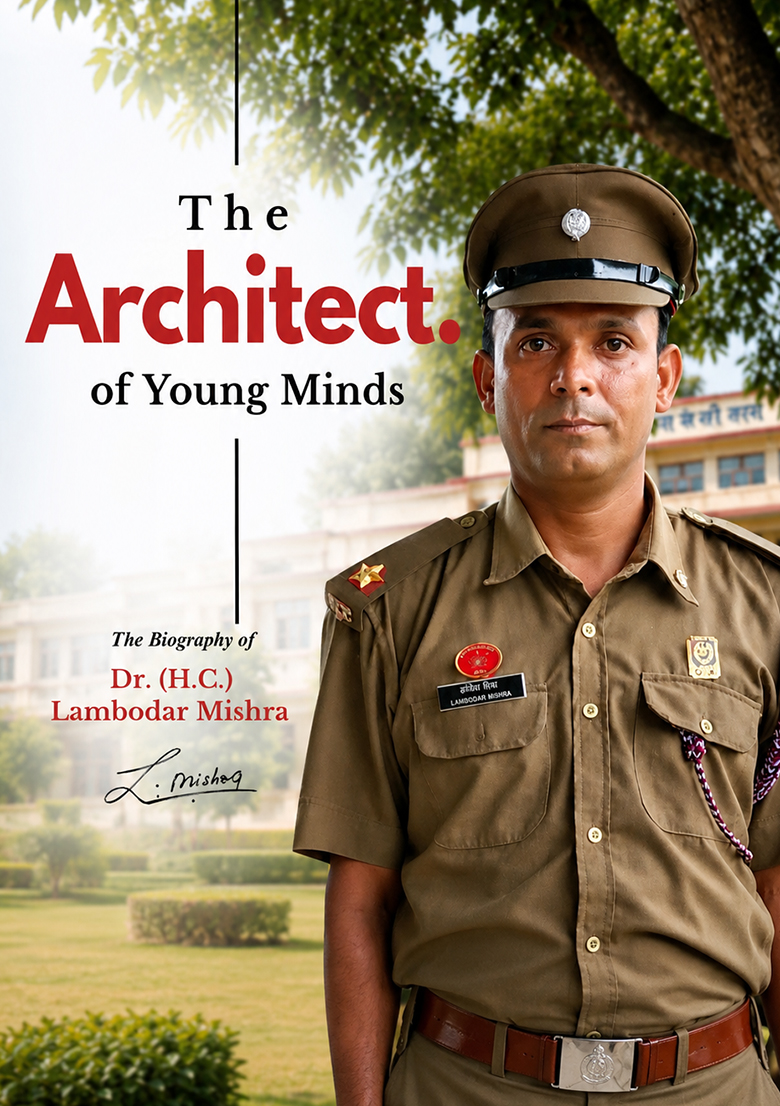
"Fame never called my name, nor did I seek it. I found my purpose in the quiet moments, in the struggles of a student transformed, and in the belief that every life I touched carried forward a piece of my devotion to education."
Introduction
Education leaves its deepest mark not when it fills a mind with facts, but when it transforms the very fabric of a human heart. It is not measured by the certificates it produces but by the character it cultivates, not by the professions it builds but by the persons it reveals. This truth lies at the very core of Dr. Lambodar Mishra’s extraordinary journey, a journey that does not announce itself through grand gestures or global fame but through the quiet, relentless labor of shaping one life at a time. His story is not written in headlines; it is written in the grateful eyes of students, in the disciplined minds he has nurtured, and in the enduring confidence he has planted where doubt once grew.
Not every life is remembered because it altered the course of history on a vast stage. Some lives are remembered because they altered the universe of every person they encountered, because they left behind not monuments but memories, not statues but souls forever changed by their presence. Dr. Lambodar belongs to this sacred company. His is a life built not upon extraordinary circumstances but upon extraordinary consistency, a life that chose the quiet power of daily devotion over the fleeting thrill of occasional triumph. Every lesson he delivered, every student he encouraged, and every responsibility he embraced became a thread in a larger tapestry of commitment, a tapestry woven with the unwavering belief that an educator’s duty extends far beyond the boundaries of a syllabus. It extends into the very soul of a generation.
The third of May, 1986, marked the beginning of this remarkable story in the small, unassuming town of Chirmiri, Chhattisgarh. Here, life moved at a gentler pace, and opportunities were not handed freely but earned through grit and grace. He grew up in a middle-class household where simplicity was not a limitation but a philosophy, where disciplined routines were not burdens but blessings, and where sincere learning was considered the highest form of wealth. Long before he understood the abstract meaning of success, he understood the tangible value of perseverance. He watched his elders face challenges with quiet resolve, and he absorbed the lesson that progress is never the product of shortcuts but the reward of patience, that dignity is found not in comfort but in the honest effort to rise above circumstance. These early impressions did not fade with time; they hardened into the bedrock of his character and silently guided every choice he would later make.
His academic life was never driven by a hunger for recognition. It was propelled by a genuine, almost sacred love for learning itself. From his earliest school days through the demanding years of higher education, he approached each subject with a curiosity that refused to be satisfied by surface understanding and a consistency that refused to yield to distraction. Science, with its elegant logic and infinite wonder, became the realm where his intellect found its deepest fulfillment. But it was teaching, the act of illuminating darkness for others, that became the profession through which his soul found its purpose. The transition from student to educator was never merely a professional shift. It was the birth of a lifelong covenant, a promise to share knowledge not with arrogance but with clarity, not with indifference but with sincerity, and not with haste but with the patient devotion that true education demands.
That sacred covenant found its first tangible expression in the year 2013, when he stepped into a classroom in Dantewada and began his teaching career. Guiding young minds through the intricate landscapes of Physics, Chemistry, and Science, he refused to reduce education to the mechanical transmission of textbook information. He sought to make learning alive, to connect abstract principles to tangible experiences, and to ensure that every student, regardless of their starting point, felt seen and supported. His willingness to stay beyond regular hours, to offer extra guidance to those who struggled, was not an occasional gesture but a reflection of his deepest conviction: that every learner deserves encouragement, that pace and ability are never measures of worth, and that a teacher’s success is not counted in lessons completed but in the confidence that students carry with them long after they have left the room.
"The strongest foundations are never built with abundance; they are cultivated through values that teach a person how to rise above every limitation."
Phase 1: Where Character Takes Root
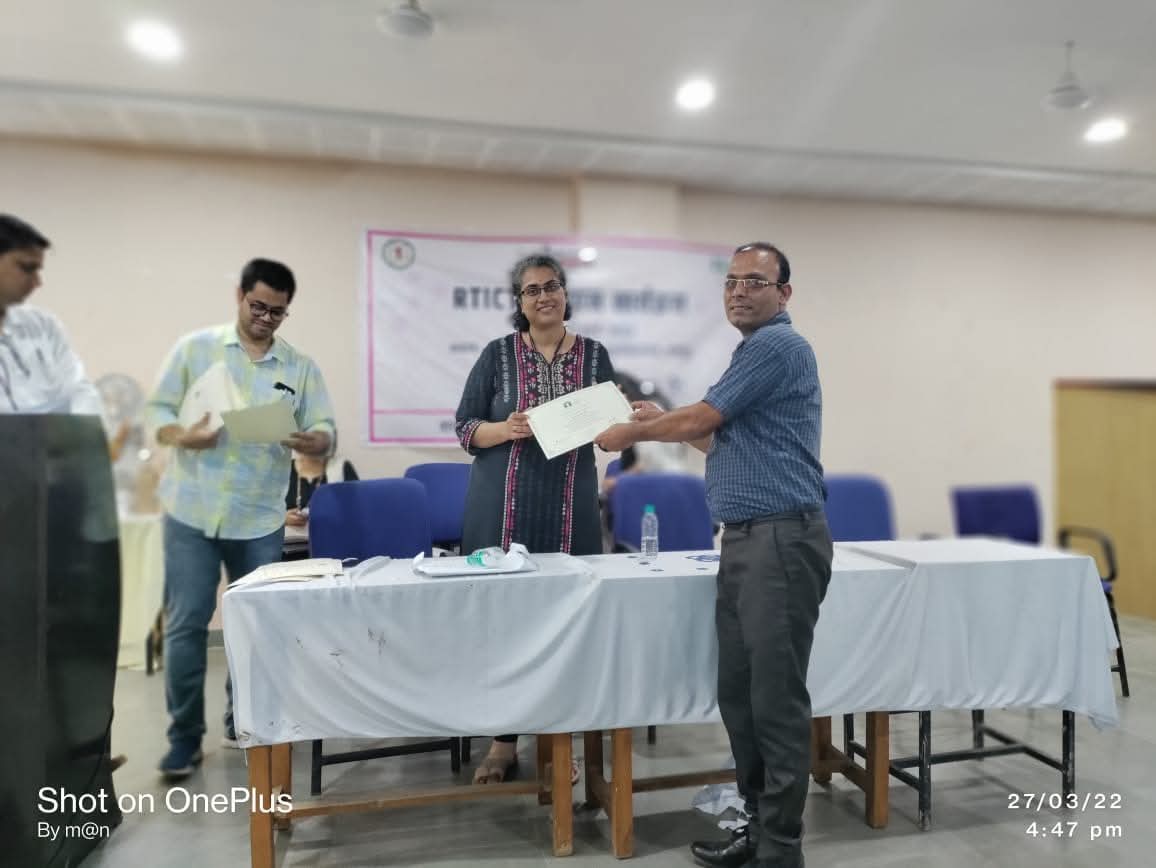
It was the 3rd of May, 1986, when the quiet town of Chirmiri in Chhattisgarh welcomed a child whose journey would one day leave an indelible mark upon countless young hearts and minds. But nothing about that beginning suggested grandeur or ease. It was a start shaped not by extraordinary fortune but by the enduring strength of a family whose currency was not money but integrity, whose inheritance was not property but principle. Within the warm and unpretentious walls of a modest middle-class household, young Lambodar spent his formative years absorbing lessons that no textbook could ever contain, lessons written not in ink but in the daily rhythms of a life lived with dignity.
His father, Kedar Nath Mishra, was a man who had dedicated his existence to serving the community as a priest, a vocation that demanded neither wealth nor recognition but offered something far more precious, the quiet satisfaction of a life devoted to duty. Through his example, young Lambodar learned that respect is never demanded; it is earned through sincerity. He learned that one’s work, no matter how humble, must always be performed with devotion, for it is not the scale of the task that defines a person but the spirit with which they undertake it.
Beside him, steadfast and unwavering, stood Suvarna Mishra, a woman whose quiet dedication as a homemaker transformed a simple house into a sanctuary. Her hands may never have shaped grand monuments, but they shaped the character of a son. Her words may never have been recorded in any public forum, but they were engraved upon a young heart that would carry them forever. Together, this remarkable couple built something far more enduring than any physical structure: a home where values were not lectured but lived, where discipline was not enforced but breathed, and where compassion was not taught but absorbed through the very air of daily existence.
As the elder of two siblings, responsibility was not an abstract concept for Dr. Lambodar; it was a lived reality from the earliest moments of consciousness. Every stage of his childhood deepened his understanding that meaningful progress demands commitment, that convenience is the enemy of achievement, and that the path to any worthwhile destination is paved with perseverance rather than shortcuts. Material comforts were scarce, yet scarcity never diminished the atmosphere of contentment and gratitude that permeated his home. His parents had mastered the art of finding abundance in simplicity, and this quiet philosophy became the lens through which young Lambodar would view the world. He learned, without ever hearing the lesson stated aloud, that lasting achievement is never determined by the circumstances one inherits but by the steadfastness with which one faces them.
His formal education began at Government Secondary School, Chirmiri, an institution where opportunity was simple and resources were humble. The classrooms reflected the realities of countless government schools across the land, where students often sat on floor mats instead of desks, where blackboards were scarce and facilities were basic. But for young Lambodar, these conditions never became excuses. They became reminders, gentle but insistent, that determination has no dependence on comfort. Each day he walked into that modest school, he carried with him a growing conviction that sincere effort possesses a strength far greater than the most favorable circumstances. He understood, even then, that the value of education is not measured by the grandeur of its setting but by the hunger of the mind that receives it.
"Genuine achievement belongs not to those with the greatest resources but to those who make the most of every opportunity placed before them."
Phase 2 : The Hunger That Never Sleeps
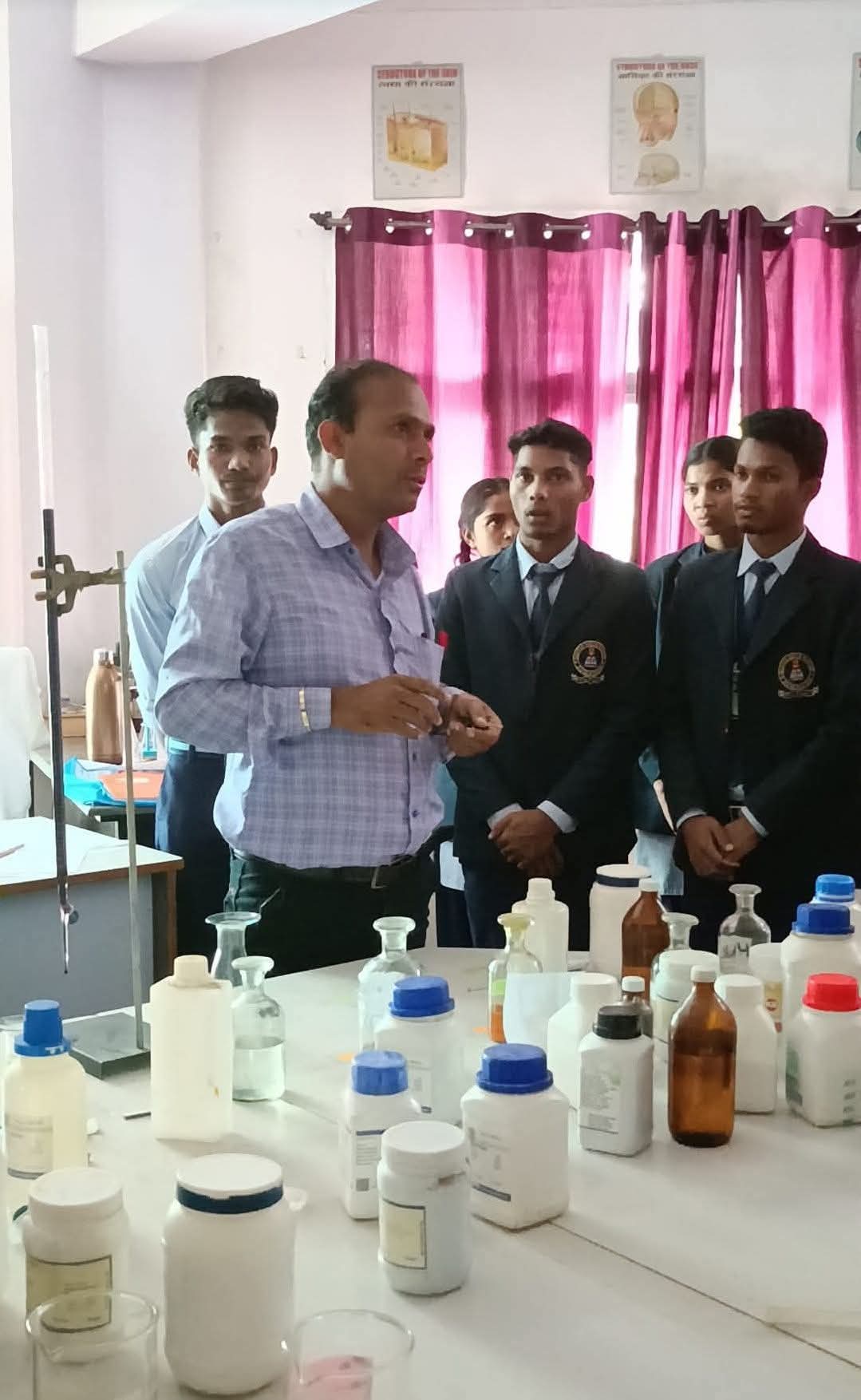
For Dr. Lambodar Mishra, education was never a mere transaction of information, a checklist of chapters to be completed, or a bridge to a professional destination. It was something far more profound. It became a lifelong pursuit that demanded discipline, stoked curiosity, and required an absolute dedication to personal growth, not as an occasional exercise but as a daily discipline. The values cultivated during his childhood, the quiet lessons absorbed within the walls of that modest home, naturally evolved into a determination to excel in academics. And with every passing year, learning transformed from an obligation into a deeply rewarding pursuit, a sacred dialogue between the mind and the universe of knowledge. He understood early, with a clarity that distinguished him from his peers, that genuine achievement belongs not to those who possess the greatest resources but to those who make the most of every opportunity placed before them, no matter how humble.
His years at Government Secondary School, Chirmiri, reflected this conviction with remarkable consistency. From the very first standard until the completion of Class XII, Dr. Lambodar consistently secured the first position in his class, an unbroken record of excellence that spoke not of effortless brilliance but of disciplined preparation and an unwavering focus on his studies. While many students found distractions difficult to resist, he discovered contentment in books, often choosing the quiet companionship of a well-worn text over the fleeting attractions of unnecessary diversions. His commitment was rooted in a simple but profound belief: that meaningful success demands complete dedication, that talent without discipline is a ship without a sail, and that the heights of achievement are scaled not in leaps but in steady, relentless steps.
Academic excellence, however, never isolated him from the broader experiences of student life. He understood, even then, that a well-rounded individual is forged in multiple fires. Alongside his studies, he actively participated in athletics, competing in the 100-metre, 800-metre, and 1500-metre running events. These experiences strengthened qualities that would later define both his personality and his profession. Every race reinforced the importance of endurance, preparation, and self-belief; every sprint reminded him that progress is achieved one determined step at a time, and every finish line taught him that victory belongs not to the swiftest alone but to those who refuse to stop when exhaustion begs them to quit. The discipline required on the track quietly complemented the discipline he practised in the classroom, together shaping a balanced and resilient individual who understood that the body and mind must be trained in harmony.
His pursuit of higher education continued at Government Lahri College, Chirmiri, where his passion for learning matured into something approaching a vocation. It was during these years that science emerged as the field that most deeply captured his imagination. The logical beauty of scientific thought, its elegant laws and infinite mysteries, encouraged him to question, to analyse, and to understand the world beyond accepted answers. He was no longer content to simply receive knowledge; he wanted to interrogate it, to test its boundaries, and to discover its hidden dimensions. At the same time, his consistent academic performance earned him the opportunity to serve as the Vice President of the college, a responsibility entrusted on the basis of academic merit. This recognition reflected not only his scholastic excellence but also the confidence that his institution placed in his character and leadership. It was a quiet affirmation that his peers and mentors saw in him something beyond grades: they saw integrity, reliability, and the quiet authority that comes from a life lived with purpose.
"Learning finds its truest purpose not in accumulation but in the sacred act of illuminating the path for another."
Phase 3 : The Moment Knowledge Finds Its Voice
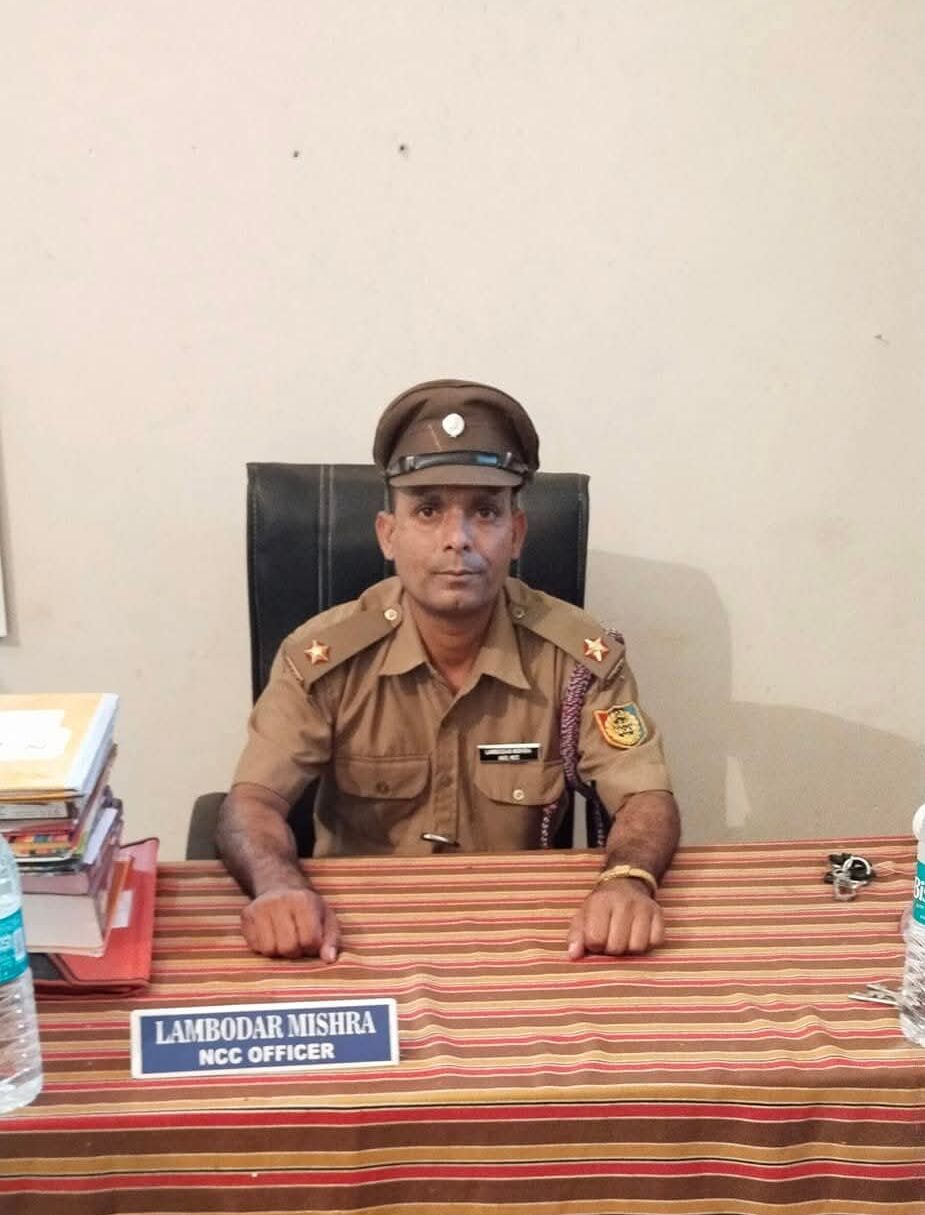
Every educational journey eventually arrives at a defining moment when knowledge, having been accumulated and cherished, begins to seek a greater purpose beyond personal achievement. It is the moment when the student realizes that learning, however profound, remains incomplete until it is shared; that understanding, however deep, finds its truest expression only when it illuminates the path for another. For Dr. Lambodar Mishra, that moment emerged not as a dramatic revelation but as a quiet, natural progression. The years of disciplined learning gradually transformed into a desire to guide others, and the inspiration he had drawn from his own teachers began to take shape as a vision of what an educator could become. Teaching was never viewed simply as a career, a means to security, or a respectable profession. It represented something far more significant: an opportunity to contribute meaningfully, to help young minds discover confidence in their own abilities, and to pay forward the gift of knowledge that had been so generously bestowed upon him.
Among the major turning points in his life, the years following his higher secondary education marked the beginning of this new direction. Continuing his academic pursuits while simultaneously completing his B.Ed., he gained a deeper, more nuanced understanding of education as a profession that demanded far more than subject knowledge. It required patience, the kind that does not fray when explanations must be repeated. It demanded empathy, the capacity to see the world through the eyes of a struggling learner. It called for communication, the art of translating complexity into clarity. And above all, it required the ability to recognize the potential within every learner, to see not what a student currently is but what they have the capacity to become. These experiences broadened his perspective in ways that textbooks never could, preparing him not only to teach lessons but also to understand the profound responsibility that accompanies the role of a teacher, a responsibility that extends far beyond the boundaries of any syllabus.
The defining chapter of this transition unfolded in the year 2013, when Dr. Lambodar began his teaching career in Dantewada, Chhattisgarh. Entering a classroom for the first time as a teacher was a moment charged with both excitement and responsibility. The institution welcomed students from a tribal region, each carrying different educational backgrounds, different learning abilities, and different linguistic influences that shaped the way they understood the world. Rather than viewing these differences as obstacles, he recognized them as opportunities. He understood that diversity in the classroom is not a problem to be solved but a richness to be embraced, and he committed himself to adapting his methods so that learning could become meaningful for every student sitting before him, regardless of their starting point.
His initial responsibilities included teaching Physics, Chemistry, and Science to senior classes, subjects that demanded not only mastery but also the ability to translate abstract principles into tangible understanding. Standing before a classroom filled with young learners, he realized that effective teaching required more than delivering information. It demanded the ability to build understanding through trust, through clarity, and through encouragement. Drawing upon his own experiences as a student, he approached every lesson with the intention of making complex ideas easier to understand, of breaking down walls of confusion and replacing them with bridges of comprehension. He believed, with a conviction that would never waver, that genuine learning begins when students are encouraged to ask questions freely, to participate without hesitation, and to know that their curiosity will be met not with impatience but with appreciation.
Note of Thanks
As this journey finds its place within these pages, Dr. Lambodar Mishra offers his heartfelt gratitude to the individuals whose guidance, encouragement, and unwavering belief have left a lasting imprint upon his life. Every chapter of his journey has been enriched by people who, in their own unique ways, helped him grow not only as an educator but also as a human being.
His deepest appreciation goes to Shri Shambhu Nath Singh, whose disciplined approach to teaching instilled resilience, perseverance, and an uncompromising dedication to excellence. Though his methods were demanding, they nurtured a strength of character that has continued to guide Dr. Lambodar throughout his life. He also extends his sincere gratitude to Shri Chandan Dutta, whose inspiring way of teaching Physics awakened a lifelong curiosity for science and demonstrated that true education lies in making knowledge both meaningful and accessible.
With equal respect, he expresses his heartfelt thanks to Dr. Dharmendra Dwivedi, whose encouragement and guidance became an important source of motivation during significant stages of his journey. His appreciation also extends to Ritu Ma’am, whose support and belief in his abilities strengthened his confidence and encouraged him to continue striving for excellence with humility and dedication.
Above all, Dr. Lambodar Mishra remains profoundly grateful to every student who has entered his classroom. Each learner has contributed to his own growth as an educator, continually reminding him that teaching is a journey of mutual learning, patience, and shared discovery. Their trust has been both a privilege and a responsibility that he has always sought to honour with sincerity.
Finally, he offers his gratitude to his family, whose unwavering support has remained the quiet strength behind every step of his journey. Their encouragement, understanding, and constant presence have made it possible for him to pursue his calling with commitment and peace of mind.
With humility and gratitude, Dr. Lambodar Mishra acknowledges that whatever he has become is not solely the result of his own efforts, but also the reflection of the many hands, hearts, and minds that walked beside him. This biography stands as a tribute to each one of them, with sincere appreciation for the lasting role they have played in shaping his life and purpose.
thanks,
– Dr. Lambodar Mishra