Dedication
This biography is dedicated to those who quietly shaped the life and purpose of Dr. Komal Sharma.
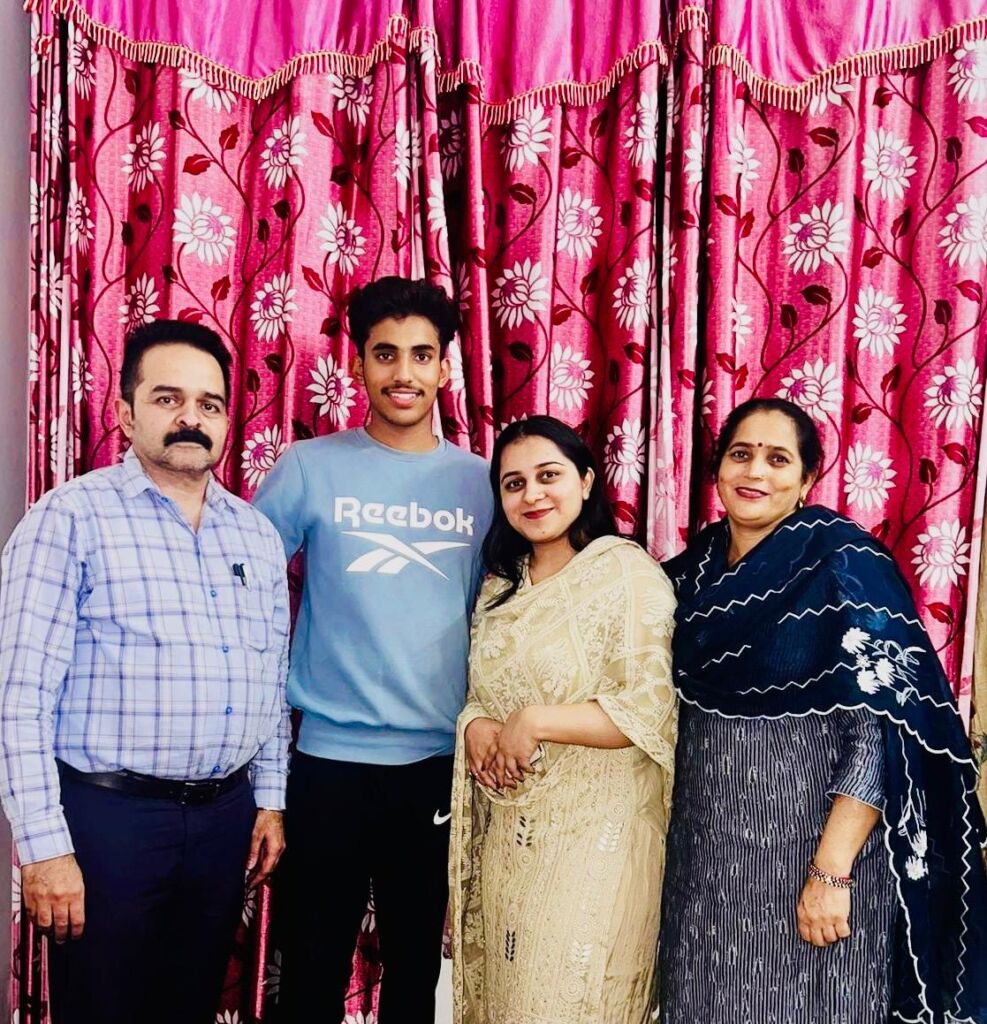
To her father, Mr. Chander Sharma, whose unwavering belief gave her the strength to walk her own path.
To her mother, Miss Ritu Sharma, whose silent resilience became the foundation of her courage.
To her younger brother, Anurag Sharma, whose passion inspires her own pursuit of excellence.
To Mr. Sohail Yusuf, her mentor in a new land, who recognized her potential and empowered her growth.
With heartfelt gratitude to Vice Principal Mrs. Sara Sappina, whose unwavering support and guidance have been a pillar of strength and inspiration throughout this journey.
And to a cherished friend of many years, whose guidance, loyalty, and emotional presence lit the way through every crossroads.
Their faith became her fuel. Their presence became her compass.
PHASE 1: The Foundations of Life
“Even before I stood before a real classroom, I had already lived the life of a teacher in my mind. It was never just a profession—it was the language of my purpose, the rhythm of my childhood, and the dream I chose before the world could choose for me.” — Dr. Komal Sharma
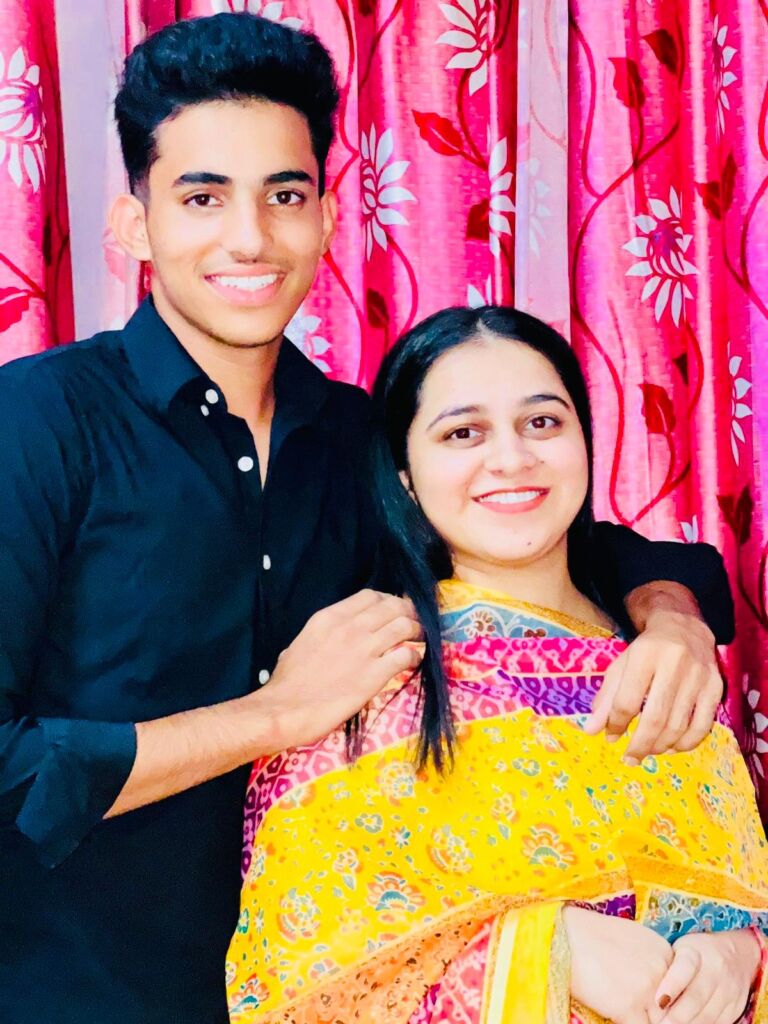
“Dr. Komal Sharma was born and raised in Chandigarh, a city celebrated for its architectural elegance and progressive ethos. Known for its intellectual climate and urban grace, Chandigarh served as the ideal nurturing ground for a young girl destined to become an educator par excellence. While the city fostered a sense of modernity, Dr. Komal Sharma’s ancestral roots extended to Jammu—a land steeped in tradition, where societal norms often curtailed women’s aspirations. It is within this dual context of cultural richness and conservative constraint that her story acquires its distinctive resonance.
From early childhood, Dr. Komal Sharma displayed a remarkable inclination toward knowledge, a natural curiosity that set her apart from her peers. Rather than indulging in idle play, she would often replicate classroom scenarios, role-playing as a teacher and carefully instructing an imaginary class with enthusiasm and seriousness far beyond her years. Even at that tender age, the idea of teaching was not merely a game—it was a calling in its most nascent form.
Her parents, Mr. Chander Sharma, a government servant known for his discipline and integrity, and her mother, a business woman who balanced enterprise with empathy, were pivotal in shaping the environment that nurtured her growing intellect. In a community where daughters were often guided toward domesticated futures, her parents made a bold and enlightened decision—to empower their daughter to dream differently. Their support, especially in a conservative familial setting, was not only progressive but courageous. It created the psychological scaffolding upon which her independence and ambition would eventually stand.
Among her earliest and most influential memories is a distinct moment from her tenth-grade classroom. One teacher in particular, whom Dr. Komal Sharma remembers with enduring affection, consistently called upon her to write on the blackboard, acknowledging her desire to become a teacher and recognizing the potential within her.
“Every time she needed someone to write something on the board,” recalls Dr. Komal Sharma, “she would choose me—not just because I wrote neatly, but because she knew I aspired to stand where she stood.”
This symbolic act, repeated many times, became a formative ritual, affirming her path. Her natural ability to explain topics, her eagerness to help classmates understand lessons, and her contagious enthusiasm for learning did not go unnoticed. In fact, her entire cohort of tenth-grade teachers jointly advocated to her father that she should be allowed to pursue teaching. They had observed, with clarity and conviction, that she possessed the rare qualities of a born educator—clarity of thought, warmth of communication, and a deep-seated desire to uplift others through knowledge.
Beyond the confines of the classroom, Dr. Komal Sharma’s interests remained anchored in teaching. While other children explored fleeting hobbies, her truest joy lay in tutoring her younger brother or organizing makeshift “classes” in a small room her father had lovingly prepared for her. It was here, surrounded by chalkboards, notebooks, and youthful ambition, that she rehearsed her future—again and again—with passion and precision.
In her own words: “My passion became my career. I didn’t just enjoy teaching—I lived it, even before it became my profession.”
This alignment of purpose and passion at such a young age is what distinguishes Dr. Komal Sharma’s journey from the conventional. Where others stumbled into careers, she pursued hers with singular focus and clarity. It was not a choice borne out of circumstance; it was a destiny she embraced from childhood.
Today, the spark that first ignited in a classroom in Chandigarh continues to burn brightly in international corridors of learning. But its origin—deeply rooted in the nurturing vision of her parents, the insight of her teachers, and her own unshakable desire to teach—remains the soul of her story.”
PHASE 2: Academic odyssey
“I never pursued education for titles or prestige. Each degree was a mirror—I held it up to see who I was becoming, and whether she resembled the teacher I once dreamed of being.” — Dr. Komal Sharma

“For Dr. Komal Sharma, education has never been a mere obligation—it has been her compass, her voice, and her sanctuary. Her academic life reflects not only her intellectual aptitude but a deeply personal journey toward identity, self-assertion, and purposeful impact. It is a chronicle that winds through the structured classrooms of Chandigarh and rises toward the pedagogical philosophies that now shape her as an educator abroad. Every examination she undertook, every book she read, and every classroom she entered became a spiritual preparation for the teacher she was destined to become.
Born and raised in the structured elegance of Chandigarh, a city that is both an academic hub and an architectural marvel, Dr. Komal Sharma was immersed in a scholastic environment from a young age. She was enrolled in GMSSS–10, Chandigarh, a school under the Central Board of Secondary Education (CBSE), where she pursued her education from the kindergarten years through her higher secondary grades.
Even in her earliest classrooms, it was apparent that she possessed an unusual affinity for instruction. While most children idolised actors or athletes, Dr. Komal Sharma quietly admired her teachers. The classroom was not a place of mere study for her—it was a theatre of dreams, and she envisioned herself not at a student’s desk, but in front of the blackboard, guiding, explaining, and empowering. She often simulated this dream in her own home, converting a modest room into a mock classroom where her younger brother became her first pupil, and her chalk and duster her first tools of transformation.
In Grade 10, she formally demonstrated her academic capabilities by scoring 7.4 CGPA in her board examinations. Her performance in English and Social Studies stood out—not just in marks, but in mastery. But more important than her report card was the faith her teachers placed in her. One educator in particular, recognising her consistent interest in pedagogy, often called her up to the blackboard—not simply as a student assistant, but as a symbolic heir to the teaching tradition.
This gesture became a turning point. It was a subtle, yet affirming rite of passage. Her instructors not only acknowledged her academic discipline but also endorsed her teaching instinct. Her peers would often rely on her to explain complex topics, and she found genuine joy in these moments of peer teaching. The act of sharing knowledge gave her purpose and made her feel deeply aligned with something greater than herself.
Despite her evident talent and clearly articulated desire to pursue the humanities, she was persuaded—like many bright students in traditional Indian households—to take the medical stream (PCB: Physics, Chemistry, Biology) in Class 11 and 12. The decision was not hers. Rather, it was influenced by the societal prestige attached to careers in medicine and science. For a young woman from a community rooted in conventional gender expectations, choosing a ‘professional’ stream was seen as the safest, most respectable route.
Yet even as she navigated the challenging terrain of biology and chemistry, Dr. Komal Sharma held on to her identity. She scored 73% in Class 12 (2016)—a reflection not just of academic ability, but of extraordinary adaptability and resilience. But once the exams ended, she made the boldest decision of her life: to walk away from a path that was not hers, and return to her true calling—the English language and education.
Her return to the humanities was not a retreat—it was a reclamation. In 2016, she enrolled in the Bachelor of Arts in English Honours program at Panjab University, one of India’s premier academic institutions. The three years that followed were transformative. Surrounded by classic literature, evolving pedagogical theories, and the rich traditions of Indian and Western thought, Dr. Komal Sharma flourished.
Her coursework included English Honours, Public Administration, and various elective subjects that sharpened her understanding of governance, society, and human behaviour—all essential components for an educator with a vision to do more than just teach syllabi. By 2019, she had not only completed her degree but also laid the intellectual foundation for the teacher she aspired to be.
Not one to rest on early accomplishments, Dr. Komal Sharma advanced directly into a Master of Arts in English, again at Panjab University, completing it in 2021. These years were marked by rigorous academic inquiry and personal expansion. Here, she moved beyond surface-level engagement with texts, diving into literary theory, postcolonial discourse, feminist critique, romanticism, and postmodern literature.
Her analyses were no longer confined to literary appreciation—they were explorations of power, identity, language, and emancipation. She saw literature not just as stories, but as mirrors of society and as maps of the human condition. The MA program instilled in her an ability to see language as a tool of transformation—one that she would later bring into her classrooms with conviction.
In 2022, with two degrees behind her and clarity of purpose ahead, she pursued a Bachelor of Education (B.Ed.) from Punjabi University, Patiala, completing it in 2023. She specialised in English and Social Studies—subjects that had long shaped her worldview. The B.Ed. program wasn’t just an academic exercise for her; it was a rite of passage into the world of professional teaching.
Here, she undertook lesson planning, micro-teaching sessions, classroom observation, internship-based practicum, and reflective teaching methodologies. She learned how to design inclusive classrooms, how to measure learning outcomes, and most importantly, how to teach not just from the head, but from the heart.
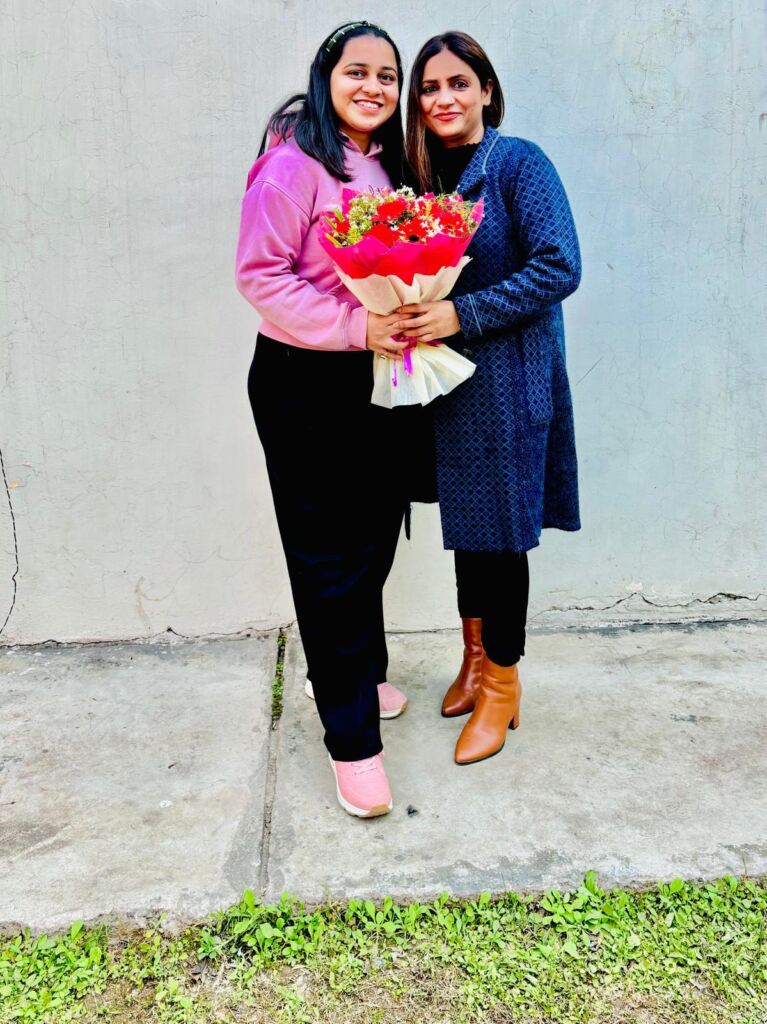
She also enrolled in various teacher training workshops and took on advanced teaching assignments that tested her adaptability and encouraged innovation. She began engaging with activity-based learning, project-based pedagogy, and early exposure to ed-tech integration—all of which would later define her global teaching experience.
For Dr. Komal Sharma, every phase of education was more than a means to employment—it was a spiritual and social commitment. Her pursuit of learning was deeply personal, yet it was always aligned with service to others. The degrees on her wall are not symbols of achievement; they are declarations of accountability—to her students, to her values, and to the future of education.
‘I do not wear my degrees as ornaments—they are tools, forged through effort, meant to build futures. My education taught me not only how to teach, but how to listen, how to evolve, and how to inspire.’ — Dr. Komal Sharma
Her academic life, layered and luminously lived, remains the scaffolding upon which her global teaching journey now stands—resilient, compassionate, and ever-expanding.”
PHASE 3: Chalk, Courage, and the classroom
“I did not enter the classroom to teach only what books contain—I stepped in to show every student that their voice matters, that clarity is power, and that learning is not a race, but a resurrection.” — Dr. Komal Sharma
“The professional journey of Dr. Komal Sharma is a compelling narrative of growth, perseverance, and unwavering commitment to the art and science of teaching. Her career, rooted in quiet beginnings and nurtured through continuous self-development, is now a tapestry of educational experiences across local, national, and international platforms. Each chapter in her professional evolution reflects a deeper understanding of pedagogy, a firmer grounding in communication, and a stronger belief in the transformative potential of learning.
Home Tutoring and Early Instruction (2016–2021)
The earliest phase of Dr. Komal Sharma’s career began far away from formal institutions or structured campuses. It unfolded in the modest spaces of student homes, where she served as a home tutor between 2016 and 2021. This stage, although understated in formality, was rich in experience and critical in shaping her foundational identity as a teacher. As a university student herself during this time, she chose not to wait for degrees to validate her ability. Instead, she stepped directly into the realm of instructional practice, believing that real teaching begins with real learners—regardless of location or title.
Her work as a home tutor was comprehensive and rigorous. She taught students from the primary to the secondary level, focusing particularly on English and Social Studies. These were not just subject lessons but personalized learning experiences. She adapted her methodology to suit each learner’s pace, strengths, and areas of improvement. Beyond textbooks and grammar drills, she focused on building confidence and clarity in her students, often staying back beyond scheduled hours to ensure they had not just understood a concept, but internalized it.
During these years, she also expanded her instructional capabilities into spoken English and exam preparation. She coached students for competitive English language proficiency tests like IELTS and PTE, helping them prepare for global academic and migration aspirations. This was a turning point, not only in her technical knowledge of international English but in her understanding of student psychology. She saw firsthand how language learning was not just about fluency—it was about breaking mental barriers, managing fear, and believing in one’s voice. Her success as a tutor came not from mechanical test prep, but from nurturing belief and composure in her students.
Over these formative five years, she quietly built the essence of her teaching identity—interactive, empathetic, resilient, and deeply invested in her students’ holistic growth. These early years may not have been glamorous, but they laid the bedrock of integrity, patience, and adaptability that would shape every subsequent role in her career.
From Individual to Institutional (2021–2022)
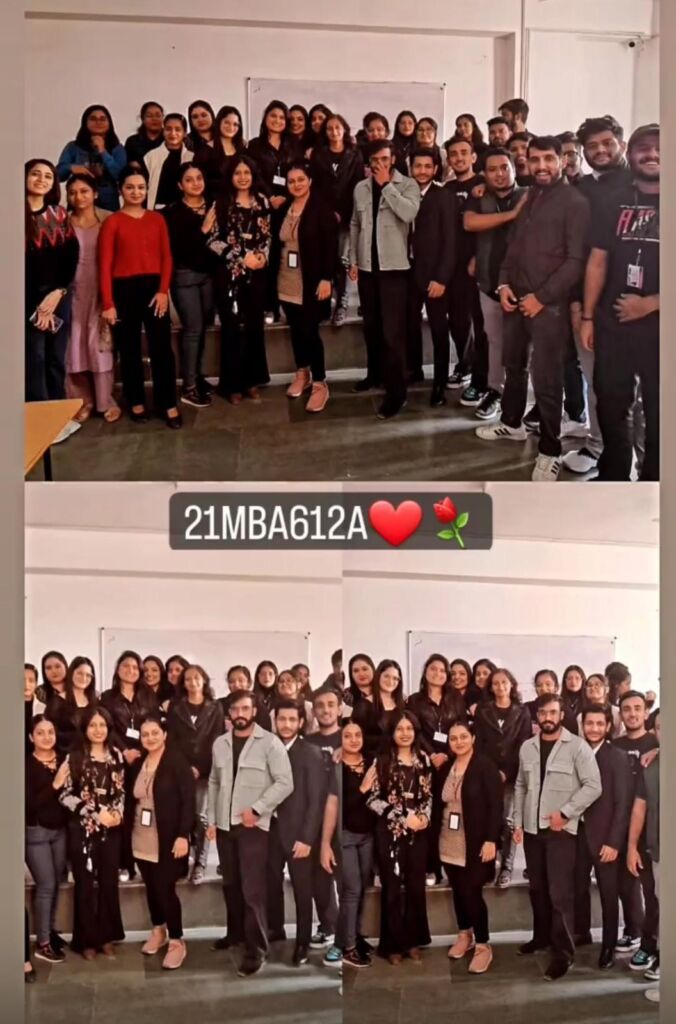
In 2021, having completed her postgraduate studies and matured as a tutor, Dr. Komal Sharma stepped into a more formal academic environment by joining Chandigarh University—one of the fastest-growing private universities in India—as an English Language and Personality Development Trainer. This transition was more than a change of workplace; it marked her arrival into a space where academic professionalism met administrative expectation, and where pedagogy had to merge with performance outcomes.
At Chandigarh University, she was entrusted with training postgraduate students of MBA and MCA—learners preparing to enter the corporate and technological world. Her role here demanded more than content delivery; it required the cultivation of workplace readiness, soft skills, and professional communication. She designed and conducted modules that addressed spoken fluency, business correspondence, interview skills, leadership development, and collaborative communication. She encouraged students to participate in group discussions, role-plays, mock interviews, and public presentations—not just as assignments, but as tools for real-life application.
What set her apart was her ability to humanize these sessions. She treated each student not as a trainee, but as a future professional with distinct anxieties and untapped strengths. Her sessions were known for their dynamic atmosphere, where feedback flowed both ways, and where students often came forward to express that for the first time, they felt truly ‘heard’ in an academic setting.
This phase also required her to coordinate with faculty members, contribute to institutional training reports, and design original content for workshops and seminars. It was here that Dr. Komal Sharma began to understand the institutional architecture of education—the systems, the hierarchies, the assessments—and how to function within them without losing her personal pedagogical integrity. Many of her mentees went on to secure competitive placements, some even reaching out later to thank her for the confidence she had instilled in them.
In those twelve months at Chandigarh University, she transitioned from being a tutor to becoming a corporate trainer, a life skills coach, and an academic mentor—all while retaining her primary identity: a teacher who listens, uplifts, and prepares.”
The Mentors Behind the Mission
“The right mentor doesn’t impose answers. They ask the right questions—and then wait while you find the courage to answer them for yourself.”
— Dr. Komal Sharma
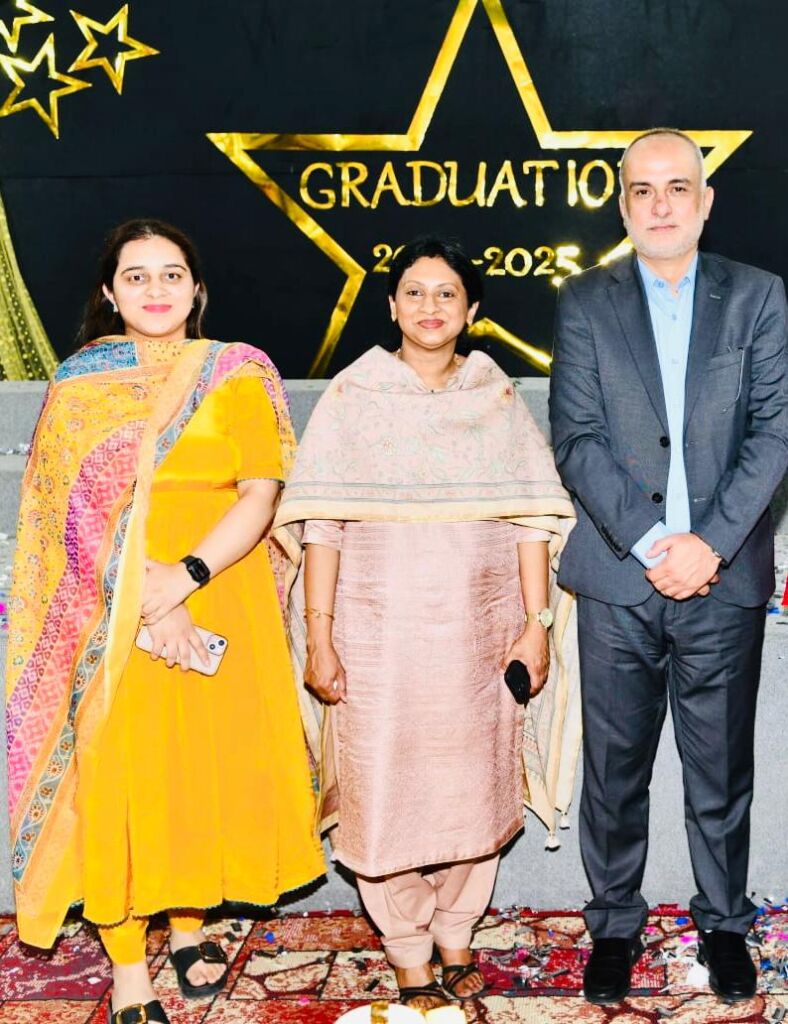
Behind every quietly courageous journey is a constellation of people whose faith, love, and guidance light the way. For Dr. Komal Sharma, becoming an educator of substance and strength was not a solitary path. Her story is woven with brave choices and transformative experiences, all nurtured by mentors who showed up with the right wisdom at the right time. At the heart of this constellation stands her father, Mr. Chander Sharma—a man whose support was subtle, but unwavering. Even when family expectations leaned toward medical science, he stood by her choice to follow her passion for teaching. His quiet faith gave her the courage to pursue her purpose, making him not only her parent but her first and most enduring mentor.
As her career blossomed and extended beyond India, Dr. Komal found another anchor in her current principal, Mr. Sohail Yusuf of Hawally Pakistan English School. Much like her father, Mr. Yusuf offered leadership rooted in trust and vision. By entrusting her with the intricate responsibility of contributing to Accreditation documentation, he helped her flourish professionally while also grounding her emotionally in a new cultural space. His mentorship came at a pivotal point—when she was reestablishing her identity abroad—and served as both validation and inspiration. He became not just a supervisor, but a role model for the kind of educator and leader she hopes to become.
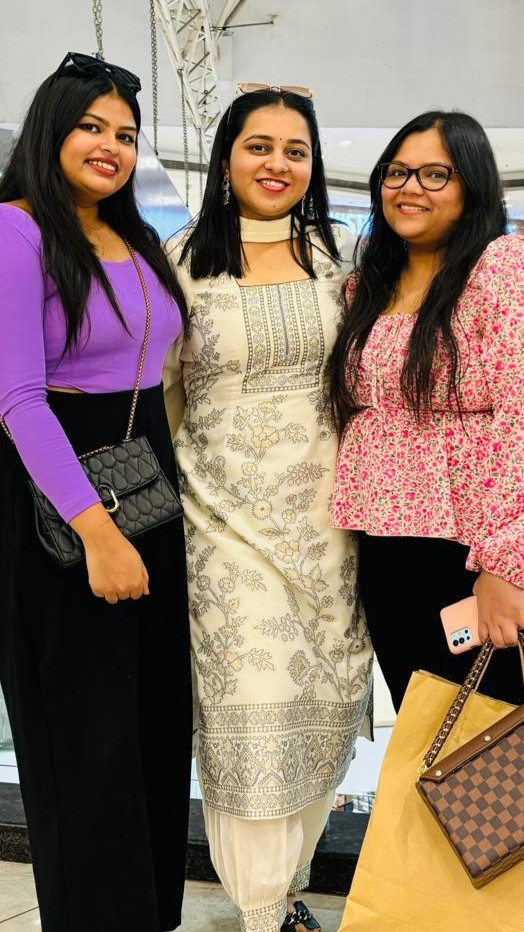
Beyond family and professional mentors, Dr. Komal’s journey has been shaped by the unwavering strength of long-standing friendships. Her best friends—Yamini Juyal and Shweta Dhillon—have been pillars of support and understanding for over eight and three years respectively. Their presence has provided her with honest counsel, clarity during difficult times, and the kind of emotional steadiness that only deep friendship offers. A special mention belongs to Yamini’s mother, Neelam Juyal, whose maternal warmth and wisdom came as a blessing. Neelam Ji believed in Komal’s dream to teach long before she fully believed in herself, encouraging her at every step, especially during the emotionally charged move overseas.
Together, these individuals have formed the unseen structure behind Dr. Komal Sharma’s resilience. They have been her encouragers, protectors, and guides, enabling her to grow into a compassionate educator and emerging leader. In honoring their contributions, she carries their values forward—not just with gratitude, but with the intent to one day become that same source of strength for someone else. Their belief in her has become her foundation, and now, her promise.
As Dr. Komal Sharma reflects on her journey, she recognizes that each milestone—personal or professional—has been deeply rooted in connection. These relationships, built on trust, respect, and shared belief, have not only shaped her path but have also instilled in her a deep sense of responsibility to pay it forward. Whether guiding her students, supporting peers, or leading within her institution, she carries forward the lessons of empathy, encouragement, and quiet strength. Her story is a testament to the power of collective belief—that when even a few people choose to stand beside you, you can rise to become more than you ever imagined.