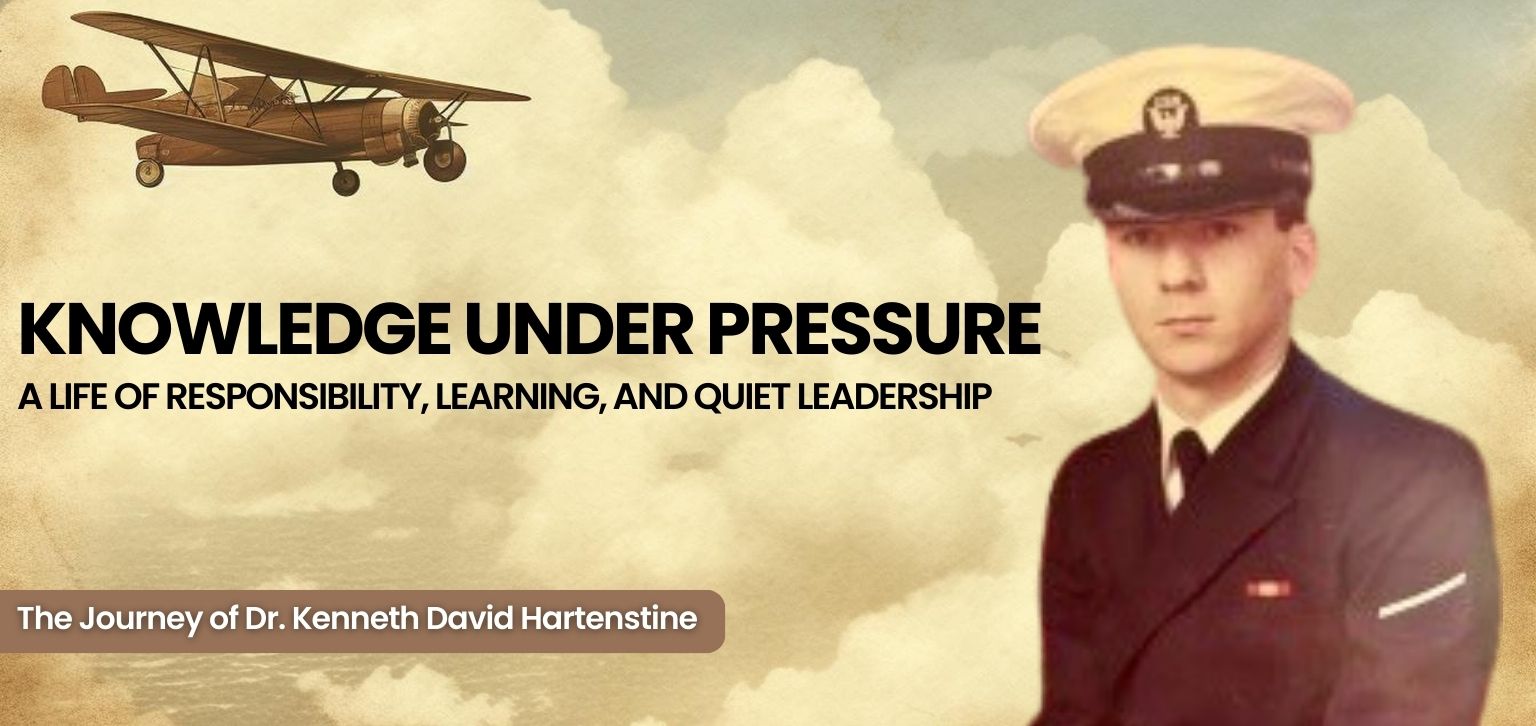
“The only way to do great work is to love what you do.”
Dedication
Dr. Kenneth David Hartenstine’s life and career were quietly changed by a group of individuals and principles, and this biography is dedicated to those individuals and beliefs. These individuals and principles often acted without recognition and always without expectation.
First and foremost, it is dedicated to his parents, who started out in life with a minimal formal education but held within them an unyielding belief in the importance of honesty, diligent effort, and personal responsibility. The principles that they upheld were the first framework through which he learned right from wrong, effort from ease, and integrity from convenience. This devotion was despite the fact that circumstances required him to be absent for extended periods of time and in constant sacrifice.
It is dedicated to his family, particularly his wife, whose patience, encouragement, and consistent presence supported the long hours of learning, training, and responsibility that defined his professional life. Specifically, it is dedicated to his wife. Her unassuming contribution to his self-control, preparedness, and perseverance turned out to be a crucial component of his accomplishments, even if it was not widely recognized at the time.
This work is also dedicated to the innumerable pilots, coworkers, trainees, and professionals whose lives intertwined with his own over the course of his decades of service. Many of them may never know the extent of the judgment, care, and vigilance that was performed on their behalf; yet, the safety and trust of those individuals gave every decision that he made a purpose.
Above all, this biography embodies the conviction that handling responsibility with humility can transform it into a lifetime calling.
“Not all those who wander are lost.”
Phase 1: Beginnings Without Privilege—Curiosity, Distance, and Quiet Formation
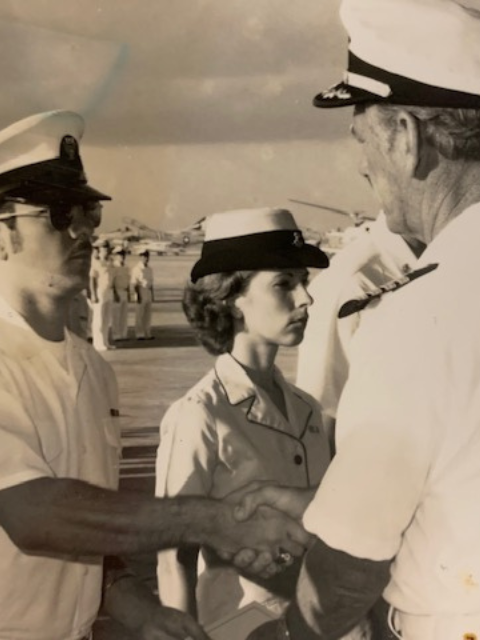
Dr. Kenneth David Hartenstine’s early years were characterized by a lack of distinction, benefit, or early notice. The fourth and youngest kid in his family, he arrived over 10 years after his closest sibling. He was born as the fourth and youngest child in his family. This age difference subtly shaped his childhood at the time. He had three elder siblings, but by the time he reached his formative years, they were already moving toward adulthood, developing lives of their own, and spending little time at home. Although he officially had three older siblings, they were already going toward adulthood. As a result, he spent most of his childhood and adolescence alone, lacking the constant presence of siblings who could have influenced his daily experiences.
Instead of focusing on comfort or extravagance, his family had a life that was grounded in the practicality and routine of the middle class. His father worked as an over-the-road truck driver, a profession that necessitated long hours and constant separation from his family. His father frequently was missing throughout the week, and he would only return on the weekends. Although this pattern was not unique for the family, it did result in the establishment of a household in which independence was learned at an early age and emotional distance became a normal part of daily life.
The formal education of his parents was limited, and neither of them had completed high school for themselves. Approximately when he was in the eighth grade, his father’s education came to an end, and his mother’s education followed a similar trajectory. Nevertheless, in spite of these constraints, the household demonstrated a strong commitment to values. Faith had a significant part in the existence of the family. On a consistent basis, they went to church, and the teachings of Christianity influenced the way they viewed the world. It was made abundantly obvious and consistent that the expectations were as follows: make an effort to be a kind person, do not steal, do not cheat, and do not lie. They lived these beliefs without discussion or negotiation.
“Man is not what he thinks he is; he is what he hides.”
Phase 2 : Resistance, Reckoning, and the Decision to Change
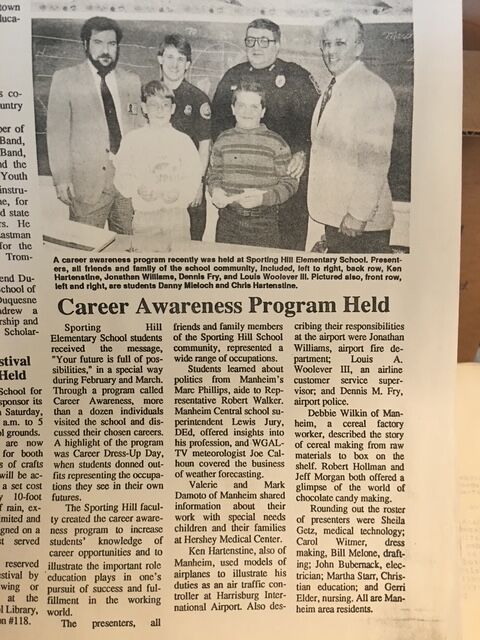
Dr. Kenneth David Hartenstine had reached a point by the time he graduated from high school that he could no longer continue to avoid situations on his own. When he reached adulthood, the behaviors of distraction and resistance that had formerly characterized his youth were now in direct opposition to his adulthood. The teachers showed little faith in his ability to succeed academically, and the guidance counselors considered graduation itself to be a significant accomplishment. In addition, he lacked motivation to seek further education, and he did not expect it to help him advance in his career.
Nevertheless, this time period was not entirely characterized by restrictions. Being aware of it was what defined it. For the very first time, he realized that what had previously seemed liberating was actually limiting his future. There was no longer any need to take a stand against structure. The realization was something that he required.
The historical circumstances of the time heightened this insight. The draft was unavoidable because the Vietnam War was still going on at the time. The low number of drafted individuals made Dr. Kenneth aware that his time in the military was approaching. Despite knowing that he would soon face a decision, he chose to act. He made the conscious decision to enlist in the Navy because he was under the impression that the military would be the best institution to provide the discipline that he needed for himself.
This choice was the first time in his life that he made a conscious effort to change his path. It was not a way out, but rather a commitment to do so. He made the decision to take responsibility for the first time.
“In matters of conscience, the law of the majority has no place.”
Phase 3 : Responsibility at Seventeen — Learning Under Pressure and the Weight of Trust
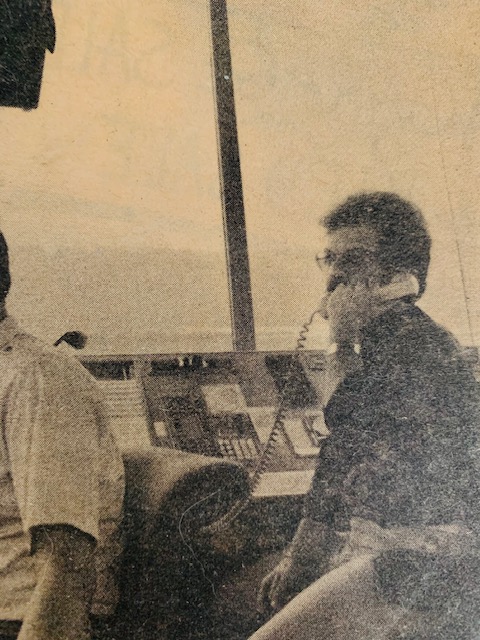
In the life of Dr. Kenneth David Hartenstine, Phase Three was the point when preparation gave way to implementation of the consequences. The discipline he had formed in the past was no longer theoretical. Dr. Kenneth David Hartenstine put his discipline to the test in real time, real places, and real lives that depended on clarity and judgment. When he was just seventeen years old, he had already graduated from the trainee-in-principle program. When it related to his work, he was a controller.
Following completion of his initial training session, he was placed in the control tower and assigned to operational duty. The transition into responsibility did not occur in a gradual manner. There were aircraft in motion. They were waiting for pilots. To proceed, decisions have to be made without delay. The reality of the duty became clear the moment he picked up the microphone for the first time to interact with an aircraft, specifically a military jet that was positioned at the end of the runway. He was responsible for determining when the aircraft moved and didn’t move at all. The accountability was also instantaneous, and the authority was immediately available.
Dr. Kenneth made rapid progress, in contrast to the majority of people who must first certify in either tower or radar operations. For his first major assignment, which was at the Naval Air Station in Memphis, he qualified in both tower operations and radar, which is an exceptional accomplishment for an initial assignment. He was also qualified in ground control and approach control, indicating that he is capable of managing difficult airspace with accuracy and composure. Not a single one of these criteria was symbolic. The results demonstrated a consistent performance despite the demand.
Increasing levels of operational confidence led to the establishment of formal responsibility. When active operations were taking place, he was given the position of Controller-in-Charge, which put him in a position of leadership.
Note of Thanks
This biography is presented with a profound sense of gratitude to all those individuals who contributed to the formation of Dr. Kenneth David Hartenstine’s life and efforts in the field of medicine. It is true that he never traveled alone on his voyage, although it demonstrates personal discipline and responsibility. Individuals, organizations, and instances of mutual trust were the driving forces behind each and every job that he played, which enabled him to accomplish his work.
He would like to express his deepest gratitude to the coworkers and professionals who have worked alongside him throughout the course of his many years of service. Their collaboration, commitment to safety, and shared sense of accountability reinforced the operations and strengthened the standards that guided them. He is thankful for the opportunity to learn together via responsibility, and he expresses his gratitude to the trainees, inspectors, and peers who engaged with his guidance, questions, and expectations.
He extends his heartfelt gratitude to the organisations that have entrusted him with increasingly significant roles. He never took this trust lightly, and it significantly influenced his professional behavior as well as his personal and philosophical outlook.
In the first place, Dr. Kenneth David Hartenstine would like to express his gratitude to his family, whose unwavering support, patience, and understanding made it possible for him to pursue a challenging job. Their unassuming presence served to maintain equilibrium and perspective throughout the years marked by duty.
A reflection of common effort, collaborative purpose, and an unwavering regard for service carried out with integrity, this work stands as a testament to our collective efforts.
Thank You
– Dr. Kenneth David Hartenstine