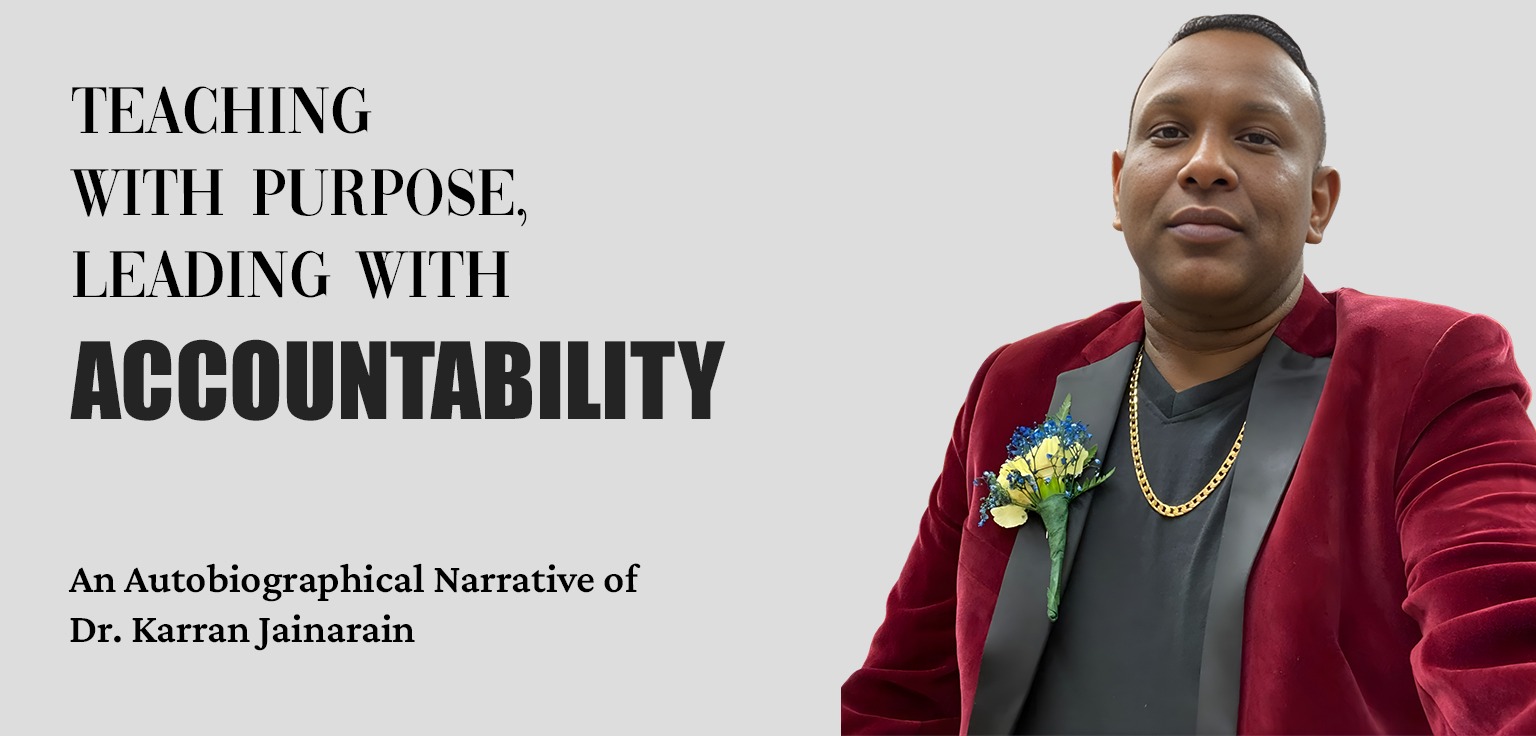
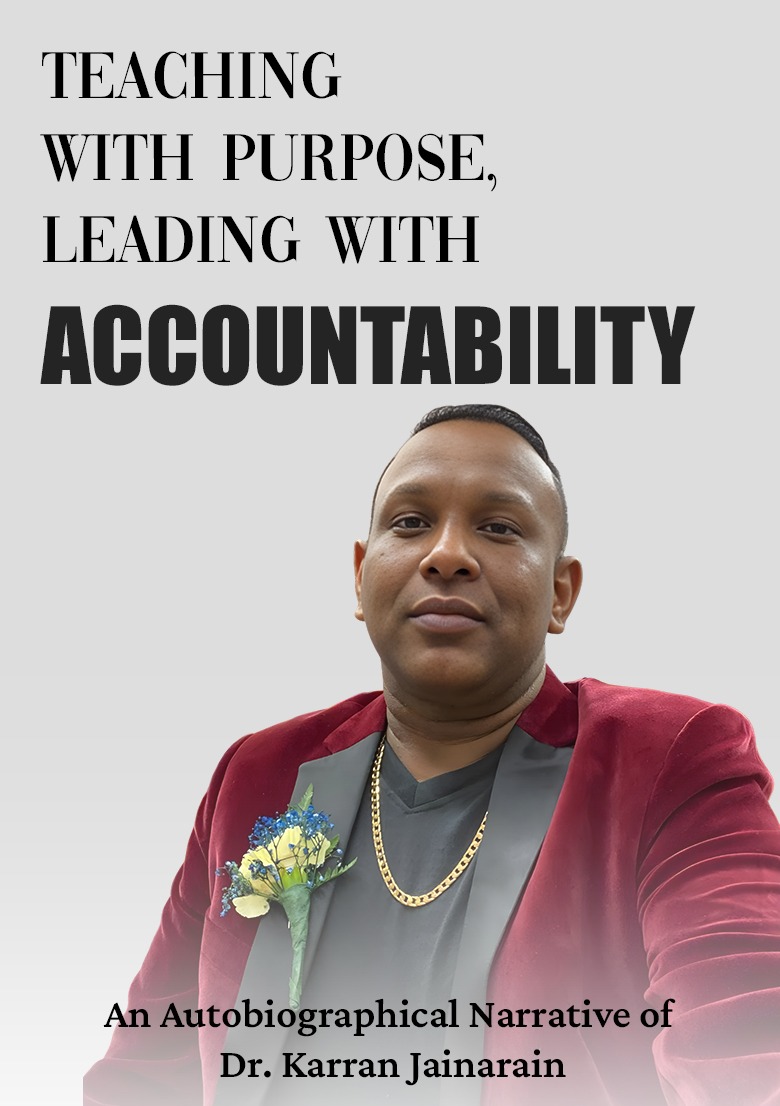
"A teacher affects eternity; he can never tell where his influence stops."

Dedication

First and foremost, I give thanks to Saraswati Maa, the universal mother of knowledge, for the blessings and guidance that have shaped my life. I am deeply grateful to my family, whose unwavering belief, sacrifices, and support laid the foundation of my journey long before I understood the meaning of success. Their steadfast presence shaped both my character and my purpose.

This work is respectfully dedicated to my grandparents, Aja and Ajie Udjha and Hukia Jainarain (also known as Sandfly and Mongoose of No. 69 Village, Corentyne, Berbice, Guyana), whose quiet strength, enduring wisdom, and moral clarity left a lasting imprint on my life. Through their example, I learned humility, responsibility, and respect for others.

To my parents, Naitranee and Indrarajh Jainarain (also known as Ranie and Hope of No. 68 Village, Corentyne, Berbice, Guyana), who carried responsibility with dignity and perseverance. Dad, though you are no longer with us, I know you would be proud. Moreover, you both taught me that education is not only a path to advancement but a responsibility to oneself and to society. Your resilience instilled in me discipline, purpose, and respect for progress earned through hard work.

In honor of my aunt, Bhojwattee Shankar (Sabie), whose love and support shaped my emotional and moral development. I also acknowledge Patricia Johnson, my former headmistress, whose guidance and encouragement launched my teaching career in 1996 and reinforced the enduring values of compassion, perseverance, and strength.

I am equally grateful to my professional family at The Child Development Center at Queens College, to some of my close, dedicated colleagues at the Queens College Academic Advising Center, and to the brilliant administrators and staff at Elijah G. Stroud Elementary School, P.S. 316, where I currently work. Their collaboration, support, and dedication have enriched my professional journey immeasurably.

Above all, this work is a tribute to family as a collective source of strength. Their love, guidance, and shared values have sustained every step of my journey. This narrative is offered in gratitude for the foundation they provided and the life they helped shape.
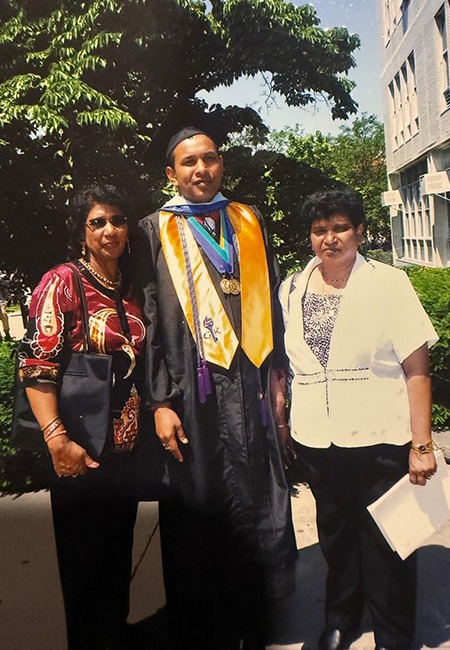
“Character is formed in the small moments, long before the world begins to watch.”

Phase 1: Roots of Responsibility : Childhood and the Formation of Values

I grew up in Guyana, a country in South America, in a family of seven. As the oldest of five children, I learned early that responsibility comes before ease. Being the eldest was not just a title it was a role that demanded maturity, awareness, and sacrifice. I often had to act as a parental presence for my siblings, ensuring that our family remained whole while also pursuing my own goals.

These experiences shaped me profoundly. I learned that duty extends beyond oneself; it includes those who depend on you. My sense of responsibility grew not from a desire for recognition, but from knowing that others relied on me. Leadership, I discovered, is earned through reliability and consistency, not authority.

We did not come from wealth, and I was aware of the differences between my family and others. Yet, I refused to let those circumstances define me or limit my ambition. I chose instead to focus on what I could create through perseverance, self discipline, and hard work. Over time, these choices became habits-and eventually, the foundation of my character.

Challenges were constant, but I learned to face them with resilience. I focused on what I could control, rather than being unsettled by what I lacked. This mindset, developed in childhood, has guided every aspect of my life.

School became a refuge and a place of joy. From nursery school at age four, through primary and secondary school, I cherished the structure, the learning, and the sense of belonging it provided. Classrooms were spaces of possibility, where inquiry was encouraged, talents were nurtured, and progress was celebrated. Teachers were mentors, not mere instructors, and they taught me that education is about comprehension and growth, not competition.

“Education is the passport to the future, for tomorrow belongs to those who prepare for it today.”

Phase 2 : Education as Identity : Discipline, Credentials, and Continuous Learning

Education did not enter my life as a way to avoid challenges, it became a part of my identity. By the time I faced formal academic decisions, learning had already shaped how I thought, planned, and measured success. Education was not something I merely engaged in; it was a framework that guided every choice I made.

I approached school seriously, not for recognition, but because it offered structure, direction, and long term stability. Sociology, my undergraduate major, allowed me to study social behavior, systems, and inequality fields that aligned with my curiosity and early observations of the world. Through sociology, I gained a methodical understanding of community, responsibility, and social structure. Most importantly, it reaffirmed my belief that education should serve people, not exist in isolation from them.

While sociology helped me understand society, I wanted to work directly with people, particularly children. This led me to pursue a Master of Arts in education. At this stage, learning was no longer just professional training; it was a profound commitment. Teaching requires knowledge, but also preparation, pedagogy, ethics, and emotional intelligence. I learned how learning environments are created and how educators influence development far beyond academics.

My pursuit of a Master of Arts in Urban Affairs further expanded my perspective. I began to see how education intersects with community systems, policies, and governance. These studies prepared me for leadership roles and reinforced the connection between education, public service, and community development.

In addition to formal degrees, I completed numerous professional development programs. Each certificate reflected my belief that educators must continually update their skills, uphold professional standards, and adapt to evolving educational contexts. Every training strengthened my teaching and leadership abilities, enhanced my practice, and increased my accountability.

Balancing work, study, and life was never simple. There were moments of exhaustion, doubt, and pressure. Discipline was essential for managing time, meeting expectations, and staying focused. Yet I never viewed challenges as obstacles; they were part of preparation. Education was never about speed; it was about depth, readiness, and integrity.

“A teacher affects eternity; he can never tell where his influence stops.”

Phase 3 : Teaching as Purpose: Early Professional Practice and the Classroom Years

I did not initially choose teaching as a career. Over time, however, it became the most natural expression of who I am. Today, I have spent more than twenty years as a teacher, instructing students across grade levels, contributing to curriculum development, and supporting initiatives to improve the quality of education. Yet the essence of my work lies in the daily decisions I make in the classroom.

Teaching has never felt like a routine. Each day, I enter the classroom with enthusiasm, connecting with students because I once shared their curiosity and eagerness to learn. I design experiences that inspire them to engage, explore, and enjoy learning as a living, dynamic process.

Currently, I teach pre-K students, guiding young children across all subject areas in ways that build knowledge, confidence, and curiosity. At this age, teaching extends beyond academics; it is about nurturing a child’s relationship with learning. My approach is activity-centred, with the children leading much of the experience while I observe, guide, and support. This allows them to explore, communicate, and learn from real experiences.

Instruction at this level is profoundly human. Through observation, I understand what children already know, what excites them, and what challenges they face. I then build on that understanding to develop language, practical skills, and emotional intelligence-foundations for thriving relationships and personal growth. I believe education is inseparable from values. A child who learns kindness, cooperation, and respect is also learning leadership in its earliest form.

Preparation is central to my practice. Lesson planning is not mere paperwork it is a tool that focuses my teaching, reinforces concepts, and ensures meaningful learning objectives are met. Planning allows me to anticipate challenges, create multiple approaches, and maintain flexibility in the classroom. Over twenty years, this discipline has been crucial in sustaining consistent, effective teaching.

Note of Thanks

I am deeply grateful to everyone who has shared my journey and contributed, directly or indirectly, to the life reflected in these pages. This narrative is not solely mine. It is the result of collaboration, guidance, and support from many people along the way.

I thank my family for their love, sacrifices, and steadfast faith, which provided the strength to persevere. My grandparents, parents, and extended family instilled values that continue to guide my choices. I am grateful to my instructors, mentors, and colleagues, whose guidance shaped my academic and professional growth and reinforced my view that education is a responsibility, not a privilege.

I am thankful to my students, who have taught me patience, empathy, and adaptability. I am grateful to those who inspired me during times of change, reminding me that perseverance and focus lead to progress.

To all who supported and believed in me, your influence is woven into this work and will endure beyond these pages.

Thank You
– Dr. Karran Jainarain