“When science meets compassion, healing becomes an art.”
Introduction
Every once in a while, the world witnesses a professional who excels in their field and elevates it—someone whose work becomes a bridge between science and humanity. One of these people is Dr. Kai Stimpel. His journey is about the degrees he earned, the jobs he held, and the huge difference he made in the lives of those he healed, mentored, and inspired. A man of resilience, purpose, and compassion, Dr. Stimpel represents the perfect harmony between intellectual pursuit and heartfelt service. Dr. Stimpel’s life exemplifies the potential of combining passion with discipline and guiding knowledge with empathy.
Dr. Stimpel has always been interested in how the body works, especially how movement, strength, and healing work together. What began as curiosity soon became a calling. With a deep sense of purpose, he pursued his studies in Physiotherapy and later advanced his expertise with a Master of Science in Musculoskeletal Therapy and an OMT Diploma from the Donau Universität Krems. But for him, learning was never about getting praise; it was about seeing life through the lens of movement and recovery. Each academic milestone was a step toward a larger vision—to redefine healing as an integration of knowledge, compassion, and innovation.
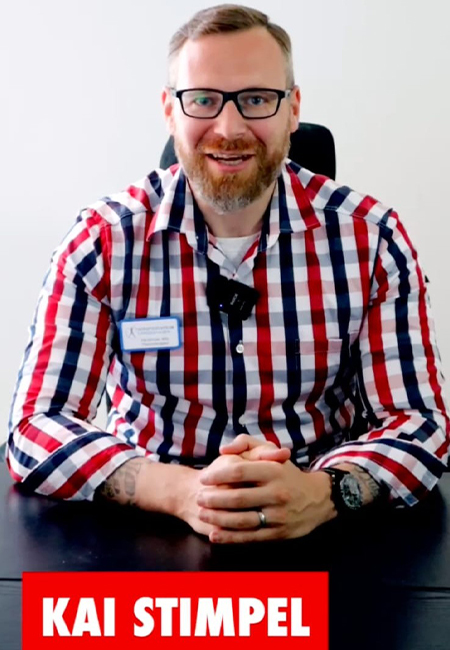
Dr. Stimpel has always been at the crossroads of medicine and human emotion in his work. His career at Therapiezentrum Langenhagen, where he began as a young therapist and grew into a leader overseeing multiple clinics and teams, is a testament to his determination and leadership. Under his guidance, the centre became more than a place for treatment—it evolved into a hub for learning, research, and compassionate care. He has mentored countless physiotherapists, fostering a culture of respect, collaboration, and professional excellence. His work embodies the belief that healing does not end at the physical level; it extends to the emotional and psychological well-being of each individual.
As an educator, Dr. Stimpel’s influence reaches beyond the confines of clinics and classrooms. At Donau Universität Krems and Medical School Hannover, he has encouraged students to see therapy as more than just a technical skill; he has taught them to see it as a conversation between the mind and body. His approach to teaching is rooted in authenticity—combining science with stories, structure with empathy, and theory with hands-on mastery. Students often describe his classes as transformative experiences that go beyond knowledge, instilling in them a sense of purpose and pride in their craft. He is more than just a teacher; he is a mentor who inspires future therapists to be curious, confident, and kind.
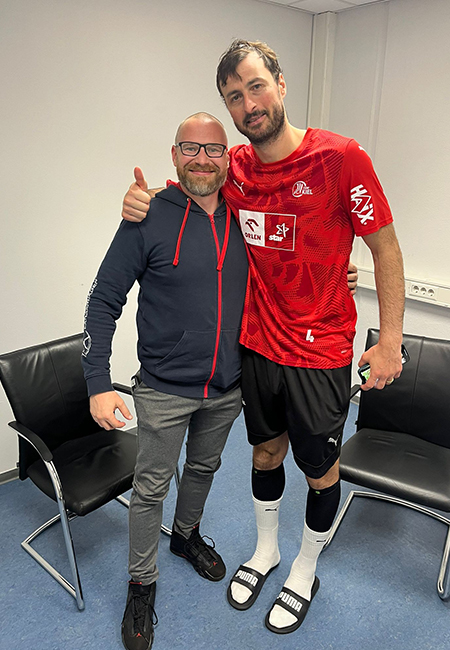
He has also worked in sports physiotherapy, where he has led medical teams for professional and semi professional sports teams like the Hannover Scorpions, TuS Vinnhorst, and TSV Havelse. Dr. Stimpel showed how evidence-based treatment and intuitive care can work together in these stressful situations. His leadership redefined rehabilitation standards, introducing structured diagnostic protocols, advanced recovery systems, and preventive strategies that strengthened both athletes and teams. Through his involvement in sports, he emphasised a holistic view—one that values not only physical performance but also mental balance and long-term well-being.
“Some souls are born with hands meant to heal and hearts meant to understand.”
Phase 1: Where Curiosity Meets Compassion
Every wonderful journey starts with a spark, a moment when the everyday world hints at something bigger. Curiosity was what sparked Dr. Kai Stimpel’s interest. He was born in Germany in 1984. His childhood was simple, but he was always fascinated by how life worked, not just in theory but also in practice. Many kids saw play as a way to get away from things, but Kai saw it as a way to learn. How muscles worked, how balance was kept, and how effort turned into movement—these little things were his first attempts to learn about the human body.
He had a mind that questioned everything and a heart that listened quietly for answers as he grew up. At Kurfürst-Joachim-Friedrich Gymnasium, he found joy in Physics and History, two subjects that seemed worlds apart but would eventually merge into his philosophy of healing—one taught him the mechanics of motion, the other the meaning of endurance. The discipline of science and the empathy of human stories began to blend within him, shaping a thinker who saw beyond textbooks. Even as a student, Kai possessed the rare balance of logic and empathy — an analytical mind and a deeply human soul.
His family helped him become sensitive to life. They valued education, but more than that, they valued kindness—a principle that quietly became the foundation of his character. Compassion was not something he learned; it was something he carried. While other people would have turned away from a fight, Kai leaned in, watched, learnt, and understood. He was drawn to people’s stories — how they endured pain, how they found strength, and how they healed. This innate empathy, though unnoticed then, would later become the cornerstone of his profession.
From an early age, Dr. Stimpel found himself captivated not by what made people different, but by what made them whole. He would often say that even before he knew the term physiotherapy, he understood its essence — that movement is life. This awareness shaped his view of the world. He learnt something about resilience from every action, gesture, and recovery. He was interested in more than just science; he was also interested in how people can recover, adapt, and grow.
“When knowledge finds its way and purpose finds its heart, a calling is born.”
Phase 2 : The Anatomy of Purpose
The completion of his academic studies was not the culmination of a goal for Dr. Kai Stimpel; it was the beginning of a journey into the living laboratory of human experience. The walls of the classroom had given him theory, but the clinic was about to give him truth. He had his diploma in hand and a heart full of ambition when he started working. He wasn’t looking for recognition; he wanted to learn how healing happens outside of textbooks.
His first job at Therapiezentrum Langenhagen in 2007 taught him how complicated real-life practice can be. Each patient brought a different story: an elderly woman recovering from joint replacement, a young athlete struggling to return to form, and a worker nursing an injury that threatened his livelihood. Every day presented a new challenge and a new lesson. These weren’t just bodies moving; they were lives that had been stopped and were waiting to discover their rhythm again. And that made him feel even more determined to do what he was doing.
From the very first day, Dr. Stimpel approached his work with attentiveness that went beyond clinical protocol. He believed that effective therapy began with genuine connection. He tried to understand a patient’s fears, frustrations, and hopes before he worked on their body. He didn’t learn this in school; it was instinct, guided by empathy. He quickly gained the trust of both patients and coworkers, not because he knew everything, but because he asked the right questions. He was the kind of therapist who helped people, not just their problems.
Those early months became a crucible of transformation. He learnt the difference between technique and touch: that therapy didn’t just depend on knowing anatomy but also on being able to read the pain’s unspoken language. He said a lot about how the body whispers. A good therapist knows how to listen to the whispers before they turn into screams. This ability to notice small things became his trademark, setting him apart from other experienced professionals.
“Skill refines the hands, but empathy refines the healer."
Phase 3 : Hearts That Heal, Hands That Learn
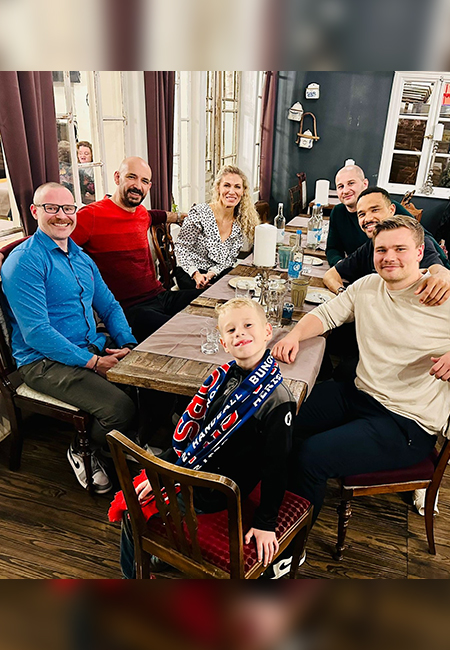
The next part of Dr. Kai Stimpel’s journey was like a masterclass in how to grow, be strong, and change quietly. He had established himself as a leader and a clinician, and now he was at the point where his experience was starting to turn into expertise. The learner who used to be curious had become a professional whose hands could read what words couldn’t. But this wasn’t a time to be lazy; it was a time of intense growth, when every meeting with a patient, coworker, or problem taught him something about how to connect with others.
He was in charge of more clinical units, which meant he had more responsibilities, but it also meant he had a bigger vision. Dr. Stimpel knew that the healthcare world was changing quickly, and he didn’t want to just follow trends; he wanted to be ahead of them. He knew that therapy couldn’t be separate from research, education, and new ideas anymore. His clinics were no longer just places to get help; they were becoming living systems of learning and growth. Every therapist became both a practitioner and a student under his leadership, constantly looking for new ways to do things better.
He introduced structured mentorship programmes and collaborative meetings that encouraged dialogue rather than hierarchy. He doubted that leadership meant controlling people; instead, it meant creating an environment where everyone on the team could do their best work. This method brought departments together in a strong way, making clinics feel like families with a common goal. His coworkers admired how he could be precise and patient at the same time and how he could be in charge without being too strict. They often said he had a way of making everyone feel capable, even in moments of uncertainty.
During these years, his insight into human behaviour deepened. He began to observe that physical healing was intertwined with psychological readiness. Some patients got better quickly, not because their treatment was easier, but because they believed they would get better. This realisation was the start of his study of the mind-body connection, which would later become a big part of how he taught and treated people.
Note of Thanks
Dr. Kai Stimpel looks back on the many parts of his journey with a deep sense of humility and thankfulness. It wasn’t luck that led him to where he is now; it was the support, energy, and faith of the people who walked with him. He has never thought of success as something he could do alone. It has always been something he could do with others based on trust, support, and a shared goal.
He thanks the many mentors and coworkers who have been there for him throughout his career. Their wisdom, challenges, and faith helped him get better at his job and understand what it really means to heal. Every time he worked with someone else, shared information, or won something together, it helped him grow. He is especially grateful to the Donau Universität Krems, the Medical School Hannover, and the dedicated teams at Therapiezentrum Langenhagen and Clementinenhaus GbR for giving him the freedom to learn, teach, and try new things. They all worked together to make the base for his work, which is still growing.
Dr. Stimpel is always thankful to his students and peers. Their interest and dedication have been the best test of his teaching. They told him to stay curious, keep getting better, and never forget to be kind even when things are going well. He sees the future of healthcare in them: a generation ready to lead with love and wisdom.
He appreciates the constant love and support of his family, especially his wife, Sabrina, and their two kids. Their patience and encouragement have given him the strength to strive for excellence with balance and purpose. They have been his steadfast support during challenging times and his inspiration during prosperous times.
Dr. Kai Stimpel says that gratitude is not the end of the story; it is the story itself. Every lesson learnt, every life changed, and every challenge overcome is proof of the people who believed in him and the goal that still guides his work.
Thank You
– Dr. Kai Stimpel