“A worthwhile life is not measured by what one owns, but by how honestly one lives and how many others are helped to think, stand, and act with dignity.”
Introduction
The life of Dr. Julius Adams unfolds not as a pursuit of status or recognition, but as a steady, questioning journey shaped by conscience, fairness, and an enduring belief in human dignity. His story is not defined by a single profession or achievement, but by a consistent way of thinking, one rooted in justice, honesty, and responsibility toward others. From childhood through decades of public service, teaching, creative work, and governance, his life reflects a deliberate refusal to accept comfort at the cost of integrity.
Born and raised on a council estate, Dr. Julius Adams grew up in an environment where financial scarcity was common and stable employment was far from guaranteed. Yet this material limitation was balanced by something far more formative: a strong sense of community. Neighbours worked together, shared space, and lived collectively, creating a social fabric that offered belonging even when resources were few. This early experience shaped his understanding that value lies not in wealth, but in mutual support and shared humanity. Free access to education in his country reinforced another enduring belief that opportunity, not privilege, should determine how far a person can go.
The moral framework that guided his life was established early through the quiet influence of his parents, Linda Adams and Barrington (“Barry”) Adams. They did not teach philosophy through instruction, but through action. Acts of generosity were not exceptional events in his childhood; they were routine. Watching his father give away his last coins to someone who needed them more left a lasting impression, as did his parents’ natural rejection of prejudice in an era when intolerance was often normalised. Their openness to people of different backgrounds, nationalities, and beliefs became the foundation of his own lifelong commitment to equality and justice.
From a young age, Dr. Julius Adams was drawn toward creative expression and truth-seeking. Writing, photography, journalism, and visual storytelling appealed to his instinct to observe, question, and communicate. Formal education supported this direction, leading him into studies in design and photography and later into teaching these disciplines. However, experience gradually led him to question the structures behind journalism and authority-driven narratives. He came to see that truth, when filtered through institutional power, often becomes constrained. This realisation did not diminish his respect for communication; instead, it redirected his focus toward education, where independent thinking could be nurtured rather than managed.
Running parallel to his intellectual growth was a deeply personal struggle that remained largely unseen. From childhood, Dr. Julius Adams lived with phobic anxiety disorder, including social anxiety and agoraphobia. At its most severe, it kept him away from school for an entire year. Rather than allowing the condition to define his future, he made a pivotal decision in his late teens to enter a therapeutic community for a full year. This was a conscious and voluntary choice, an investment in self-understanding and recovery. The experience reshaped his outlook, equipping him with tools to manage the condition and reinforcing his belief that confronting difficulty is often the most transformative act a person can make.
“We had very little money, but we had something far greater people who lived together, worked together, and looked after one another. That sense of community taught me that dignity does not come from wealth, but from how we treat others.”
Phase 1: Foundations of Community, Humility, and Moral Awakening
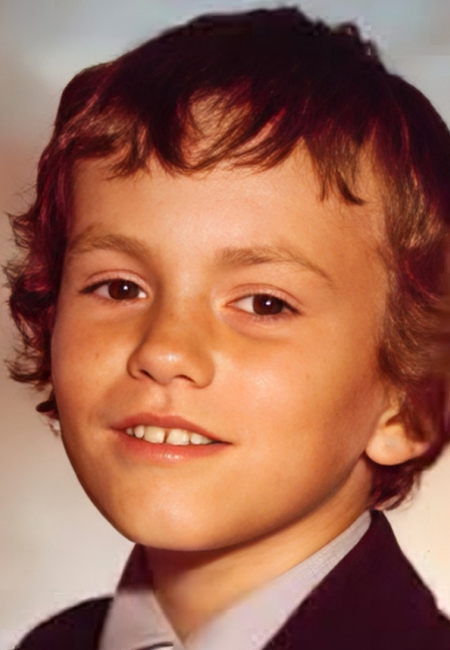
The earliest phase of Dr. Julius Adams’ life was shaped not by privilege or certainty, but by shared struggle and collective resilience. He grew up on a council estate where employment was scarce and money was perpetually limited. For many families, work was irregular or nonexistent, and financial security was more an aspiration than a reality. Yet within this material scarcity existed something profoundly formative: a deeply connected community. People lived close to one another, not only in physical space but in spirit. Neighbours knew one another, children played together freely, and survival was a shared responsibility rather than an individual burden.
In this environment, Dr. Julius Adams learned early that wealth was not the primary measure of a good life. Leisure was limited, possessions were modest, and extravagance was largely absent. Yet there was no sense of deprivation in the way he remembers those years. Instead, there was cooperation, humour, and belonging. During this time, his education was interrupted by a prolonged period of absence during certain years, reflecting the instability that shaped many lives within the community. People helped one another without keeping score, and social bonds were built through daily interaction rather than convenience. This collective way of living left an enduring impression on him, shaping a worldview in which success would never be detached from humanity.
Education played a critical role in these formative years. At the time, education in his country was free and accessible, meaning that financial background did not restrict intellectual ambition. For Dr. Julius Adams, this was a quiet but powerful affirmation of fairness. If a person had the ability and the desire to learn, doors could open. Opportunity, at least in theory, was not reserved for the wealthy. This belief that access matters more than advantage would later become central to his lifelong commitment to teaching and public service.
At the heart of this early phase were his parents, Linda Adams and Barrington (“Barry”) Adams, whose influence was neither abstract nor authoritarian. They did not impose values through instruction or ideology. Instead, they lived them.
“If fairness makes sense everywhere across cultures, beliefs, and lives then it is not ideology; it is logic. And logic demands that people are treated justly.”
Phase 2 : The Awakening of Justice, Thought, and Ethical Logic
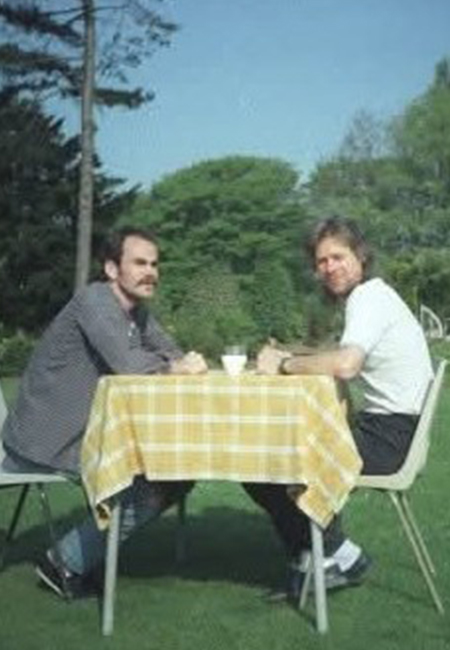
As Dr. Julius Adams moved beyond early childhood, the values absorbed through family and community began to take shape as conscious thought. What had once been instinctive fairness, generosity, and respect slowly evolved into a deliberate moral framework. This phase of his life marks the transition from inherited values to examined principles, where justice became not only something he witnessed, but something he actively questioned, defended, and lived by.
During his formative years, Dr. Julius Adams developed a deep sensitivity to injustice. This was not driven by dramatic events or ideological instruction, but by observation and reflection. He noticed how power operated, how resources were unevenly distributed, and how some voices were amplified while others were ignored. These observations did not lead him toward anger or resentment, but toward clarity. He came to believe that inequality was not inevitable, but constructed and therefore capable of being challenged.
Politics entered his thinking not as ambition, but as necessity. Dr. Julius Adams did not see politics as competition or control, but as a system that should exist to organise fairness. He identified early with socialist principles, particularly the idea that the state has a responsibility to provide the basics of living. This belief was grounded not in abstraction, but in lived reality. He understood that without access to education, healthcare, and opportunity, freedom becomes a hollow concept. His alignment with socialism was therefore ethical rather than partisan, shaped by logic and experience rather than slogans.
Central to this developing worldview was his commitment to natural justice. To Dr. Julius Adams, fairness was not negotiable or contextual; it was rational. He believed that systems should exist to serve people, not the other way around. The accumulation of wealth for its own sake held little meaning for him. He questioned the logic of profit divorced from responsibility and found it fundamentally incompatible with human dignity. This line of thinking would later influence every professional decision he made, including his refusal to work in profit-driven environments.
“I wanted to tell the truth, not decorate it. Once I realised how easily truth could be shaped by authority, I knew my work had to be about teaching people how to see and think for themselves.”
Phase 3 : Creativity, Education, and the Search for Truth
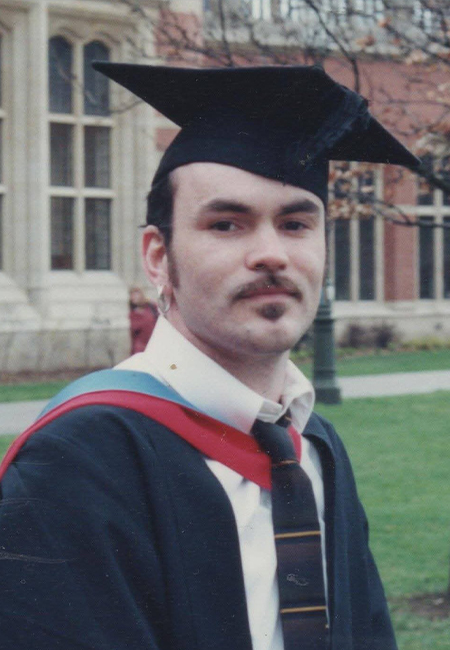
As Dr. Julius Adams moved into early adulthood, the ethical foundations formed in his youth began to find expression through creativity, learning, and disciplined inquiry. This phase marks a decisive shift from internal conviction to outward direction, where curiosity became purpose and education became a pathway toward truth rather than conformity. It was a period defined by intellectual exploration, creative development, and a growing awareness of how power shapes narrative.
From a young age, Dr. Julius Adams felt a strong pull toward creative disciplines. Writing, photography, visual art, and journalism appealed to him not as forms of self-expression alone, but as tools for observation and communication. He was deeply interested in how stories are told, how images shape understanding, and how language can illuminate or obscure reality. At its core, this creative impulse was driven by a desire for honesty to represent the world as it is, not as it is presented.
This interest led him into formal education in design and photography, where he developed technical skill alongside critical awareness. He undertook structured study, earning qualifications that grounded his creative instincts in professional discipline. These academic experiences sharpened his ability to analyse visual and written material, reinforcing the connection between form and meaning. Creativity, for Dr. Julius Adams, was never decorative; it was functional, purposeful, and tied to responsibility.
During this period, journalism emerged as a natural aspiration. It appeared to offer a direct route to truth-telling, accountability, and social engagement. However, experience gradually revealed a more complex reality. As Dr. Julius Adams encountered the professional structures surrounding journalism, he became increasingly disillusioned. He observed that journalists, rather than acting independently, were often constrained by editorial agendas and institutional priorities.
Note of Thanks
This biography concludes with sincere gratitude to the people and experiences that have quietly shaped the life of Dr. Julius Adams, not through grand declarations, but through presence, example, and shared humanity. Above all, this work acknowledges Linda Adams and Barrington (“Barry”) Adams, whose everyday actions formed the moral foundation upon which his life was built. Their generosity, openness, and lived sense of justice continue to echo through every choice he has made. He remains deeply aware that without them, he would not be the person he is.
With equal respect, Dr. Julius Adams extends gratitude to the teachers who awakened his thinking, most notably Mr. Somerville, whose passion for language, expression, and engagement left a lasting imprint on his own approach to teaching. The lessons learned in that classroom reached far beyond literature, shaping how he would later connect with learners, challenge complacency, and communicate ideas with purpose.
This note also recognises the many students who passed through his classrooms over the years. Their questions, struggles, courage, and growth shaped him as much as he shaped them. The continued connections with former students, some spanning decades, stand as quiet reminders that teaching is never a one-way exchange.
Thanks are also due to colleagues within education, public service, and governance, and to the countless individuals encountered through professional and everyday life. Each conversation, collaboration, and moment of shared reflection contributed to a deeper understanding of people, systems, and responsibility.
Finally, Dr. Julius Adams acknowledges the value of those brief, often unnoticed interactions—conversations with strangers, moments of music, silence, and shared understanding—that give life its texture. This biography exists because of all these influences combined. It is offered not as a statement of arrival, but as a gesture of appreciation for the people and moments that made the journey meaningful.
Thank You
– Dr. Julius Adams