“The key to success lies not in the obstacles we face, but in the perseverance to overcome them.”
Dedication
This biography is dedicated to my family, whose steadfast support has been instrumental throughout my journey. My parents instilled in me the importance of hard work and perseverance, providing a solid foundation to aspire and strive for a better life. To my wife, who consistently inspires me, I hope this narrative assists you in recognizing how every challenge can pave the way for greater opportunities when approached with courage and determination.
This biography is dedicated to all the individuals I have encountered throughout my life, including childhood friends, business partners, mentors, and clients. They have significantly influenced my journey in ways I could not have anticipated. Collectively, we have created an achievement that surpasses what any individual could accomplish alone. I aspire for my narrative to motivate future generations to pursue their ambitions while fostering enduring connections throughout their journey.
“Take the first step in faith. You don’t have to see the whole staircase, just take the first step.”
Phase 1: Roots on the Island
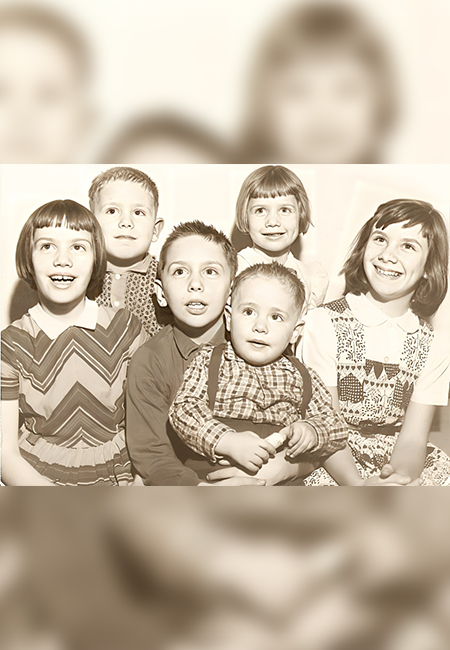
Long Island, with its salt-tinged wind and tight knit neighborhoods, has always been a place where beginnings feel both humble and expansive. It was there, on a modest street not far from the hum of the Southern State Parkway, that a boy—the sixth child in a bustling household—entered the world. His arrival was less an event of fanfare and more a natural continuation of a life already in motion. In a family that large, nothing stood still for long.
The house was never quiet. It pulsed with the noise of siblings darting through hallways, the slam of screen doors, the anonymous thud of someone dropping a textbook or a toy from the staircase landing. Yet beneath the chaos lived an order shaped by two parents whose examples would impress themselves deeply on every child, especially on the sixth.
His father was a man who defined himself through work—not one job, but often two or three, layered like sediment across the years. When the sun rose, he was already gone, leaving behind the faint smell of coffee and aftershave. By afternoon he might be delivering supplies across the island; by evening he could be fixing equipment in a workshop or taking shifts that kept him out long past dinnertime. His hands were calloused, not simply from labor but from the unspoken belief that providing for a family required a kind of relentless stamina. He never complained. He didn’t need to. His children learned to read the story of his sacrifices in the tired set of his shoulders and the quiet pleasure he took in small moments at home.
The mother, meanwhile, ruled the household ledger with an expertise that would have impressed any Wall Street analyst. She stretched every dollar with a precision that bordered on artistry. Bills were paid on time; groceries were budgeted down to the last apple; and when something unexpected happened—as it inevitably did in a home with six children—she navigated each crisis with a calm born of discipline and instinct. The family never lived lavishly, but they lived securely, because she understood the mathematics of survival as well as the economics of love.
“Strength does not come from what you can do. It comes from overcoming the things you once thought you couldn’t.”
Phase 2 : The Decision to Leave
By the time he reached ten years old, the familiar rhythms of Long Island had begun to feel strained—not just to him, but to his parents. Taxes rose each year, traffic thickened, and what had once been a sprawling landscape of small-town pockets now felt tight, crowded, expensive. His parents spoke in low but steady tones about the future, about whether the life they were working so hard to maintain was sustainable for a growing family of eight.
At first, the conversations felt distant, like adult talk that drifted over the dinner table. But gradually the words took sharper shape: Pennsylvania… New Jersey… Connecticut… Oregon. States he could picture, and states he couldn’t imagine at all.
His father approached the question with the same determination he brought to every responsibility—methodically, seriously, with a sense of duty that ran deeper than personal comfort. Research became a nightly ritual. Brochures gathered in neat stacks. Maps unfolded across the kitchen table. Long Island had been home for decades, but his parents were not sentimental; they were practical. If a move meant a better life for the family, they would pursue it.
Oregon, however, was the wild card. It was far—too far, he thought. Dr. Joe imagined it as a place beyond the edge of the map, a wilderness compared to the suburbs he’d always known. When his father announced he would travel out there to see it for himself, the idea became real in a way the others hadn’t. A man didn’t fly across the country unless he meant business.
His father returned with stories of wide-open land, clean air, and a sense of space that Long Island had long since lost. Mountains, rivers, forests—features that sounded like something out of a book rather than a place a family like his might actually live. Slowly, a decision took shape, though it would take years of planning, saving, and preparing before anything could happen.
“Education is the most powerful weapon which you can use to change the world.”
Phase 3 : A New Life in Oregon
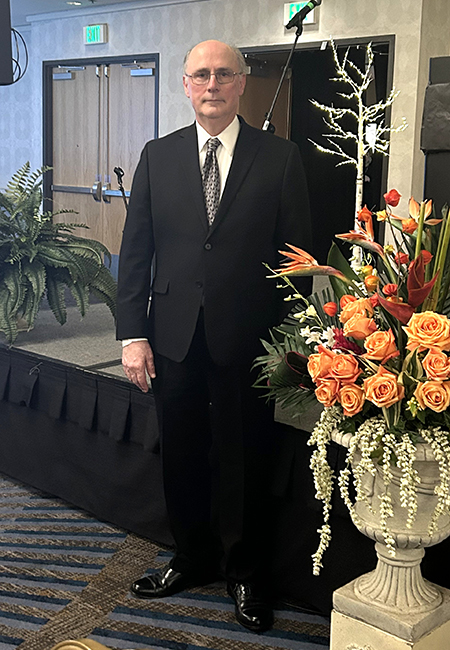
Arriving in Oregon at fourteen—almost fifteen—felt like stepping into an entirely different world. The air itself seemed wider, cleaner, somehow less hurried than the streets and neighborhoods he had known on Long Island. The geography captivated him immediately. Forested hills rolled in every direction, the horizon stretched farther than the eye was used to, and the landscape held a kind of rugged promise that fueled your curiosity. Anxious to explore—not just the land, but the life that waited there.
Like many young men on the edge of adulthood, Dr. Joe was eager to earn his own money. Independence was starting to matter. Freedom started to matter. And in this new place, where agriculture was woven into the rhythm of daily life, there were opportunities everywhere for someone willing to work.
He took whatever jobs were available. Working local farms during harvest seasons, picking berries in the early light of morning. He took jobs catching chickens in dusty barns and milking cows before most people were awake. The work was physical, demanding, and sometimes dirty, but it taught him something important: there were a thousand ways to make a living, but not all of them needed to rely on raw strength and long hours.
Somewhere along those early jobs, Dr. Joe began to notice patterns. He saw that the farmers he worked for depended on more than labor—they needed knowledge, tools, and services that could make their operations run more efficiently. And he realized, almost instinctively, that money could be made not just by doing the hardest jobs, but by providing what others needed to succeed.
That curiosity pushed him toward cattle genetics and artificial breeding, a field that fascinated him with its mix of science, strategy, and opportunity. he learned how breeding choices shaped herds, improved production, and influenced a farm’s entire future. The more he studied, the more he saw possibility. Not just acquiring a skill—Dr. Joe was discovering a direction.
Note of Thanks
Dr. Joe would like to express his deepest appreciation to everyone who has played a role, however small, in the adventure chronicled here. Not as a solo achievement, but as a testament to the many years of collaborative belief, support, and guidance, this work stands.
His unfaltering support, patience, and sacrifices from his family laid the groundwork for his perseverance and resolve, and he is eternally grateful to them. Their principles, unassuming power, and ever-present presence brought stability in times of doubt and direction in times of change.
Dr. Joe is equally grateful to his advisors, coworkers, and business partners who believed in him, encouraged critical thinking, and stood by him through all challenges. Their candor, cooperation, and insightful commentary enhanced his professional development and understanding of leadership and accountability.
He reserves special recognition for the many people and places he has helped and learned from. The significance of service, honesty, and human connection was reinforced by every encounter, discussion, and shared experience, and his viewpoint was expanded as a result.
In closing, Dr. Joe is appreciative of the chances, both anticipated and unexpected, that have molded his career. Every obstacle became an opportunity for growth, and every connection a mentor. He expresses his gratitude to everyone who has contributed to this continuous journey with humility.
Thank You
– Dr. Joseph Wiggins