“To the One who calls, equips, and sustains — and to the hearts that walk beside the calling.”
Introduction
In the quiet heartlands of Zambia, where the air is rich with dust and dreams, a young boy grew up among nine siblings, watching his parents fight poverty with courage and conviction. They had no degrees, no titles, and barely enough to get by. But what they did possess was the one thing that would define their son’s destiny — a deep, unwavering belief in the power of education, discipline, and faith. This was the beginning of Dr. Joseph Mwaba — a man who would go on to serve over 25 years as a missionary, plant 15 churches, found schools, transform communities, and leave a legacy that would ripple across Zambia, Congo, and beyond.
Born on March 19, 1972, in a rural corner of Zambia, Dr. Mwaba was the eighth child in a family of nine. His father, a hardworking truck driver who later joined the Zambia Air Force, and his mother, a humble market vendor, could not afford luxuries — but they made the bold decision to send all nine children to school. That alone was a revolution in a time and place where education was a rare privilege. Though the family was poor, their values were rich — discipline, sacrifice, and a relentless pursuit of a better life. These were the roots from which Dr. Mwaba’s purpose began to grow.
His early years were defined by uncertainty. By the time he started first grade, his father had already retired. The burden of dreams outweighed the means to fulfill them. Yet it was in this space of doubt that his purpose took shape. As the youngest son, often feeling vulnerable and overlooked, he discovered early on what it meant to depend on God. He didn’t just learn faith — he lived it. Every morning walk to school, every day without enough food, was a training ground for the path he would one day walk as a servant leader.
Education, even in its most basic form, became the bridge between survival and significance. Dr. Mwaba’s academic journey is a story of perseverance and excellence. He earned his Bachelor of Theology from Trans-Africa Christian University, his Master’s in Intercultural Studies from Global University in the USA, and pursued a Doctor of Ministry in Leadership through Pan Africa Theological Seminary. Along the way, he became a John Maxwell Certified Leadership Coach, trained with the John Haggai Institute in Singapore, and completed specialized missionary training in Pretoria, South Africa. Each milestone was not for career advancement — it was for the equipping of others.
But knowledge without service is incomplete — and so he answered the call to ministry with boldness. Between 1996 and 1999, Dr. Mwaba planted 15 churches in Kasempa, Zambia, walking up to 100 kilometers at times, often with no transportation, minimal resources, and no guarantee of comfort. It was in those formative years, preaching in villages, sleeping in grass-thatched huts, and holding revivals under open skies, that he learned what true leadership means — to walk before others are willing to follow.
“The seed of greatness is often planted in the soil of struggle.”
Phase 1: Born to Serve — The Roots in Zambia
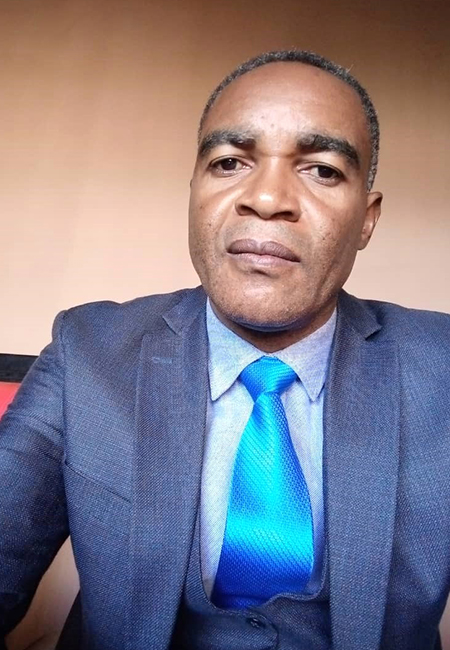
Before the churches, the schools, the leadership seminars, and the foreign missions — there was a boy. A boy born on March 19, 1972, in Zambia, surrounded by the echo of scarcity but wrapped in the quiet love of a humble, hard-working family. This is where the journey of Dr. Joseph Mwaba truly begins — not with accolades, but with adversity. Not with fame, but with faith.
Born into a family of nine children, Joseph was the eighth child, and while this position often left him feeling vulnerable or overshadowed, it also gave him a perspective that would later define his life. He learned early to observe, to serve, to listen — and to grow in silence. He wasn’t the loudest voice in the room, but his spirit was forming a strength that would later move nations.
His father was a truck driver, a man who spent the earlier part of his life navigating roads between Zambia and Tanzania, and later settled into a career with the Zambia Air Force. He was a provider in the most literal sense, someone who worked tirelessly, often in solitude, to make ends meet for his large family. His mother, though uneducated, was fiercely resourceful — a market vendor who sold basic goods and supplies to support her children. She wasn’t rich in possessions, but she overflowed with grit, love, and belief in the power of schooling.
Despite their limited means, Joseph’s parents were unrelenting when it came to education. They made a decision — a bold, sacrificial decision — to ensure that all nine of their children would attend school. In a community where dropping out was normal, and where many questioned the purpose of educating children who would still return to poverty, this was nothing short of revolutionary. They gave Joseph a legacy far richer than money — they gave him opportunity.
But it wasn’t an easy path. By the time Joseph began Grade 1, his father had already retired. The family’s income dwindled, uncertainty loomed, and the future looked bleak. He remembers that time vividly — starting his education just as the family’s stability began to wane.
“God doesn’t call the equipped; He equips the called.”
Phase 2 : The Call to Kasempa — Faith in the Footsteps
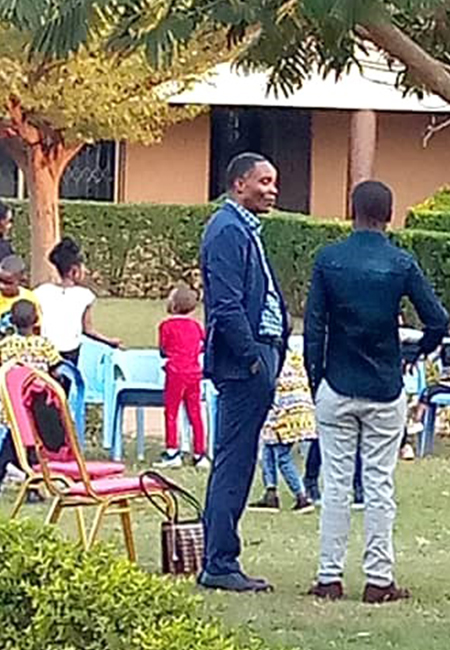
If Dr. Joseph Mwaba’s childhood was about laying the foundation, then his early adulthood was when the walls of his calling began to rise. It was in Kasempa, a remote and underdeveloped district in Zambia’s North-Western Province, that Dr. Mwaba’s faith moved from belief to action, from learning to leading, and from prayer to practice. This was not a comfortable transition — it was a calling forged in sweat, in sacrifice, and in the stillness of rural isolation. But as Dr. Mwaba would later say, “You do not need comfort to serve — you need conviction.”
After completing his Bachelor of Theology at Trans-Africa Christian University, Dr. Mwaba made a life-altering choice: to plant churches in some of the most unreachable and underserved areas of Zambia. This wasn’t a decision made out of convenience. It was obedience — the kind that doesn’t wait for perfect conditions. Kasempa wasn’t just remote — it was physically grueling, spiritually dry, and economically starved. There were no tarred roads, few schools, little access to clean water, and even fewer churches.
But Dr. Mwaba didn’t arrive with excuses. He arrived with evangelism.
At that time, he was not yet married — a young, passionate man with a Bible in his hand, a vision in his heart, and the world on his shoulders. He was stationed at a small central church and immediately began outreach evangelism. But evangelism in Kasempa did not come with microphones and auditoriums. It came with barefoot marches through dust and bush, with no cars, no food reserves, and no promise of safety. Dr. Mwaba and his team would walk 30, 50, even 100 kilometers to reach villages — sometimes arriving late into the night, exhausted but determined to bring the light of the Gospel to those who had never heard it.
With each new visit, a new church would emerge — built not of bricks, but of belief. Within just two years, Dr. Mwaba and his team planted 15 churches, each with its own local pastor, each formed from grassroots trust, community engagement, and fervent prayer.
“When God sends you, the destination is already prepared — all you need is obedience.”
Phase 3 : Crossing the Border — Planting Hope in Congo
By the year 2000, Dr. Joseph Mwaba had already carved out a legacy in Zambia. He had planted 15 churches in just under three years, endured long treks into rural villages, and learned the rhythms of servant leadership through the soil of hardship. But even as his ministry flourished, God was preparing to stretch him further — across national borders, into a foreign land marked by instability, war, and spiritual need.
That land was the Democratic Republic of Congo.
The invitation came as a call for help from a Congo-based Pentecostal network that desperately needed theological structure and pastoral training. War and corruption had hollowed out leadership, and congregations were struggling to survive without solid spiritual guidance. The leadership of the Pentecostal Assemblies of God Zambia, recognizing Dr. Mwaba’s faithfulness, discipline, and gift for training, saw him as the right man for this formidable assignment.
Dr. Mwaba did not flinch.
Where others saw danger, he saw destiny.
In the year 2000, he and his wife crossed the border into Congo, not as tourists or observers, but as missionaries with a mandate. They entered Lubumbashi, a city brimming with raw potential and profound brokenness. The country was still reeling from civil conflict. Infrastructure was weak, resources were scarce, and spiritual confusion was rampant. Yet, Dr. Mwaba arrived not with fanfare, but with faith. His goal was clear: to build a Bible school from scratch — one that would equip local pastors, restore dignity to the pulpit, and uplift entire communities.
That school would become ISTHEK — the Institut Supérieur de Théologie Évangélique du Katanga. It was more than a building — it was a beacon.
From the very beginning, Dr. Mwaba served as Principal, Dean of Students, and Administrator, sometimes all at once. He taught classes, designed curriculum, mentored students, and managed the operational heartbeat of the institution. Between 2000 and 2008, ISTHEK flourished under his leadership. His vision wasn’t just to teach theology — it was to model it. As he often said, “Teaching without demonstration is incomplete. The Word must walk.”
Note of Thanks
With a heart full of gratitude, Dr. Joseph Mwaba extends this note of thanks — not as a conclusion to his story, but as an acknowledgment of the many lives, hands, and hearts that have made his journey possible.
First and foremost, to God Almighty, the true Author of this life, this ministry, and every testimony written across continents — thank You. Every door opened, every soul reached, and every vision fulfilled is a result of divine grace. Without God’s guidance, protection, and provision, none of this would be possible.
Dr. Mwaba’s journey is not one of self-made success — it is one of God-breathed purpose.
To his beloved wife, a woman of strength, quiet power, and unwavering support — this journey is equally yours. Thank you for walking beside Dr. Mwaba through bushes and boardrooms, war zones and classrooms, always with grace and conviction. Your wisdom in education, your nurturing presence in the home, and your partnership in ministry have been pillars of this legacy. You didn’t just support — you built, you carried, you led.
To his daughters, whose patience and sacrifices often went unseen, but whose love has never gone unnoticed — thank you. Your resilience through seasons of absence, transition, and change is part of the reason this legacy lives on. You have both inherited not just a family name, but a foundation of integrity and impact.
To his late parents, who — despite their own lack of education — fought to ensure that all nine children went to school: thank you for choosing sacrifice over survival. Your discipline, your dignity, and your prayers were not in vain. You didn’t just raise children — you raised destiny.
To the churches, ministries, and communities across Zambia and Congo, thank you for receiving the Gospel with open hearts and for becoming co-laborers in the work. To the students, pastors, and teachers who sat under Dr. Mwaba’s leadership — you are the reason this work continues. You are not followers — you are the future.
To the leadership of the Pentecostal Assemblies of God Zambia, the John Haggai Institute, the Pan Africa Theological Seminary, and the John Maxwell Team — thank you for shaping, mentoring, and equipping Dr. Mwaba with the tools he continues to pass on to others.
To the supporters, donors, colleagues, and silent warriors who prayed, funded, and stood in the gaps when times were hard — thank you. Your names may not be printed here, but they are etched in heaven and honored in every life touched.
And to every reader of this biography — thank you for taking the time to witness a life poured out in service. May you be inspired not only to admire, but to act. May you become the servant leader the world is still waiting for.
From the depths of his heart, Dr. Joseph Mwaba says:
“I am not who I am because I was strong — I am who I am because I was surrounded by strength.”
Thank You
– Dr. Joseph Mwaba