“History does not change by silence; it changes when evidence is carried patiently across borders, languages, and generations.”
Introduction
The life of Dr. Jordan Michow unfolds at the intersection of persistence, inquiry, and a quiet but unyielding commitment to historical truth. His journey is not defined by institutional titles or academic privilege, but by a steady dedication to research that spans continents, languages, and decades. What distinguishes his path is the resolve to pursue questions others hesitated to ask and to follow evidence wherever it led, even when the road was long, uncertain, and unsupported.
Born and raised in Bulgaria, Dr. Jordan Michow spent the first three decades of his life shaped by the social, cultural, and political environment of a socialist state. Growing up in a middle-class family, guided by a mother who was a teacher and a father who was an economist, he was taught early the values of responsibility, discipline, and civic duty. These principles became deeply embedded in his character and later reflected in his methodical approach to research and documentation. His parents encouraged him not only to learn, but to observe, to question, and to grow into a thoughtful and responsible citizen.
Education played a defining role in his formative years. From technical studies in Varna, including practical training that demanded structure and precision, to later academic development at the International Tourism Institute in Varna, his learning journey was both diverse and grounded. These years strengthened his organizational abilities and sharpened his engagement with people, cultures, and systems. More importantly, they contributed to his growing mastery of languages, an ability that would later become central to his historical work. Over time, Dr. Jordan Michow achieved fluency in Bulgarian, Russian, Polish, and English, allowing him to access primary sources across multiple regions and traditions.
Although his professional life eventually led him to the United Kingdom, where he worked in logistics at London Heathrow, this period did not distance him from intellectual pursuits. On the contrary, it offered stability and proximity to some of the world’s most significant research institutions, including the British Library. London became not only a place of work, but a gateway to deeper archival exploration. It was here that his long-standing interest in mediaeval history began to transform into focused, independent research.
Approximately a decade ago, Dr. Jordan Michow made a decisive shift toward intensive historical investigation. His interest centred on unresolved questions surrounding mediaeval European history, particularly events and figures linked to the 15th century. Certain historical narratives, long accepted as fixed, appeared to him incomplete or insufficiently examined. With careful attention to documents, languages, and geographic connections, he began to explore alternative interpretations grounded in primary evidence.
“Before a scholar questions history, life first teaches him how to observe, listen, and remember.”
Phase 1: Foundations of Identity and Early Consciousness
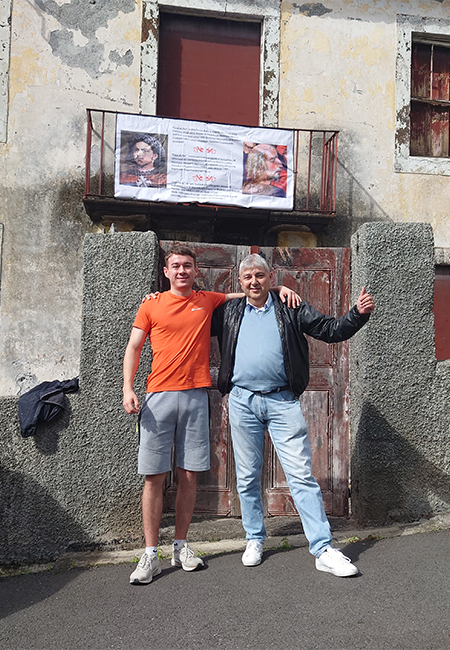
The story of Dr. Jordan Michow begins not in libraries or lecture halls but in the quiet rhythms of everyday life in Bulgaria, where his earliest years shaped the values, discipline, and worldview that would later define his scholarly journey. Born and raised in a modest, middle-class family, he spent the first three decades of his life rooted in Bulgarian society, absorbing its traditions, contradictions, and historical depth long before he consciously chose the path of research.
His parents played a central role in shaping his character. His mother worked as a teacher, while his father was an economist. Together, they represented stability, responsibility, and respect for education. They did not raise him with expectations of academic prestige or public recognition, but with a firm belief in becoming a good citizen, someone who contributes thoughtfully to society. In a country defined at the time by socialist governance, this upbringing carried a particular weight. Bulgaria, during those years, offered a worldview shaped by collective ideals, state structures, and a distinct interpretation of history and identity. Growing up within this system gave Dr. Jordan Michow an early awareness that history is often presented through specific lenses, influenced by politics, ideology, and time.
As a child, he was surrounded by an environment where history was not merely taught but lived. The city of Varna, where much of his early life unfolded, carried visible traces of the mediaeval past. Events that occurred centuries earlier were not distant abstractions; they were woven into the physical and cultural landscape around him. This proximity to history quietly influenced his imagination. While he did not yet define himself as a historian, he developed a deep sensitivity to the idea that places hold memory and that truths from the past are often layered beneath accepted narratives.
His childhood was not marked by privilege or exceptional opportunity but by consistency and moral grounding. His parents emphasized discipline, honesty, and respect for learning. They taught him to observe the world carefully and to understand that knowledge carries responsibility.
“Before a life is shaped by ideas, it is shaped by discipline, effort, and the dignity of work.”
Phase 2 : Foundations of Discipline and Practical Learning (1976–1979)
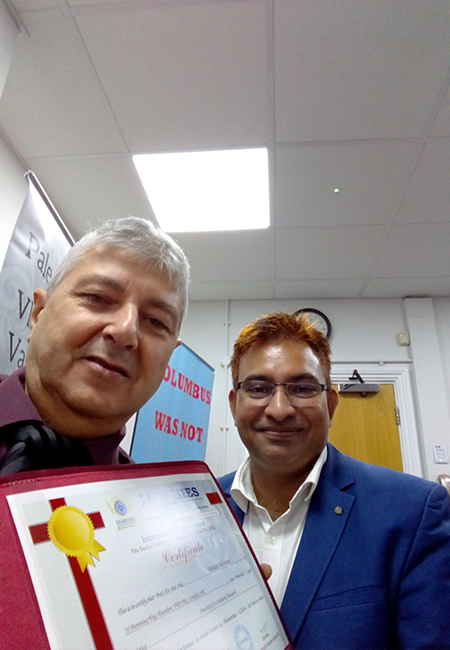
The years between 1976 and 1979 marked an important formative phase in the life of Dr. Jordan Michow, a period defined not by academic titles or public recognition, but by discipline, structure, and practical learning. During this time, he pursued his education at a Technical College in Varna, Bulgaria, where he also completed HGV driving training. Though this phase may appear modest when viewed against the backdrop of his later scholarly achievements, it laid an essential foundation for the resilience, organization, and independence that would characterize his life’s work.
At a young age, Dr. Jordan Michow entered a learning environment that demanded responsibility and consistency. Technical education in Bulgaria during this period required precision, respect for systems, and the ability to work within clearly defined frameworks. These were not abstract lessons but practical realities, where performance depended on attention to detail, adherence to procedures, and the willingness to accept accountability. The discipline required in technical training instilled in him a strong work ethic, reinforcing values already introduced in his family home.
The HGV driving course further strengthened his understanding of logistics, coordination, and long-term responsibility. Operating heavy vehicles was not simply a mechanical task; it required situational awareness, planning, patience, and an understanding of risk. These experiences trained him to think ahead, anticipate challenges, and remain calm under pressure – qualities that would later prove indispensable during complex research journeys, extensive travel, and independent fieldwork across multiple countries.
This period of education also coincided with life in a socialist Bulgaria, where opportunities were structured and expectations were clear. For Dr. Jordan Michow, technical education became a pathway to self-reliance. It offered him a practical skill set that ensured independence and mobility, allowing him to navigate future transitions with confidence.
“Education does not always reveal its purpose immediately; sometimes, its true meaning unfolds quietly over time, shaping the way a person learns to observe the world.”
Phase 3 : Academic Direction and the Foundations of a Global Outlook
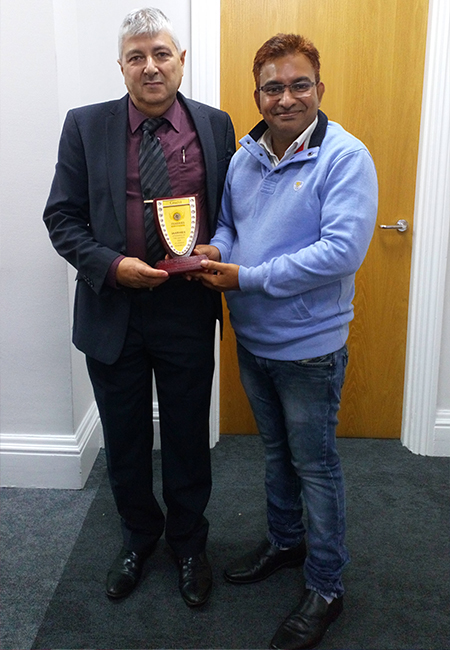
Phase Three of the life of Dr. Jordan Michow marks a decisive transition from practical training into structured academic development, a period during which intellectual discipline, cultural exposure, and linguistic depth began to converge. This phase centers on his formal education at the International Tourism Institute in Varna, Bulgaria, undertaken between 1981 and 1983, and the deeper orientation it provided toward international understanding and long-term scholarly engagement.
By the early 1980s, Dr. Michow had already developed a strong sense of discipline and responsibility through his earlier technical education. However, his decision to pursue studies in Hotel and Restaurant Management at the International Tourism Institute reflected a broader curiosity about the world beyond national borders. Tourism, particularly in a European context, was not merely a service-orientated discipline; it was a structured engagement with cultures, histories, languages, and systems of organization. For Dr. Michow, this field offered an academic framework that connected people, places, and narratives across regions.
The academic environment in Varna played a crucial role during this period. Varna itself was a city layered with history, standing at the crossroads of ancient trade routes, mediaeval events, and cultural exchanges. Studying in such a setting reinforced his awareness that history was not abstract or distant but embedded in geography, architecture, and collective memory. Though his academic focus was not yet historical research, his proximity to historically significant locations quietly strengthened his attentiveness to the past and its unresolved questions.
During his time at the Institute, Dr. Michow received structured training in management, organization, and professional communication. These skills would later become indispensable in managing large volumes of research material, coordinating travel across countries, and organizing academic participation in conferences and congresses.
Note of Thanks
This biography concludes with a sincere expression of gratitude from Dr. Jordan Michow to those whose presence, support, and belief made his long and demanding journey possible. No scholarly pursuit stands alone, and his work is no exception. It is rooted in human relationships, quiet encouragement, and shared responsibility.
First and foremost, Dr. Jordan Michow offers heartfelt thanks to his family, whose understanding and patience sustained him through years of independent research, extensive travel, and personal sacrifice. His deepest gratitude is reserved for his son, Jakub Michow, whose contribution went far beyond familial support. Through his technical expertise, Jakub played a vital role in the preparation and editing of books published in multiple languages, ensuring that documents, images, and historical materials were preserved and presented with care. His companionship during research expeditions across several countries provided both strength and reassurance during demanding moments.
With equal respect, Dr. Jordan Michow extends his gratitude to his colleague and fellow researcher, Dr. Manuel Rosa, whose decades of dedication to historical inquiry aligned closely with his own work. Their collaboration was built on mutual trust, shared intellectual courage, and a common commitment to evidence-based research. Together, they refused to back down in academic settings that frequently reject nontraditional enquiries, opting instead for discussion and documentation.
He also expresses his appreciation to the predecessors who inspired his path into historical research, particularly Leopold Kielanowski, whose pioneering work encouraged deeper exploration and critical thinking. Gratitude is further extended to archivists, librarians, and academic audiences across Bulgaria, Poland, Portugal, Russia, and the United Kingdom, who engaged with his work through conferences, lectures, and discussions.
Finally, Dr. Jordan Michow thanks the readers who approach this biography with openness and curiosity. Their willingness to listen, reflect, and question ensures that the pursuit of historical truth remains alive and meaningful for generations to come.
Thanks,
– Dr. Jordan Michow