“What lies behind us and what lies before us are tiny matters compared to what lies within us.”
Introduction
Every life begins in a particular soil. Dr. Jayshree Devi grew up in a home where effort was admired and kindness was expected. The early years were not adorned by spectacle. They were shaped by routines that cultivate attention: reading before dawn, caring for elders, and finishing what one starts. She learnt that silence can be a form of respect and that a promise is a measure of the self. These lessons did not confer immediate advantage. They formed a grammar by which she would later write the sentences of her life.
As she entered the public world of study and work, she discovered two complementary callings: to understand with precision and to serve with empathy. The first demanded discipline; the second required imagination. She pursued both. In study she committed herself to fundamentals, believing that method is the mother of mastery. At work she placed people at the centre of decisions, believing that dignity is not a reward but a premise. This pairing—rigour and regard—became her signature.
She did not chase categories. She pursued problems. Whether the setting was a classroom, a clinic, a laboratory, an enterprise, or a community space, she asked versions of the same question: What is the need? Who is the neighbour? And how do we build something that lasts? Over time, this question carried her into roles that tested her balance of analysis and compassion. By the time recognitions arrived, they read less like surprises and more like acknowledgements of a pattern: she followed through.
The phases that follow are arranged not merely by chronology but by formation. Each phase contains a central question, a practice that answered it, and a glimpse of how that practice compounded over time. Each open with a line from a thinker whose words shaped how she moved through difficulty. This is not a museum of moments; it is a workshop of habits.
“In the depth of winter, I finally learned that within me there lay an invincible summer.”
Phase 1: Roots and Formation
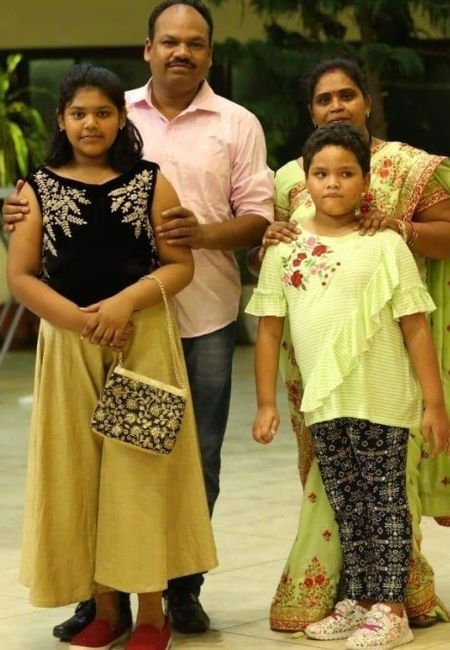
For Dr. Jayshree Devi, childhood was more than just a time in her life; it was a classroom with no walls, a steady beat of discipline, love, and learning. She grew up in a place where values weren’t just talked about but lived, where even the smallest actions were held to the highest standards, and where learning was less about rules and more about developing beneficial habits of mind. Her family valued simplicity, but they never thought it meant being average. The seed of resilience took root in those small beginnings.
She learnt early that mornings were special. She got up before dawn and saw how silence could prepare someone ready for the noise of the world. The quiet hours taught her how to be patient and watch how things happen before she acts. She did chores around the house that seemed normal at first but turned out to be important for her growth, like keeping her space clean, taking care of younger siblings, helping older people, and finishing tasks without being watched all the time. These daily tasks instilled a sense of responsibility in people. She learnt that we don’t get responsibility just because we’re older; we have to earn it by being reliable all the time.
Her interest in learning grew while she was in school. The first books she read opened up whole new worlds for her. She quickly realised that reading could be more than just fun; it could also set her free. Every page was a conversation with minds that were very different from ours in time and space. Teachers noticed her quiet intensity, which some people thought was shyness but was really attentiveness. She paid attention to things that other people missed and asked questions that went deeper than the surface. Her teachers were strict, but instead of hating discipline, she saw it as a way for them to show they cared. She felt that they believed in her potential because they were so firm.
“We are what we repeatedly do. Excellence, then, is not an act but a habit.”
Phase 2: The Discipline of Learning
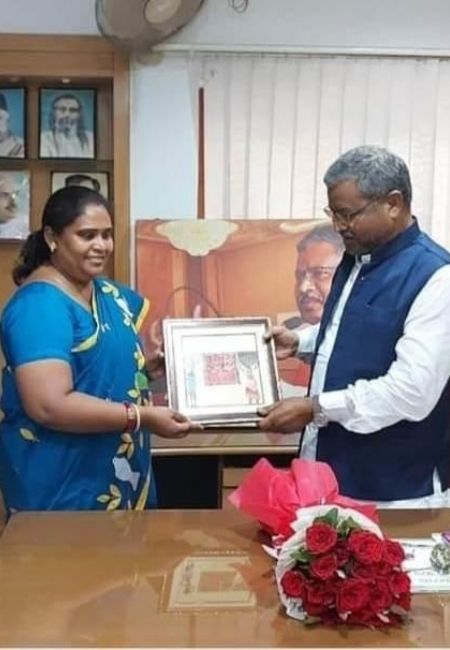
Dr. Jayshree Devi never thought that learning was limited to the classroom. It was a process that required her to use both her mind and her character. The second part of her life can be seen as a growing commitment to discipline, not as punishment, but as a way of showing love. Discipline was to her what scaffolding was to imagination; it was the base that gave freedom its strength. During this time, she sharpened her mind, changed her habits, and made plans that would help her get through the hardest times in her career and personal life.
Dr. Jayshree learnt from a young age that school was more about growing and less about memorising things. She didn’t see her studies as a series of obstacles to get over; instead, she saw them as a way to improve her skills. She wanted to see clearly because each subject gave her a new way to look at the world. Math taught her how to think logically, literature taught her about the depths of human emotion, and science taught her how to be humble when she saw things. It wasn’t just her skills that set her apart; it was also her attitude. She thought that every lesson was important because it made her a better person.
She learnt in a methodical way. She made study schedules that were strict but not too strict. We’d review in the morning, apply in the afternoon, and reflect on what we learnt in the evening. She wrote in her journal about her progress, including what she had learnt and what she still didn’t understand. For her, clarity was not a goal but something she was always working towards. This practice of reflective study instilled in her a humility that safeguarded her from arrogance. She could do well on tests and still honestly say that there was a lot she didn’t know. People admired her openness more and more as she got older.
“The best way to find yourself is to lose yourself in the service of others.”
Phase 3: First Responsibilities, First Tests
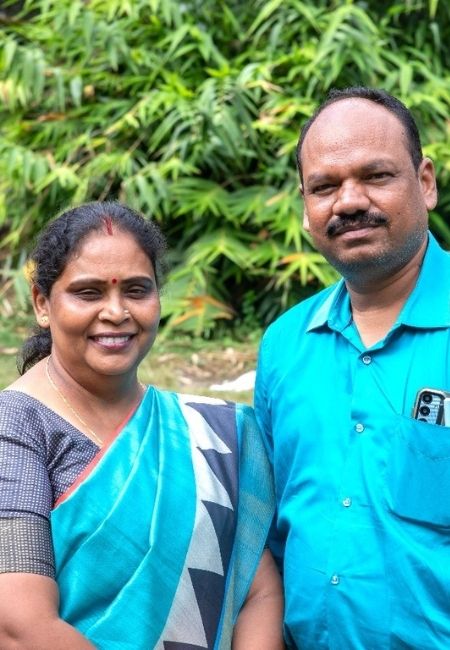
The third phase of Dr. Jayshree Devi’s journey marked a transition from preparation to practice, from theory to application, and from the security of learning to the uncertainty of responsibility. Having spent her early years forming habits of discipline and cultivating intellectual depth, she now entered the arena where her knowledge, character, and resolve would be tested in real-world circumstances. This phase was not merely about gaining professional roles or responsibilities; it was about learning to shoulder the weight of expectations, to make decisions with consequences, and to discover that leadership and service are inseparable.
Her first responsibilities, though modest in scale, carried immense importance. She began by taking on roles that required reliability, rather than brilliance, and endurance, rather than flair. Whether it was managing a small project, mentoring juniors, or coordinating with colleagues, she approached each task with a seriousness that belied her years. She believed that no responsibility was too small to be treated with dignity. In her mind, showing up consistently and honouring commitments was as important as dazzling with ideas.
One of her earliest lessons in responsibility came through mentorship. She was entrusted with guiding a group of younger learners, an experience that demanded not only clarity of knowledge but also patience and empathy. She quickly realized that teaching is not about transferring information but about nurturing confidence. When a student struggled, she did not simply provide answers; she sat with them, breaking down the problem until it became less intimidating. These early mentorship experiences laid the foundation for her lifelong role as a guide to others, teaching her that the measure of one’s knowledge lies in its ability to empower others.
Note of Thanks
Thanks to everyone who has read these pages. The story of Dr. Jayshree Devi is more than just a record of one woman’s life; it shows us what we can do with our own lives. Writing a biography is both a privilege and a duty. It is a privilege because it lets us see the private parts of a life shaped by courage, resilience, and meaning. It is a duty because it requires us to be truthful and compassionate.
There are so many voices and hands that helped make this book possible. Her family deserves thanks for sharing memories, stories, and insights that showed her private strengths just as clearly as her public accomplishments. Her coworkers and mentees shared stories that demonstrated how her influence transformed both institutions and people’s lives. Her community has allowed us to view her not only as a professional leader, but also as a neighbour, mentor, and friend.
She should also thank the mentors and giants who helped her see things more clearly. Their advice has stayed with her throughout her journey. We are truly grateful to the editors, interviewers, and archivists who kept the facts straight, polished the stories, and kept the balance between fact and feeling. Their work made sure that this biography is not only accurate but also very human.
Most of all, we should thank Dr. Jayshree Devi for living a life that makes us think. Her life reminds us that greatness is not about titles or applause but about living by our values every day. Her bravery in tough times, her vision in creating institutions, her kindness in mentoring, and her unwavering search for meaning all serve as a guide for those who want to live with integrity.
May these pages help you stick to your guns and choose what’s right over what’s easy, learn to be patient when things get tough, honour both excellence and empathy, and carry on the light that no storm can dim. We hope that by telling her story, we can bring out the best in you. The world always needs more people who live like she did: clearly, carefully, and bravely.
Thanks
Dr. Jayshree Devi