“Education is the most powerful weapon which you can use to change the world.”
Dedication
This biography is devoted to Jhordane Johnson, a young man who is the driving force behind Dr. Jacqueline Hendricks’s unassuming bravery and the everyday purpose she pursues. Love has never been a performance in Dr. Hendricks’ life; rather, it has been a responsibility that has been handled with steadiness, particularly in the areas of life that require more patience than praise.
The journey that Jhordane took, which was distinguished by multiple intellectual problems and autism, altered the rhythm of his mother’s universe in ways that only a parent who is completely devoted to their child can fully comprehend. Because of this, movement was restricted, continual planning was required, and a level of power that is not always visible on the surface was an absolute necessity. Dr. Hendricks’ compassion was strengthened, her understanding of the various learning needs of children were enhanced, and her commitment to the belief that every child is capable of learning once they are placed in the appropriate environment was strengthened as a result of this experience.
The author expresses thanks for the bond that taught her perseverance and perspective. This is due to the fact that, despite her positions as an educator, a leader, a cultural trainer, and a contributor to the community, she is also a mother who has consistently shown up.
“The child is the father of the man.”
Phase 1: Small Feet, Strong Will
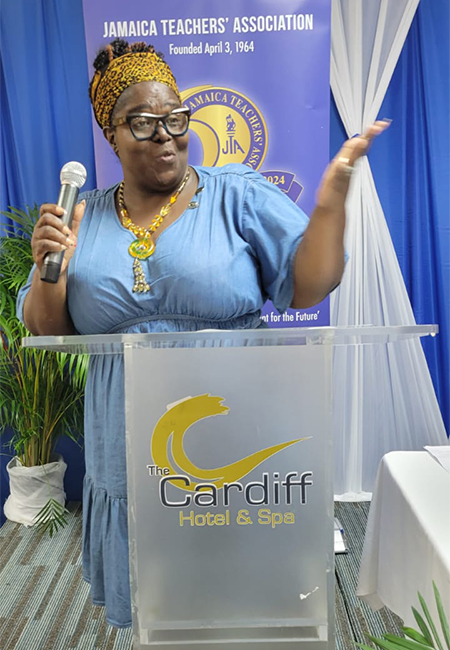
Dr. Jacqueline Hendricks, who was born on April 20th, came into this world with a spirit that would one day mould the lives of hundreds of young people, even if in her younger years, she did not yet experience what is now known as leadership. These characteristics included sensitivity, stubbornness, curiosity, and an innate drive to stand out. Her narrative was not one of ease from the very beginning up until the very end. An emotional understanding that was decades ahead of its time – it was a revelation.
It was only when she was three years old that she started attending formal schooling. She skipped both preschool and infant school totally and went right into primary school. While other youngsters were still learning how to sit still, she was already maneuvering her way through the classes, teachers, and laws during that time. Her thoughts moved quickly, and her presence was obvious. Despite the fact that she was only six years old, she had already achieved the third grade, making her progress through the system more rapid than the majority of children her age. However, protection is not necessarily synonymous with acceleration.
An event that took place while she was a student at Dalvey Primary School subtly changed her relationship with education. One day, her mother reprimanded her, and the elementary school teacher witnessed it. For a young youngster, that particular moment was like being exposed to the world. What transpired after that was not merely a negligent act. It was a violent emotional upheaval. Jacqueline made a defiant appearance. After being referred to as “very naughty” by the instructor, she then did something that demonstrated the strength that she possessed on the inside. She did not want to return to that classroom at any time. When a youngster of four years old walks out of a learning area, this is not seen to be rebellion. I am crying out.
The immediate and excruciating effect was the result. She had to retake the grade, moved from the second grade and went right back to the first grade. When it came to a youngster who had been making rapid progress in their academic career, this was not just about grades.
“Our greatest glory is not in never falling, but in rising every time we fall.”
Phase 2 : When Confidence Was Tested and Courage Was Formed

For Dr. Jacqueline Hendricks, the transition from childhood to adolescence and young adulthood was not a smooth one. The arrival of these individuals served as a gradual and consistent examination of her character, transforming her from a capable schoolgirl into a woman who would one day run institutions and have an impact on generations of students. It is not enough to say that she is getting older during this stage of her life. Learning how to recover, how to adapt, and how to continue believing in oneself in the face of circumstances that appear meant to demolish that belief are all important aspects of this process.
Dr. Jacqueline had a distinct aspiration that she carried with her throughout her time at Morant Bay High School. She aspired to work in the field of mechanical engineering. It wasn’t a random thought at all. Her high success in mathematics demonstrated her love for logic, structure, and problem-solving. On the other hand, changes occurred in the emotional landscape of school halfway between the third and fourth forms. She started to be treated unfairly and became the target of ridicule, and she felt that she was being blamed for things that she did not completely comprehend. The fact that it was done alone made it more difficult. When she was going through that vulnerable period of her life, she did not feel emotionally supported, although her parents were well-regarded experts.
Not only did she experience a strain on her mental well-being, but her physical health also started to deteriorate. Her scholastic performance worsened as a result of the fever that she was suffering from, which had an effect on her brain. The once self-assured student found that she was having difficulty keeping up with the pace. Her grades went down. Her certainty began to wane. Nevertheless, something significant was subtly developing beneath the surface of the disappointment. She did not make a surrender.
When she entered the fifth form, she confronted the pressure of external examinations with a determination that was not based on confidence but rather on resilience. She made a choice that required a great deal of bravery when the findings showed that she would not be able to graduate.
“The best teachers teach from the heart, not from the book.”
Phase 3 : Where Calling Became Commitment
In the year 1991, when Dr. Jacqueline Hendricks entered Middleton Primary School, she was not yet aware that she was entering a position that was more than just a job. She was about to embark on a journey that would last a lifetime. What started out as a single opportunity eventually became the cornerstone of her professional identity, molding not just the pupils she would teach but also the educator she would become.
The first position she ever held was that of a Class Teacher, which she held from the years 1991 until 1998. During these formative years of her professional life, she realised that teaching was not just about imparting knowledge to students; it was about comprehending the needs and desires of children. When she entered the classroom, she brought with her everything she had learnt about life. She understood the struggles, the sense of under appreciation, and the loss of confidence. Furthermore, as a result of this, she made certain that her students were never without visibility.
She imparted knowledge with enthusiasm and affection. Because of her lifetime commitment to cultural development through JCDC, her classrooms were filled with poetry, drama, dance, and other forms of creative expression. Their atmosphere was vibrant. The process of learning was not intended to be subdued or strict. Intentionally, it was supposed to be captivating, delightful, and significant. Not only did children respond to her because she was intelligent, but they also responded to her because she was personally present. She had a strong conviction that every child had the potential to learn, and she used a great deal of effort to discover the method that would enable each pupil to achieve success.
During the year 1998, her dedication, consistency, and ability for leadership were acknowledged, and she was given the position of Senior Teacher, which she would continue to assume until the year 2017. She established herself as one of the anchors at Middleton Primary School over almost twenty-six years. When she was in this position, she was not only accountable for her classroom, but she was also responsible for mentoring other teachers, providing assistance to the administration, and contributing to the upkeep of academic and behavioural standards throughout the entire school.
Her leadership was subtle and unobtrusive. It remained uniform. By demonstrating both justice and emotional intelligence, she was able to effectively manage both youngsters and adults. The fact that teachers, just like students, require direction, encouragement, and sometimes even quiet support was something that she understood. As someone who had been a student in the past and experienced feelings of being misunderstood, she made it her aim to provide an atmosphere in which progress was always possible.
Note of Thanks
Dr. Jacqueline Hendricks would like to express her most heartfelt gratitude to each and every individual who has been by her side during the numerous stages of her life. She has never embarked on this journey, defined by education, community involvement, and responsibility, alone. She is grateful to her professors, mentors, colleagues, and administrators who believed in her capabilities even when things were challenging and who assisted her in developing into the leader she is today. She honours this individual with respect.
She expresses her deepest gratitude to the students who have placed their faith in her, shared their knowledge with her, and made it possible for her to become a part of their lives. Her efforts have resulted in several significant benefits, one of which is the continuous connection, progress, and resilience of her clients.
Dr. Hendricks would also like to extend her heartfelt gratitude to her family, whose support and influence provided her with the strength she needed to persevere through both the peaceful and difficult times in her life. In particular, she expresses her gratitude to her son, Jhordane Johnson, whose bravery, patience, and uniqueness have had an important influence on her view of learning, empathy, and love that is unconditional.
In conclusion, she expresses her gratitude to the communities, institutions, and organisations that have been a source of opportunities for her to serve. Her experiences in the classroom, in leadership, and in public service have shaped who she is and will continue to do so.
Thanks,
– Dr. Jacqueline Hendricks