“True education begins when knowledge meets character, and teaching becomes an act of love guided by patience, purpose, and faith.”
Introduction
To really understand what it means to dedicate oneself to service, you need to know about Dr. Idris B. Mohd Taha’s life. He did it not through power or position, but through purpose. His story doesn’t take place in the halls of power; instead, it takes place in Singapore’s small classrooms, where he has quietly shaped young minds, guided restless hearts, and instilled the values that define the human spirit for almost four decades. In a world where numbers are too often used to measure success, his life shows us that the true measure of greatness is the people we help, the lessons we teach, and the love we show others.
Dr. Idris grew up in a home where faith, discipline, and kindness were everyday virtues. His mother was an Islamic school teacher, and he saw her come home with stories that combined patience with purpose. At the time, he didn’t know it, but these small acts of devotion were the first signs of what he would do in the future. He didn’t plan to teach; it just happened over time. His interest in education grew into a strong belief. He started to see teaching as more than just a job when he was in high school and later when he was in the military. It was a way to contribute back, shape the next generation, and find meaning in everyday work.
The classrooms in Singapore were very different when he started teaching in 1986 than they are now. There weren’t many resources, technology was far away, and teachers had to be creative, caring, and strong. But even then, Dr. Idris saw a chance where others saw a problem. His early years were a test of his strength. He had to deal with classrooms full of hyper kids, adapt to the demands of character-building and the curriculum, and find his way as a young teacher who wanted to make a difference. He learnt over time that teaching was less about being in charge and more about making connections. When he realised that kids learn best when they feel understood and valued, he built his whole philosophy on that idea.
His life changed when he chose to focus on Physical Education. He got his diploma and then became a mentor in both academics and sports. He thought that learning wasn’t just about books; it was also about working together, being disciplined, and being strong. Coaching students in physical education gave him the chance to teach them lessons about life outside of school, like how to be fair, respectful, and never give up. He thought of every game as a lesson in life, and every win or loss as a chance to learn something new.
Life, on the other hand, had its problems. He had to have surgery on a painful heel injury, which meant he had to leave the field of physical education that he loved so much. But Dr. Idris stayed true to himself and turned his problems into opportunities for growth. Using what he learnt in Malay, he moved into full-time teaching, where he continued to help students with a new sense of purpose. The subject didn’t matter; the effect did. His goal was always the same, whether he was teaching English, Physical Education, or Malay: to help students become responsible and caring people.
“The brightest lessons are not written in books but lived in homes where love teaches patience, faith shapes discipline, and humility becomes the first language of learning.”
Phase 1: Roots of Light — The Home That Taught Values Before Words
Dr. Idris B. Mohd Taha’s humble beginnings were in a home filled with faith, discipline, and unspoken love. This is where every life that inspires the world begins. His earliest memories were full of lessons that were not taught in class but through real-life examples. He learnt the values that would later make him a teacher, a mentor, and a man of strong principles in the quiet parts of his childhood home.
Idris was born into a family that valued education and morality as sacred virtues. He grew up in an environment where kindness was natural and respect was the norm. His parents didn’t talk much, but everything they did—from how they greeted a neighbour to how they kept a promise to how they showed gratitude—taught him a moral lesson. People didn’t talk about humility in that house; they showed it. People didn’t ask for patience; they practised it. Those silent lessons had a bigger impact on him than any book could.
His mother, who taught at an Islamic school, was the first person to show him how powerful education can be. Every morning, he watched her leave for work with a sense of calm purpose. She would come home tired but with a glow of quiet satisfaction. She was more than a teacher; she was a soul nurturer. She never talked about her students’ grades or marks; she talked about how they grew, how kind they were, and how much faith they had. Idris often sat next to her and listened to stories that made teaching sound like a sacred duty, a chance to change people’s hearts as well as their minds. He didn’t know it at the time, but those moments would stay with him and grow in their own time.
His father, on the other hand, was a man of honour and discipline. He was always firm, but never mean. He showed Idris what it meant to be responsible by doing things. Every job had to be done honestly, and every promise had to be kept with sincerity. Idris learnt how to be kind and firm at the same time while watching him. This would later become his teaching style. His father’s quiet strength taught him that leadership doesn’t always have to be loud; sometimes it can be gentle and strong through self-control.
“Some call it destiny; I call it listening — to the voice within that tells you where your goodness can serve best.”
Phase 2: The Quiet Awakening — When the Heart Heard Its Calling
Sometimes in life, your purpose doesn’t show itself with loud, clear sounds, but with soft, quiet ones. For Dr. Idris B. Mohd Taha, that whisper came when he was young; it was soft, steady, and clear. It wasn’t a dream that he had because he wanted to be successful; it was a quiet realisation that his life was meant to help others. During this part of his journey, he didn’t have any big successes or make any big decisions. Instead, it was a time of deep observation, reflection, and awakening, when the values that had been planted in childhood began to grow into a vision for the future.
Idris never thought he would become a teacher when he was a kid. To him, teaching was a noble but distant job that required responsibility and patience—two qualities he admired in his mother but never thought he could live up to. He was curious, disciplined, and quietly thoughtful when he was in school. He picked things up quickly, not just from books but also from people. He saw how different personalities interacted, how kindness earned respect, and how fairness built trust. These early lessons formed the basis of what would later shape his philosophy as a teacher.
But he was still looking in those early years. The road ahead looked unclear, and his dreams, though real, were not clear. He grew up in a society that valued stability, respect, and helping others above all else. His parents, who taught him to be humble and responsible, never made him choose a certain job. They were sure that his faith and conscience would lead him. Idris was able to see the world with open eyes and a reflective heart because he had this freedom and a strong sense of duty.
He first started to understand things when he was in high school. He was around other students who discussed their goals in science, business, or law, and he started to feel drawn to something else—something that had more to do with people. Idris’s friends wanted to work in offices or as managers, but he was drawn to classrooms, the sound of learning, and the sharing of ideas that helped others see things in a new way. At first, he wasn’t interested in teaching as a career. What interested him was the change he saw in those who were well led. He noticed that goodness was revealed not only through ambition and material possessions but also through one’s perspective on the world.
“Service is the art of giving your best — not for reward, but for responsibility.”
Phase 3 : Forged by Duty — Lessons of Courage and Discipline from National Service
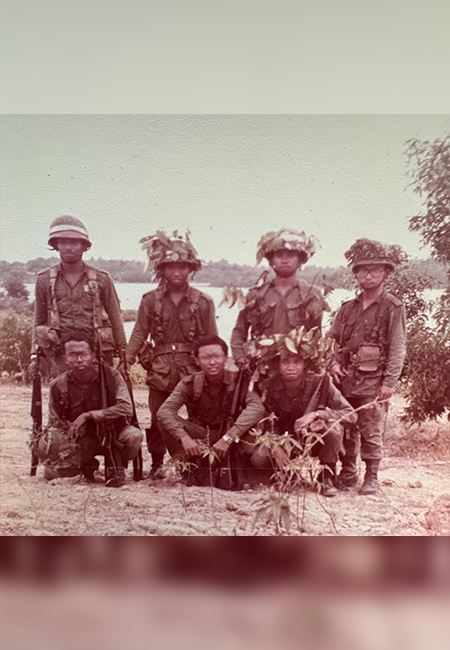
Dr. Idris B. Mohd Taha learnt lessons that would stay with him long after he took on adult responsibilities. He learnt about them while serving in Singapore’s National Service. There, he would not be tested on his intelligence or knowledge, but on his character and ability to last. During those years, when he was between being a teenager and an adult, he learnt how to be strong, lead, and be disciplined. This is where his inner strength took shape. The young man who came in as a quiet dreamer came out as a strong and purposeful person.
Idris felt the same mix of fear and pride that every young Singaporean does when he got his National Service enlistment letter. Since he was a child, his father’s quiet patriotism and his mother’s lessons on responsibility had instilled in him a strong sense of duty to serve his country. But he also felt the weight of the unknown as he got ready to leave his family’s house. National Service was reputed to be both physically demanding and emotionally transformative. People said it would break boys and make men, but he would only fully understand it after going through it himself.
He started his training on Pulau Tekong, the island where new recruits were turned into soldiers. The first few weeks were a blur of early mornings, strict drills, and the constant beat of discipline. The sudden change from a loving home to a world of orders and endurance was scary for someone who had grown up in a caring environment. But Idris adjusted quickly. His father’s quiet example of discipline and his mother’s example of patience became his anchors. He quickly learnt that being able to survive training wasn’t just about being strong; it was also about being mentally strong, working as a team, and having the will to keep going even when he was tired.
The long marches, obstacle courses, and tactical exercises pushed people to their limits in more ways than one. There were times when tiredness and doubt made him want to give up. But Idris wouldn’t give in. He found strength in being with others and learning that unity could turn struggle into shared power. He learnt to depend on his fellow recruits, and they learnt to depend on him. The bonds that were made during those challenging months would last a lifetime and served as a reminder that no one truly overcomes a challenge alone.
Note of Thanks
Dr. Idris B. Mohd Taha expresses profound gratitude to all who have accompanied him throughout his life’s journey of learning, teaching, and transformation. Everyone around him helped him reach every goal he set for himself by believing in him and being kind to him.
He sincerely thanks his coworkers, mentors, and students for their trust and friendship, which made his time in school better. Their excitement and respect were constant reminders that teaching is not just a job but a shared goal of growth and purpose.
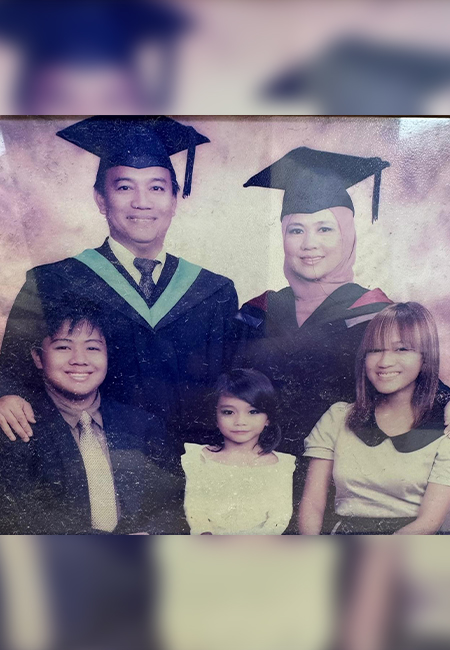
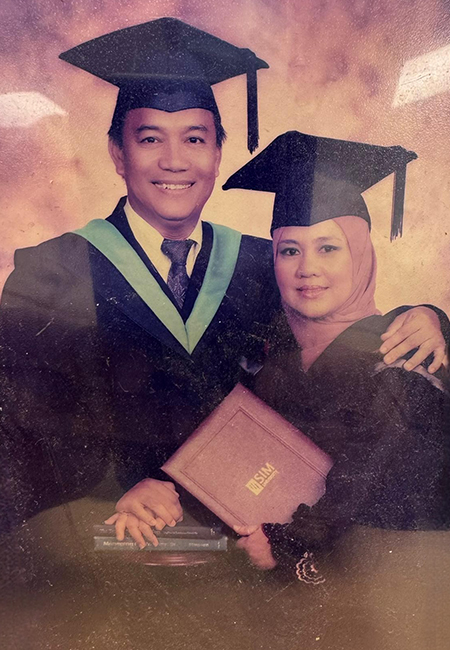
His deepest thanks go to his beloved wife, Suriana Othman, whose patience, devotion, and constant support helped him through every chapter of his life. He thanks his kids and grandkids for their love and understanding, which gave his life its greatest meaning.
He also thanks God for the guidance that led him on his path and gave him the strength to serve with honesty and humility.
Dr. Idris knows that his story is not just his; it belongs to everyone who believed in him, supported him, and inspired him. Their presence turned his work into a legacy of love, learning, and kindness.
Thank You
– Dr. Idris Taha