“Progress does not begin with certainty. It begins the moment one is willing to try.”
Introduction
The life story of Dr. Horst August Lichtner is not defined by a single ambition, profession, or moment of fortune. Instead, it is shaped by a steady willingness to act, to learn, and to take responsibility long before outcomes were clear. His journey reflects a lived philosophy grounded in discipline, curiosity, and the belief that effort must precede recognition. This biography begins not as a record of titles, but as the account of a man who learned early that independence is built through action, not expectation.
Born on 31 August 1959 in Essen, Germany, Dr. Horst August Lichtner often describes his birthplace as an accident of circumstance rather than identity. Shortly after his birth, his family moved to a small town in northern Germany, far removed from the influence of major cities. It was a modest environment, limited in distractions yet rich in routine. Life there revolved around school, sport, and music—spaces where discipline and consistency quietly shaped character. This setting left a lasting imprint, fostering habits of focus and self-direction that remained constant throughout his life.
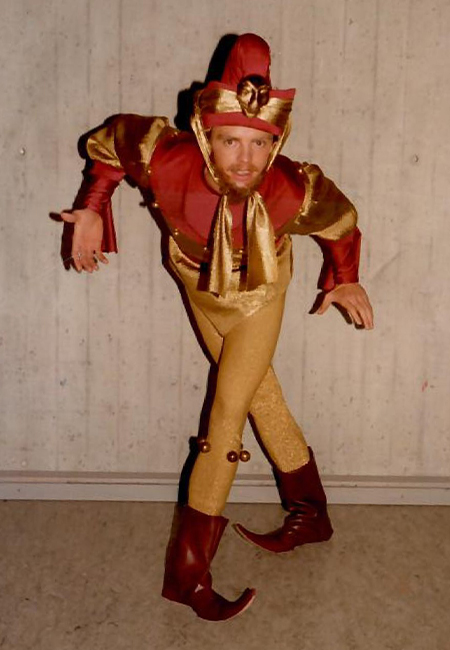
From an early age, movement and structure became central themes. He played sports not with a defined goal, but with openness to opportunity. Handball, tennis, swimming, and later dance filled his days, alongside twelve years of playing the trumpet. At that stage, learning was driven less by academic ambition and more by experience—by doing rather than planning. It was only later, during his military service, that seriousness replaced spontaneity. There, he encountered responsibility in its most direct form and came to understand that life demanded more than talent; it required commitment and accountability.
This period marked a turning point. Determined to remain financially independent, Dr. Horst August Lichtner chose paths that allowed him to support himself, becoming a state-certified tennis instructor and later completing his military service, where he rose to the rank of Lieutenant of the Reserve. These years instilled discipline, self-reliance, and the clarity to decide his future direction. Encouraged by guidance he received during this time, he committed himself to higher education, moving nearly 800 kilometers away to Munich—a deliberate distance that symbolized both physical and emotional independence.
At the Technische Universität München, he pursued academic training in sport, while at Ludwig-Maximilians-Universität München he studied German language and completed his diploma in sport with a specialization in sport management. For four years, he served as the student representative at TU München, advocating for student interests and presenting their concerns to university management. University life deepened his understanding of structure, analysis, and responsibility. It also introduced him to mentors who recognised his potential and entrusted him with meaningful responsibilities—an experience that reinforced his belief that confidence grows when opportunity is met with effort. His academic journey was never isolated from practice; it remained closely tied to events, research, and real-world application.
Beyond academics, his life unfolded across diverse fields. Dance became not only an art form but a long-term commitment, leading to public performances, instruction, and even authorship. Sport remained a constant, evolving from personal participation into organizational leadership. Event management, federation work, and governance gradually replaced competition as his career expanded into national and international arenas. Each transition followed a familiar pattern—an invitation, a decision to try, and sustained effort that earned trust.
“A life does not begin with certainty; it begins when one learns to stand on their own, even before understanding where the road will lead.”
Phase 1: Roots, Identity, and the Making of Independence
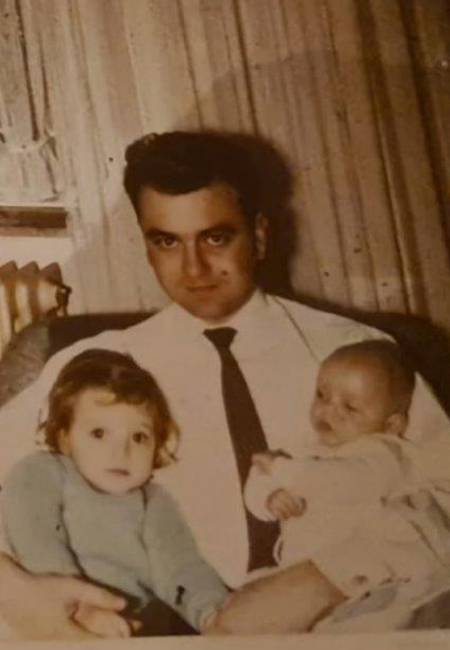
The story of Dr. Horst August Lichtner begins with an event he himself has often described as accidental. Born on 31 August 1959 in Essen, Germany, his place of birth was not a reflection of family roots or long-term residence, but simply the result of travel at the time. Almost immediately after his birth, life moved northward to a small town in northern Germany where his childhood would truly unfold. This early transition, though unremarkable on the surface, quietly shaped a defining feature of his character: the understanding that circumstances do not define destiny—responses do.
The town in which Dr. Horst August Lichtner grew up was modest in scale and opportunity. With a population of roughly fifteen thousand at the time, it stood far removed from the pace and distractions of large cities such as Hamburg, Berlin, or Munich. Life there was simple and structured. There were few diversions, few shortcuts, and little external stimulation. Children attended school, engaged in sports, and returned home. This steady rhythm created an environment where consistency mattered more than competition and effort mattered more than appearance. Within this quiet setting, discipline began to take root.
His family life added another layer to these formative years. His father worked in an industrial field producing plastic caps and later established his own factory, which he operated for decades. His mother remained at home, caring for Dr. Horst August Lichtner and his sister, Marion. Yet beneath the surface of routine, there were emotional challenges. His parents often struggled in their relationship, creating a domestic atmosphere that was not always stable. As a young boy, he felt this tension deeply. Rather than weakening him, it planted an early desire for distance, independence, and self-determination.
School, during these years, was not his primary passion. Traditional learning did not immediately capture his attention. What did, however, was movement. Sport became his language, his outlet, and his daily structure. Handball, tennis, swimming, and physical activity filled his days. These pursuits were not driven by ambition or long-term planning; instead, they were shaped by opportunity.
“Not every lesson announces itself as important. Some shape a life quietly, through repetition, effort, and the courage to keep trying."
Phase 2 : Schooling, Sport, and the Slow Awakening of Purpose
The second phase in the life of Dr. Horst August Lichtner unfolds during his school years and early youth—a period that did not begin with academic ambition, but gradually formed the discipline and character that would later define his journey. These years were not marked by clear goals or carefully constructed plans. Instead, they were shaped by curiosity, movement, and a willingness to participate fully in whatever life placed before him.
His formal education took place at Gymnasium Lohne (Oldb), a mathematically and linguistically oriented secondary school in northern Germany, where he completed his Zeugnis der Reife, the qualification required for university education. School, however, was not the center of his attention during the early years. Traditional classroom learning did not initially inspire him. He has openly acknowledged that as a young student he was far more drawn to activity than to books. His days were full, but not with academic obsession—they were filled with movement.
Growing up in a small town meant that options were limited, yet within that limitation lay structure. There were no endless distractions and few competing pulls from urban life. What existed were schools, sports clubs, and community activities. Dr. Horst August Lichtner immersed himself in these spaces naturally. Handball became one of his earliest structured sports, introduced through a teacher who also served as a coach. Tennis followed, first through family exposure and later through personal dedication. Swimming and physical training rounded out a routine that kept his days active and disciplined, even if that discipline was not yet consciously directed toward long-term goals.
Music played a parallel role during these years. For more than a decade, he played the trumpet, attending music school in the afternoons. This commitment demanded patience, repetition, and focus—qualities that quietly reinforced habits of perseverance. Music, like sport, taught him that improvement comes not from sudden breakthroughs, but from consistent effort. At the time, these lessons were absorbed instinctively rather than intellectually; only later would he recognise how deeply they had shaped him.
“Growth begins the moment comfort is replaced by responsibility, and choice replaces habit.”
Phase 3 : Leaving Home, Choosing Education, and Learning to Take Life Seriously
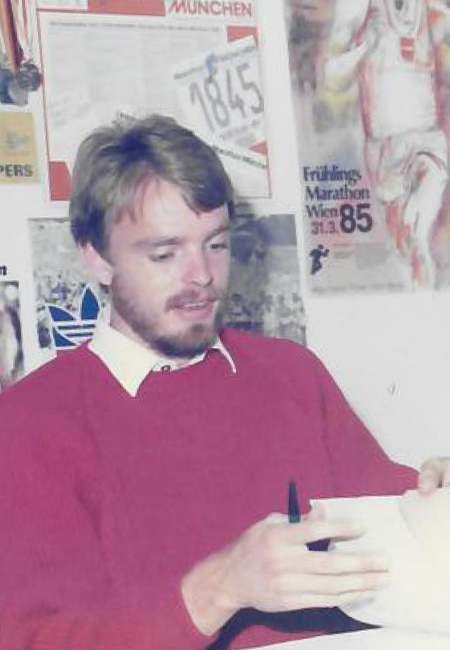
Phase Three marks a decisive shift in the life of Dr. Horst August Lichtner—a period defined not by external success, but by inward clarity. It is the stage in which independence moved from instinct to intention, and experience began to crystallise into direction. What had once been a life shaped largely by movement, opportunity, and reaction now started to take on form, structure, and purpose.
The transition did not come easily. By the time Dr. Horst August Lichtner reached the end of his military service, he had already lived through years of emotional tension at home. His parents’ constant conflicts left a lasting impression. Rather than anchoring him, the home environment pushed him toward distance. This was not rejection, but necessity. He felt a strong need to step away—to take his life fully into his own hands and prove, first to himself, that he could build something independently.
The decision to move to Munich was therefore both practical and symbolic. Nearly eight hundred kilometers separated his small northern hometown from the Bavarian capital—almost the greatest physical distance one could create within Germany. For Dr. Horst August Lichtner, this distance represented freedom, self-determination, and a clean beginning. He did not leave with guarantees; he left with resolve.
Encouraged during his military service to reflect honestly on his abilities, he recognised two core strengths. The first was his deep familiarity with physical movement and sport, refined through years of disciplined practice. The second was his command of language, particularly German. From a young age, he had written poems and expressed himself with clarity. These strengths led him to a clear, if unconventional, academic decision: to study sport and German language together.
Note of Thanks
This biography stands as a reflection of a life shaped by effort, responsibility, and the courage to act without certainty. Dr. Horst August Lichtner extends his gratitude to the individuals and institutions that, at decisive moments, placed trust in him and allowed experience to become the greatest teacher. While his journey has been guided by self-reliance, it was strengthened by those who recognised potential and encouraged action.
He offers sincere thanks to his early educators and mentors, whose influence arrived not through instruction alone, but through belief. Heribert Westerkamp, his Latin teacher and handball coach, provided stability and guidance during formative years, helping him remain focused on education when circumstances were challenging. His appreciation also extends to his military commander, whose counsel during service encouraged him to pursue studies aligned with his abilities and to approach life with seriousness and discipline.
At university, Dr. Horst August Lichtner acknowledges the enduring influence of Prof. Hartmut Baumann, whose academic trust and mentorship reinforced confidence through responsibility and collaboration. He also expresses deep gratitude to Dr. Krombholz, whose guidance in dance and professionalism opened early professional doors and remained a constant source of support across decades. Her influence extended beyond instruction, shaping values of precision, representation, and respect.
Professional gratitude is extended to colleagues and partners across institutions who placed confidence in his work and integrity. These include leaders and teams associated with the NOC Germany, ISL Marketing AG, S&K Marketing AG, CWL Marketing AG, German Football Association (DFB), T.E.A.M., and the International Ice Hockey Federation (IIHF) as well as KEDA Foundation, whose trust made sustained collaboration possible.
Above all, Dr. Horst August Lichtner acknowledges the power of opportunity—offered by people who believed in action over promise. This note of thanks recognises that while a life is ultimately lived by one’s own choices, it is shaped meaningfully by the trust of others along the way.
Thank You
– Dr. Horst August Lichtner