"The past may explain where a person stands, but it is the next decision that determines where and how far they can go."
Introduction
The professional journey of Dr. Vijaygopal Krishnamurthy has spanned multiple industries, cultures, and continents, yet its defining quality is not geographical reach alone. It is the ability to remain receptive to change without losing clarity of purpose. From engineering and frontline sales to banking, commodity trading, and entrepreneurship, he has repeatedly entered new environments, learned how they function, and found a way to succeed for himself and more importantly for his professional stakeholders.
At Annamalai University, Dr. Vijaygopal studied Chemical Engineering and graduated with First Class with Distinction in 1999. His academic performance opened the possibility of pursuing advanced studies in the United States. He completed the required examinations and received admission offers for direct PhD programmes. At that stage, the future appeared to be taking the form he had carefully prepared for.
The rejection of his student visa changed that direction. It was a decisive moment, not because it ended his aspirations, but because it required him to act without the certainty of his original plan. A campus opportunity with Castrol India Limited became the alternative he embraced with not reluctance but with an acceptance of reality and willingness to do what it takes with this opportunity in order to succeed.
That unexpected placement at Castrol in field sales, revealed an ability he had not planned to build a career around. Working directly in field sales allowed him to understand people, markets, distribution networks, and commercial realities at close range. His assignments took him through cities, towns, villages, and diverse regions across India. The experience gave him a view of the country that could not have been acquired from a desk. It also confirmed that sales and marketing suited both his personality and his way of engaging with challenges. He built on this and in between took an additional academic qualification of a business degree from the prestigious Indian School of Business
A subsequent move to Standard Chartered Bank introduced him to retail banking, regulatory responsibilities, and the structure of financial services. Although his time in banking was comparatively brief, it added knowledge that would later prove relevant in businesses where finance, risk, and commercial judgement operate together.
The transition to Olam International Limited expanded his working world more dramatically. Based in Ivory Coast, he entered the agricultural commodity trade and assumed responsibilities connected with West African markets. The move demanded professional and personal adjustment. He was working far from India, surrounded by a language he did not initially speak and cultures he had not previously encountered. Rather than allowing these differences to remain barriers, he began searching for points of connection.
"Keep putting in the effort. The result may not come immediately, but sincere work will eventually find its reward. Luck usually favours the prepared."
Phase 1: Chennai Roots and an Energetic Beginning
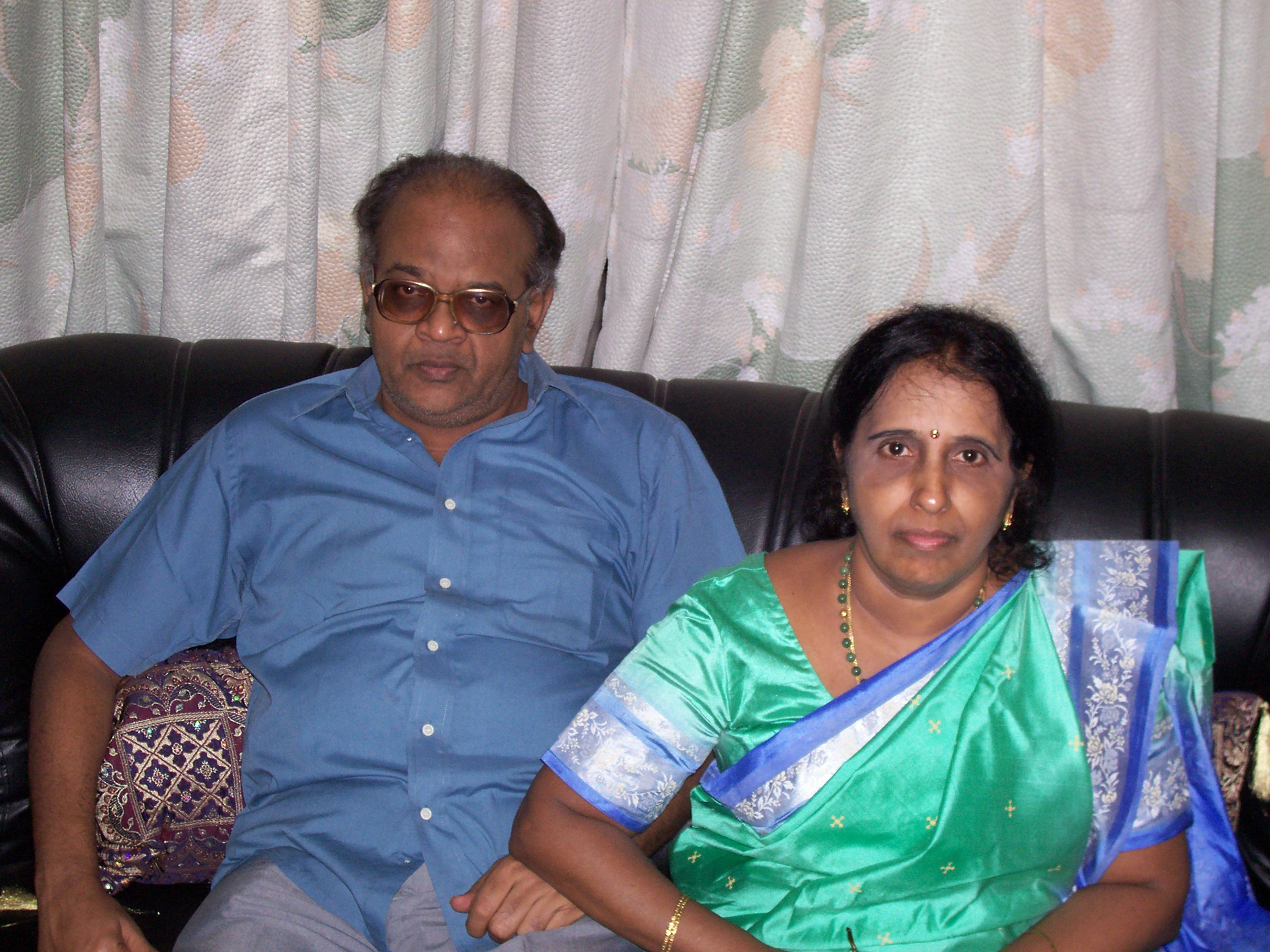
Dr. Vijaygopal Krishnamurthy grew up in Chennai and completed his entire schooling in the city. His childhood unfolded during the 1980s and 1990s – a period in which he witnessed many changes taking place across India. When he looks back on those years, he remembers details that belonged naturally to that time, including audio tapes and rotary dial phones. His memories are not shaped by claims of an unusual upbringing. He describes himself simply as a child of those decades, growing up in a familiar South Indian environment while gradually discovering the interests and qualities that would later accompany him into professional life.
Home provided the first structure around that growth. His father, G. Krishnamurthy, managed a family business established by Dr. Vijaygopal’s grandfather. The business supplied scientific instruments and laboratory equipment to universities and colleges throughout India. Microscopes and the equipment commonly found in physics and chemistry laboratories formed part of its work. Through this enterprise, his father served educational institutions while carrying forward a business created by the preceding generation.
There was a natural expectation that the younger member of the family might one day enter the same business. That possibility remained present as Dr. Vijaygopal approached university. His interests, however, were beginning to take him in another direction. He did not feel drawn towards joining the family enterprise and eventually chose to establish an independent professional identity.
His mother, Saradha Krishnamurthy, brought a different kind of energy to the household. Primarily a homemaker, she was also an all-rounder who explored opportunities beyond domestic responsibilities. During the period when Doordarshan’s dominance was declining and new television channels were beginning to appear, she established a small production house that created game shows and other programmes for local television channels.
Her experience in television had begun even earlier. She worked as an outside production manager for Doordarshan and contributed to programmes during that period. The production work was not a full time occupation, but she continued whenever time and opportunity permitted. She also remained involved in community service through the Inner Wheel Club, the women’s organisation associated with Rotary. Together, his parents represented two different expressions of responsibility. His father sustained a business rooted in the family’s earlier generation, while his mother balanced the home with creative work and service. Their lives surrounded their son with a practical understanding that commitment could take many forms.
"A plan can fail without making the future a failure. Sometimes the road that closes is the one that teaches a person to prepare for a wider journey."
Phase 2 : Engineering Ambition and a Life-Changing Rejection
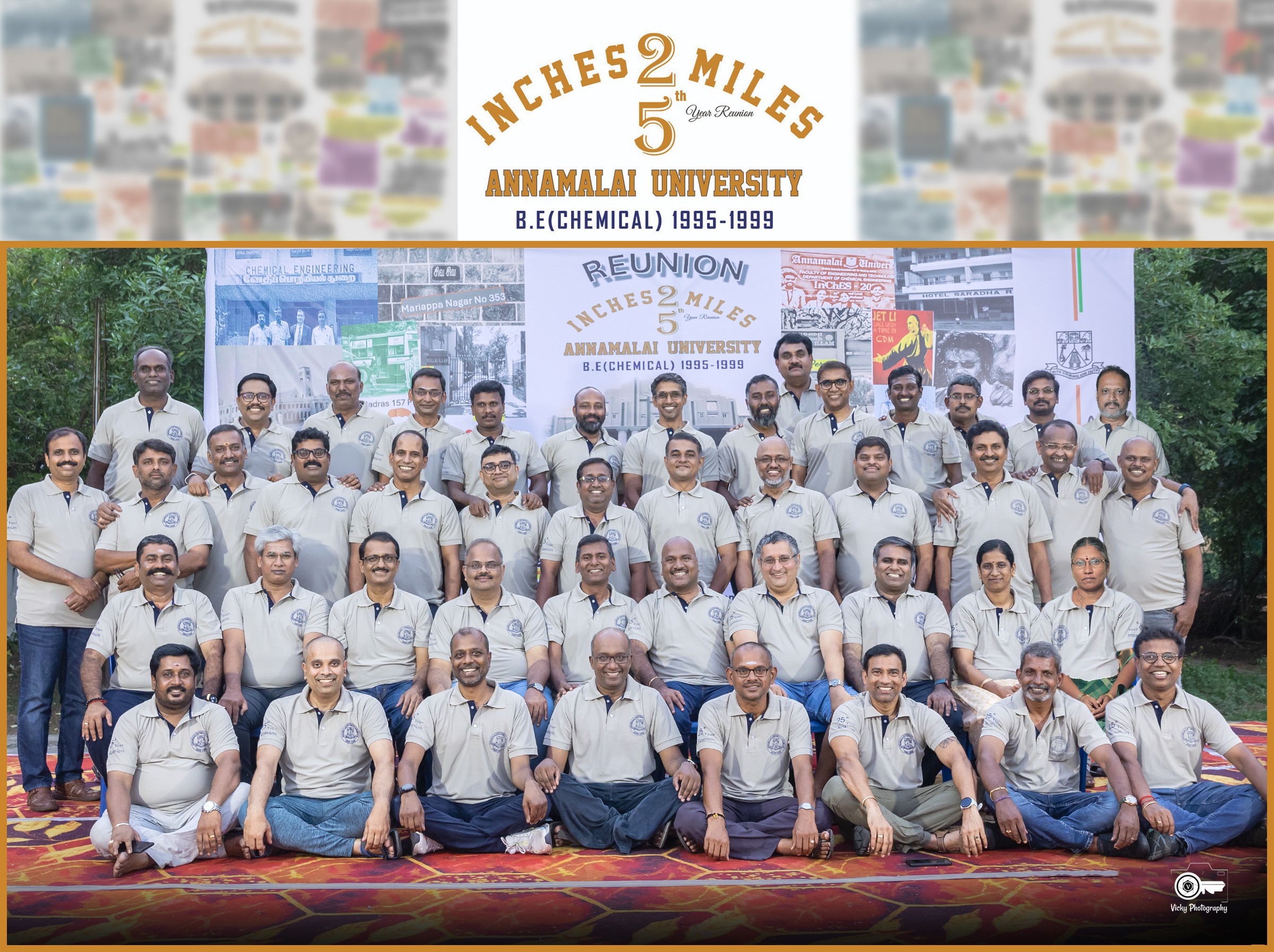
When Dr. Vijaygopal completed his schooling in 1995, the next stage of his life required him to leave the familiarity of Chennai. He enrolled at Annamalai University, situated in a university town approximately 250 kilometres from the city where he had grown up. The move introduced him to hostel life and to a setting in which academic responsibility had to be managed with greater independence.
He chose to study Chemical Engineering, entering a discipline that demanded close attention to scientific and technical principles. For four years, the university town became the centre of his daily life. The distance from Chennai was not international or immense, yet it marked an important personal transition. He was no longer moving between the family home, school, books, and the cricket field. He was living within a university environment, organising his own routine and preparing for a professional future.
His undergraduate years did not become limited to lectures and examinations. Just as he had participated actively in school, he continued to engage with activities beyond the classroom.
The university had a Rotaract Club, and he became part of it. Having already experienced the service-oriented environment of the Interact Club during school, he entered another platform connected with the larger Rotary movement.
He also participated in the National Service Scheme. The combination of engineering education, Rotaract involvement, and national service reflected the breadth of his university experience. Technical study 9 occupied the centre of his academic life, but he continued to make room for organised participation and service.
This continuity mattered because university did not require him to abandon the personality that had shaped his school years. He remained interested in people and activities while working towards a demanding qualification. His experience at Annamalai University allowed academic effort and wider participation to exist together rather than compete for his identity. His professors here were more of life mentors rather than just chemical engineering teachers and they shaped him to form a world view, which reinforced his personality.
In May 1999, Dr. Vijaygopal completed his Bachelor of Engineering in Chemical Engineering. He graduated with First Class with Distinction, a result that confirmed the seriousness with which he had approached his studies. The degree certificate was formally issued by Annamalai University in January 2000, but by then his attention had already moved towards the next academic possibility.
"A person may enter a profession by circumstance, but it is curiosity, effort, and the courage to learn that turn an unexpected role into a meaningful career."
Phase 3 : From Technical Expectations to a Talent for Sales
In 1999, Dr. Vijaygopal entered professional life with a degree in Chemical Engineering and an expectation shaped naturally by his academic training. His plan to continue studying in the United States had not materialised, but a campus opportunity offered him an alternative beginning. He joined Castrol India Limited, a lubricants company whose industry appeared closely connected to his technical background.
The selection process had been highly competitive. More than 400 candidates took the written examination, which was followed by a campus interview centred on technical and engineering-related subjects. From South India, only two candidates were ultimately selected for the position of Graduate Engineer Trainee. Dr. Vijaygopal was one of them.
The nature of the recruitment process strengthened his belief that he would be given a technical responsibility. As a chemical engineer entering a lubricants company through its Graduate Engineer Trainee Programme, he expected to work in a factory or blending plant. He imagined that his responsibilities might involve the manufacturing of lubricants, allowing him to apply the engineering knowledge he had acquired at university.
That assumption accompanied him into the organisation. Although the opportunity had become his alternative after the rejection of his student visa, he believed it would still preserve a direct connection with engineering. The company, however, had recognised a different potential in him. After an induction programme lasting approximately 15 days, he was assigned to sales.
The decision surprised him. His education had prepared him to understand chemical processes, while the recruitment stages had tested his technical knowledge. Nothing in his original expectations had placed him in a frontline commercial role. He had joined as a graduate engineer trainee without fully knowing what the company intended him to do, yet he had not imagined that his work would begin in the market rather than the plant.
Management apparently believed that his personality was better suited to sales and marketing. The qualities that had been visible during his school and university years, including his extroverted nature and ease in participating with others, now became relevant in an entirely different setting. Instead of spending his days around production systems, he would work directly with distributors, retailers, dealers, and customers.
Note of Thanks
Dr. Vijaygopal offers his heartfelt gratitude to everyone whose presence has contributed to his personal and professional journey. Each stage of his life was strengthened by people who shared their knowledge, placed confidence in his abilities, and stood beside him when responsibilities carried him into unfamiliar roles and distant geographies.
He expresses profound appreciation to his parents, G. Krishnamurthy and Saradha Krishnamurthy, for the values of discipline, education, perseverance, and sincere effort that shaped his outlook from an early age. Their guidance gave him a foundation that remained steady through every change of direction.
His deepest thanks are extended to his wife, Anusha Vaidyanathan, whose constancy made demanding professional choices easier to carry. He is equally grateful to their daughter, Akshaya, whose outlook continues to remind him that learning can come from every generation. He also acknowledges his mother-in-law and extended family for the practical care and encouragement that helped sustain the household through periods of travel, separation, and shared professional responsibility.
His thoughts of gratitude in his extended family are also to Raj Nagarajan who was a career mentor in his early years and especially without whose support, Dr Vijaygopal’s management education would not have been possible Dr Vijaygopal expresses his gratitude to all the teachers at Vidya Mandir school in Mylapore Chennai. They shaped his early education and personality.
Dr Vijaygopal has great respect and regards for all his teachers at the Department of Technology at Annamalai University and he would particularly recall the personal mentorship provided to him by the (Late) Associate Professor K Vaithiyanathan. He also recognizes with gratitude (Late) Padmashree Dr Bala Balachandran and Prof Seenu Srinivasan – Professors who taught him at the Indian School of Business in Hyderabad
Dr. Vijaygopal records his lasting appreciation for K. R. Shankar, whose guidance encouraged him to pursue management education and remained available throughout later stages of his career. He also thanks Vikas Gupta for strengthening his analytical and forward-looking approach to challenges.
His gratitude extends to the colleagues, customers, suppliers, competitors, local teams, and expatriate teams from whom he learned across India, Southeast Asia, and West Africa. Their perspectives enriched his understanding of people, markets, cultures, and leadership.
Last but by no means the least, his partner stakeholders at Shree Agro Pte Ltd who have been with him before and throughout his entrepreneurial journey deserve a big voice of gratitude This biography carries his sincere thanks to everyone who contributed advice, trust, cooperation, and companionship along the way. Their influence lives not only in the milestones recorded here, but also in the principles with which he continues to move forward.
thanks,
– Dr. (H.C.) Vijaygopal Krishnamurthy

AIMLAY is a leading global education platform empowering ACADEMIC and EXPERIENTIAL learners, uniquely focused on recognizing knowledge gained through experience and building a diversified community of doctorates and aspiring researchers.