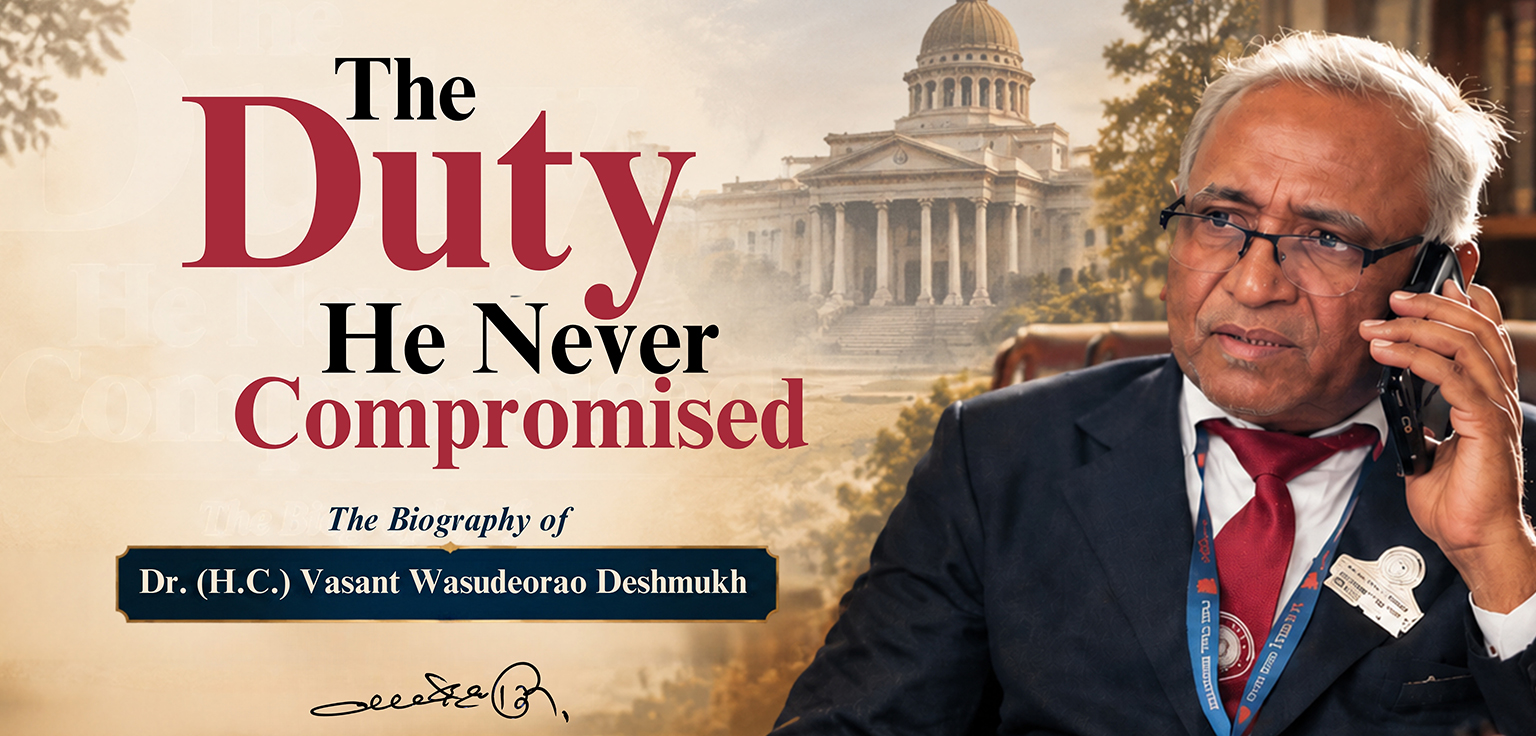
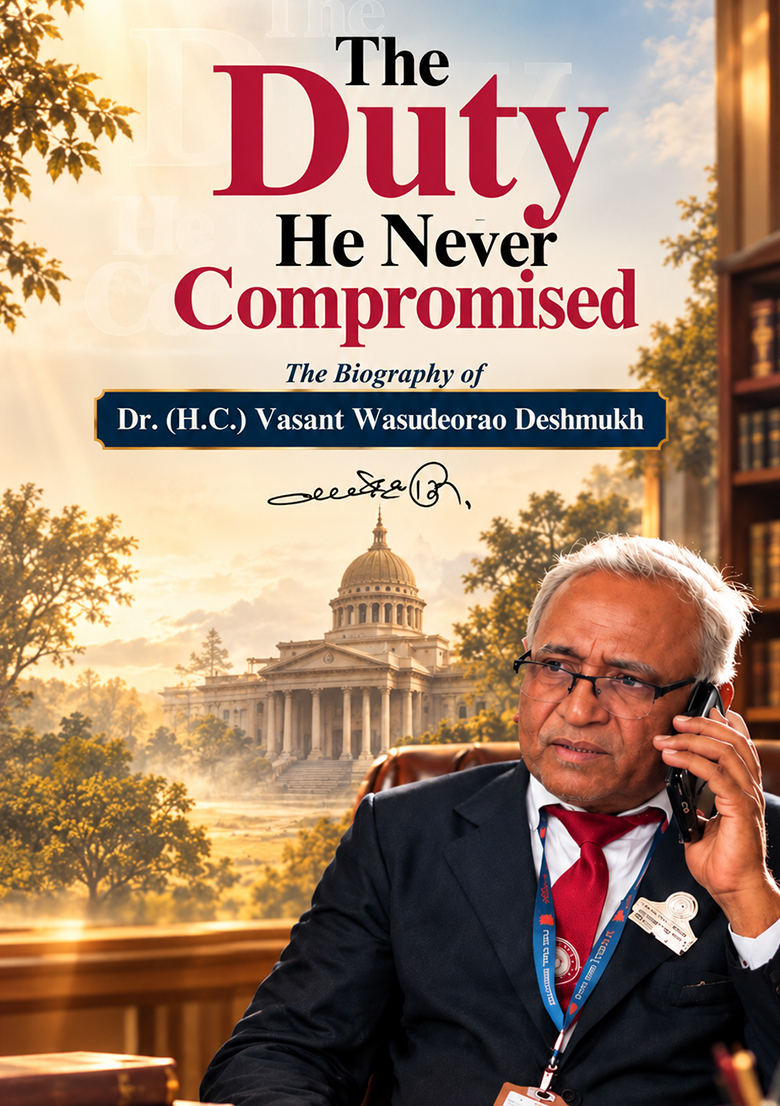
"From a classroom of curious students to the rushing corridors of the railway, I walked one path: honesty first, duty always, and gratitude for everything life placed before me."
Introduction
There is something revealing in this simple thought. It speaks of a childhood where responsibility was never treated as an abstract idea, but as something understood through the texture of everyday life. For Dr. Vasant Wasudeorao Deshmukh, being the eldest among three children carried its own quiet weight. He grew up with his younger brother and sister beside him, while his parents provided the foundation of the home. His father worked in the Agriculture Department, while his mother was a homemaker. Within that setting, discipline and responsibility became familiar values rather than lessons that needed to be formally explained.
His early years gave him a grounding in discipline, responsibility, and learning. These qualities developed quietly, through family life and education, before finding expression in the choices he made as a young man.
Education gradually became more than a personal pursuit. It gave him the confidence to engage with others, explain what he understood, and recognise the value of making knowledge useful.
That understanding would soon be tested in a setting where knowledge had to be communicated rather than simply acquired. The classroom would give him his first direct experience of guiding others and responding to the needs of people who looked to him for an explanation.
The classroom also demanded confidence. Questions could arrive without warning. A student might ask something that required the teacher to pause, think, and find a clear explanation. Those moments taught him that teaching was as much about understanding the learner as it was about knowing the lesson.
There was a directness in his manner even then. He preferred to explain things plainly and move forward rather than hide behind complicated language. The experience gave him an early understanding of people, communication, and responsibility, while his Own education continued to shape the way he thought.
His story therefore begins in a modest setting, with family, study, ambition, and the gradual assumption of responsibility. Nothing about those beginnings needed to appear extraordinary. The significance lay in the values being formed quietly: discipline, curiosity, responsibility, and the willingness to work with what life placed before him.
Those qualities belonged to the person before they belonged to any profession. They were present in the eldest son, in the student, and in the young teacher standing before a classroom. At that stage, the future was still open. What mattered was the character being built within it.
"Being the eldest was never a title I asked for. It was a quiet understanding that arrived on its own and shaped everything that followed."
Phase 1: The Eldest Son Who Learned Before He Was Taught
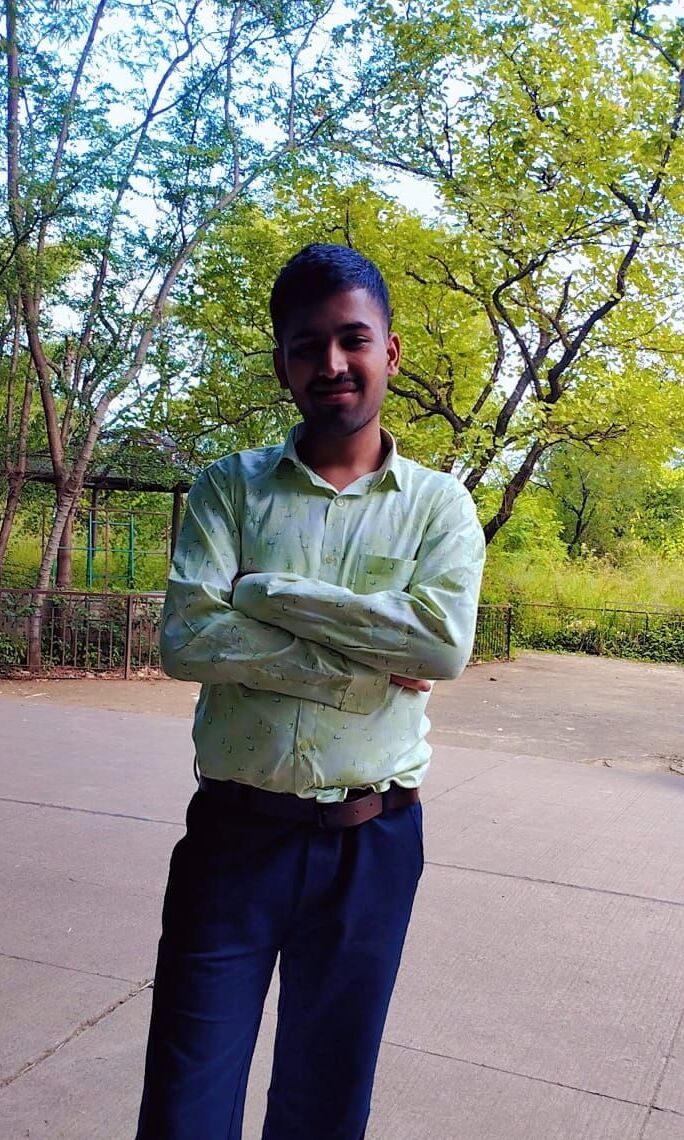
For Dr. Vasant Wasudeorao Deshmukh, being the eldest child was never simply a position within the family. It carried an awareness of responsibility that seemed to arrive naturally, without anyone needing to explain what it meant. He grew up with a younger brother and a younger sister, and as the firstborn, he understood that certain expectations would rest on his shoulders. There was no ceremony around it. It was simply part of growing up.
His childhood began in Akola, within a family shaped by work, simplicity, and clear responsibilities. His parents’ roles gave the household its own rhythm. His father represented a life connected to regular work and duty. His mother held the home together. For the young boy growing up between them, these surroundings became the first place where ideas such as discipline and responsibility took form.
Being the eldest also changed the way he understood his place among his siblings. He did not describe responsibility as something imposed upon him. He spoke of it as something that came naturally with being older. That distinction matters. It suggests a child learning to recognise what was expected of him before he had the language to describe it fully.
There was discipline in the way he was raised, and it stayed with him. He has spoken about the importance of following a straight path, much like a horse running along a single line. The comparison is simple, but it reveals something about the way he understood conduct. There was value in staying in knowing one’s direction, and in not allowing unnecessary distractions to take control.
His childhood, however, not defined entirely by responsibility. There were friendships, companionship, and the ordinary happiness of growing up among people of his own age. He remembers having a good group of childhood friends, a circle that remained meaningful in his recollections even though many individual memories from those years have faded with time. What remains is the feeling of having belonged to a group and having enjoyed those early years.
There was also an imagination about what life might become. As a young person, he had an interest in engineering. At that stage, the possibilities seemed open, and he even began an engineering-related course. It did not reach completion. Circumstances eventually led his life in another direction, leaving that particular ambition unfinished.
"Standing before a classroom taught me that knowing an answer means nothing until you can make another person truly understand it."
Phase 2 : The Teacher Who Learned From His Students
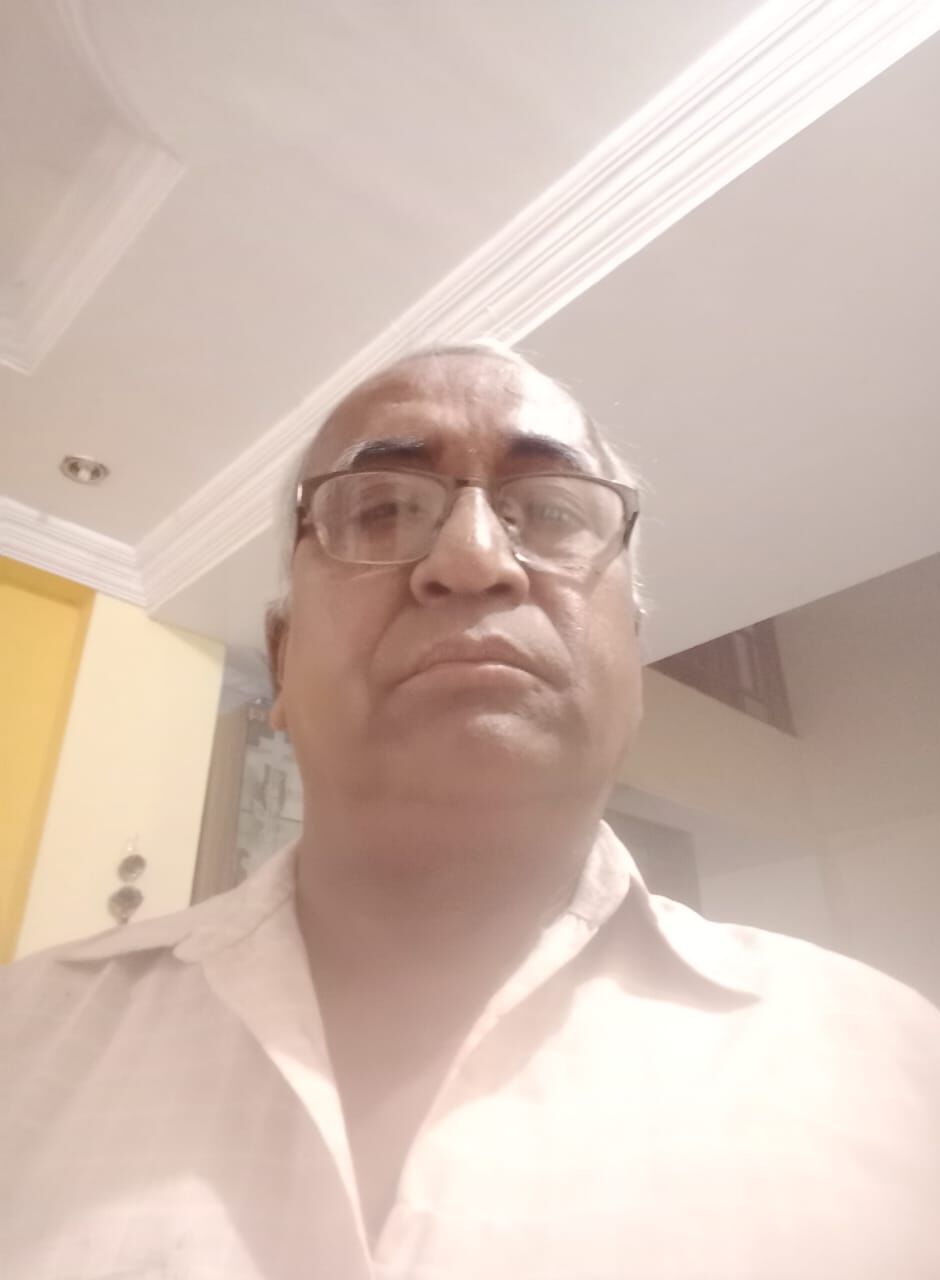
For Dr. Vasant Wasudeorao Deshmukh, education was never confined to marks, examinations, or the completion of a degree. Even during his student years, learning carried a more practical meaning. He was drawn toward subjects that demanded thought and understanding, particularly Physics and Chemistry. Mathematics also became an important part of his academic life, eventually giving him the opportunity to stand on the other side of the classroom and experience learning from the perspective of a teacher.
His academic years were not entirely effortless. The examination schedule could be demanding, and he remembers having to work through several examinations within relatively short intervals. Yet he continued with his studies. There was a certain persistence in that approach. He did not describe education as something that always came easily. It required showing up, preparing, attempting the examination, and moving forward.
In 1985, he completed his B.Sc. The qualification represented years of study, but it also marked a point at which knowledge began to take on a different meaning. Until then, he had primarily been the person receiving instruction. Soon, he would be expected to explain what he knew to others.
That change came quickly. After completing his graduation, he entered teaching and spent approximately two years in the classroom between 1985 and 1987. He taught Mathematics, including students at the 10th- standard level. For a young teacher, standing before a classroom could naturally bring some nervousness. He experienced that feeling too. But he did not allow it to become a barrier.
His approach to teaching was strikingly direct. He recalls teaching without constantly referring to a textbook, relying instead on his understanding of the subject and his ability to explain it. The classroom demanded more than memory. Students asked questions, sometimes unexpectedly, and those questions could force him to stop and think before responding.
One such experience stayed with him. A student asked a question that initially left him searching for the right explanation. Rather than dismissing it, he worked through the concept and found a simpler way to make it understandable. That experience reinforced something he came to value deeply: a teacher cannot simply know the subject. The teacher must know how to explain it to the person sitting in front of him.
This became central to his understanding of good teaching. He believed that the teacher had to come down to the student’s level, understand where the student was struggling, and then build the explanation from there. Knowledge could be deep, but if it could not be communicated, it had limited use inside a classroom.
There was another lesson hidden within those interactions. Teaching required patience. A student did not always understand something on the first explanation. Repeating an answer was not necessarily enough either. The explanation itself might need to change. That required attention to the learner rather than simply completing the lesson.
"Leaving the classroom for the railway felt like stepping into another world. The work changed, but the duty remained exactly the same."
Phase 3 : From Blackboard to Railway Platform
Leaving the classroom behind meant stepping into a very different kind of working life. After two years of teaching, Dr. Vasant Wasudeorao Deshmukh was ready to take up a new responsibility. In 1988, he entered Central Railway, beginning a professional chapter that would place him in direct contact with the public and introduce him to a working environment very different from the one he had known as a teacher.
The change was substantial. Teaching had placed him before students, where the task was to explain, answer questions, and make knowledge understandable. Railway service demanded something else. His work began with ticketing, bringing him into the practical world of passenger movement, travel rules, and responsibilities that had to be handled while trains were in motion. There was little room for detachment. Each interaction required attention.
The early period was also a time of adjustment. He had to understand the procedures of the new role and learn how to deal with people whose circumstances could change from One journey to the next. Training provided the foundation, but experience came from the work itself. A rule could be understood in theory. Handling an actual passenger required judgement.
What distinguished his approach was the seriousness with which he treated the responsibility. He did not see the work merely as a routine assignment. His own recollection is clear: he wanted to perform his duty honestly Money, in his view, was never a reason to compromise that principle. He believed that a person should work sincerely and allow the results to follow, rather than make financial gain the centre of every decision.
The railway environment also demanded confidence. Passengers could question decisions, disagree with charges, Or react strongly when faced with rules they did not want to follow. For someone working directly with the public, remaining composed mattered. His manner was straightforward. He preferred clear words and direct communication rather than unnecessary argument.
There were practical details to master as well. Ticket checking was not simply a matter Of looking at a ticket and moving on. Irregular travel had to be identified, applicable charges had to be handled, and passengers had to be dealt with appropriately. He learned to pay attention to what was happening around him and to approach each situation with care.
In 1992, another change came when he joined the ticket-checking squad. The move gave him a wider working environment and placed him among colleagues performing similar responsibilities. It also demanded a stronger sense of coordination and accountability. The work was becoming less about handling individual situations and more about understanding how a group could function effectively.
Note of Thanks
Dr. Vasant Wasudeorao Deshmukh extends his sincere gratitude to the people whose presence, guidance, and support have contributed to the life he has built. Every professional chapter carries the influence Of Others, whether through direct guidance, a timely word of encouragement, or simple consideration shown at an important moment.
He remembers with particular appreciation Ms. Kalara, who was his in-charge during his early period in railway service. Her role in helping him receive a posting closer to his village holds a special place in his memories. Such support may appear simple when viewed from a distance, but at the time, it made a meaningful difference to his circumstances. He remains grateful for that consideration.
His thanks also extend to the colleagues and people he worked alongside during his years in railway service. Working in a demanding public-facing environment required cooperation, understanding, and the ability to work together through everyday challenges. The experiences shared with others became part of the professional life he remembers today.
He is equally thankful to the students he taught during his years in teaching. classroom gave him opportunities to explain, listen, think, and understand how differently people learn. Ihe questions asked by students Often made him 100k at familiar subjects from another perspective, making those years meaningful in their own right.
Above all, he holds gratitude for his family, whose presence remained important throughout his life. He is especially grateful for the support and companionship that helped him through the different responsibilities of his life. He also gives thanks to his children and loved Ones, whose lives continue to give him reasons to remain involved, hopeful, and purposeful.
Finally, he expresses gratitude to God for the strength, opportunities, and circumstances that have shaped his life. His belief remains simple: do one’s work honestly, remain disciplined, and be grateful for whatever comes along the way.
thanks,
– Dr. Vasant Wasudeorao Deshmukh

AIMLAY is a leading global education platform empowering ACADEMIC and EXPERIENTIAL learners, uniquely focused on recognizing knowledge gained through experience and building a diversified community of doctorates and aspiring researchers.