Dedication
Dedicated to
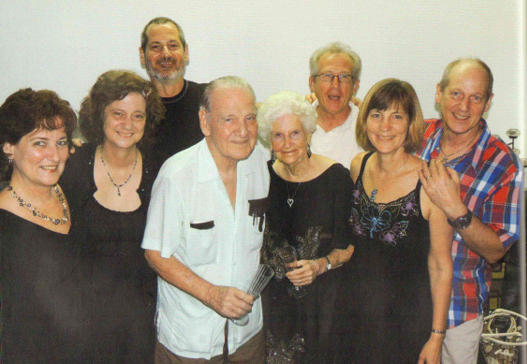
Theodore (“Teckie”) Tempro (1925–2020),
Christina Eleonora (“Nora”) Tempro (née Spiers) (1922–2018); and
Donna Anne Tempro (née Lousaing)
To his father, whose strength, example, and resourcefulness shaped his own and who taught him how to think, to question, and to solve problems.
To his mother, for her guidance, love, and compassion, through which he learned kindness, respect, and care for all living things.
And to his beloved wife, whose unwavering love and support have sustained him throughout more than five decades and without whom much of this journey would not have been possible.
Phase 1: Foundations
The life of Dr. Stanley Tempro is not defined solely by the positions he held or the industries in which he worked but by the values and habits formed early values that would quietly underpin every achievement that followed.
He was raised in a household where resources were limited, but ingenuity was abundant. As one of several children, he grew up in an environment where making do was not simply a necessity; it was a way of life. There were no excesses, but there was stability, discipline, and, most importantly, an example.
His father, Theodore Tempro, known to many as “Teckie,” was a respected amateur radio operator. In a time when acquiring new equipment was often beyond reach, he relied on skill rather than means. Damaged or discarded components would find their way into his hands, and through patience and technical understanding, he would restore them to working condition.
From around the age of ten, Dr. Stanley was drawn into this world. What began as simple observation quickly evolved into participation. Under his father’s guidance, he learned how to dismantle equipment, identify faults, and reassemble systems with precision. These were not formal lessons but practical ones taught through doing, through repetition, and through expectation.
Just as influential was his mother, Christina Eleonora Tempro “Nora” whose impact was less mechanical but no less profound. She instilled in him a sense of compassion, humility, and respect for others. Her guidance shaped how he interacted with people and the world around him.
One of her recurring admonitions, “don’t hurt dumb animals,” was simple, but it carried weight. It reflected a broader philosophy of care and responsibility that remained with him throughout his life.
Between these two influences, a balance was formed: from his father, the ability to solve problems; from his mother, the instinct to care how those solutions affect others.
Together, these influences formed more than character; they established patterns of thought and conduct that would surface repeatedly throughout his life in engineering, in leadership, in family life, and in service to others.
Phase 2 : Early Character and Independence
From a very young age, Dr. Stanley displayed a level of independence that his parents both encouraged and trusted. He moved freely within his neighbourhood, easily forming friendships and developing a natural confidence in engaging with others.
By the age of seven, he was permitted to travel considerable distances on his own to visit school friends, something that, even at the time, reflected a significant degree of parental trust. It was not recklessness, but a recognition of responsibility.
At ten, his family relocated to a new city following his change in employment. For many children, such a transition would have been unsettling. For Dr. Stanley, it was simply another adjustment he had to make. He adapted quickly, forming new friendships and integrating into a new school environment with little difficulty.
However, at age twelve, a defining moment occurred that foreshadowed much Of what was to come.
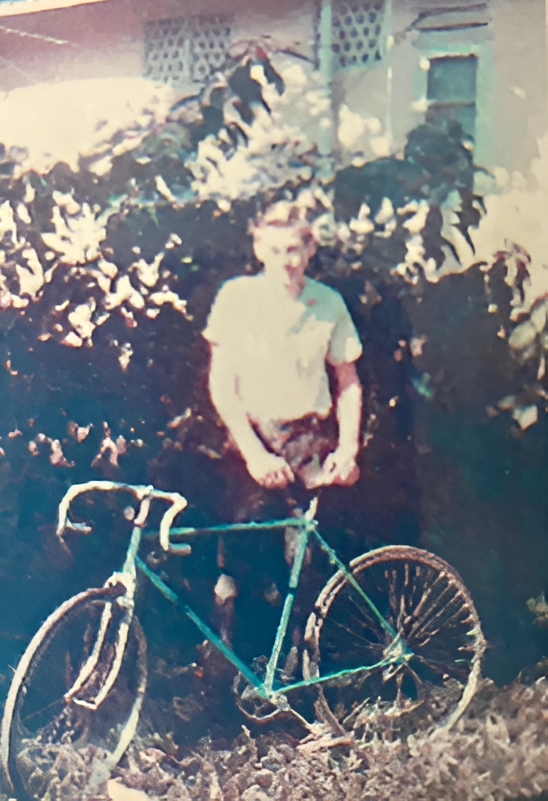
With the permission of his parents, he used funds from a school book grant to purchase a damaged second-hand racing bicycle. TO most, it would have appeared to be little more than scrap. TO Dr. Stanley, it was an opportunity.
He dismantled the bicycle completely, reducing it to its individual components. The frame was stripped of paint, treated with a rust-prevention primer, and repainted. Each part was inspected, repaired, or replaced as necessary. What emerged was not merely a usable bicycle but a reflection of a process of patience, method, and attention to detail.
More importantly, it was an early demonstration of how he approached challenges: not by avoiding them, but by breaking them down and working through them systematically.
That same bicycle would later carry him six miles each way to and from secondary school further reinforcing both independence and discipline.
That early love of cycling never left him. To this day, Dr. Stanley still enjoys not only the simple pleasure and fitness of being out on the road but also the companionship that comes from riding with friends in the cycling club he founded, aptly named “Old Spokes,” a playful nod to the fact that the group consists of folks older than 60.
Phase 3 : Discipline, Curiosity, and Transformation
The independence developed in childhood soon began to express itself not merely in practical initiative but in intellectual discipline, a quality that would deepen in unexpected ways.
During his early secondary school years, Dr. Stanley was not particularly inclined toward reading. Academic ability was present, but engagement varied depending on the subject.
Recognizing these tendencies, one of his English teachers took an indirect approach. Rather than single out any one student, the entire class was assigned a task over the Easter break: select a book from the school library, read it, and produce a written report.
Dr. Stanley chose a book on Ulysses, drawn by an interest in mythology. Only after returning home did he realize that the book was written in Latin, a subject he neither particularly enjoyed nor excelled at.
Faced with this unexpected obstacle, he had a choice: abandon the task or work through it.
He chose the latter.
Drawing on his limited understanding of Latin and referring frequently to his textbooks, he worked through the text page by page. Progress was slow at first, and often frustrating. But as the narrative began to unfold, something shifted. The story drew him in, and the effort became less about obligation and more about understanding.
By the time he completed the book, he had not only fulfilled the assignment but had also done so with depth of comprehension. He received full marks for his report.
The impact extended beyond that single exercise. His confidence in handling Latin improved significantly, culminating in a perfect score in his subsequent examination, much to the satisfaction of his teacher.
More importantly, the experience transformed his relationship with reading.
What had begun as a reluctant task evolved into genuine interest. He began exploring a wide range of literature, particularly novels. The works of Edgar Rice Burroughs, including the Tarzan series and John Carter of Mars, captured his imagination. Western novels followed, and later, more philosophical writings such as those by T. Lobsang Rampa.
This developing habit broadened his thinking, strengthened his ability to absorb information, and reinforced a pattern that would repeat throughout his life:
When he applied himself even in unfamiliar territory, he made progress.

AIMLAY is a leading global education platform empowering ACADEMIC and EXPERIENTIAL learners, uniquely focused on recognizing knowledge gained through experience and building a diversified community of doctorates and aspiring researchers.