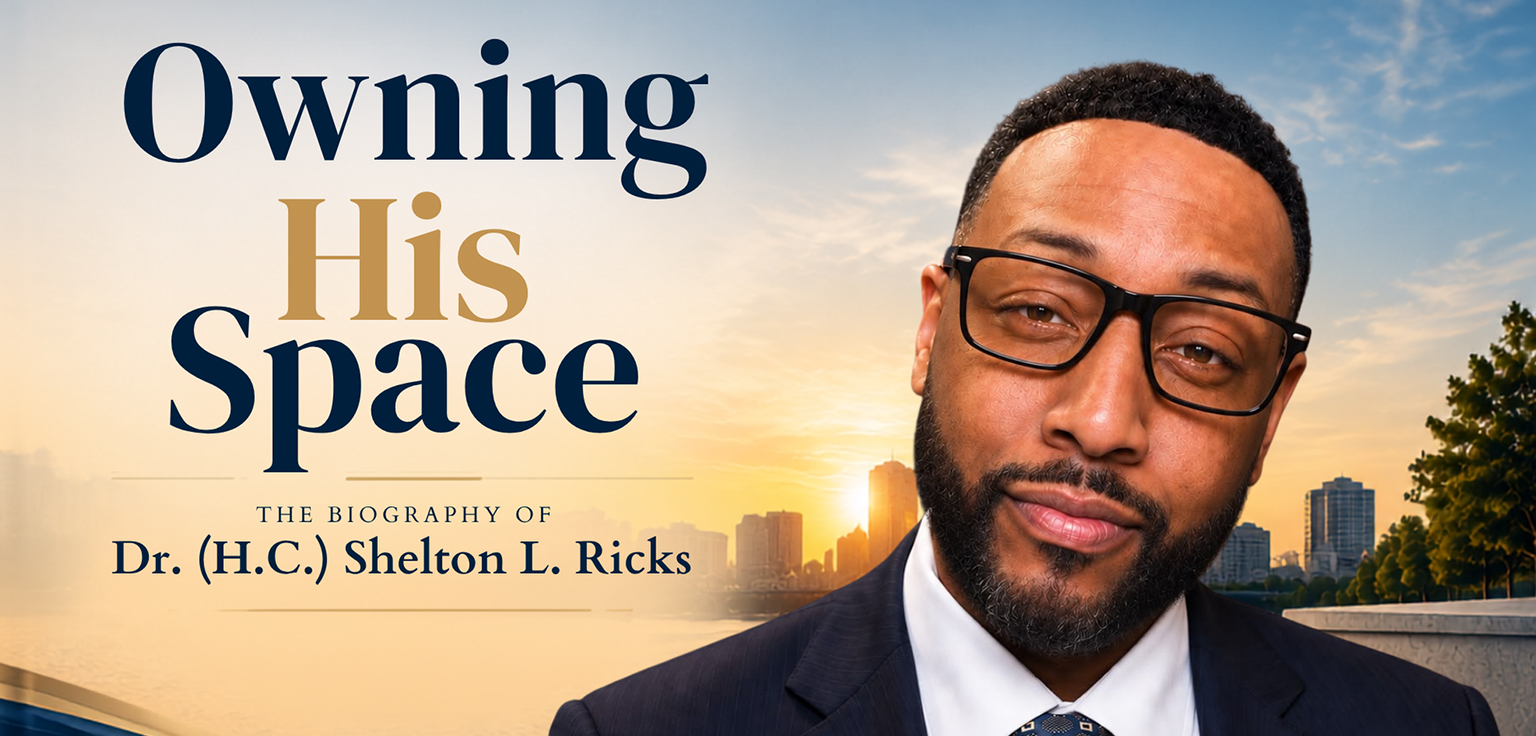
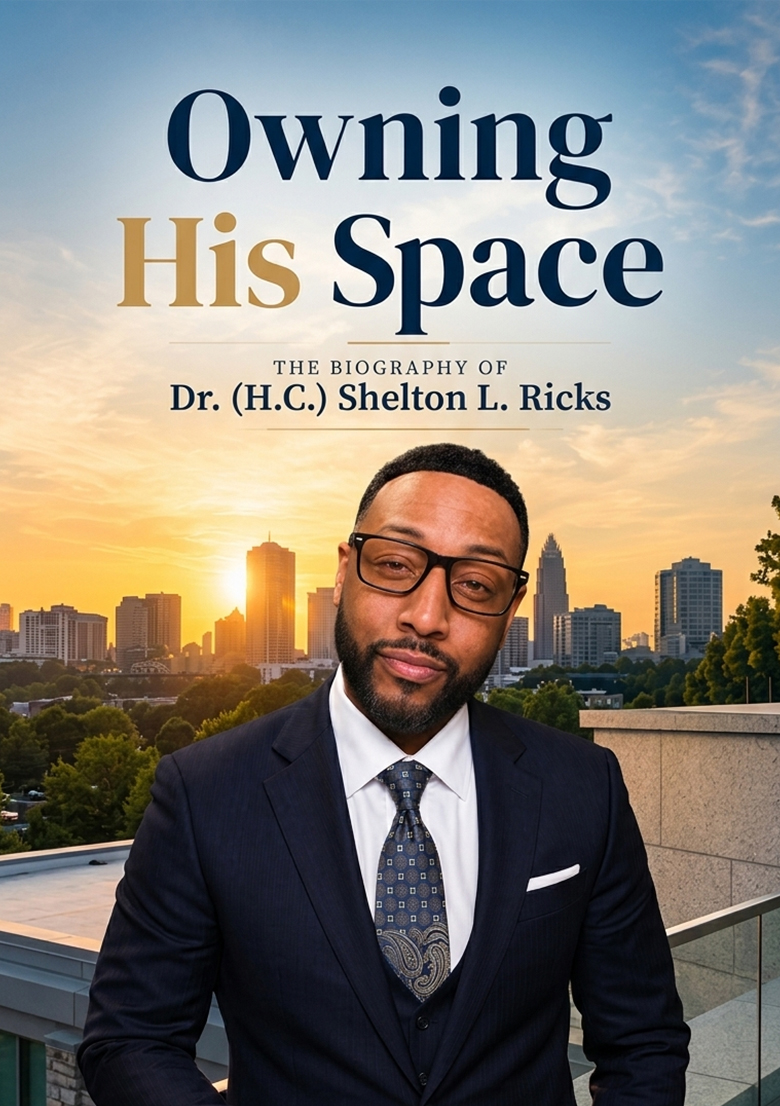
"If you do not make a decision, life will make one for you. Build the confidence to step forward, prepare yourself well, and take an active part in shaping the outcome."
Introduction
The life of Dr. Shelton L. Ricks has never followed a single professional lane. It has grown through responsibility, curiosity, and an unusual ability to recognize meaning in experiences that others might dismiss as routine. Long before he held senior leadership responsibilities, taught graduate students, guided organizational strategy, or worked with complex workforce data, he was learning how people move through systems, how trust is earned, and how preparation changes outcomes.
At nineteen, he was trusted to oversee the night operations of a 250-room hotel. The role required calm judgement, attentiveness, and the willingness to accept responsibility while most of the city slept. In other assignments at Hilton Hotels, he worked in room service and banquet operations, where he began noticing the flow behind an event. The placement of a table, the sequence of service, the movement of guests, and the timing of each task became early lessons in organization. What appeared to be hospitality work was also training in process, coordination, and human behavior.
Those lessons continued in different settings. At Bank of America, his work with customers facing serious financial difficulty taught him to approach people with empathy rather than assumption. He saw how quickly circumstances could change and how dignity mattered even during difficult conversations. Other early roles in auditing, quality assurance, risk, and business analysis expanded his understanding of accountability. Each position gave him another way to study how decisions affect individuals, teams, and institutions.
His education developed alongside this practical learning. Through Norfolk State University, he completed a Bachelor of Science in Interdisciplinary Studies, with a concentration in Critical Thinking and Assessment. He later earned a Master of Business Administration from Averett University and a Doctor of Management in Organizational Leadership from the University of Phoenix. These achievements did not separate him from the world of work. They helped him examine it more closely. Academic study gave language and structure to ideas he had already encountered through leadership, employment, family responsibility, and public service.
A defining chapter began at Verizon Communications, where he advanced through progressive leadership roles in human resources and operations. He managed major budgets, supported work across numerous states, led organizational transformation, handled employee relations, and developed performance tools intended to improve fairness and trust. The scale of those responsibilities sharpened his ability to connect strategy with daily working realities. Yet the end of that period also brought a lesson that remained with him. No position, however established, could replace the need to remain capable, adaptable, and prepared for change.
That understanding encouraged him to build beyond the boundaries of one employer. Through Shelton LR and Associates, he worked in business strategy, economics, workforce planning, research, financial management, and organizational development. He later contributed to technical and financial planning within Northrop Grumman Huntington Ingalls and led evaluation, monitoring, planning, auditing, training, and business analytics functions for the City of Newport News Department of Human Services. Across these settings, he became increasingly skilled at entering complicated environments, identifying what was not working, and creating structures that could support clearer decisions.
Teaching eventually became one of the most natural extensions of his experience. At DeVry University, the Keller Graduate School of Management, and Centura College, he taught subjects ranging from economics and marketing to databases, analytics, management, and organizational leadership. The classroom allowed him to bring together theory, professional practice, and personal observation. He was not interested only in whether students completed assignments. He paid attention to whether they understood the material, whether the learning felt relevant, and whether they left more confident in their ability to apply it.
"Mine was a single-mother household in the inner city, but it was full of love. My mother did an amazing job, and the people around us were monumental in shaping who I became."
Phase 1: It Was Full of Love
The earliest world known to Dr. Shelton L. Ricks was not shaped by ease or by the appearance of a perfect household. His parents separated when he was extremely young, and he grew up in an inner city home with his mother and older brother, Aubrey. His father lived within the same general area, and he saw him, although not as often as he might have wished. The daily responsibility of raising the two boys rested largely with their mother. What she created around them was not a life without difficulty, but a home filled with love.
That distinction became important. Limited income did not prevent her from being present, attentive, and deeply involved in the lives of her sons. She supported Dr. Shelton through the many activities that kept him active during childhood, including football, basketball, and baseball. Her role extended beyond watching from the sidelines. She became the caring mother who made sure children had snacks before and after games, quietly turning each sporting occasion into another opportunity to look after others. Her generosity was not measured by what she possessed. It appeared in what she was willing to give.
The bond between mother and son grew through both affection and shared realities. She experienced serious struggles with her mental health, yet those challenges did not reduce her commitment to her family or silence her concern for people facing similar circumstances. She became a public speaker and advocate for individuals who were struggling to secure proper treatment, medication, access, and equal rights. In South Hampton Roads, Virginia, she spoke on behalf of people whose mental incapacity had often caused society to overlook or dismiss them. She appeared before local and state authorities, helped lead marches, and told her story with such honesty that news organizations came to the family home to hear it.
For a young Dr. Shelton, this was an early lesson in the power of a voice used responsibly. He saw that personal struggle could become a source of public courage. He also saw that advocacy was not an abstract idea. It meant standing beside people who could not easily stand alone, speaking clearly when systems failed to listen, and preserving the dignity of those who had been treated as though their lives mattered less. His mother’s example gave him an understanding of strength that was rooted not in hardness, but in compassion.
Her parents added another circle of stability. His maternal grandparents were central to his upbringing and early development. He shared a close relationship with both of them, and their presence helped give structure to a childhood already carrying the complexities of divorce and limited resources. His grandmother, a retired nurse, remained especially close. She spent time at his elementary school working as the lunch lady, placing a familiar and caring face within the environment where he was beginning to discover the wider world.
Her presence at school carried a quiet reassurance. She was not distant from the ordinary details of his childhood. She was there in the rhythm of the day, in a place where meals were served, children gathered, and small moments of comfort often mattered more than adults realised. His grandfather was equally meaningful to him. Together, his grandparents offered guidance, consistency, and a relationship that remained deeply connected to his sense of family.
"Once you gain confidence in yourself and with people, you can influence the outcome."
Phase 2 : From a Shy Guy to a Social Butterfly
In his early school years, Dr. Shelton L. Ricks was a shy and observant child, cautious about his deportment. He obeyed the rules and rarely looked for trouble. His quietness, however, was sometimes mistaken for limited ability. Because he felt uncomfortable reading aloud, assumptions began to form around his academic progress. The difficulty was not that he could not read. Performing before a group made him withdraw.
That distinction was not immediately recognized. He was placed in a program called Spiral in elementary school, which provided him with a smaller classroom environment and more reading practice. He spent a couple of years there, although he believed his reluctance came from shyness rather than an inability to understand the material. The arrangement gave him more repetition, yet it also placed him inside a label that did not fully reflect who he was.
Eventually, it became clear that Dr. Shelton was not a slow reader. The conclusion corrected the misunderstanding, but the experience left him with an awareness that would remain useful throughout his life. People can be judged by what they are unable to show in a particular moment. A quiet child may know more than he can comfortably express. Long before he studied human behaviour in professional settings, he had experienced how easily someone could be misread when confidence and ability were treated as the same thing.
The move into junior high school opened a different side of him. He became more socially comfortable and gradually saw that he could hold his own as a student. The change was not sudden. Confidence grew through participation, observation, and repeated contact with people. Each interaction gave him another chance to speak, respond, and discover that his thoughts had value.
He became more of what he later described as a social butterfly. That growth did not erase his reflective nature. Instead, it gave him a way to bring that thoughtfulness into the world around him. He was learning how to be present without abandoning the careful attention that had always been part of him. The young person who once avoided reading aloud was beginning to understand that connection required a willingness to be seen and heard.
High school gave him several places to test that developing confidence. Academically, he described himself as a student whose grades generally fell between 2.5 and 2.9. He did not present those years as a story of perfect marks. What defined him more clearly was engagement. Athletics gave him movement and competition. The marching band required timing, discipline, and awareness of others.
His participation in several areas taught him an important lesson about the functioning of his own mind. Dr. Shelton hardly ever was content with one thing at a time. He got accustomed to juggling different responsibilities at the same time, shifting his focus without losing sight of the demands of each environment. That habit increased his ability to multitask, think critically and maintain social ties with people whose interests and personalities were different from his own.
"When anything is on the line, give me the ball. Win or lose, I am willing to take the shot, live with the result, and explain the decision."
Phase 3 : Learning to Take the Shot
Sport was never just recreation for Dr. Shelton L. Ricks. Growing up in the early 1980’s, athletics gave him an outlet for his energy and helped him stay focused in an environment where it took effort to stay out of trouble. Practices, games, coaches, and teammates filled his time with expectations that could not be met by talent alone. He had to show up ready, listen attentively, work diligently, and understand that his efforts impacted others beyond himself.
He was naturally gifted as an athlete, but ability was only the beginning. The teams on which he played experienced success, including championships and second place finishes. Winning became familiar, yet it did not become casual. He learned that a successful team is built through repeated work that often remains unseen by the crowd. Commitment had to continue before recognition appeared. Discipline had to survive frustration. Individuals had to sacrifice personal comfort for a shared result.
The men who coached, mentored, and sponsored him strengthened those lessons. They did more than give technical direction. He could see in their standards how a leader could ask for effort and at the same time build confidence in others. Their influence gave him an early understanding of tough love, the kind that expects more because it recognizes what a person may become. Within those circles, he learned to receive correction without treating it as rejection and to regard preparation as a form of respect for the team.
Leadership came to him early. On the teams where he played, Dr. Shelton was made captain or placed in a leading role. He did not enter those responsibilities with a formal theory of leadership. He learned while the game was moving, while emotions were high, and while people were looking for direction. He had to communicate clearly, motivate teammates, and help others regain focus when frustration threatened the larger goal. The experience taught him that leadership is tested most honestly when there is little time to prepare a speech and no opportunity to avoid the result.
Playing quarterback in football sharpened that awareness. He had to remain mentally present while pressure gathered around him. The role reinforced the importance of temperament and critical thought when events were unfolding quickly. A decision could not be postponed simply because the situation was uncomfortable. He began to understand that hesitation also carried consequences. On the field, as in life, refusing to choose did not stop an outcome from arriving.
Basketball gave that belief another language. Dr. Shelton recognized that he could not help a team win while sitting on the bench. Being selected required readiness. He had to make himself the player a coach trusted to place on the floor when the game mattered. That meant practicing before the opportunity, maintaining his ability, and demonstrating that he could contribute under pressure. The lesson was simple but lasting. A person cannot wait until responsibility arrives to begin preparing for it.
From that understanding came the mindset that would remain part of him. His confidence did not rest on the promise of success. It came from knowing that he was willing to live with the result and explain the choice he had made.
Note of Thanks
Dr. Shelton L. Ricks wants to give special thanks to his family for their patience and openness which has given him a chance to learn about people through real relationships. They have allowed him to use his increasing skills in informal ways to support and advise them over the years. He has found that in these everyday interactions care is not only expressed in words but is shown by being attentive, involved and ready to be there when someone is looking for direction.
He is especially thankful for the trust his family placed in him. They became the first people with whom he could practise listening carefully, recognising different perspectives, and finding ways to help without taking away another person’s dignity or independence. Their lives gave him opportunities to strengthen the human side of his work, not through distant observation, but through bonds shaped by affection, honesty, and responsibility.
His children hold a distinct place in this gratitude. They gave meaning to his growth and challenged him to think about the model that he was setting. They gave him the opportunity to be a father not in name but as a responsibility to care for, guide, and prepare a future generation. His hope for them has been simple, that they will go further than their parents and lead lives strengthened by confidence, preparation, and purpose.
Dr. Shelton also recognized the importance of the challenges that made him more determined. Not all influence came in the form of agreement or encouragement. Some experiences demanded he prove his resolve, strengthen his judgement and proceed when the easier response would have been to step back.
Central to his thankfulness is a family that gave him room to grow while giving him room to serve. Their love, trust and engagement helped shape the man, father, mentor, educator and leader he became.
thanks,
– Dr. (H.C.) Shelton L. Ricks

AIMLAY is a leading global education platform empowering ACADEMIC and EXPERIENTIAL learners, uniquely focused on recognizing knowledge gained through experience and building a diversified community of doctorates and aspiring researchers.