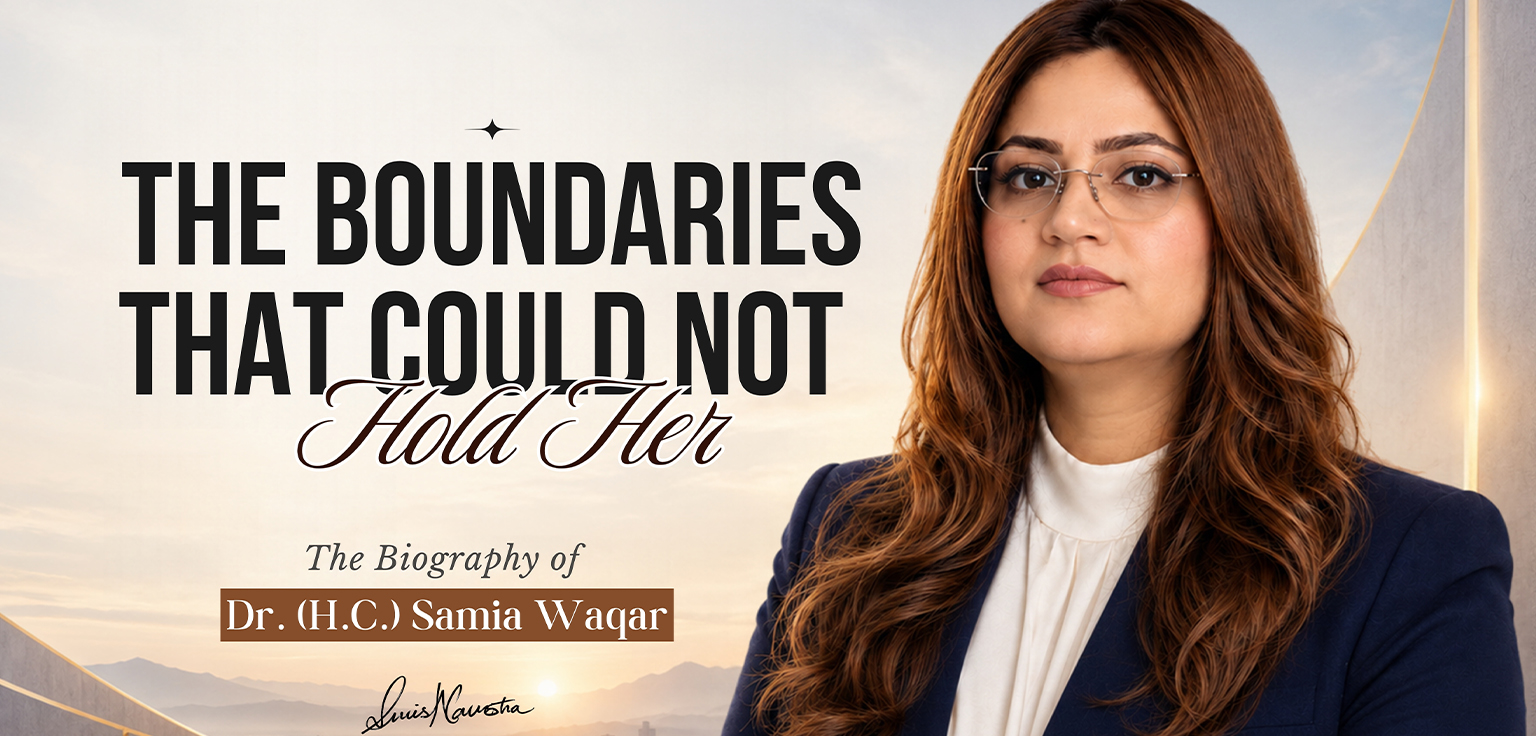
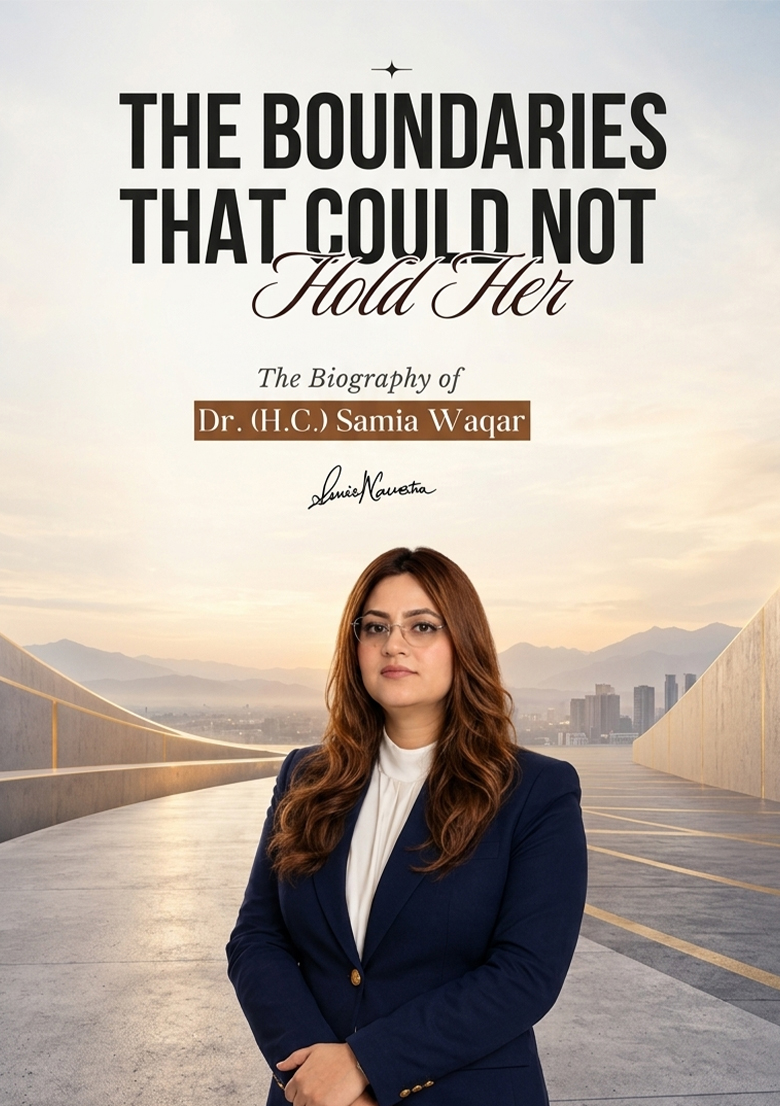
“I never wanted to be remembered as the girl who became an exception. I wanted to help create a world where girls no longer needed to be exceptions.”
Introduction
As a girl growing up in Pakistan, Dr. Samia Waqar could see that permission did not come equally to everyone. Her early experiences shaped her determination to pursue education and make her own choices. That desire remained with her as she moved abroad, entered demanding professional roles and eventually began creating opportunities for others to learn.
She had access to good schooling, yet opportunities beyond the classroom could still meet resistance. Britain offered the setting for further education and the experience of living beyond familiar surroundings. Her education and early work developed alongside one another. Human resources appealed to her because she wanted to help people develop, although experience soon revealed how much the profession also depended on commercial judgement.
Her career later took her to Canada, where she worked across several organisations and changing business environments. She also founded S&S Coaching and Consulting Services, which she leads as CEO. The company provides professional training and advisory services, with an emphasis on helping people apply what they learn. Preparing someone for an examination forms part of its work; preparing that person to handle decisions and responsibilities at work gives the learning a further purpose.
Motherhood brought another set of commitments into her days. Raising her son, Saim, has influenced how she works, studies and travels. Time devoted to professional development has often shared space with caring for him, and working from home allows her to remain close. Balancing these responsibilities has required sustained effort. The demands of being available to a child do not disappear when a meeting begins or a presentation approaches, and her choices have had to accommodate both.
Technology has introduced questions of its own. Her interest in artificial intelligence includes its practical uses and the preparation required to manage it responsibly. She has pursued further study as her understanding has developed, including learning that an application can function successfully while important questions about its data remain unresolved. Such experiences have kept her attention on the decisions surrounding technology, as well as on what the technology itself can accomplish.
That concern extends into Role-Agnostic Project Leadership™, known as RAPL™, the framework she created. It addresses responsibilities that arise across functions when organisations undertake strategic change. A person working in finance, human resources or another area may still need to guide decisions, manage uncertainty and remain answerable for results. Her framework brings those responsibilities together, asking what people need to understand and practise when the work reaches beyond their usual boundaries.
Her forthcoming book, The Leadership Economy: Why Today’s Organizations Need the Leaders We Are Not Yet Developing, develops the wider question behind this work. Organisations can acquire powerful tools and generate information quickly, but the decisions made with that information still matter. Her recent presentation at the Global Project Management Forum in Riyadh brought RAPL to an international professional audience, extending the discussion she is developing through her writing and teaching.
"The support I got from my family is why I’m here today."
Phase 1: A Home Where Education Mattered
Dr. Samia Waqar was born on 15 August 1980 and grew up in Pakistan, with parents she regarded as exceptionally talented, in a family where education mattered deeply. Yet the encouragement within her home existed alongside expectations that could make a girl’s ambitions difficult to pursue. She would come to understand both the value of having someone stand beside her and the effort required when others could not accept what she wanted to do.
Her mother held a particularly firm belief in education. She wanted her daughters to study and supported them when doing so met resistance. In the surroundings of their childhood, a girl’s education was often treated as something that could be permitted, rather than something she was entitled to receive. Her mother did not regard that resistance as a reason to give up. She was prepared to stand beside a daughter who wanted to learn, even when others questioned the opportunities being offered to her.
Learning already had a place in the maternal family. Her grandmother had been an educated woman and a scholarship holder. Alongside her mother’s determination, that fact gave the family an example of a woman’s academic achievement. Women’s education was present in her own family history, even while assumptions about what girls should be allowed to do continued around her. The opportunities available to women and the expectations placed upon them did not always move together.
She came from a religious family, with expectations concerning modesty and conduct. Her parents belonged to that family while also supporting her education. Their position was important to her understanding of home. The people closest to her valued their beliefs and wanted their daughter to develop her abilities. She regarded both parents as different from many of the people around them, particularly in their willingness to encourage her.
Within the wider environment, traditional expectations could sometimes limit the choices available to girls, particularly beyond education and home. Dr. Samia became increasingly aware of those differences and wanted the opportunity to discover what she could achieve for herself.
By around the age of ten, she was already ambitious. She wanted to grow and resisted the idea that her possibilities should be smaller than those available to boys. Her response was direct: she questioned treatment she considered unfair. That determination did not remove the difficulties. It meant that she was willing to object when something felt unacceptable. She could say that she should not be treated a certain way, even while facing the pressure that came with speaking up.
She was one of five sisters, whose different personalities and abilities she would come to appreciate. They developed interests and approaches of their own, and she valued what she could learn from each of them. Their differences gave her several perspectives within the same family. Their relationship became an exchange between peers, with each sister bringing something of her own and learning from the others.
“I always had the courage to say, ‘No, this is not acceptable. You can’t treat me like that.”
Phase 2 : Achievements She Had to Hide
At twelve, Dr. Samia Waqar was selected to represent Pakistan in a race in the United States. It was an opportunity to participate beyond her own country, but she did not make the trip. Her family was uncomfortable with her travelling, and permission was withheld. She was heartbroken. Selection had opened a possibility that she could not take up.
She believed that a boy in the same position would have been allowed to go without facing the same objections. That difference made the disappointment harder to accept. The opportunity had been offered to her, yet being chosen was not enough. She still depended on approval from people whose concerns about a girl travelling carried greater weight than her wish to participate.
Afterwards, she was allowed to travel within Pakistan for sport. She welcomed that permission. It did not restore the opportunity she had missed, but it allowed her to take part elsewhere in the country. There was some movement in what her family would accept, even though the earlier refusal remained a painful memory.
Hockey also occupied an important place in her school years. She played at national level while continuing her studies, carrying academic commitments alongside her participation in sport. These were years in which she was studying, playing and confronting objections to what girls should be allowed to do. Taking part required her to keep going despite those objections.
Her sporting achievements occasionally attracted attention from television and newspapers, but public recognition was complicated by the expectations surrounding her at the time. She therefore kept much of that recognition private. Even achievements she was proud of had to be balanced with an awareness of how they might be received within the wider family.
She continued to participate nevertheless. Her school years were demanding because the effort extended beyond studying and playing. She also had to defend her participation and deal with attitudes that made ordinary choices harder. Those years were difficult, shaped not only by study and sport but also by the constant need to defend choices that should have been ordinary. Continuing did not mean that the disappointment or pressure had disappeared.
Another commitment developed while she was still in high school. She helped run a free charitable school for children. It was a shared undertaking, and it gave her an early part in helping others obtain an education while she was still pursuing her own.
"I make my own decisions today. That was my dream."
Phase 3 : Leaving Home Without Leaving Responsibility Behind
After high school, Dr. Samia Waqar moved to Britain to continue her education. By then, her father had died. Her mother accompanied her, leaving Pakistan and the familiar life she had there. Going together meant her daughter would not be travelling alone, an arrangement that helped address concerns within the family. Her mother was prepared to make the move so that further study could become possible.
That decision required much more than agreement with her daughter’s ambitions. It meant leaving her own home and country. She did not speak English fluently and would have to live in surroundings where familiar conversations and friendships were less readily available. Her daughter would have studies to pursue and people to meet. Her mother was making a change without those same opportunities to occupy her days.
The difference remained clear to Dr. Samia. She could go out, attend university and make friends. Her mother had no circle of friends there and had left behind a life of her own. The comforts and practical help she could have enjoyed in Pakistan were not available in the same way. Yet she stayed. Her presence allowed her daughter to continue with the purpose that had brought them abroad.
One memory captures the unfamiliarity of that life. During a visit to her mother’s home in Scotland, she found her sitting by a window, reading the Quran. Outside was a pub, where people were drinking. It was not an environment her mother felt comfortable with, but she was there because she wanted to be close to her daughter. Dr. Samia understood how much her mother had left behind when she thought about that scene.
Her mother’s support was practical and direct. When her daughter wanted to pursue an opportunity, she was willing to stand beside her and help make it possible. Accompanying her abroad was the clearest expression of that willingness. Education had required a change in both their lives, although the demands of that change were different for each of them.
Dr. Samia herself did not find adapting to a new country especially difficult. She had moved while young and had come for study. She accepted unfamiliar surroundings and did not regard change as something to resist simply because it was new. Britain became the setting in which she completed her undergraduate education and began building an adult life around study and work.
Alongside her studies, Dr. Samia carried a wider sense of responsibility. She understood that succeeding abroad could help demonstrate what became possible when young women were trusted with educational opportunities. She wanted them to see that allowing a daughter to study abroad could lead to something worthwhile.
Note of Thanks
Dr. Samia’s thanks begin with the people closest to her, especially her sisters. She values both their closeness and the differences that make each sister distinct. They have distinct skills, outlooks and professions, yet each brings something of her own to the family. For Dr. Samia, that variety creates room for mutual respect and learning. For Dr. Samia, gratitude is not only about receiving support; it is also about sharing what each person knows and valuing what others bring.
She carries that appreciation with her through the relationships that have shaped her life. The people around her have their own ambitions and ways of seeing the world. Their differences do not diminish their connection. They give it depth, reminding her that care can include encouragement, honest exchange and the freedom to grow in one’s own way.
This note honours the closeness Dr. Samia shares with her sisters and the reciprocal learning that has remained part of their relationship. It also recognises the importance she places on helping others develop. That belief also runs through her commitment to education and opportunity: growth becomes more meaningful when people can share what they have learned and help someone else move forward.
Her thanks are offered with warmth and without a long list of names. They rest on a simple understanding shaped by her family relationships: people can support one another while continuing to learn from one another. For Dr. Samia, that exchange is a lasting source of gratitude.
thanks,
– Dr. (H.C.) Samia Waqar

AIMLAY is a leading global education platform empowering ACADEMIC and EXPERIENTIAL learners, uniquely focused on recognizing knowledge gained through experience and building a diversified community of doctorates and aspiring researchers.