“Greatness is not born in comfort; it is grown through hard work, determination, and faith in one’s purpose.”
Dedication
This biography is for people who think that dreams can grow from small beginnings. This book is dedicated to his parents, who taught him the first lessons in discipline and resilience; to his wife, who has been both an anchor and a compass; and to his children, who exemplify his hope and legacy. Dr. Rameez Abdool Hakh’s journey is a tribute to their quiet strength: the encouragement they gave him at dawn, the patience they showed him when he was unsure, and the joy they shared with him in every victory.
It is also dedicated to the farmers, workers, and inventors who turn ideas into food for countries. Their hands, worn down by the sun and rain, remind us that progress comes from hard work. This work is for everyone who has ever tried to turn problems into chances and who has always believed, like Dr. Hakh, that courage can help shape the future.
“A tree’s strength lies in its roots; a person’s greatness lies in the soil that shaped them.”
Phase 1: Roots of Gold: The Early Years
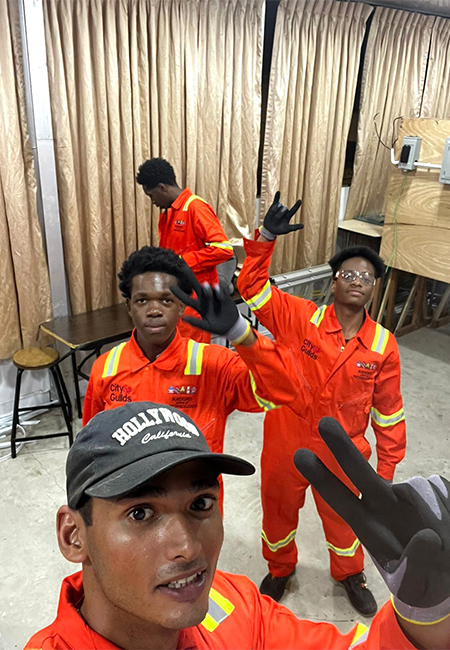
Before the world knows about the main character, every outstanding life story starts. It starts slowly—in the patterns of childhood, in the values that are whispered at home, and in the small acts of strength that go unnoticed and later become the building blocks of character. Dr. Rameez Abdool Hakh started his life in Golden Fleece, a small village on the southern coast of Guyana. The fields sparkled in the tropical sun, and every grain of rice told a story of perseverance.
Golden Fleece was not known for its luxury but for its hard work. Its mornings were filled with the sound of palm leaves rustling, the sound of kids laughing on dusty roads, and the low hum of machines from rice mills nearby. In that setting, Young Rameez learned the value of hard work. He saw men and women get up before dawn to work in the fields. Their hands were rough but steady, and their eyes were full of purpose. They weren’t just growing crops; they were also growing hope.
His parents were the first people to shape his inner world. They didn’t talk about how outstanding they were; they showed it through what they did. His father, who was strict and had a clear vision, thought that work was not just a way to make a living but also a way to help others. His mother was strong but also gentle. She thought that the best things a parent could give their child were kindness and an education. They taught him that a life based on honesty and hard work can get through anything.
Dr. Rameez learned things as a child by watching, not by reading. He learned that every successful harvest came from being patient; failure could come back but never last forever; and humility, like rain, fed everything it touched. These ideas stuck in his young mind and became the rules that would later guide his career.
He didn’t see education as a privilege; he saw it as a duty. People at Fisher Primary School knew him for being quiet and focused, not for being loud and ambitious. His teachers saw him as a student who learned to understand rather than compete.
“Leadership is not about being in charge. It is about taking care of those in your charge.”
Phase 2 : Turning Gears of Growth: From Responsibility to Leadership
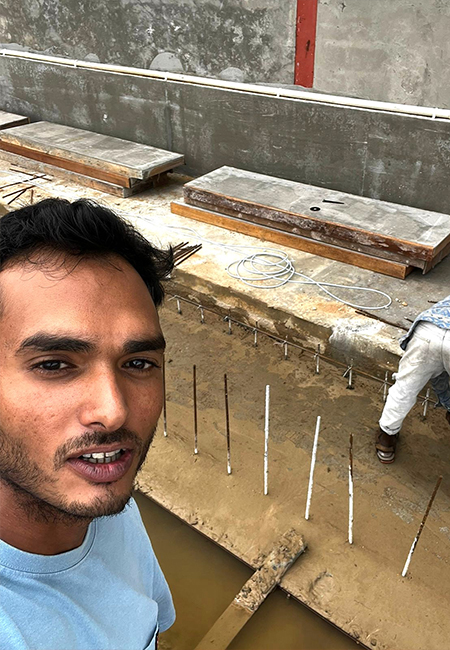
Dr. Rameez Abdool Hakh had already walked every hallway of the mill before he became Operations Manager. He could tell how the machines were working, how the raw grain smelt, and how the workers moved the sacks in time with each other. His promotion didn’t come out of nowhere; it was the result of years of hard work and learning from the ground up. The man who used to check stock with a clipboard now managed a whole ecosystem of people and processes.
Being responsible for operations wasn’t just a step up in his career; it was the start of a new chapter that required him to turn his practical experience into visionary management. Dr. Hakh never thought of leadership as giving orders; it was about making connections. He believed that inspiration, not orders, brings out the best in people. The mill was full of that spirit just because he was there.
The first thing he did when he took over operations was to watch. He didn’t succumb to the urge to change systems right away. Instead, he spent weeks studying the mill’s rhythm, such as how grains moved from purchase to polishing, how data moved from records to reports, and how people talked to each other between departments. He knew that you had to know how a system works before you could improve it.
He quickly figured out that communication was just as much of a problem as efficiency. There were gaps between the farmers who grew the rice, the workers who dried and milled it, and the exporters who were waiting at the wharf. These gaps were not due to lack of planning but rather lack of coordination. His first step was to connect these parts. He set up a daily review and coordination routine in which supervisors met in person to share updates. This simple habit made people more responsible and cut down on mistakes by a lot.
“The best way to predict the future is to create it.”
Phase 3 : Beyond Boundaries – Building Lasting Systems
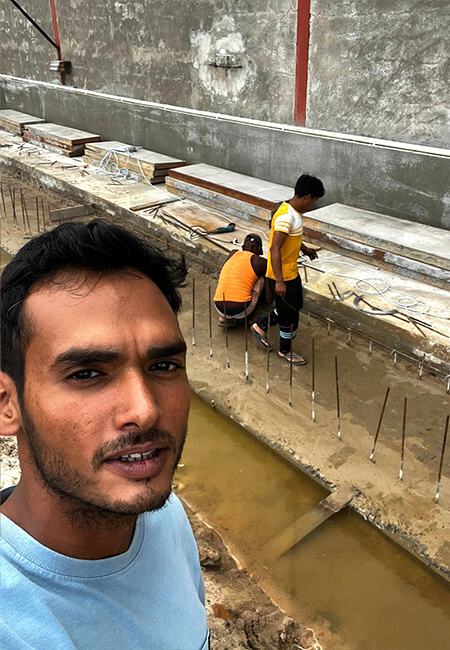
When vision learns to breathe outside of walls, leadership grows up. Dr. Rameez Abdool Hakh’s years as Operations Manager were a time of growth for his mind, methods, and meaning. The young man who once walked through the rice fields of Golden Fleece became a strategist whose choices affected whole areas. Even though his power grew, he stayed true to the same principle that had guided him since he was a child: growth must help others to be called success.
By 2020, many industries around the world were quickly going digital. Agriculture, which doesn’t change rapidly, was behind. Dr. Hakh saw this hole as a chance. He understood that harnessing data could transform it into the farming community’s most valuable asset. With his help, the mill set up data-driven decision systems that kept track of, analysed, and predicted every step of production, from harvest yields to moisture content, drying times, and readiness for export.
He made it so that numbers could tell stories. It was no longer just a random problem when the temperature changed or the shipment was late; it was a lesson. His team learnt how to spot patterns, figure out what happened, and create models that could predict the future. This analytical method made things more accurate than they had been before, when they were based only on experience. It also drew in young people from nearby technical schools who wanted to combine engineering with farming, which is a rare opportunity.
The use of smart sensors in storage silos, automated calibration of dryers, and digital dashboards for real-time monitoring became the new core of operations. For the first time, mill managers could see performance metrics in real time on their handheld devices. This made it possible to quickly correct problems that used to take hours to identify. Efficiency went up, losses went down, and everyone in the company felt more confident.
Dr. Hakh never thought that innovation meant copying someone else. It meant having the guts to question the way things are done. He encouraged individuals to explore new pursuits, not solely for enjoyment, but because it was necessary.
Note of Thanks
Dr. Rameez Abdool Hakh is very thankful as he thinks about all the work he has done in his life. First, he thanks God, whose grace has guided him through every trial and triumph. He believes that every success is a gift from God that came through faith and hard work.
He deeply appreciates his parents for instilling in him the values of honesty, humility, and hard work, which have shaped his character. He is forever grateful to his wife and daughters for their love, patience, and understanding—the light that kept him going through long days and nights when he didn’t know what to do.
He also thanks all the coworkers, farmers, engineers, and workers who helped him turn his ideas into reality. Their dedication is still the most important part of his success.
Finally, he thanks his mentors, partners, and community for believing in his dream of making agriculture a legacy of sustainability. Their faith has made the harvest better than he could have ever imagined.
Thanks,
– Dr. Rameez Abdool Hakh