“He never asked what he would get in return. He asked only whether he could help.”
Introduction
People approach Dr. Ram with concerns that extend beyond a single profession. Some need guidance about insurance or a consumer dispute. Others are seeking help with treatment, accommodation, or the financial demands of illness. His responsibilities in risk management, law, and community service bring him into contact with these different needs. Across them, he uses experience gained through employment, professional study, and years of working with people who do not always know where assistance can be found.
That range of responsibilities developed far from the village in Sultanpur where he grew up. Born in 1957, he belonged to a zamindar family whose background did not ensure a steady supply of money. Schooling took place alongside household work and the practical difficulties of rural life. Access to education required persistence, while decisions about further study were made with little guidance. He eventually became the first in his family to complete graduation, an achievement that widened his opportunities beyond the circumstances of his early years.
The influence of his parents remained important as those opportunities expanded. His father, Late Ram Udit Pandey, helped villagers in need. After his early death, Late Sahdei Pandey carried the responsibility of keeping the family together. Although she had no formal education, her example gave her children a lasting understanding of discipline, consideration, and family responsibility. Her efforts continued to matter even when members of the household moved away and established homes of their own.
His move to Mumbai introduced him to factory employment and responsibilities involving labour, personnel, and administration. At Universal Cans and Containers Limited, work required him to deal with people, workplace concerns, and difficult industrial situations. He later joined The New India Assurance Company Limited, where insurance became a substantial part of his professional experience. Retirement from the organisation in 2017 marked a change in employment, while the knowledge acquired there remained relevant to his subsequent work.
Legal education added another area of professional responsibility. Having completed his LL.B. examination through the University of Mumbai, he went on to obtain advocate enrolment and a Certificate of Practice. His work through AAS Associates brings together risk assessment, insurable-interest matters, and legal services. Consumer forum matters hold particular interest for him, alongside accident-related cases and other work handled by the firm. These responsibilities draw on both his insurance background and his later qualification in law.
At home, Sushma Pandey’s attention to savings contributed to the family’s financial establishment. Their children developed lives and careers in India and abroad, with interests extending into engineering, business, law, and education within the wider family. He recognises their progress alongside the help he received from friends and colleagues. His account of becoming settled includes personal effort, practical assistance from others, and relationships that continued long after the circumstances in which they began.
His association with Lions Clubs International, beginning in 1986–87, gave sustained form to his involvement in social service. Over the years, that work has included vision care, assistance for people with disabilities, AIDS awareness, and cancer awareness and care. Club and district responsibilities brought opportunities to coordinate programmes and work with others. The needs encountered through these activities also shaped his understanding of what useful assistance involves, particularly when illness is accompanied by poverty or a lack of reliable information.
"A family’s strength can begin with one person who keeps making room for everyone."
Phase 1: A Mother Who Kept the Family Together
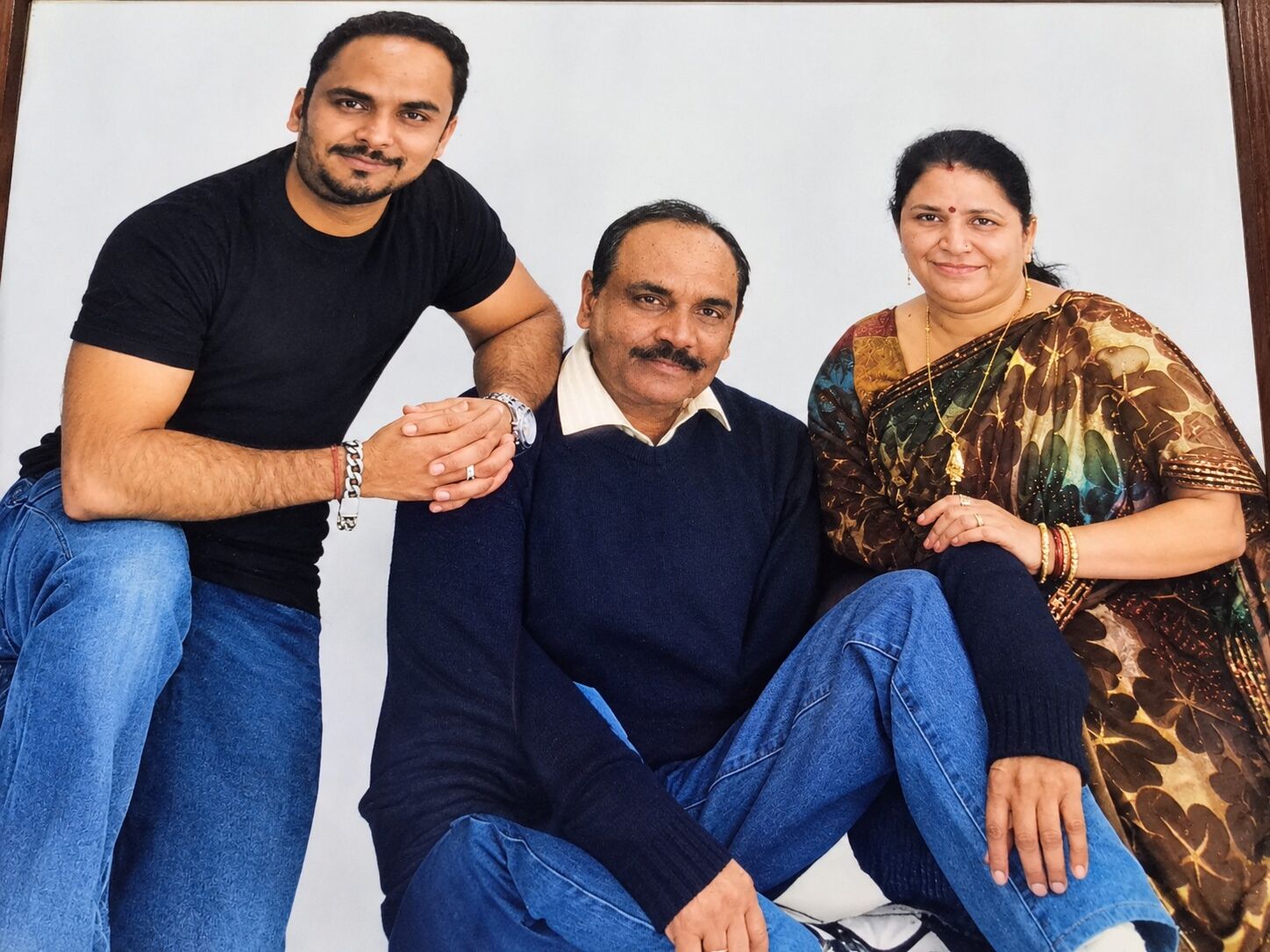
Before Dr. Ram established his life in Mumbai, his understanding of responsibility began within a large household in rural Sultanpur. Born in 1957, he grew up in a family whose circumstances combined a zamindar background with financial constraints. The family’s position did not always translate into readily available money. That distinction is important to his beginnings. A recognised background existed alongside practical difficulties, and growing up within it meant becoming familiar with both the responsibility of helping others and the limitations affecting the household itself.
His native place was Bishnagerpur Bhatpura, in the Sultanpur district of Uttar Pradesh. Family life there involved shared work and close contact among its members. He grew up in a large family of five brothers and two sisters. His brothers were Late Ram Yagya Pandey, Late Ram Subhag Pandey, Jagdish Prasad Pandey, Rakesh Pratap Pandey, the youngest, and Dr. Ram Prasad Pandey himself. His two sisters were Late Raj Dei and Late Raj Pati. Within this close-knit household, individual needs were balanced with shared responsibilities and a strong sense of togetherness.
The home was also a place where kindness extended beyond family members. His parents regularly helped people in need, setting an example of generosity and compassion that remained deeply rooted in his values throughout his life.
His father, Late Ram Udit Pandey, belonged to a family that had provided money and grain to villagers. Such assistance formed part of the relationship between their household and the surrounding community. Grain was a significant means of support in the rural setting he described. The help given to others was therefore connected with ordinary needs and the resources available to meet them. These early examples gave him a direct understanding of assistance long before he became involved in organised community work.
One instruction from his father remained especially significant. Towards the end of his life, he asked that the written records of outstanding repayments be torn up and discarded. The family was not to pursue the people who owed them. It was a specific decision concerning help already given, and it carried a meaning that his son continued to recognise. Repayment would not be made a condition for allowing those people to move forward. What had been provided in a time of need could remain with them.
He remembered that approach as part of his parents’ example. If someone returned what had been received, the repayment was accepted. If it was not returned, assistance did not have to become a continuing demand. His father’s instruction made that position clear through an action concerning the family’s own resources. For a child growing up in a household that also experienced financial limitations, the example held particular weight. Helping others and managing one’s own difficulties could exist within the same family experience.
Time with his father was limited. He recalled being around Class 6 or 7 when his father died, although the precise school year remained uncertain in his memory. Before that loss, he had helped care for him while continuing his studies. The details he retained were personal and practical: attending to a parent while still a schoolboy. His memories of his father therefore included both the assistance extended to villagers and the care he himself had been able to provide at home.
After his father’s death, Late Sahdei Pandey became the central influence in the household. She had no formal education, yet her son regarded her contribution as the greatest in his upbringing. The importance he gave her was rooted in what she managed to sustain. There were children to guide, household responsibilities to carry, and relationships to preserve. Her influence reached across these demands. He associated her with the discipline and cultural values that helped the family remain connected through the years that followed.
“Sometimes, the first achievement is simply finding a way to keep going to school.”
Phase 2 : The Distance Between Home and School
For Dr. Ram, education began with the practical question of reaching a classroom. Growing up in rural Sultanpur, he attended school under conditions that required effort beyond the lessons themselves. Distance, limited money, and household responsibilities formed part of his school years. These circumstances remained important in his recollection of education because they explained what continuing to study involved. Before qualifications could widen his choices, he had to manage the ordinary difficulties of attending school and keeping his studies going.
His early schooling took place in the village, where he studied through Class 8. During those years, access to shoes and slippers was not something he could consistently take for granted. He remembered going to school without them and wearing basic clothing. Such details place his education within the material conditions of his childhood. The family background described in the previous phase did not remove these limitations. School attendance continued within the resources available to the household, alongside the other demands on those resources.
A river lay along the route to school, making the daily journey particularly challenging during the rainy season. For approximately three to four months each year, heavy rainfall caused the river to flood, and Dr. Ram had to cross it by swimming to continue attending his classes. During the remaining months, the water level was considerably lower, allowing him to cross with relative ease. These seasonal changes were a familiar part of his childhood, yet they also revealed the determination required to pursue an education in his rural surroundings. Even when reaching school meant swimming across a swollen river, he continued his studies, unwilling to let the difficulties of the journey interrupt his education.
Education also had to fit around work at home. He recalled studying while helping with household tasks, as children in his rural surroundings commonly did. School did not release him from those responsibilities.
Both belonged to the same period of his life, and continuing one required making room for the other. This is an important part of his educational background. His progress took place within a working household where study was one responsibility among several, rather than an activity supported by freedom from all other demands.
As he reached the higher classes, the distance to school remained substantial. He recalled journeys of approximately four to five kilometres. A bicycle became available only around Class 11 or 12. Its place in his memory reflects how significant such an acquisition was at the time. What might appear a modest possession in another setting represented improved access to education. Until that stage, he had continued through years of schooling without a bicycle of his own.
Alongside these practical difficulties was another limitation: a lack of guidance about what education might lead to. He stated clearly that his family could not provide much direction on academic or career choices. Their support and values did not amount to specialised knowledge of courses, admission requirements, or professions. As he moved towards decisions about further study, he therefore had to consider possibilities without the kind of informed advice that could have helped him understand the routes available.
Science interested him. Within that field, medicine was a direction he associated with further study and professional advancement. He recalled that students pursuing science commonly considered a medical career. That possibility did not become his own course, however. He referred to reservation-related constraints among the difficulties affecting his options, while also emphasising the absence of guidance. His recollection establishes that medicine was considered and did not work out. It does not establish a particular application, entrance examination result, or admission decision.
“An opportunity needs more than our interest. It needs an answer while there is still time to give one.”
Phase 3 : Factory Responsibilities and an Opportunity Deferred
Arrival in Mumbai brought Dr. Ram into circumstances he could not yet predict. He remembered coming with a bag and uncertainty about what would follow. Education had taken him beyond village schooling, but employment and settlement remained to be worked out. He did not arrive with an established position in the city. Support from people around him became important as he began finding his place, learning through work and through contact with those who knew the surroundings better than he did.
He acknowledged the help he received from the local Maharashtrian community. That support belonged to the practical experience of adapting to a place where he had much to learn. His earlier education had taken place in a rural setting, with limited exposure to English. In Mumbai, his interactions widened. He learned through his association with people in the city and through the responsibilities that employment placed before him. These experiences became part of his preparation for work that increasingly involved dealing with others.
Dr. Ram’s first employment opportunity in Mumbai came through an unexpected turn of events during a winter vacation in Calcutta. His brother, Jagdish Prasad Pandey, was working there and had a close professional association with Mr. Prakash Mohta, the Managing Director of Universal Cans and Containers Limited and son-in-law of Mr. B. K. Birla. Recognising an opportunity for his younger brother, Jagdish approached Mr. Mohta and requested that he consider Dr. Ram for employment. Mr. Mohta responded favourably and invited him to join the company’s factory in Mumbai. At that time, Mumbai seemed almost like a foreign destination to Dr. Ram, as distant and exciting as Dubai. Securing employment there was a matter of considerable pride, and his family and acquaintances appreciated his achievement of becoming established in the city. He joined Universal Cans and Containers Limited in Taloja, Navi Mumbai, where he served as a Labour Officer and later as Manager, Personnel and Administration. The opportunity introduced him to industrial administration, labour relations, and the professional responsibilities that would shape his early career. Dr. Ram remained deeply grateful to Mr. Prakash Mohta for recognising his potential and offering him his first employment opportunity, as well as to his brother Jagdish for helping open that door.
This was a substantial change from the educational setting he had known. Scientific study had provided formal qualifications; factory employment introduced responsibilities involving workers and management. It also brought him into contact with colleagues whose later careers would remain points of reference in his own account.
Industrial relations were not always peaceful. He recalled difficult union situations and incidents in which people were subjected to violence. The precise circumstances of those incidents are not clear enough to describe individually. What he emphasised was that his relationships with people continued despite the tensions surrounding that period. He remembered maintaining contact then and afterwards. His account does not establish that he resolved a particular dispute, but it does identify the lasting connections that emerged from an unsettled working environment.
Those connections mattered beyond a single appointment. In later years, he continued to speak of people he had known through industry and of the support exchanged between them. He associated the continuation of these relationships with the effort made to preserve them. Their endurance was one result of his early employment. While positions and circumstances changed, the people he had worked with did not simply disappear from his life. Some remained connected with him long after their original professional association had ended.
Note of Thanks
Dr. Ram acknowledges with gratitude the people whose guidance, practical assistance, and companionship have contributed to his life. He attributes much of what he has received to God’s grace, while recognising the individuals through whom help reached him at different times.
His parents, Late Ram Udit Pandey and Late Sahdei Pandey, hold an enduring place in that acknowledgement. Their generosity towards others, and his mother’s care in preserving family relationships, gave him examples he continues to value. He remains grateful for the upbringing they provided and the responsibilities they taught him to recognise.
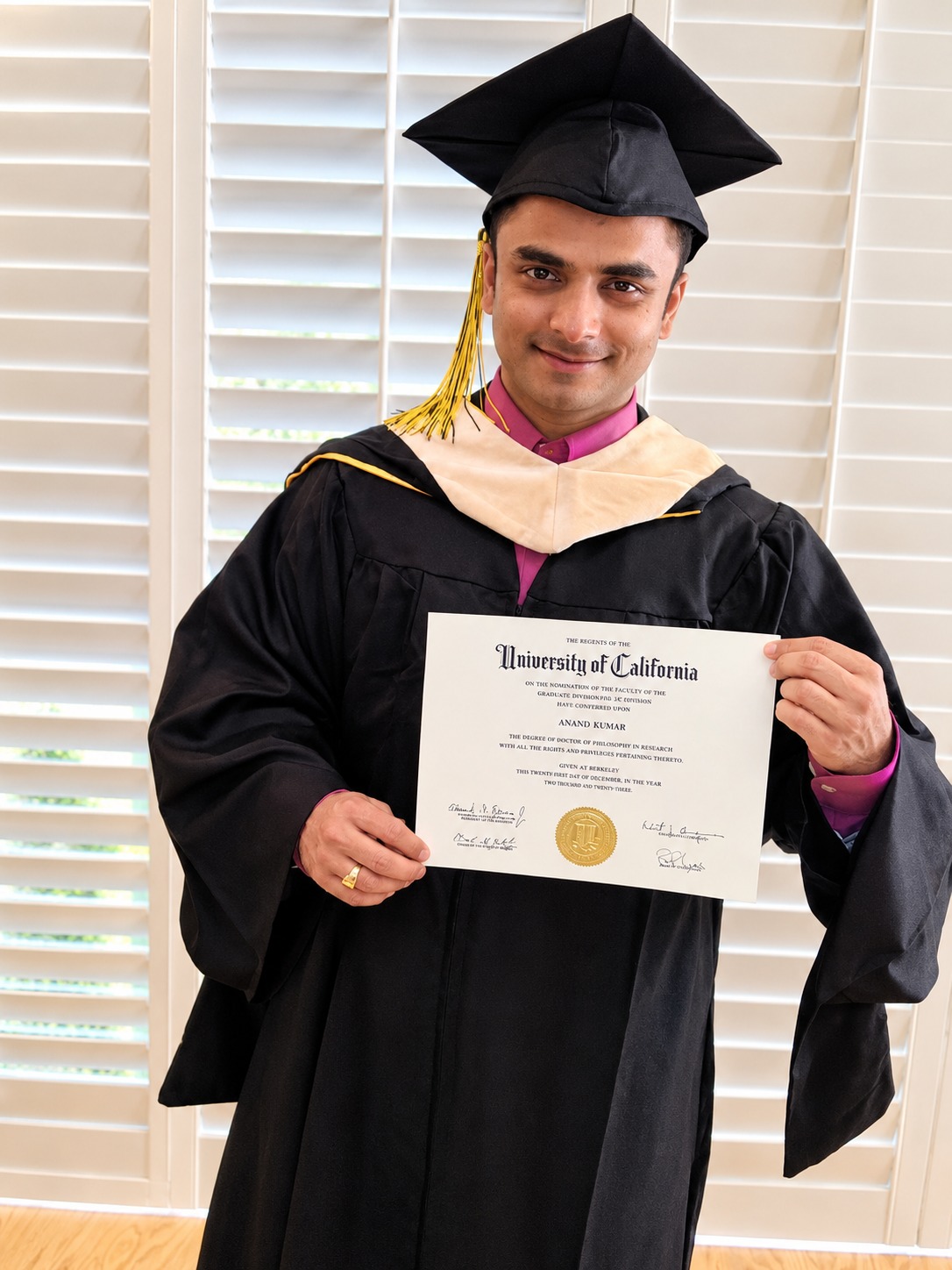
His thanks extend to his wife, Sushma Pandey, for her contribution to their household and her attention to savings. He also acknowledges Anand Pandey, Devhuti Mishra, Ankur Pandey Jain, and Smriti Pandey, whose lives form part of his wider family. He values his children’s encouragement of his efforts to assist people needing financial or medical support.
Among friends and colleagues, Mr. Yogesh Chandra Korani receives particular recognition for assistance sustained over many years. He also remembers Patil and the people who helped him establish himself in Mumbai. Their support remains part of his understanding of how his circumstances improved.
Dr. Ram also expresses his heartfelt gratitude to Mr. Biny Ahuja and his son, Mr. Viren Ahuja, an industrialist, whose longstanding friendship and moral support have remained deeply meaningful to him. When his son Anand was preparing to pursue higher education in the United States, the Ahuja family wholeheartedly encouraged his aspirations and generously offered financial assistance, including travel expenses, should it be required. Although Dr. Ram was financially self-sufficient and did not need to accept their offer, their willingness to help brought him considerable reassurance. Their continued interest in Anand’s well-being and professional progress in the United States further strengthened this valued relationship. He remains sincerely thankful to the Ahuja family for their kindness, encouragement, and unwavering goodwill.
He also remains sincerely grateful to Mr. Prakash Mohta for offering him his first employment opportunity in Mumbai and to his brother, Jagdish Prasad Pandey, whose timely support helped make that important beginning possible.
His community work has depended on cooperation. He acknowledges fellow members of Lions Clubs International, those involved with Saket Foundation Trust, and the hospital teams, charitable organisations, and public representatives with whom he has worked. Their participation has helped make programmes and individual assistance possible.
Finally, he recognises the people who have remained in contact after receiving help. These relationships remain meaningful parts of the life recorded in these pages.
thanks,
– Dr. (H.C.) Ram Prasad Pandey

AIMLAY is a leading global education platform empowering ACADEMIC and EXPERIENTIAL learners, uniquely focused on recognizing knowledge gained through experience and building a diversified community of doctorates and aspiring researchers.