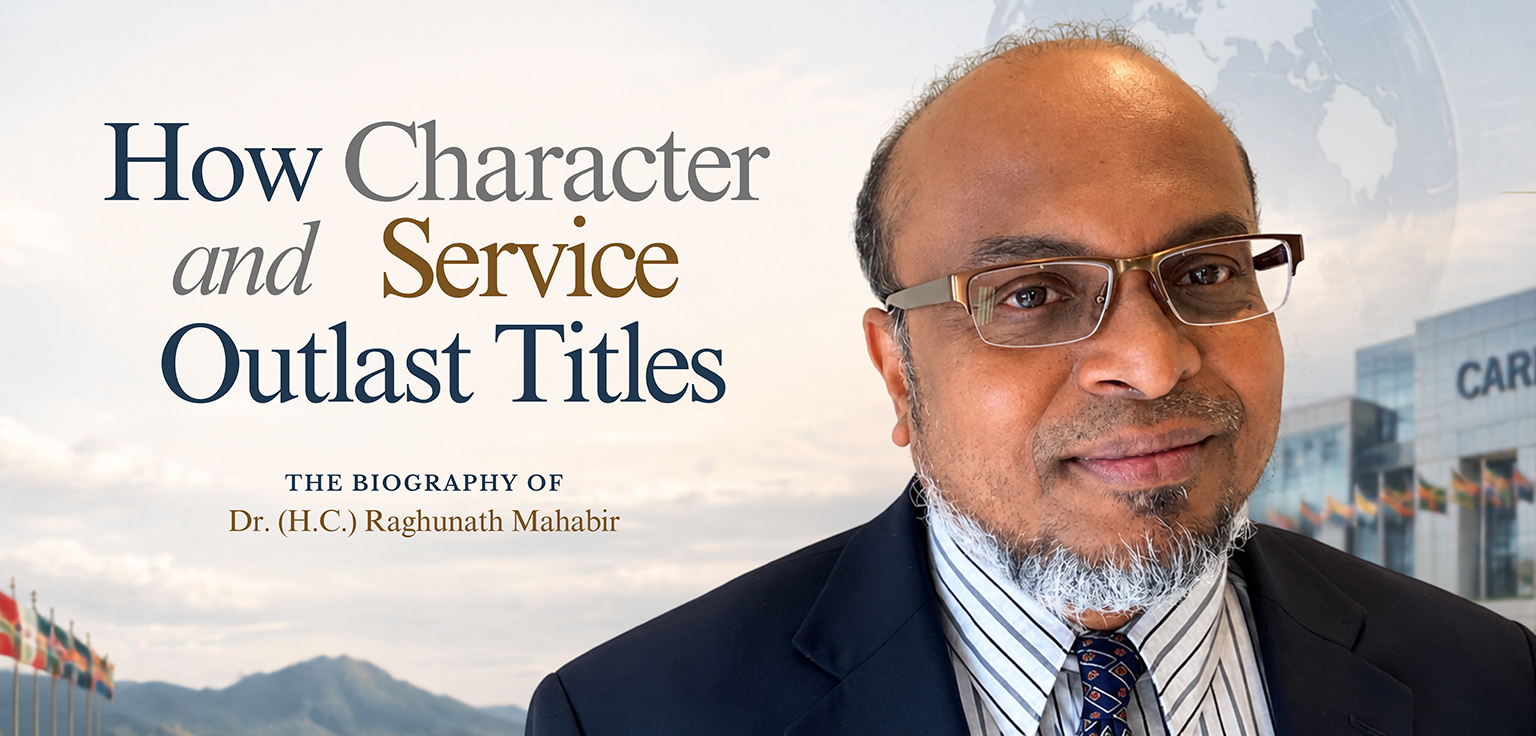
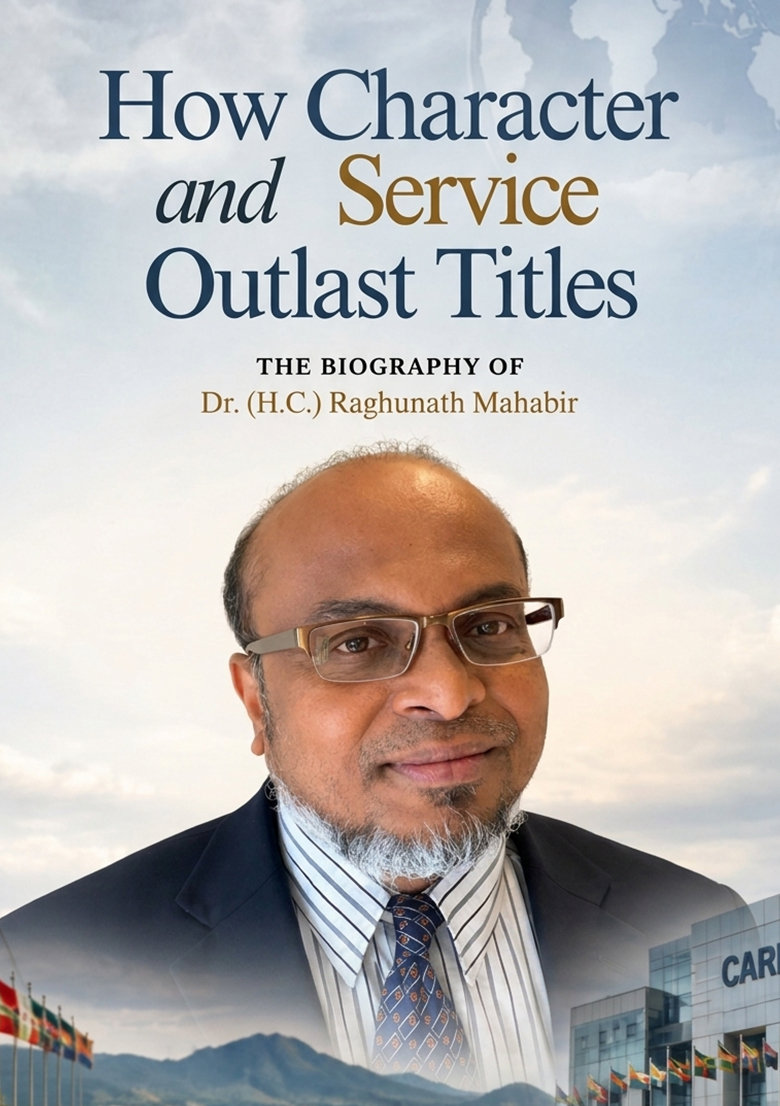
“Do not go where the path may lead, go instead where there is no path and leave a trail.”
Introduction
The biography of Dr. Raghunath Mahabir is the story of a life shaped by learning, service, faith, humility, and the courage to walk through many different doors with an open mind. His journey began in Monkey Town, a small village in Barrackpore, Trinidad and Tobago, where rural life taught him the value of work, responsibility, and simplicity. From his earliest years, he grew up close to the land, surrounded by agricultural work, rice fields, gardens, animals, and the steady rhythm of village living. These beginnings did not limit him. Instead, they gave him a strong foundation that would remain with him throughout his life.
His educational path began at Monkey Town Government School, continued through Naparima College, and later took him to Barrackpore Senior Secondary School, where he completed his A levels. Each stage of schooling widened his world and strengthened his motivation. At Naparima College, he entered a respected academic environment filled with intelligent and driven students, and that atmosphere helped shape his ambition. His decision to move schools in order to study the subject he wanted showed an early sense of clarity and purpose. His success in the 1984 quiz team that won the prestigious Caricom Award was one of the early signs of his academic promise.
The next major chapter of his journey unfolded at the University of the West Indies, where he remained connected from 1987 to 2004 and completed three degrees and two diplomas. His academic achievements included a BA, an MSc in International Relations, a PhD in International Relations, Diplomatic Education, and a Diploma in International Relations. His pursuit of knowledge was never casual. It required sacrifice, discipline, and determination, especially because he began teaching while still studying. As a primary school teacher and later a secondary school teacher, he learned the importance of not shortchanging students and understood that teaching meant entering the minds of young individuals with responsibility and care.
His life later moved into the world of diplomacy and public service when he joined the Foreign Service of Trinidad and Tobago through the Ministry of Foreign Affairs in 2001. There, he worked on the consular and diplomatic desks, closely engaging with protocol and meeting several leaders. Though he had always wanted to be a diplomat or politician, he made the difficult decision in 2004 to return to academia when he was offered a role at the University of the West Indies. This choice reflected the thoughtful way he approached life, not merely chasing opportunity but choosing what he believed was right at the time.
His professional path later expanded through international and regional spaces. He worked at the South Centre in Geneva, participated in the 2007 general election in Trinidad, and later served at the CARICOM Secretariat in Guyana, where he became Head of Conference Services. In that role, he oversaw close to 1,600 meetings, including 18 Heads of Government meetings, and worked across areas connected to security, trade, social development, human development, foreign relations, and community relations.
Yet the life of Dr. Mahabir is not defined only by achievement. It is also marked by faith, reflection, and resilience. Serious illness, a painful accident in Guyana, and the loss of someone close to him deepened his appreciation for life. Through these challenges, his faith in God remained central, and his belief that all things are possible for those who believe continued to guide him.
After returning to Trinidad, he continued his work in teaching, ministry, and service. As a pastor of two churches and Graduate Coordinator at the University of the Southern Caribbean, he remained committed to guiding people through knowledge and faith. His life stands as a sincere example of how education, humility, service, and spiritual strength can come together to shape a meaningful legacy.
"Out of the huts of history’s shame, I rise."
Phase 1: Roots in Monkey Town and the Discipline of Rural Life
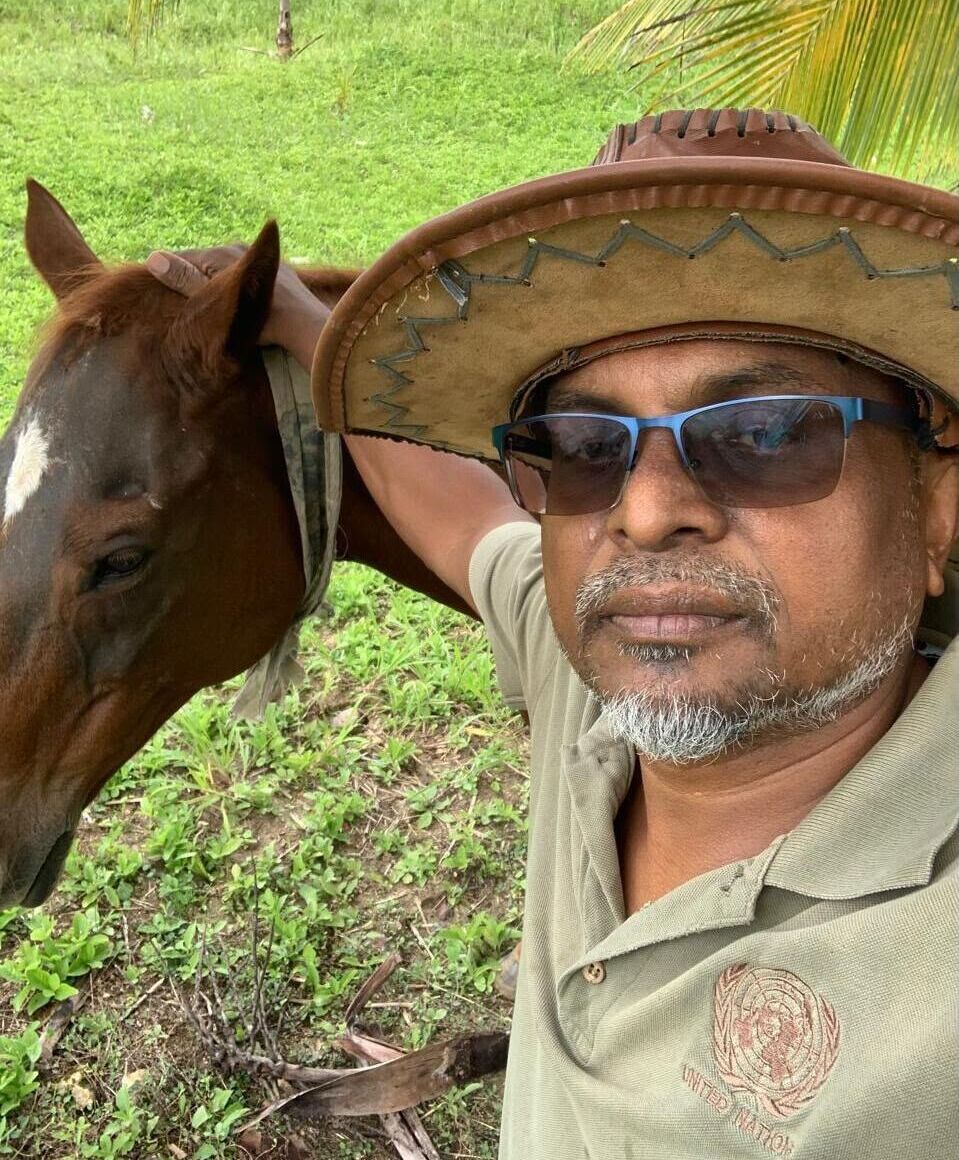
The life of Dr. Raghunath Mahabir began in the humble surroundings of a small rural village called Monkey Town, located in Barrackpore, Trinidad and Tobago. It was not a place marked by luxury or ease, but it was rich in the values that quietly prepare a person for the larger tests of life. His childhood was shaped by the rhythm of village living, by the closeness of family, by the dignity of work, and by the steady awareness that life, even in its simplest form, carries lessons for those willing to learn.
Growing up in Monkey Town, he witnessed a way of life deeply connected to the land. The men in the village worked in agriculture, and their environment reflected the reality of rural survival. Fields, gardens, rice cultivation, animal husbandry, and daily physical labour were not general ideas for him. They were part of the world he knew from the beginning. This was the setting in which he first learned that life does not always offer comfort before responsibility. In such a village, every household understood effort, and every child grew up seeing that progress had to be earned through discipline, patience, and persistence.
For young Raghunath Mahabir, childhood was not separate from duty. His days were shaped by a simple but meaningful pattern. He would go to school, return home, and then help his parents with the work that sustained the family. Whether it was assisting in the rice fields, working in the garden, or helping with animals, Remaining close to the land and animals. he learned early that contribution was a natural part of family life. These tasks were more than just chores. They became his first lessons in commitment, humility, and endurance. Long before he would enter classrooms of higher learning, diplomatic spaces, academic institutions, or leadership roles, he had already been trained by the practical school of rural life.
His upbringing shaped his understanding of work, which stayed with him throughout his journey. In the fields and around the animals, he saw how effort had to be repeated day after day. Nothing grew overnight. Nothing flourished without attention. The land demanded consistency, and those who lived by it understood that patience was not weakness but strength. This early exposure helped form in him a grounded nature. It taught him to respect labour, to appreciate simplicity, and to understand that every achievement begins with small acts of responsibility performed with sincerity.
At the age of five, he began his formal education at Monkey Town Government School. This marked the first step in his academic journey, but even then, education did not remove him from the reality of village life. Rather, school and home worked together to shape him. In the classroom, he began to enter the world of books, lessons, discipline, and learning. At home, he continued to remain connected to work, family, and the agricultural life that surrounded him. This balance between education and responsibility became one of the early defining patterns of his life.
His early school years gave him a foundation, but he also formed his character beyond the classroom. The rural village gave him a sense of community, while his family environment gave him a sense of duty. He was not raised in a world where dreams were spoken loudly without effort. He was raised in a place where dreams had to be supported by work. The values he absorbed during those years were quiet but powerful. They taught him to remain close to his roots, to value people, and to understand that greatness is not measured only by status or wealth but by the ability to remain sincere, useful, and humble.
The presence of his parents played an important role in this phase of his life. Their influence was not limited to words. It came through example, through daily life, and through the expectations placed upon him as a child in a hard-working family. By helping them in the fields and gardens and with animals, he learned that family was not only a bond of affection but also a shared responsibility. The respect he developed for his parents and for the work they carried out became part of the moral foundation on which his later life would stand.
“Education is the most powerful weapon which you can use to change the world."
Phase 2 : Schooling, Motivation, and the First Signs of Promise

After the early discipline of village life, education became the next important force in the journey of Dr. Raghunath Mahabir. His first step into formal learning began at Monkey Town Government School, where he started school at the age of five. That beginning, simple and close to home, opened a path that would gradually take him from the familiar surroundings of his village into wider academic spaces, stronger intellectual circles, and deeper personal ambition.
His early schooling gave him the foundation on which his later achievements would stand. It was the beginning of his movement from a rural childhood into a life guided by learning, thought, and purpose. For a young boy from Monkey Town, education was not merely a routine activity. It was a doorway. It offered him access to ideas, people, and possibilities beyond the immediate world around him. The classroom became a place where discipline and curiosity could meet and where the first signs of his academic promise began to take shape.
From Monkey Town Government School, he later proceeded to Naparima College, one of the more prestigious colleges on the island. This transition was significant because it placed him in an environment known for strong academic standards and motivated students. For Dr. Mahabir, this was not simply a change of institution. It was an important stage in his personal growth. He entered a space where many students were intelligent, focused, and highly driven. Their presence influenced him, and being among such students encouraged him to become more motivated himself.
The atmosphere at Naparima College helped widen his thinking. It was mostly a Presbyterian school, while he came from a Hindu background. This experience exposed him to new perspectives and allowed him to learn beyond the boundaries of his own familiar environment. He met many friends there, some of whom became lifelong friends. These relationships were part of his growing understanding of people, culture, and difference. Through this setting, he learned that education was not only about subjects and examinations. It was also about meeting people, understanding new ways of life, and discovering how different influences could shape one’s own personality.
Being a Hindu student in a largely Presbyterian school did not restrict him. Instead, it became a meaningful part of his learning. He was able to observe, understand, and absorb new things from the environment around him. The experience contributed to his openness, his respect for different backgrounds, and his ability to relate to people outside his own immediate culture. These qualities would later become important in his work as a teacher, scholar, public servant, and person engaged with international relations and community life.
The intellectual energy of Naparima College played a special role in shaping his ambition. He saw students who were serious about their futures, and their motivation encouraged his own. In such an environment, he began to recognise the value of being surrounded by people who push him towards growth. The school gave him more than academic exposure. It gave him confidence, friendships, and a stronger sense of direction. It helped him see that excellence was not accidental. It was cultivated through focus, discipline, and the influence of the right environment.
When the time came for him to pursue his A-levels, Dr. Mahabir made an important decision. One subject he wanted to study was not offered at Naparima College, so he decided not to continue there for that stage of his education. This choice showed early independence of thought. Rather than remain in a prestigious institution simply because of its name, he chose to move to another school that could support his academic needs. It was a decision guided by purpose rather than comfort.
“Live as if you were to die tomorrow. Learn as if you were to live forever.”
Phase 3 : The Teacher Scholar and the Sacrifice Behind Academic Growth
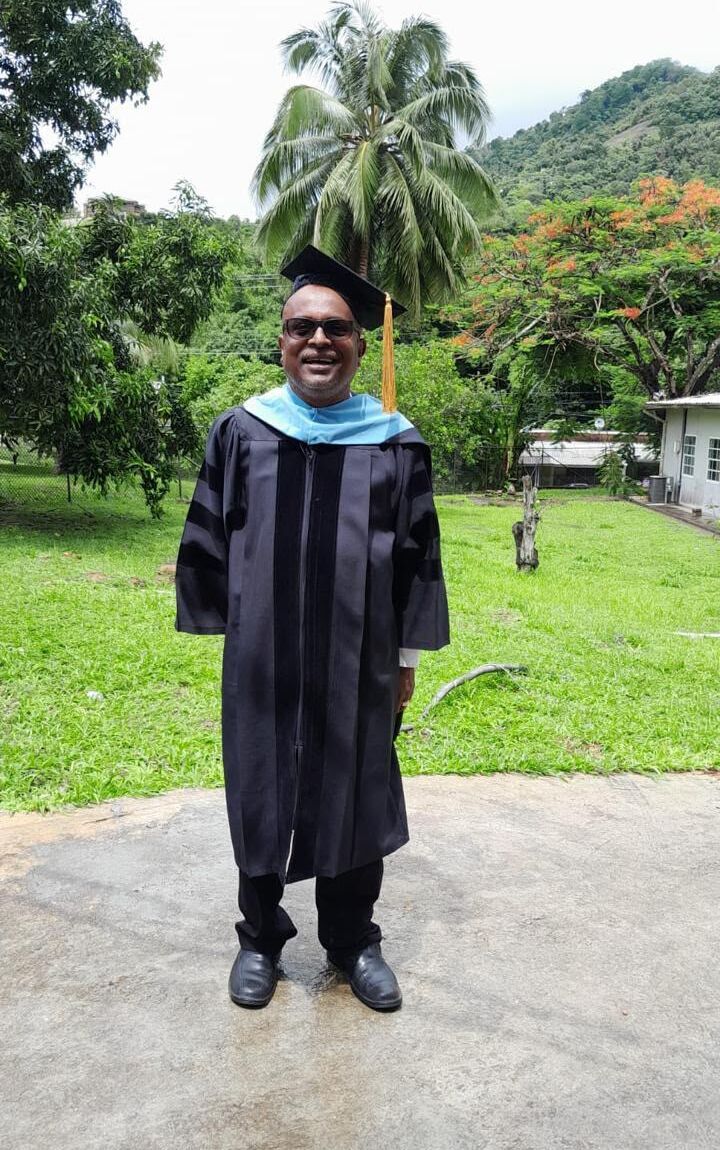
The academic journey of Dr. Raghunath Mahabir became one of the most defining passages of his life. After successfully completing his A levels, he entered the University of the West Indies in 1987. This step marked the beginning of a long and disciplined relationship with higher education, one that would shape his intellectual growth and prepare him for the many roles he would later carry as a teacher, scholar, public servant, and thinker in international relations. His years at the university were not brief or ordinary. They represented a serious commitment to learning, sacrifice, and personal advancement.
From 1987 to 2004, his connection with the University of the West Indies remained central to his life. He completed three degrees and two diplomas during this period. These included a BA, an MSc in International Relations, a PhD in International Relations, Diplomatic Education, and a Diploma in International Relations. This academic progression reflected not only his intellectual capacity but also his deep commitment to study. He did not treat education as a single milestone to be crossed and left behind. For him, education became a continuing journey, one that required discipline, patience, and a willingness to keep going even when the path became difficult.
What makes this phase especially meaningful is that his academic journey was not separated from work. In 1989, while he was still at the university, he began teaching at a primary school. This was a major responsibility for a student still building his own academic life. It required him to balance the demands of work and study, to move between the roles of learner and teacher, and to carry both with seriousness. His decision to teach while studying showed his willingness to take responsibility early and to sacrifice comfort for progress.
Teaching during those years was not merely a job for him. It became a formative experience. His first official work as a primary school teacher taught him the importance of not shortchanging students. He understood that teaching was not simply about delivering lessons or completing duties. It was about entering the minds of young individuals and recognising the responsibility that came with shaping them. He took that responsibility seriously. This understanding would remain important in his later academic and mentoring roles, because it taught him that education involves service, care, and moral accountability.
The reality of working while studying was demanding. As a teacher, he had to fulfil his professional responsibilities and then rush to attend university. He was teaching full-time, which meant he could only attend evening classes during the last two years of his first degree. Yet, he did not want to complete the degree part-time. In spite of attending only evening classes, he was able to finish his first degree in three years. This achievement showed the strength of his determination. It was not simply a matter of completing the programme. It showed he could stay focused under pressure and meet academic expectations while also working full-time.
This period also taught him the value of sacrifice. There were no effortless shortcuts in his journey. He had to manage time, energy, and responsibility with discipline. The demands of teaching full time and studying at the same time could have slowed him down, but he chose to continue with determination. That decision revealed the seriousness with which he viewed education. He understood that progress often requires personal sacrifice, and he was prepared to make that sacrifice without losing sight of his goal.
His teaching years also opened his understanding of people. He had the opportunity to teach children from different backgrounds, races, and statuses. In Trinidad and Tobago, where racial divisions had existed over the years, this experience became deeply meaningful to him. He was fortunate to teach in a school that was mostly African, while he himself came from an Indian background. Through this environment, he learned to appreciate another culture, including its food, drink, behaviour, and ways of life. This was not only a professional lesson. It was a human lesson.
Note of Thanks
Dr. Raghunath Mahabir expresses his heartfelt gratitude to all those who have been part of his journey and have contributed to his growth, strength, and purpose in different ways. Above all, he offers sincere thanks to his wife, Chandra Pancham, whose presence, support, and companionship have remained deeply meaningful throughout his life. Their bond has been one of the greatest blessings of his journey, and her role deserves special recognition in this biography.
He also remembers his late sister, Gowra Mahabir, with great fondness, and she will always hold a special place in his heart. Her memory continues to be a part of his personal story, reminding him of the family ties and relationships that have shaped his life with love and meaning.
While many people have helped, guided, encouraged, and supported him over the years, Dr. Mahabir especially wishes to acknowledge these important individuals in this note of thanks. Their contribution, whether through love, support, inspiration, or presence, has helped enrich his path.
This biography stands as a humble reflection of his gratitude, not only for his achievements, but for the people whose care, faith, and encouragement have walked beside him throughout his life.
thanks,
– Dr. (H.C.) Raghunath Mahabir

AIMLAY is a leading global education platform empowering ACADEMIC and EXPERIENTIAL learners, uniquely focused on recognizing knowledge gained through experience and building a diversified community of doctorates and aspiring researchers.