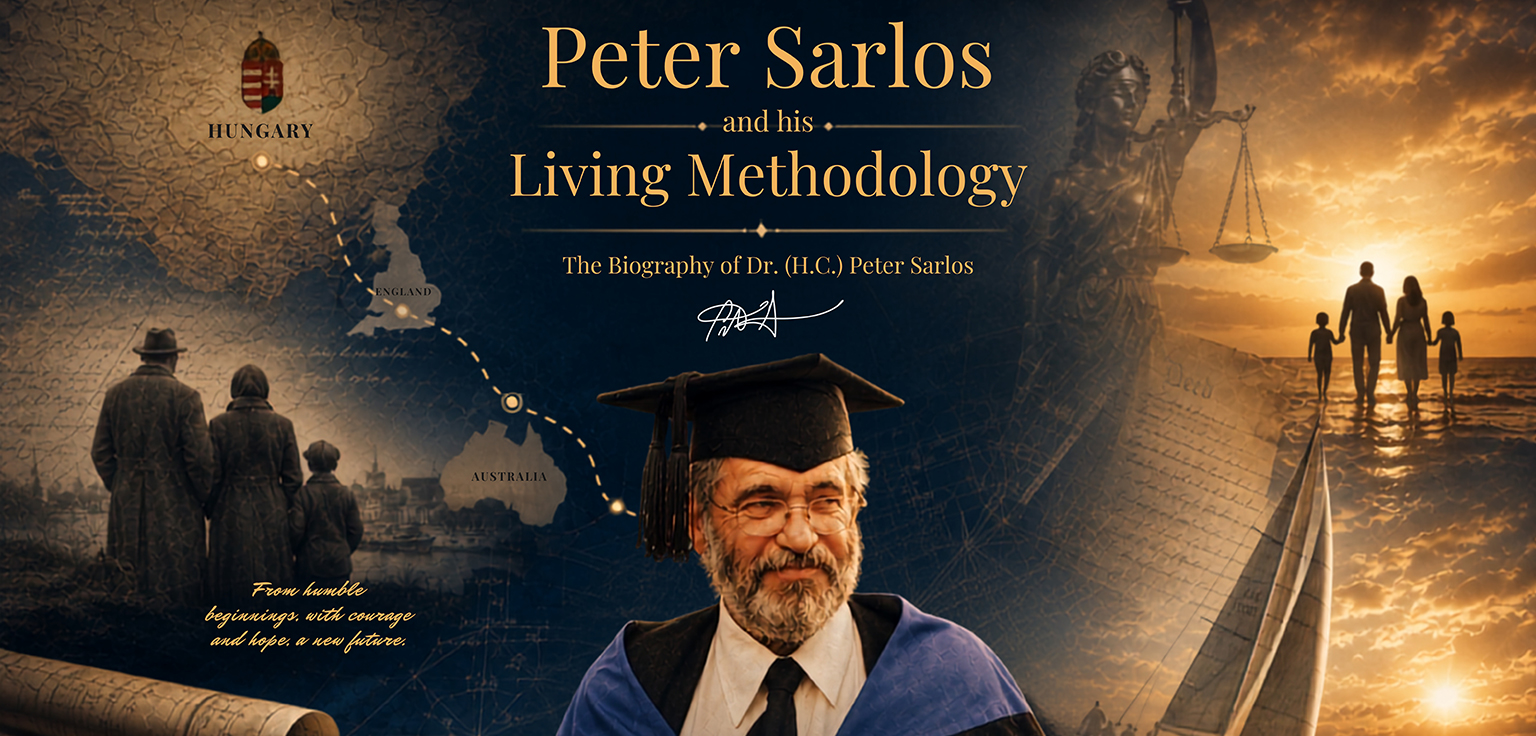
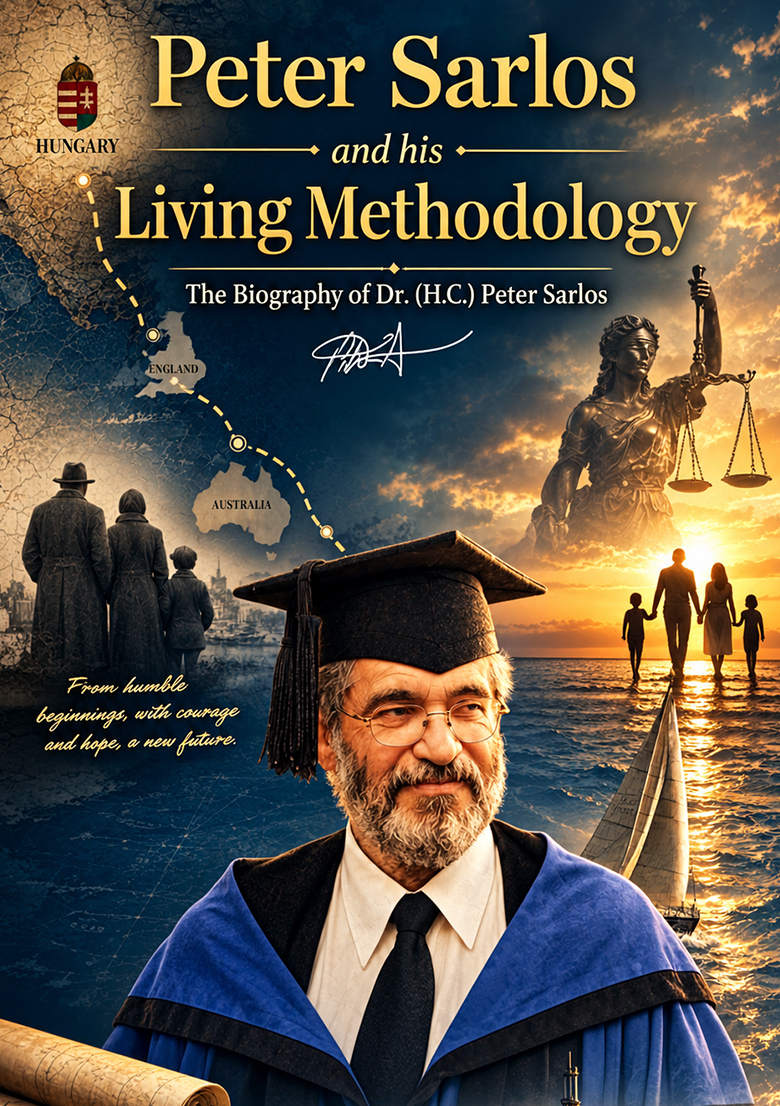
“I started with nothing but a scared family and a fresh start in a new country. I survived an operation on a Russian field hospital table when I was six months old. I got bullied at school. I made mistakes. I lost people I loved. But I also found mentors who believed in me, a wife who never wavered, and a purpose that gave me reason to get up every morning. This biography is not a list of my achievements. It is a thank you note to everyone who helped me become the man I am today. And if there is one thing I want you to take away from my story, it is this: you are never too down to build something great. And you are never too old to start.”
Introduction
The life of Dr. Peter Sarlos exemplifies resilience, ingenuity, and a steadfast commitment to personal and professional excellence. Born in Hungary during a period of intense social and political upheaval, his early years were defined by the courage of his parents, George Sarlos and Eva Sarlos (née Brundwald), who fled as refugees to escape both German occupation and the advancing Russian forces. From the beginning, Peter’s life was intertwined with challenges that demanded courage, adaptability, and a profound understanding of human resilience. At six months, he underwent critical surgery for pyloric stenosis, immediately following the end of WW2. The surgery was performed by an army surgeon in a Russian Army field hospital. The awareness of this early encounter with a stranger’s compassion instilled in him both vulnerability and a sense of humanity to shape his sensitivity to life and his empathy for others.
Following this, the family migrated first to England, where, at a very early stage of life, he adjusted to his new surroundings and the challenges faced by the displaced. Memories from this period, though sparse, include the formative experiences of early adaptation, observing his parents’ perseverance, navigating the complexities of life in a foreign land, and involvement in life-changing decisions . Later, the family relocated to Australia, initially living in Bondi and Woollahra, inner eastern suburbs of Sydney. It was there that he began to cultivate independence and self-reliance. Childhood adventures, holidays in the Blue Mountains, and playful risk taking fostered early lessons in courage and problem-solving. These would become hallmarks of his character.
Schooling presented both challenges and opportunities. At Woollahra Public School and later Sydney Boys High School, he encountered bullying that forced him to cultivate inner strength and resilience. Seeking growth beyond the classroom, he engaged in leadership development through the Boy Scouts, the Cadet Corps, and Outward-Bound School, where he participated in leadership positions at national and international gatherings as well as cultivated teamwork, discipline, and responsibility. These formative experiences instilled an enduring understanding of and the importance of commitment to self-improvement and the importance of collaboration informing his leadership style.
His architectural education at the University of New South Wales marked the beginning of his professional journey. Mentorship by Richard Fitzharding encouraged him to view design and the world around him with creativity, precision, and a deeper understanding of human context. International exposure, including a student trip to Jerusalem in 1967, broadened his appreciation for cultural diversity and coexistence between people shaping a lifelong philosophy that integrated ethics, empathy, and the importance of strategic thinking.
Launching his architectural practice in his late twenties, Peter navigated the complexities of client management, project execution, and ethical decision-making. Early experiences provided lessons in professionalism, resilience, and maintaining standards under pressure. Transitioning into government service, he led projects such as the refurbishment of historic buildings, Headquarters ABC Radio, and facilities planning and management major projects, applying his professional expertise through his strategic planning skills and ability to innovate. Such projects require a combination of the application of project management methodologies, leadership, technical skill, and careful stakeholder management. They reinforced his reputation for meticulous planning, problem solving, and ethical decision-making.
As a result of his increasing awareness of the importance and impact of the law on architectural practice as well as lessons learned in practice, he pursued legal studies, earning an LLB (Hon). For the past quarter century, he has integrated his growing knowledge of law with his architectural expertise, allowing him to specialize in construction adjudication and alternative dispute resolution and to work with lawyers in the provision of expert evidence. This multidisciplinary approach allowed him to navigate complex projects with fairness, insight, and integrity, while mentoring others and contributing to the development of best practices within the field, something that he continues to do.
“I was only six months old when a Russian army surgeon saved my life on a field hospital table. I don’t remember it, of course. But I have always carried that truth with me: vulnerability and care can exist side by side, and sometimes, a stranger’s hands can give you a future.”
Phase 1: First Lessons in Courage
The life of Dr. Peter Sarlos began in Budapest, Hungary, amid a time of profound turmoil. Born to George Sarlos and Eva Sarlos (née Grundwald), he entered a world shadowed by German occupation and the advancing Russian forces. His parents’ courage in fleeing their homeland as refugees instilled in him, from the experiences of his very beginning, the values of resilience, adaptability, and hope. At six months old, he underwent a life-saving operation for pyloric stenosis performed by a Russian army surgeon in a field hospital. This early encounter with vulnerability and human care would leave a subtle yet lasting imprint on his understanding of life and his empathy for others.
The family’s migration first took them to England, where Peter adjusted to new surroundings and the challenges of displacement. Though details from this period are few, he absorbed lessons in adaptability and observation, learning from his parents’ perseverance and the demands of navigating an unfamiliar society. Later, the family relocated to Australia, initially settling in Bondi and then moving to Woollahra, an inner eastern suburb of Sydney. These years nurtured his independence and early curiosity. Childhood adventures, particularly holidays in the Blue Mountains, and playful explorations cultivated courage, resourcefulness, and problem solving skills that would remain integral to his character.
School life brought both challenge and growth. At Woollahra Public School and Sydney Boys High School, he experienced bullying, which strengthened his resolve and self-reliance. Beyond academics, he engaged in leadership programs through the Boy Scouts, the Cadet Corps, and Outward Bound. He overcame bullying in his high school years by successfully challenging himself to meet the challenges these organisations posed for the individual. The experiences and understandings gained fostered teamwork, discipline, and a sense of responsibility, laying the groundwork for leadership qualities that would later define his career.
Mentorship and guidance were also pivotal. Observing his parents’ determination and benefiting from early structured challenges, he cultivated a philosophy that combined courage, empathy, and strategic thinking. These formative experiences shaped a mindset that embraced challenges as opportunities, valued ethical clarity, and nurtured the capacity to navigate complexity with resilience and foresight.
The early years of Dr. Peter Sarlos thus became a crucible in which character, determination, and sense of purpose were forged. From the streets of Budapest to the neighborhoods of Sydney, every experience contributed to the foundation of a life devoted to knowledge, integrity, and the meaningful pursuit of achievement.
“Moving from Hungary to England to Australia felt like being a leaf blown across the ocean. But somewhere between Bondi Beach and the Blue Mountains, I stopped feeling lost and started feeling like I belonged. That belonging, I realized, was something I had to build for myself.”
Phase 2 : Finding His Place in a New World
The period following the early years of Dr. Peter Sarlos’s life in Budapest, Hungary, was marked by migration, adaptation, and the gradual forging of a new identity. After the family fled as refugees, the first move to England offered both safety and a complex set of challenges. In a country unfamiliar in language, customs, and social structures, he navigated a world where every interaction required observation, adaptation, and learning. Even as a young child, he recognized the importance of resilience and the quiet courage of his parents, George Sarlos and Eva Sarlos (née Brundwald), whose ability to maintain stability amid uncertainty became a model for his approach to life.
Life in England was brief and formative. The family’s modest living conditions, the nuances of a foreign culture, and the constant negotiation of belonging instilled in him an early awareness of identity, place, and responsibility. Though he was a young observer rather than a participant in many of the adult decisions that shaped their survival, the lessons of perseverance, patience, and the value of observation that he absorbed would form an internal compass that guided his personal growth. The challenge of moving, settling, and forming attachments in a foreign land introduced him to the concept that security and opportunity often require courage, patience, and adaptability to maintain a person’s sense of self.
The subsequent migration to Australia introduced a new chapter of cultural, social, and personal development. Initially residing in Bondi, they eventually settled in Woollahra, an inner eastern suburb of Sydney. The move offered both stability and opportunities for exploration free from the hierarchical societies of Europe of his heritage. He began to cultivate his early sense of independence and curiosity in the egalitarian society that he and his family found themselves in. The local environment, from streets and parks to the surrounding suburban and natural landscapes, became his classroom for observation, problem-solving, and self-directed learning. Childhood adventures in the Blue Mountains and weekends spent exploring nature instilled in him a combination of courage, creativity, and resourcefulness. These formative experiences emphasized that personal growth often arises from both opportunity and challenge, a principle he would carry into every aspect of his later life.
Schooling in Sydney provided both structure and challenge. At public school, and later at high school, he faced instances of bullying that required him to draw upon inner strength and self-reliance. Rather than diminish him, these experiences became catalysts for resilience, teaching him the importance of self-confidence, composure, and thoughtful response to adversity. Academic lessons were rounded off by personal development through programs such as the Outward-Bound Movement, where he encountered structured physical, mental and leadership challenges designed to expand personal limits. Participation in the Cadet Corps and leadership roles in the Boy Scouts offered avenues to practice teamwork, leadership, and responsibility, as well as that of living in harmony with the natural environment. Leading his scout troop to national and international gatherings taught him strategic thinking, patience, and the nuanced skills of guiding and encouraging others with equity.
During these formative years, mentorship and influential figures played a subtle but significant role in shaping Peter’s worldview. He closely observed his parents’ steadfastness, learning the value of perseverance, ethical clarity, and disciplined problem-solving. The early lessons of migration and adaptation reinforced the idea that courage and initiative are essential when facing uncertainty. He also recognized that leadership is inseparable from service to others, a principle that would guide his interactions throughout his professional career. These experiences coalesced into a philosophy emphasizing moral responsibility, resilience, and the ability to navigate complexity with intelligence and compassion.
The challenges of migration deeply intertwined with the evolution of identity. He experienced firsthand the negotiation of cultural belonging, first in England and then in Australia. Adjusting to new languages, social norms, and educational expectations teaching him flexibility, patience, and humility. At the same time, the family’s experiences reinforced the significance of maintaining a sense of heritage and personal values. That his parents, George and Eva Sarlos preserved their traditions, instilled in Peter a growing sense of discipline, respect, and curiosity in their children left a lasting impression These influences shaped his character as well as the development of professional principles he would later apply in architecture, law, and dispute resolution.
“School wasn’t always kind to me. But the Outward Bound program, the Scouts, teaching water skiing, and a few good mentors showed me that leadership isn’t about being the loudest in the room. It is about earning trust, one small decision at a time.”
Phase 3 : Discovering What He Was Meant to Do
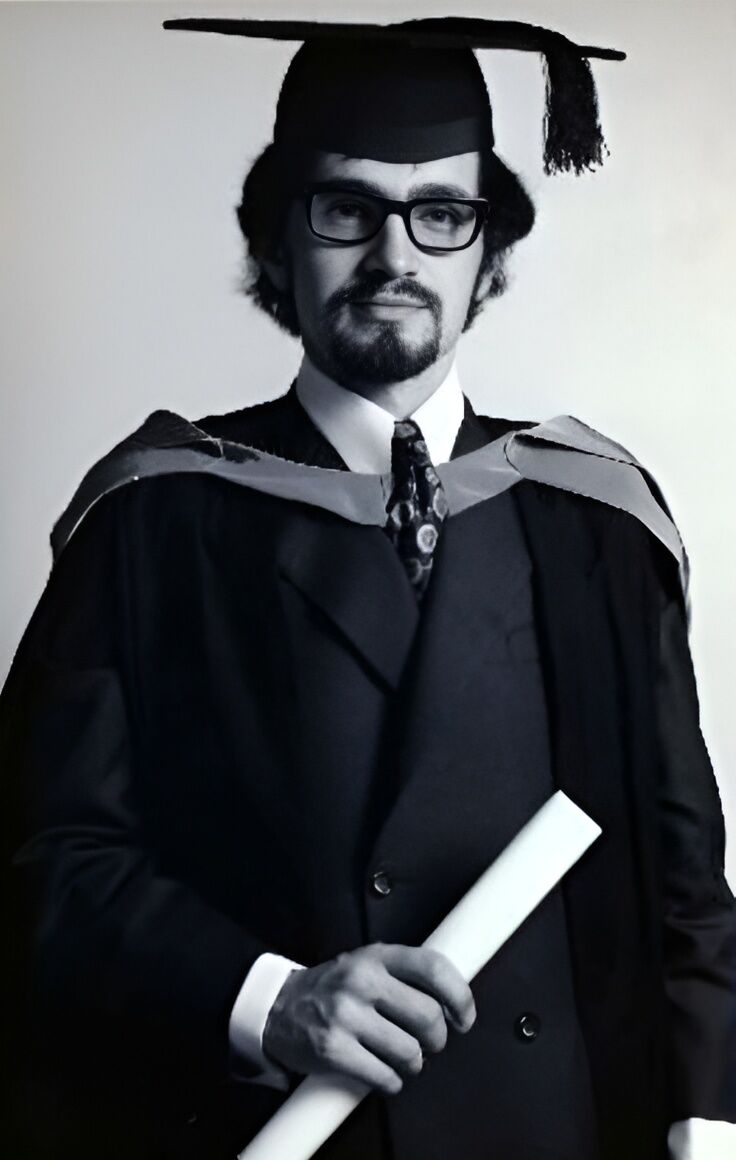
As Dr. Peter Sarlos entered adolescence in Sydney, his curiosity and determination began to converge into a clearer vision for his future. Building on the resilience and independence cultivated during his early migration experiences, he approached education with focus and discipline. At Woollahra Public School and Sydney Boys High School, he navigated academic expectations and social challenges, growing self-reliance and sense of composure. These formative experiences helped him recognize the value of persistence, observation, and thoughtful engagement with the world around him, something that served him well in his later professional life.
Beyond classroom learning, he actively pursued structured opportunities to grow his leadership and teamwork skills. His participation in the Outward-Bound School provided challenges that combined physical endurance with strategic problem-solving, while involvement in the Cadet Corps and leadership roles in the Boy Scouts taught him to guide others, plan effectively, and act responsibly. These experiences reinforced his understanding that personal growth is inseparable from contributing to the development of those around him.
During this period, his emerging interest in spatial reasoning and design became apparent. Encouraged by mentors such as Richard Fitzharding and Kieth Cottier, Peter explored architectural concepts with creativity and analytical rigor, gaining an understanding of inquisitorial methodologies needed to understand and manage direction. Field visits, study of urban environments, and hands-on projects nurtured an appreciation for how design influences human experience and community life. This early integration of creativity, technical observation, and social awareness laid the groundwork for his eventual career in architecture.
His preparation for higher education involved cultivating habits of careful study, critical thinking, and practical application. Trips to local construction sites, exploration of urban planning, and engagement with real-world design problems reinforced the principle that knowledge is most valuable when applied to tangible outcomes. Through these activities, he began to develop a philosophy that combined technical skill with ethical responsibility, social and environmental impact, a perspective that would guide his professional decisions in later years.
By the end of this phase, Dr. Peter Sarlos had solidified the foundations of intellectual curiosity, problem solving, and social consciousness. These experiences shaped his identity as a learner, a leader, and an emerging professional, establishing the skills and mindset that would propel him toward success at the University of New South Wales and beyond. This period captures the transformation from a resilient child navigating migration and adaptation into a young individual embracing knowledge, creativity, and responsibility, ready to chart a course toward meaningful professional contribution.
Note of Thanks
Dr. Peter Sarlos wants to express his deepest gratitude to everyone who has shaped his personal and professional journey. First and foremost is his wife, Susan Jane Sarlos. Her unwavering support and steady presence over more than 30 years have been a source of strength through life’s most challenging moments, including during his health crises and personal trials. Her companionship, patience, and encouragement have been indispensable to his recovery and everything he continues to do.
He also wants to acknowledge the foundational influence of his family. His father was a figure of guidance and wisdom, offering early lessons in perseverance and integrity that never left him. Those lessons stuck.
Dr. Peter Sarlos also remembers the mentors and colleagues who provided critical support at different stages of his career. Among them is the late Dr. David Barmes, former Director of World Dental Health, whose guidance and insight left a lasting impression. In architecture, the mentorship of Richard Fitzharding, Andrew Brigger was invaluable. Andrew served on the Council of the City of Sydney and helped shape the City of Sydney Master Plan. Both men offered direction and inspiration when he needed it most. He also recognizes the support of Ed Lippmann, a contemporary architect, and Russell Welsh, Director of the ABC Dispute Resolution Service. Russell’s collaboration was instrumental in advancing Dr. Peter Sarlos’s work in adjudication.
He is grateful as well for the colleagues, clients, and collaborators whose trust, challenges, and partnership made it possible to realize ambitious projects while staying true to ethical and professional standards. He also wants to thank the wider network of professionals, educators, and community members. Every interaction with them enriched his understanding, broadened his perspective, and strengthened his commitment to service.
Finally, Dr. Peter Sarlos extends his heartfelt thanks to his children, Eliza, Peta, Adam, and Gabriel, and his grandchildren. Their presence, their achievements, and their growth have brought meaning, joy, and motivation to every chapter of his life. This biography is as much a tribute to them as it is to the mentors, colleagues, and supporters who have walked beside him along the way.
thanks,
– Dr. (H.C.) Peter Sarlos